The Relationship Between Flow Rate and Medium Grind in Cone Drippers
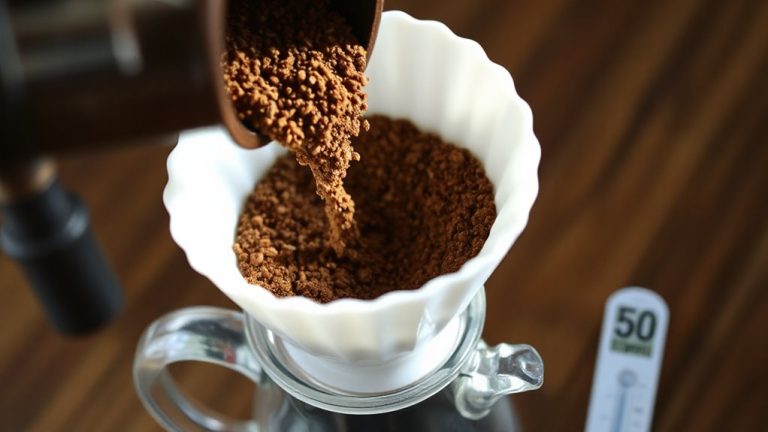
Your grind size directly controls flow rate in cone drippers. A medium grind, like table salt, balances resistance and flow, preventing clogs or rushing water. Too fine slows flow, risking over-extraction and bitterness; too coarse speeds it up, causing weak, sour coffee. Use a burr grinder for consistency, and tweak slightly based on your brewer-V60 likes it a touch finer, Stagg X a bit coarser. Keep water between 195°F and 205°F. Adjust one variable at a time, and you’ll find the sweet spot with practice.
Notable Insights
- Medium grind balances resistance and flow rate, optimizing extraction in cone drippers.
- Finer grinds slow flow due to increased particle density and water resistance.
- Coarse grinds reduce resistance, risking fast flow and under-extraction in cone brewers.
- Uniform medium grind prevents clogging and promotes even water distribution.
- Adjusting grind size slightly finer or coarser fine-tunes flow rate for ideal extraction.
Why Flow Rate Depends on Grind Size
A finer grind means more resistance and a slower flow rate in your cone dripper, plain and simple. You’re packing in more particles per milliliter, so the particle density increases, restricting how easily water moves through. That buildup creates higher water pressure behind the coffee bed, especially if you’re pouring quickly. You’ll notice drips slowing to a crawl, which can risk over-extraction if you’re not careful. On the flip side, a coarse grind opens up space, letting water pass too fast and possibly under-extracting. It’s a balancing act: too fine and you’ll choke the brew; too coarse and it’ll rush through. Your grind size directly controls flow, and flow affects flavor. Adjusting grind gives you precise control over extraction time without changing your pour or gear. It’s the most effective dial you’ve got-use it wisely.
Why Medium Grind Works Best in Cone Drippers
You saw how grind size shapes flow, but now let’s talk about finding the sweet spot-especially in cone drippers like the Hario V60 or Kalita Wave. A medium grind works best because it balances flow rate and extraction without fuss. It’s not too fine to clog or too coarse to rush through. This grind size supports even water distribution, letting liquid move smoothly through the bed and hit all grounds consistently. With medium grind, particle density is uniform enough to avoid channeling, where water sneaks through weak spots and leaves others under-extracted. That means better flavor and fewer surprises. Fine grinds can pack too tight, slowing flow and risking over-extraction; coarse grinds run too fast and taste weak. Medium gives you control and repeatability-key for daily brewing. It’s forgiving with small timing or pour changes, which makes it practical. For most setups and beans, medium is the go-to. A consistent medium grind is best achieved with a high-quality burr coffee grinder.
Find the Grind-Flow Sweet Spot
How do you nail consistent flavor with your cone dripper? Start by finding the grind-flow sweet spot-where grind consistency and water temperature align. Use a burr grinder; it delivers even particles, preventing runaway flows or clogs. Aim for a medium grind, similar to table salt, which suits most cone brewers like the Hario V60 or Kalita Wave. If your brew runs too fast, slightly finer adjustments can slow it, but don’t oversharpen-uneven fines disrupt flow. Water temperature matters: 195°F to 205°F extracts cleanly without scalding. Too cool, and your coffee tastes weak; too hot, it risks bitterness. Pair stable water heat with steady pour speed. Adjust one variable at a time. With repeatable grind consistency and proper heat, you’ll hit balanced extraction. It’s not magic-it’s method. For best results, choose one of the top-rated coffee and espresso grinders that ensure precision and durability.
Spot and Fix Coarse or Fine Grind Issues
Why does your coffee taste weak or bitter despite following the same brew steps? It’s likely due to grind issues. Poor grind consistency leads to uneven extraction, where some particles over-extract and others under-extract. If your grind is too coarse, you’ll get weak coffee; too fine, and it turns bitter. Water temperature also interacts with grind size-too hot with a fine grind worsens bitterness.
Use this table to troubleshoot:
| Symptom | Likely Cause |
|---|---|
| Weak, sour taste | Grind too coarse |
| Bitter, harsh | Grind too fine |
| Uneven flow | Poor grind consistency |
Adjust your grinder settings and check water temperature (ideal is 195–205°F). A quality burr grinder improves grind consistency. Fixing these issues stabilizes flow rate and extraction in cone drippers for balanced, flavorful coffee. For optimal results, consider upgrading to a best grinder for filter coffee.
Match Grind Size to Your Cone Brewer
Grind size isn’t one-size-fits-all-it changes based on your brewer’s design, and cone drippers vary enough that using the same grind for each can lead to inconsistent results. If you’re using a Hario V60, you’ll need a slightly finer medium grind to slow flow rate and extend brewing time, ensuring balanced extraction. The Stagg X, with its shallower angle, moves water faster, so a coarser medium grind often works better to prevent over-extraction. Water temperature matters too-aim for 195–205°F-to complement your grind choice. Too fine with high heat and long brewing time? You’ll get bitterness. Too coarse, and your coffee tastes weak, no matter the water temperature. Adjusting grind to match your specific cone dripper optimizes flow and extraction without changing your pouring or gear. It’s practical, not theoretical.
Dialing in Medium Grind for Even Extraction
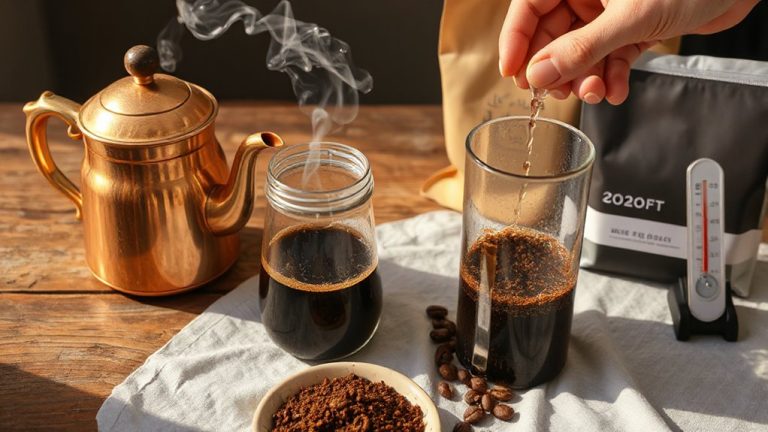
A medium grind sets the foundation for even extraction in cone drippers, but hitting the right consistency isn’t just about picking a setting and sticking with it. You’ll need to adjust based on your beans, water temperature, and desired brew time. If your coffee tastes sour, the grind may be too coarse or water too hot, leading to a fast drip and under-extraction. Bitterness often means it’s too fine or the water’s too cool, slowing flow and over-extracting. Aim for water temperature between 195°F and 205°F-just off boiling. Match this with a grind size that delivers a brew time of 2:30 to 3:30 minutes for most 12g brews. A quality burr grinder gives you control. Try a Baratza Encore or 1ZPresso Q2 for consistency. Small tweaks make big differences, so change only one variable at a time.
On a final note
You’re aiming for balanced extraction, and medium grind usually hits that sweet spot in cone drippers. It slows flow enough for good flavor without clogging. Too coarse? Your coffee runs fast and tastes weak. Too fine? It drips slow and turns bitter. Adjust in small steps-Hario and Kalita both work well with medium. Match grind to your brewer and water speed, then tweak until it flows smooth and tastes even.