How Traditional Ethiopian Coffee Ceremonies Influence Farming Practices
You’ll find that Ethiopian coffee ceremonies shape farming from the start-roasting green beans fresh means farmers skip high-yield hybrids for flavorful heirlooms. No chemicals are used, since purity matters in ritual. Shade-grown beans develop complex notes prized in cupping. Hand-harvesting and sun-drying preserve quality. These traditions don’t just honor flavor; they define how coffee is grown. There’s more to how culture guides cultivation than meets the eye.
Notable Insights
- The coffee ceremony’s emphasis on purity promotes chemical-free farming to maintain ritual and flavor integrity.
- Preference for heirloom varietals in ceremonies supports genetic diversity and traditional plant conservation in farming.
- Slow-roasting rituals mirror farming choices to prioritize flavor over yield, favoring high-quality over high-volume production.
- Shade-grown coffee, linked to complex flavors, aligns with ceremonial appreciation for nuanced taste profiles.
- Women-led ceremonies reinforce cultural value on artisanal methods, influencing sustainable, hand-harvesting and processing practices.
The Ritual Behind Ethiopia’s Coffee Ceremony
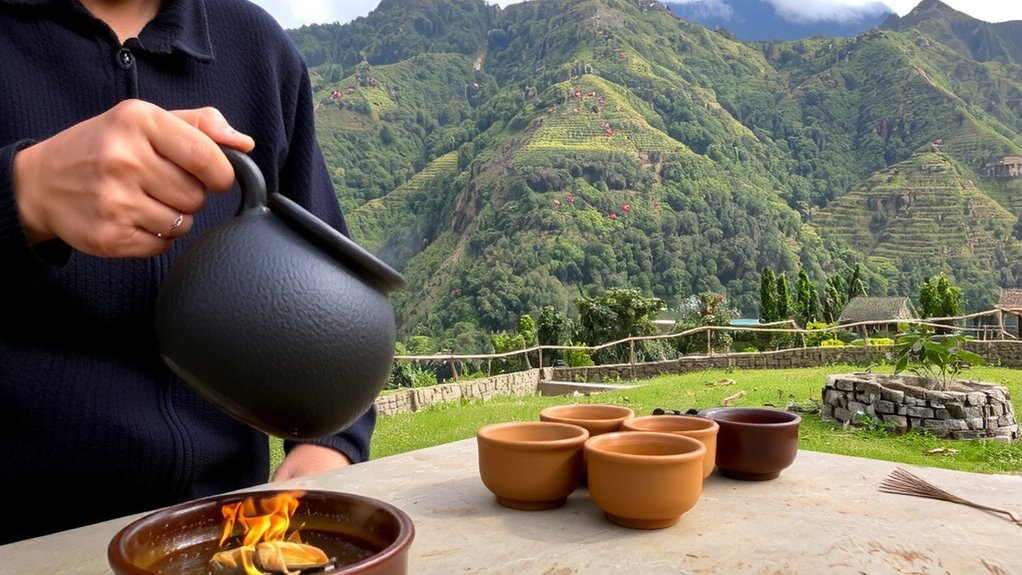
While you might think of coffee as just a quick morning pick-me-up, in Ethiopia it’s a deliberate ritual that can take over an hour, rooted in tradition rather than convenience. You’ll see green coffee beans roasted over a small flame in a jebena, a clay pot with a pear shape and narrow neck. The process emphasizes spiritual significance-incense like frankincense burns nearby, marking the space as sacred. The act isn’t just about brewing; it’s about community bonding. Three rounds of serving, called abol, tona, and baraka, each carry meaning and invite conversation. Women typically lead the ceremony, showcasing skill and hospitality. Using locally made tools-roasting pans, wooden spoons, and flat-bottomed cups-ensures authenticity. While modern gear exists, traditional methods remain preferred for their cultural accuracy and deeper connection to Ethiopian heritage. You’ll find these rituals in homes and villages, not staged performances.
Why Taste Matters More Than Yield

Great coffee starts with choices that prioritize flavor over quantity, and Ethiopian farmers know this better than most. You’re not farming for bulk when your market values a distinct flavor profile-floral, fruity, or bright with citrus notes. These traits matter because they’re shaped by tradition and confirmed through sensory evaluation, a hands-on method used to assess aroma, acidity, body, and aftertaste. Unlike mass producers chasing high yields, Ethiopian growers focus on quality indicators that score well in cupping sessions, where trained tasters rate each batch. This emphasis means you’ll often see slower-growing, lower-yielding plants maintained for their superior taste. It’s not about output; it’s about delivering complexity in the cup. When flavor drives decisions, farming shifts toward careful harvesting, proper fermentation, and sun-drying-practices that support taste, not tonnage. Choosing beans from top-rated Best Ethiopian Coffee Picks ensures you experience the full expression of these time-honored methods.
Farmers’ Preference for Heirloom Coffee Varietals
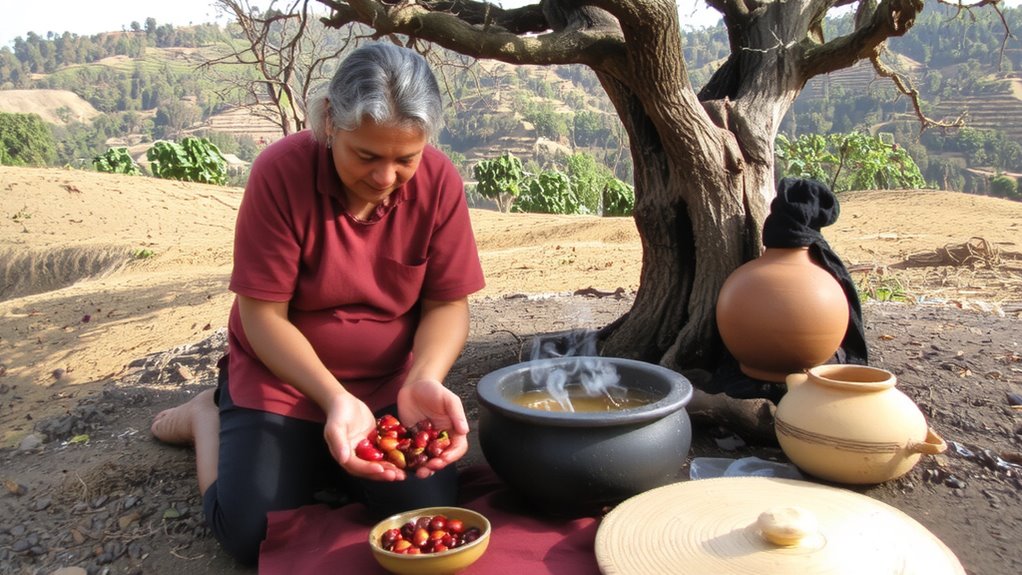
Many Ethiopian farmers choose heirloom coffee varietals because these native plants deliver the complex flavors prized in specialty markets. You rely on them not for high yield but for quality and tradition. These varietals offer broad genetic diversity, which helps crops resist disease and adapt to changing climates without lab-engineered fixes. Unlike uniform commercial strains, heirlooms vary from farm to farm, even within the same region, preserving natural resilience. This genetic variety supports long-term sustainability, reducing dependency on chemical inputs. At the same time, growing heirlooms is an act of cultural preservation-tying your harvest to ceremonial practices passed down for generations. You’re not just farming coffee; you’re maintaining a heritage. Buyers increasingly value this authenticity, paying premiums for traceable, traditionally grown beans. While yields may be lower, the trade-off favors flavor, stability, and identity. Your choice sustains both land and legacy.
How Shade and Companion Crops Boost Flavor
Because coffee plants evolved under forest canopies, growing them in shade isn’t just traditional-it’s strategic. You’ll get slower bean development under shade, which boosts flavor complexity by allowing more time for sugars to build. In Ethiopia, farmers often grow coffee beneath acacia or banana trees-these companion crops filter sunlight and improve soil health. That shade environment also supports greater bean biodiversity, preserving rare heirloom varieties you won’t find in full-sun plantations. Plus, diverse canopy layers reduce pests naturally, so you rely less on chemical interventions. You’ll notice flavor notes like bergamot, citrus, or jasmine more often in shade-grown lots, thanks to the balanced stress and nutrient uptake. If you’re serious about flavor depth, look for coffees labeled “forest-grown” or “semi-forest”-they reflect this traditional system. For brewing, these beans shine in pour-overs or siphons, where clarity highlights their complexity. Among the best Ethiopian coffee beans, many are grown using these time-honored shade and companion cropping methods.
Why Ceremony Culture Favors Chemical-Free Farming
You’re already familiar with how shade and companion crops shape flavor in Ethiopian coffee, but that’s only part of the story-what happens on the farm ties directly into tradition long before the beans hit the roaster. Ceremony culture demands natural purity, meaning no synthetic pesticides or fertilizers. Farmers avoid chemicals because they’re seen as contaminants that disrupt both health and sacred practice. This focus supports organic methods, not as a trend, but as a long-standing standard. When beans are grown for ritual authenticity, every step matters-from soil to brew. Chemical-free farming guarantees the coffee tastes clean and true, which is essential when served in three rounds during ceremonies. It’s not just about flavor; it’s about respect. The result? Beans that meet cultural expectations and international specialty markets alike. Practices aren’t changing because they already align with quality demands-no retrofitting needed. Tradition, in this case, leads the way in sustainable, chemical-free production.
Following the Bean: From Highland Farm to Ceremony Mat
While the journey starts high in Ethiopia’s fertile highlands, where farmers handpick only the ripest cherries at elevations between 1,500 and 2,200 meters, you’re seeing just the beginning of a process shaped by precision and care. Seasonal harvesting guarantees only peak-ripened cherries are collected, typically during October to December. Farmers rely on sustainable irrigation-like rainwater catchment and drip systems-to protect fragile ecosystems. After harvest, beans are washed, sun-dried on raised beds, and hulled by hand before reaching the ceremony mat. Each step preserves bean quality and reflects environmental stewardship.
| Stage | Method |
|---|---|
| Harvesting | Manual, seasonal harvesting |
| Water Use | Sustainable irrigation |
| Drying | Sun-dried on raised beds |
| Processing | Wet or natural method |
| Transport | Donkey or human-carried to market |
You follow tradition not out of habit, but because it works-efficiently and sustainably.
Keeping Tradition Alive in a Global Coffee Market
Though global demand pushes for faster, more industrial methods, many Ethiopian coffee producers choose to stick with traditional farming and roasting practices, knowing these methods shape both the quality and identity of their coffee. You’ll find that cultural preservation isn’t just symbolic-it affects how beans grow, taste, and are processed. By hand-harvesting cherries and using sun-drying on raised beds, farmers maintain flavor complexity valued in specialty markets. These practices support sustainable yields without heavy machinery, reducing costs and environmental impact. At the same time, market adaptation means some cooperatives now use basic moisture meters and vacuum packaging to meet export standards. You’ll see traditional jebenas used in homes, while exporters adopt simple lab-grade scales and hygrometers. This balance lets producers stay authentic while meeting international expectations. Your choices as a buyer encourage this model-valuing origin, process, and people-proving tradition and progress can coexist in today’s coffee economy.
On a final note
You’ll get the best results when your brewing respects the bean’s origin. Ethiopian coffee thrives under shade, grown with companion plants that boost flavor-so choose light roasts to highlight those notes. Skip harsh chemicals; they dull the taste and harm the land. Use a gooseneck kettle for precise pour-over control, or a traditional jebena for authenticity. Fresh, local, and clean matters more than fancy gear.