How to Calculate Coffee-to-Water Ratios for French Press Based on Bean Density
Use a 1:15 coffee-to-water ratio as your starting point-60g coffee to 900g water for a 34-ounce press. If you’re using dense beans, like light roasts or high-altitude Ethiopians, go slightly higher in water (1:16) and use a finer grind to improve extraction. For less dense beans, such as dark-roasted Sumatrans or low-elevation Brazilians, stick to 1:14 and a coarser grind to avoid bitterness. Adjust steep time between 4 to 5 minutes based on taste. Tweaking grind and water together gives better results than ratio alone-your next brew will be even more dialed in.
Notable Insights
- Start with a 1:15 coffee-to-water ratio as a baseline, adjusting based on bean density and roast level.
- Use a finer grind and slightly more water (up to 10g per 100ml) for dense, high-altitude light roasts.
- Apply a coarser grind and reduce water slightly for low-density, dark-roasted, or low-elevation beans.
- Prioritize grind size adjustments before changing water volume to fine-tune extraction precision.
- Adjust steep time-up to 5 minutes for dense beans, down to 3.5 for less dense-to balance extraction.
Understand How Bean Density Affects French Press Extraction
Bean density plays a quiet but critical role in how your French press coffee turns out. Denser beans, with tighter bean structure, resist water penetration, slowing flavor release during steeping. If you’re using high-density beans-like those from high-altitude regions-water needs more time to extract sugars and acids evenly. Light roasts often fall into this category and might need a slightly longer steep or finer grind to avoid under-extraction. Less dense beans, often darker or from lower elevations, open up faster, risking over-extraction if left too long. You’ll taste that as bitterness or flatness. Adjusting your coffee-to-water ratio alone won’t fix timing issues from density differences. Instead, pair your ratio with grind size and steep time. For denser beans, aim for a coarse grind and 4-minute steep to balance flavor release without clogging the press.
Estimate Bean Density Using Roast and Origin
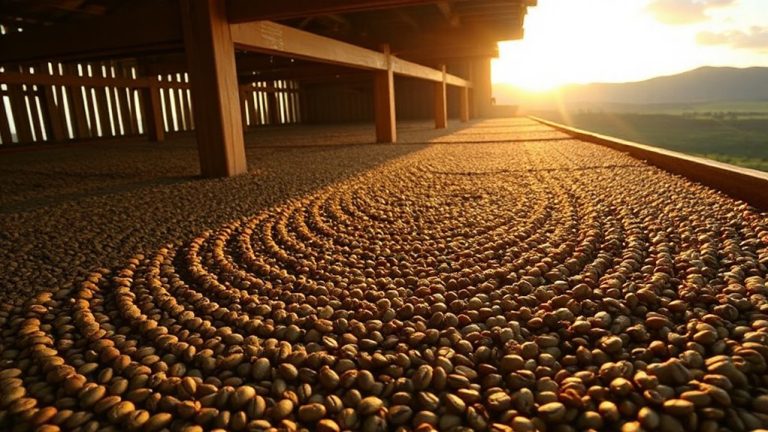
While you can’t always measure bean density directly, you can make solid guesses based on roast level and origin-two factors that directly impact how your coffee extracts in a French press. Lighter roast levels tend to be denser than dark roasts because they’re roasted for less time, preserving more of the bean’s structure. If you’re using a light or medium roast, expect slower water penetration and potentially under-extraction if your brew time isn’t adjusted. When it comes to bean origin, high-altitude beans-like those from Ethiopia or Colombia-are generally harder and denser due to slower maturation. In contrast, lower-grown beans from regions like Brazil may be less dense. So, a light-roasted Ethiopian bean will likely need different handling than a dark-roasted bean from Sumatra. Knowing your roast level and bean origin helps you predict density and fine-tune your brewing.
Start With the Standard French Press Ratio
Now that you’ve considered how roast and origin influence bean density and extraction, it’s time to set a baseline for your brew: the standard French press ratio. Use 1 gram of coffee for every 15 grams of water-commonly called the 1:15 ratio. It works reliably across most coffee types, from light Ethiopian beans to darker Sumatran blends. This ratio balances strength and clarity, giving you a full-bodied cup without excessive bitterness. It also lets key flavor notes come through, whether you’re tasting fruity brightness or earthy depth. While bean density will later fine-tune your water adjustment, starting here gives consistent, drinkable results. Most standard 34-ounce French presses use about 60 grams of coffee and 900 grams of water. Stick to a coarse grind to avoid sludge and over-extraction. This foundation is practical, repeatable, and easy to modify-exactly what you need before diving into more precise tweaks. For optimal results, always match your grind size to the brewing method, as a coarse grind is essential for preventing over-extraction and sediment in French press coffee.
Adjust Water for Roast and Density
A slightly coarser grind and a touch more water can make a noticeable difference depending on your beans’ roast level and density. Lighter roasts are denser and smaller in bean size, so they need a finer grind texture and slightly more water to extract fully. Dark roasts are less dense and often larger, absorbing water faster-use a coarser grind and a bit less water to avoid over-extraction. If you’re using beans from high-altitude regions like Ethiopia or Kenya, expect harder, denser beans that resist water; adjust by extending brew time or increasing water by 5–10 grams per 100 ml. For Brazilian or Sumatran beans, which are typically less dense, reduce water slightly. Matching water to roast and density improves flavor without changing your base ratio. Always tweak grind texture first-then adjust water-to maintain control over extraction. For pour-over methods, achieving the ideal extraction often depends on using the best coffee grinds for pour-over.
Brew With Your Custom French Press Ratio
How do you actually brew once you’ve dialed in your custom ratio? Start by measuring your beans and water precisely-consistency matters. Use a coarse grind to prevent silt and guarantee smooth pressing. Pour hot water (around 200°F) evenly over the grounds, stir gently, and place the lid on top with the plunger up. Let it steep for four minutes-this timing supports balanced flavor development without over-extraction. After steeping, press slowly and evenly; a fast or uneven press can disturb the grounds and affect clarity. Your brewing technique directly influences taste, so stay steady. Use a gooseneck kettle for better control, and always pre-wet your filter if using a paper-lined press. Stick to the same method each time to isolate variables and refine results. Once you’ve locked in the process, small tweaks can further improve flavor, but consistency in technique is key. For optimal results, consider the build quality and plunger design of your equipment, as the best French press models in 2024 emphasize durable construction for long-term performance.
Fix Weak or Bitter French Press Coffee
If your French press coffee comes out weak or bitter, the issue’s likely tied to your brew ratio, grind size, or steep time-adjusting just one of these can make a clear difference. Weak coffee often means under-extraction, so try a finer grind size or extend your brew time from 4 to 5 minutes. Bitterness usually points to over-extraction, especially if you’re using too fine a grind or letting it steep too long. A coarse grind, like breadcrumbs, works best-finer grinds increase surface area and can turn your coffee harsh. If you’re using a blade grinder, that could be part of the problem; burr grinders offer more consistent results. Test one variable at a time: start with grind size, then adjust brew time. Consistency matters, so stick with one change before making another. Small tweaks lead to better balance.
On a final note
Now you can tweak your French press ratio based on bean density. Use 1:15 as a starting point, then add or subtract water depending on roast and origin-lighter, denser beans often need more water, while darker, less dense ones do better with slightly less. This small adjustment helps avoid weak or bitter coffee. It’s not magic, just practical tweaks with real results. Your brew should be balanced, rich, and more consistent every time.