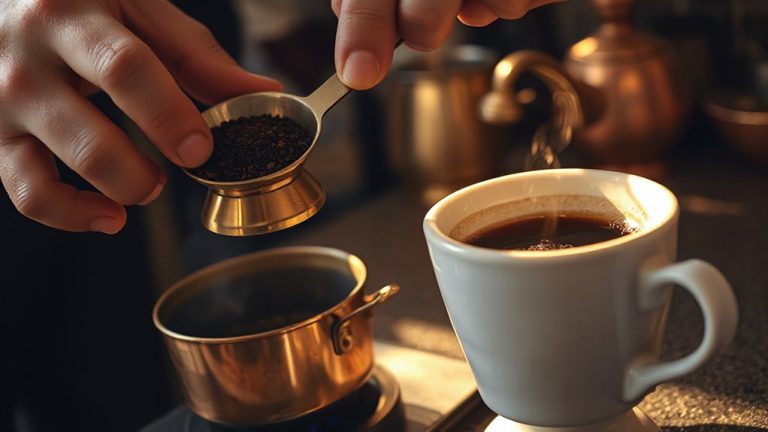
St. Lucia Coffee: How Volcanic Soil & 200-900m Farms Shape Flavor
You’re tasting coffee shaped by St. Lucia’s volcanic slopes, where mineral-rich basalt soil feeds beans with potassium and magnesium, boosting flavor depth. The Qualibou Caldera’s elevations slow maturation, enhancing complexity. Small family farms use sustainable, shade-grown methods, improving acidity and body. Hand-picking guarantees quality but limits supply. Volcanic terrain and labor intensity restrict output, making it rare. You’ll find it’s a specialty worth exploring further.
Notable Insights
- Volcanic soil on St. Lucia’s slopes enriches coffee with minerals like potassium and magnesium, enhancing flavor complexity and plant health.
- The Qualibou Caldera’s elevation gradients create microclimates that slow bean maturation, increasing flavor depth and acidity balance.
- Coffee is mainly grown on small family farms, prioritizing quality, sustainability, and careful terroir management over mass production.
- Labor-intensive hand-picking ensures only ripe cherries are harvested, improving cup consistency but limiting overall yield.
- Sustainable, shade-grown practices preserve soil health and produce specialty-grade beans with clean acidity and rich flavor complexity.
Why Volcanic Soil Makes St. Lucia Coffee Unique
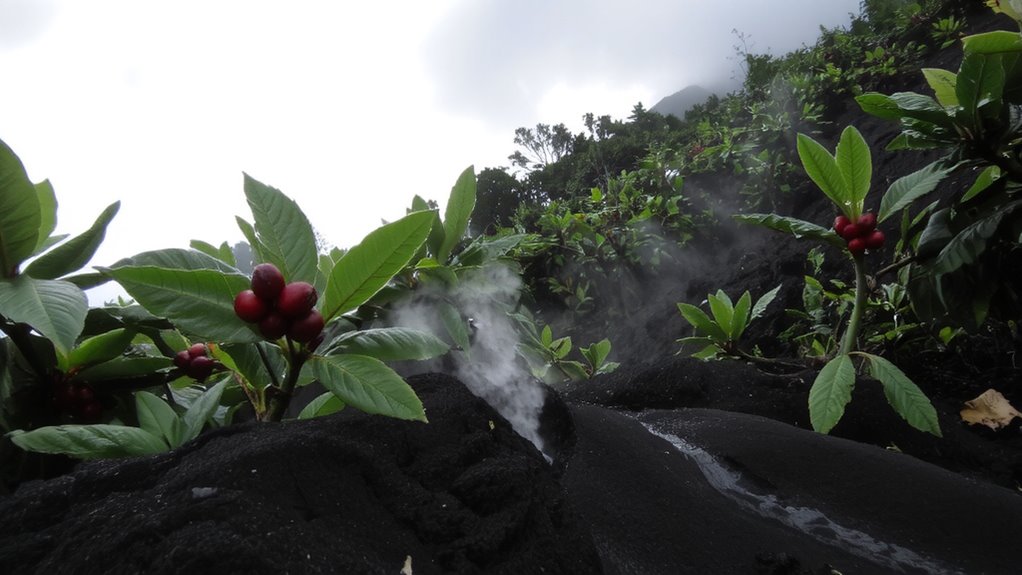
The richness of St. Lucia’s volcanic soil gives its coffee a distinct edge. You’ll notice the mineral richness in every sip-potassium, magnesium, and trace nutrients from decomposed basalt feed the coffee plants, promoting strong growth and complex bean development. This isn’t just fertile ground; it’s a foundation for terroir expression that sets these beans apart. When you brew St. Lucia coffee, you’re tasting a direct result of volcanic earth-something commercial blends from flat farmland rarely match. The porous soil also drains well, reducing root rot risk, which means healthier plants and more consistent yields. For you, that translates to higher-quality beans with balanced acidity and depth. While other regions rely on added fertilizers, here the earth naturally supports flavor complexity. If you value origin character in your cup, volcanic-grown coffee from St. Lucia offers a clear, traceable profile worth exploring.
How the Qualibou Caldera Shapes Coffee Flavor
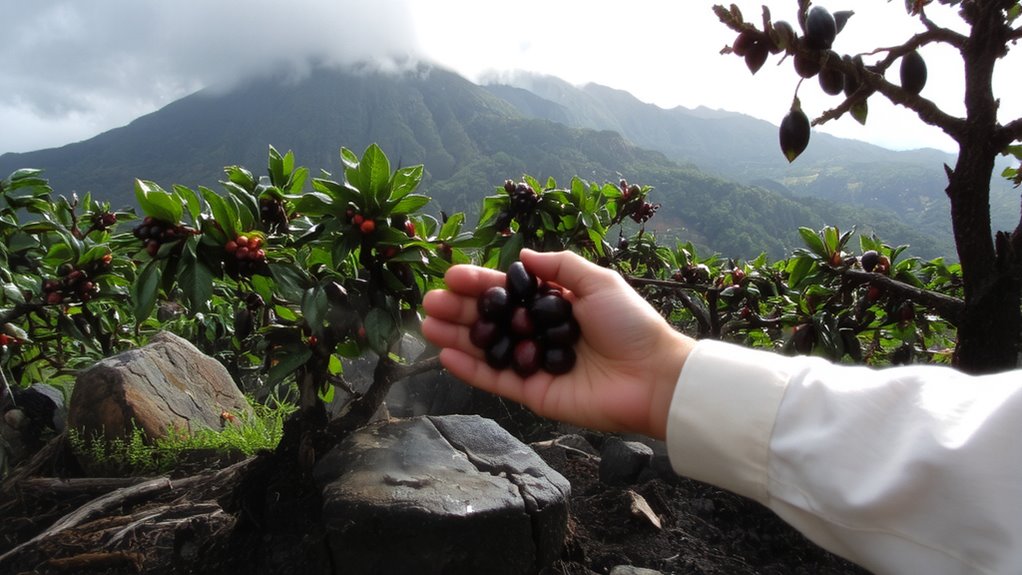
While you might not think a volcano’s structure affects your morning brew, the Qualibou Caldera plays a key role in shaping St. Lucia’s coffee flavor. Its collapsed rim creates varied elevation gradients, allowing farms to grow beans at different heights-typically between 200 and 900 meters-each altering sugar development and acidity. Higher plots slow bean maturation, boosting complexity. The terrain also directs wind and rainfall, setting distinct microclimate influence across slopes. For instance, mist from the caldera’s cooler zones increases humidity, helping beans retain moisture during drying, which stabilizes fermentation. These conditions aren’t uniform, so farmers must monitor closely and adjust harvest timing. Unlike flat regions, this variability demands attention but rewards with layered cups-often floral and bright with citrus undertones. If you’re roasting these beans, expect uneven density; sorting by elevation helps guarantee even development. The caldera doesn’t just grow coffee-it engineers it.
Small Farms, Big Impact on Coffee Supply
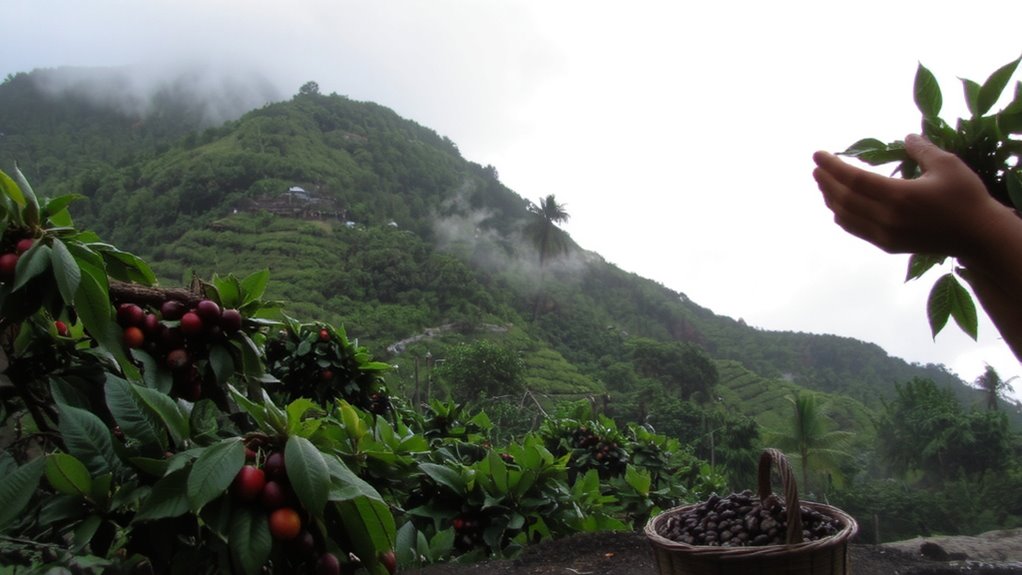
Even though you might expect large estates to dominate coffee production, St. Lucia’s supply comes mostly from small family farms. These compact plots make a big difference, focusing on quality over quantity. Because each farm is small, they can closely manage terroir influence-volcanic soil, elevation, and sun exposure-tailoring care to exact climate conditions. This precision helps maintain consistent bean characteristics, especially in microclimates near the Qualibou Caldera. While large farms might streamline processes, smallholders often respond faster to changing weather or pests, adjusting irrigation or shade cover as needed. Their size allows attention to plant health and sustainable practices, contributing to specialty-grade harvests. Though these farms can’t match industrial output, their collective impact boosts St. Lucia’s niche market status. You’ll find their coffee in limited batches, often traceable to a single slope or estate. For brewers, this means fresher, more distinct cups worth seeking.
Hand-Picked Harvests Limit Production
Since every bean counts in specialty coffee, harvest method matters, and in St. Lucia, farms rely on labor intensive harvesting to guarantee only ripe cherries are picked. You can’t rush quality-workers hand-select each cherry, slowing output but boosting consistency. This careful approach, while effective, contributes to seasonal yield fluctuations, limiting how much coffee reaches the market each year. Unlike mechanized systems, hand-picking adapts to steep terrain but demands more time and skilled labor.
| Method | Output (lbs/acre) | Labor Needed |
|---|---|---|
| Hand-Picking | 300–500 | High |
| Strip Harvesting | 800–1,000 | Medium |
| Mechanical | 1,200–1,500 | Low |
| Hand-Ripe Select | 400–600 | Very High |
| Semi-Mechanized | 900–1,100 | Moderate |
These factors keep St. Lucia’s coffee rare and supply tight.
Growing Coffee Sustainably for Better Taste
Most small farms in St. Lucia rely on a shade grown canopy to protect coffee plants from harsh sun, slowing bean development for denser, more flavorful results. You’ll find this method common among growers who prioritize quality over quantity. These farms also use organic practices, avoiding synthetic fertilizers and pesticides, which helps preserve the volcanic soil’s natural balance. Healthier soil means stronger roots and better nutrient uptake, directly influencing taste. Beans develop more complexity when grown this way, often showing cleaner acidity and smoother body. While yields are lower and labor needs higher, the trade-off is evident in cup quality. You’re not just tasting coffee-you’re tasting intentional farming. If you brew these beans, use filtered water and a consistent grind size to fully appreciate the subtle flavors sustainable methods help create.
Why St. Lucia Coffee Is a Connoisseur’s Secret?
Though it doesn’t dominate global markets, St. Lucia’s coffee thrives as a connoisseur’s secret-mostly because of its strong terroir expression. You’ll taste the volcanic soil, high-altitude growth, and tropical climate in every cup, giving the beans bright acidity, floral notes, and a smooth finish. Small farms control every step, which means quality stays high. These beans aren’t mass-produced; they’re hand-harvested and sun-dried, preserving flavor integrity. Roasters abroad often miss the nuance, so you’re better off choosing roasters who practice artisan roasting-small batches, hands-on profiling. That care brings out the bean’s true character. Unlike commercial blends that prioritize consistency, St. Lucia’s coffee varies by micro-lot, so you’ll notice differences season to season. If you want depth and authenticity, seek out direct-trade labels. A gooseneck kettle and pour-over setup will highlight its clarity. Pre-ground? Not ideal-grind fresh for best results. For precise flavor sampling during roasting or brewing experiments, consider using a coffee syringe to extract and evaluate small volumes accurately.
On a final note
You’ll need fresh beans and a good grinder for St. Lucia coffee, since its delicate volcanic terroir shows best when brewed clean-try a pour-over or Aeropress. Because it’s grown in small batches on Les Pitons and hand-harvested, supply is limited, so buy from reputable roasters who source directly. This coffee isn’t heavy or smoky; it’s bright, nuanced, and best at medium roast. Use filtered water and precise temps (195–205°F) to highlight its clarity.