Lower TDS Espresso: Grind & Dose Settings for Creamy Shots
Use a coarser grind to reduce extraction and lower TDS, which cuts bitterness and improves sweetness. Pair that with a lighter dose-try 16g instead of 18g in a 58mm basket-to boost water-to-coffee ratio and enhance body. This combo often yields a creamier mouthfeel and cleaner finish, especially with medium roasts. Stick to a 1:2 ratio, pull in 25–30 seconds, and you’ll likely see better balance. You’ll also uncover more ways to refine flow and stability.
Notable Insights
- Use a coarser grind to reduce extraction and lower TDS while enhancing body and creaminess.
- Reduce coffee dose slightly (e.g., 18g to 16g) to increase water-to-coffee ratio without raising TDS.
- Aim for a 1:2 to 1:2.5 brew ratio with a shot time of 25–30 seconds for balanced extraction.
- Choose a consistent burr grinder to maintain even particle size and prevent channeling.
- Distribute and tamp evenly to ensure uniform flow, avoiding sharpness from uneven extraction.
Why Lower TDS Means Sweeter, Creamier Espresso
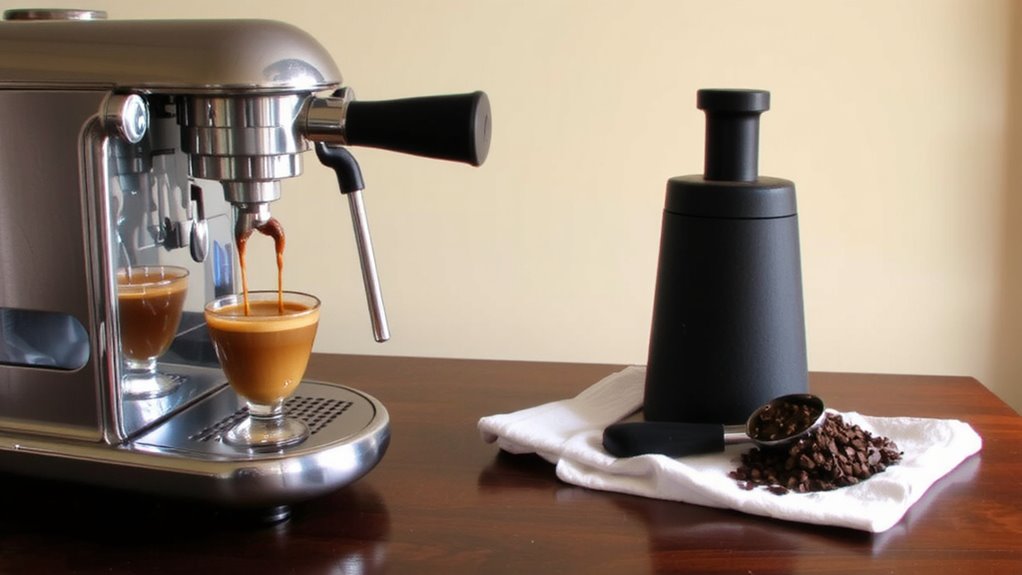
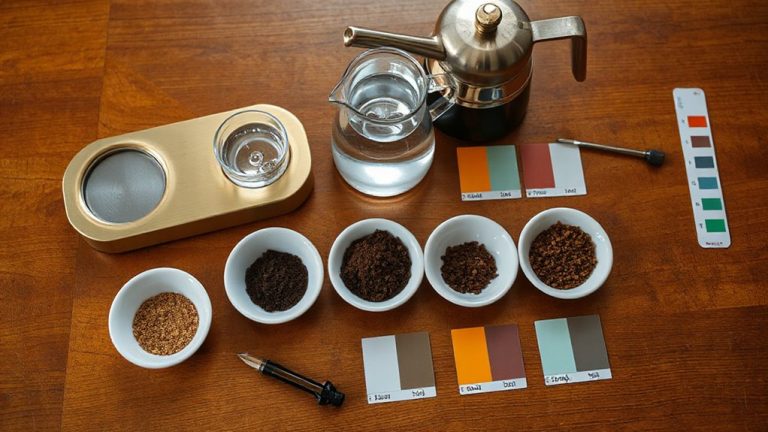
Sweetness in espresso isn’t just about the beans-it’s about extraction. When your shot runs with lower TDS (Total Dissolved Solids), you’re pulling fewer bitter compounds and more balanced sugars. That boosts sweetness perception and improves flavor clarity, making notes like caramel or fruit easier to taste. Too high TDS often muddies the cup with over-extracted harshness, especially on medium to dark roasts. Aiming for 8–10% extraction yield with TDS around 1.15–1.25% gives a clean, rounded shot. Use a refractometer like the VST LAB III to measure accurately. You’ll need precise scales, like the Acaia Lunar, and a consistent grinder, such as the Niche Zero. Keep water quality stable-50–75 ppm mineral content works best. Don’t adjust dose or grind yet; focus on understanding your machine’s output first. Lower TDS isn’t weaker-it’s clearer, smoother, and often tastes sweeter, even with less intensity. For optimal consistency in grind size, choose a high-quality burr grinder designed for both espresso and pour-over brewing.
Grind Coarser to Reduce Extraction and Boost Body
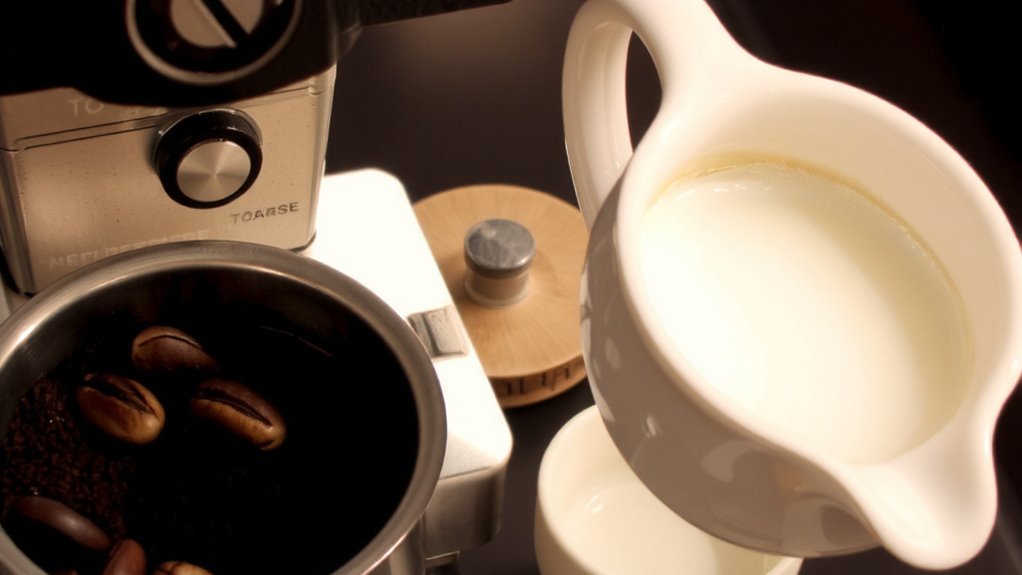
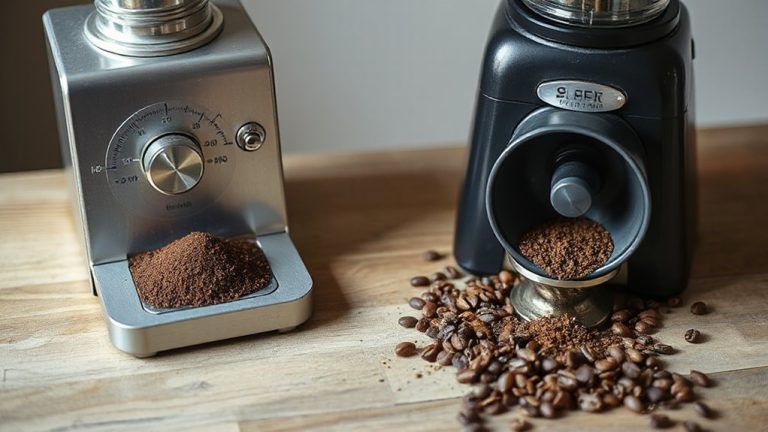
A coarser grind setting is one of the most effective ways to reduce extraction and enhance body in your espresso. By increasing your grind size, you limit how much coffee dissolves, lowering TDS while boosting mouthfeel. Too fine, and you risk over-extraction or clogging; too coarse, and water channeling can occur, creating uneven flow. Finding the sweet spot matters. For best results, use a high-quality espresso grinder with precise burr alignment to maintain consistency across shots.
| Grind Size | Effect on Espresso |
|---|---|
| Too fine | Bitter, high extraction, risk of clogging |
| Slightly coarse | Lower TDS, fuller body, balanced |
| Too coarse | Weak, sour, water channeling likely |
| Ideal | Smooth, creamy, even flow |
Adjust gradually-small changes make big differences. Use a quality burr grinder like the Compak E8 or Niche Zero for consistency. Watch flow rate: aim for 1:2 in 25–30 seconds.
Dose Lighter for Better Mouthfeel and Balance
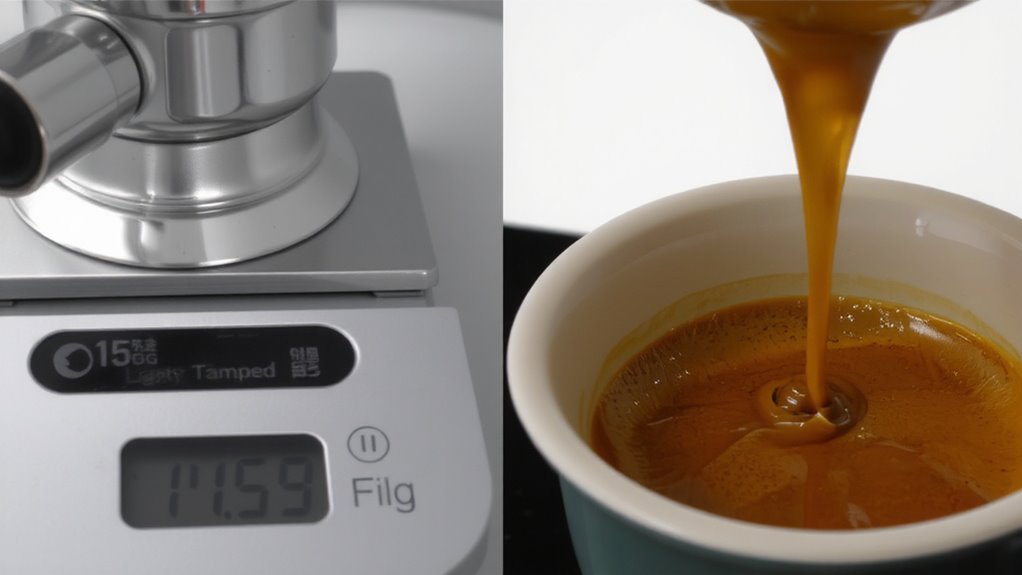
While pulling a shot, reducing your dose can improve mouthfeel and balance by adjusting the coffee-to-water ratio. A lighter dose, like dropping from 18g to 16g in a standard basket, increases brew water per gram of coffee, which often enhances extraction efficiency without raising TDS. This shift can promote a creamier texture and cleaner finish. Many users notice better flavor balance-brighter acidity and reduced bitterness-especially with denser beans or less powerful machines. Just don’t go too low; staying above 14–15g typically avoids channeling in most 58mm baskets. Some baristas use VST or IMS precision baskets for consistency. Keep tamp pressure steady and watch for puck erosion. A lighter dose isn’t a fix-all, but when paired with the right grind, it’s a practical lever for refining your espresso’s body and harmony-without changing beans. Choosing a high-quality coffee and espresso grinder can further ensure consistent particle size, which is critical for even extraction and optimal mouthfeel.
Fine-Tune Time, Yield, and Flavor in Your Shot
Now that you’ve dialed in your dose to shape mouthfeel and balance, it’s time to focus on how time and yield affect your espresso’s final flavor. Shot timing-typically between 25 and 35 seconds-is key to proper extraction. Start by adjusting your grind size to control flow rate. A slower flow usually means a finer grind, which can increase extraction but may lead to overdevelopment if too slow. Aim for a steady, syrupy stream that yields 1:2 to 1:2.5 ratio (e.g., 18g in, 36–45g out). If the shot runs too fast, the espresso might taste sour; too slow, and it risks bitterness. Tweak the grind in small increments, waiting after each adjustment. Most machines, like the Lelit or Rocket, respond predictably, letting you fine-tune with confidence. Record your shots. Precision here makes all the difference.
Fix Common Problems When Aiming for Low TDS
Why does your espresso sometimes taste sharp or thin, even when you’re chasing a low TDS? You might be dealing with overextraction issues despite aiming for lower dissolved solids. This often happens when fines migrate and create uneven flow, leading to parts of the puck extracting too much. The culprit? Poor channeling prevention. Without even water distribution, channels form, letting water rip through weak spots and pulling out harsh compounds. To fix this, level your dose properly and consider using a distribution tool like a NSEW or Weiss Distribution Technique. Also, check your puck prep-uneven tamping or a misaligned portafilter can encourage channeling. A well-prepared bed of grounds resists channeling and promotes even extraction. Pair that with a slightly coarser grind to reduce overextraction risk. Balance is key: prevent channels, manage extraction, and you’ll hit that creamy, low-TDS shot more consistently.
On a final note
You now know how to tweak your grind and dose for lower TDS espresso with a creamier feel. Use a coarser grind to reduce extraction and preserve body. Try a slightly lighter dose to improve balance and mouthfeel. Adjust shot time and yield for best flavor-aim for 25–30 seconds and 1:1.5 to 1:2 ratio. Watch for channeling or sourness. With practice, your La Marzocco or Breville machine can consistently pull sweeter, richer shots.