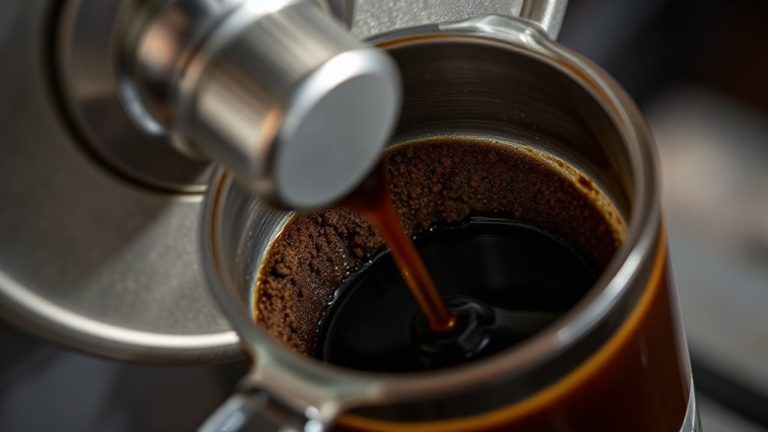
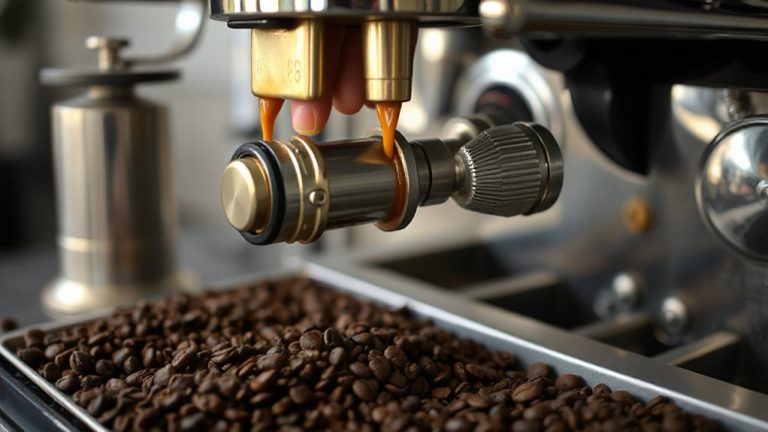
Why Dose and Grind Must Be Re-Dialed When Switching From Filter to Espresso
You can’t use the same grind and dose for filter coffee and espresso because the brew methods are too different. Espresso needs a fine grind-like powdered sugar-and a higher dose (18–20g) to slow water under 9 bars of pressure. A coarse filter grind rushes through, causing weak, sour shots. Dose and grind work together to balance flow and flavor. Tune them together, and you’ll find how small changes shape your espresso’s strength and clarity.
Notable Insights
- Espresso requires a finer grind than filter to slow water flow under high pressure.
- Filter grind is too coarse for espresso, causing rapid extraction and channeling.
- Dose must increase for espresso to create denser puck structure and even resistance.
- Proper espresso extraction needs 18–20g dose in a 58mm basket for optimal yield.
- Grind and dose must sync to maintain 25–30 second shot time and balanced flavor.
Why Espresso Requires a Finer Grind Than Filter
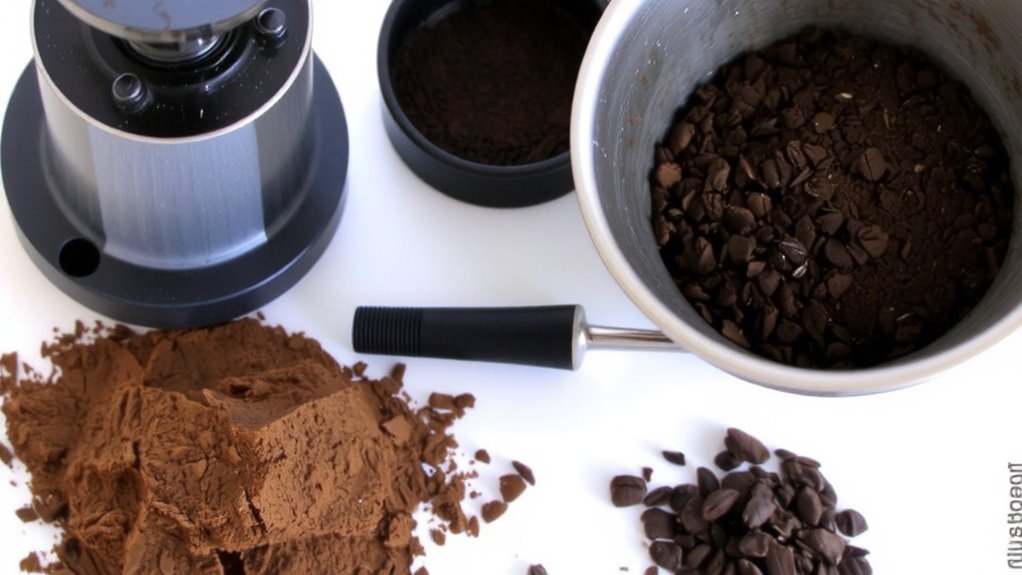
One key difference between espresso and filter coffee lies in the grind size: espresso needs a much finer grind, almost like powdered sugar, while filter coffee calls for something coarser, closer to sea salt. You need this fine grind because espresso uses high pressure and short brew time-typically 25–30 seconds-so the water extracts quickly. A finer grind increases surface area, helping achieve proper extraction. Bean density and roast age affect how the beans grind and extract. Darker roasts, older in roast age, are less dense and can become oily, grinding finer and clogging more easily. Freshly roasted beans, especially denser ones, respond better to fine grinding without clumping. Adjusting for these factors guarantees consistent shots. That’s why you can’t just switch methods without re-dialing your grinder-it’s not just preference, it’s physics. Choosing the right best grinders for filter coffee ensures optimal grind consistency across brew methods.
What Happens If You Use Filter Grind for Espresso
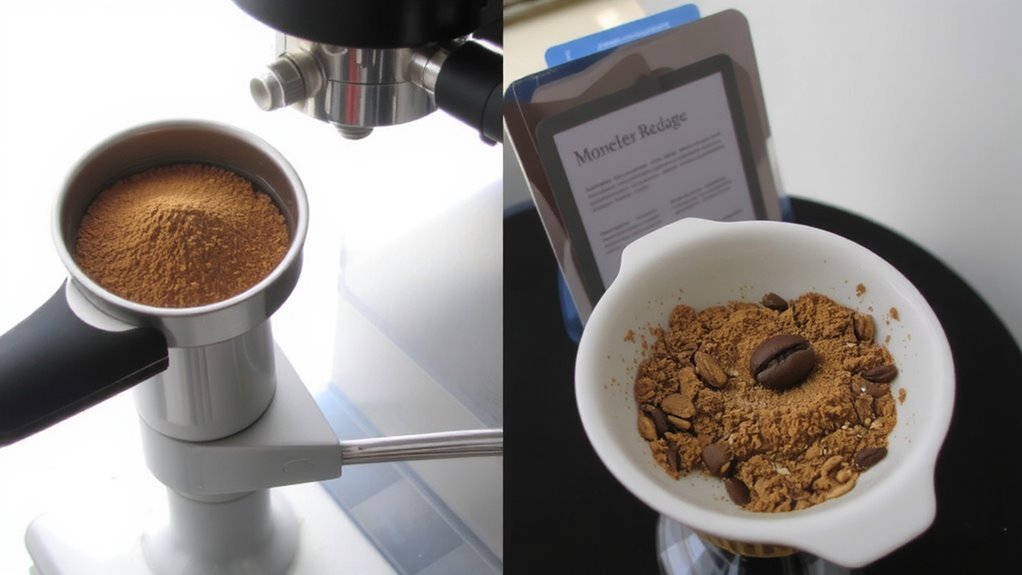
You already know espresso demands a finer grind than filter-physics won’t let you skip that step. Using a filter grind for espresso means your particles are too coarse, so water zips through too fast. That leads to weak, underextracted shots lacking body and sweetness. Worse, the loose puck structure promotes channeling-where water carves paths through weak spots, over-extracting some areas while under-extracting others. You’ll taste sourness mixed with harsh, dry notes, and your espresso will lack balance. Even tamping harder won’t fix it; the grind size is fundamentally wrong. Machines like the Breville Bambino or Lelit Bella require proper puck density to function as designed. Skipping the grind adjustment undermines the entire shot. If you want clarity, richness, and that classic espresso intensity, dial in the right fine setting. Anything coarser just won’t seal under 9 bars. For consistent results, consider using a high-quality burr grinder designed for precision across brew methods.
Why Dose Matters More Under Espresso Pressure
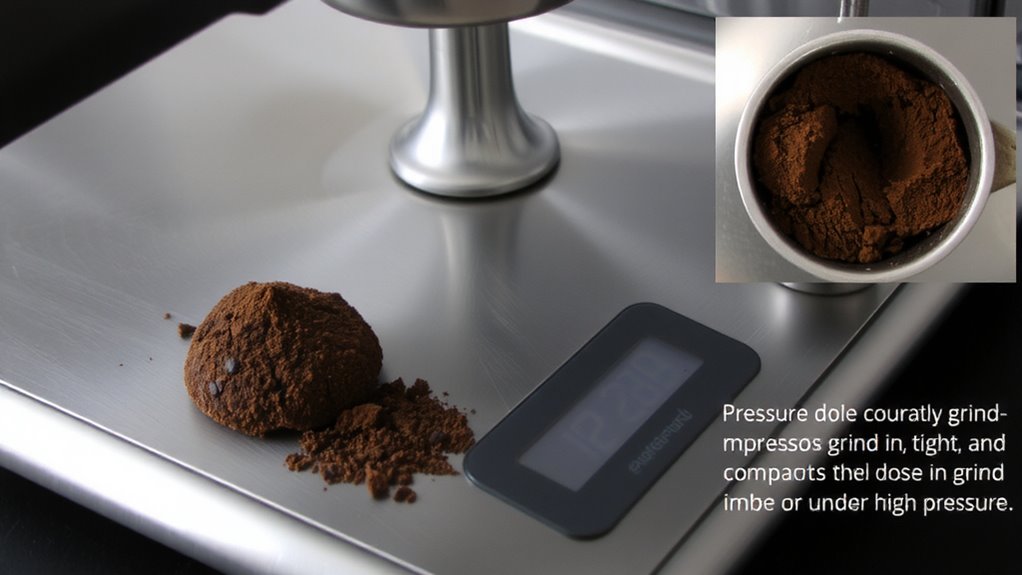
While grind size gets most of the attention, dose plays a critical role under espresso’s high pressure because it directly affects puck density and flow rate. When you increase your dose without adjusting grind, you’re raising the tamped density, which compresses the coffee bed and slows water passage. Too little dose, and the puck’s too thin-water finds weak spots, leading to channel formation. Those channels let water blast through unevenly, causing under-extracted, sour shots. Dialing in proper dose guarantees even resistance so water extracts uniformly. With dose too low or too high, even the perfect grind won’t save you. Machines like the Linea Mini or Profitec leak less pressure than entry-level models, but all still demand correct dosing. You’ve got to balance dose and portafilter basket size-18g in a 20g basket behaves differently than in an 18g one. Get this wrong, and flow becomes unpredictable. A consistent dose starts with using a high-precision grinder like those recommended in expert barista gear guides, where best coffee grinders ensure uniform particle size for optimal puck preparation.
How to Find the Right Espresso Dose for Balance
A balanced shot starts with the right dose-too little and you risk sour, thin espresso; too much and you’re fighting clogged flows and over-extraction. For most home baristas using standard 58mm portafilters, aim for 18–20 grams of coffee to achieve proper espresso balance. This range works well with dual boilers like the Breville Dual Boiler or Rocket R58, giving consistent results. If your shot tastes weak or sharp, adjust the dose in 0.5-gram increments. Small tweaks can lead to big improvements in taste optimization. Always keep your grind unchanged during this phase-focus only on dose. VST baskets help maintain consistency, but even stock baskets work if leveled properly. Finding your sweet spot takes a few shots and honest tasting-not guesswork. Stick to one variable at a time, and let your palate guide you toward balanced, repeatable results.
Adjust Grind Size for Flow and Extraction
Now that you’ve locked in a dose that brings balance to your shots, the next step is tuning the grind size to control flow and extraction. Too fine, and your shot drags; too coarse, and it rushes-both hurt flavor. Grind size directly affects how water moves through the puck, especially under consistent tamping pressure and water temperature. Small adjustments make big differences.
| Grind Size | Flow Time | Likely Extraction |
|---|---|---|
| Too Fine | >30 sec | Over-extracted, bitter |
| Ideal | 25–30 sec | Balanced, sweet |
| Too Coarse | <20 sec | Under-extracted, sour |
| Adjusted | Stabilized | Matched to dose and brew specs |
Dial in slowly. Use the same tamping pressure and water temperature throughout. A good grinder like the Baratza Sette or Mahlkönig EK43 makes repeatable changes possible. Watch flow, taste the shot, and adapt.
Brewing Brighter or Richer Espresso: Matching Dose and Grind
If you’re aiming for a brighter or richer espresso, tweaking both dose and grind together-not in isolation-makes all the difference. For brighter shots with more acidity, try a slightly lighter dose (17–18g) and a finer grind. This boosts extraction without overextending shot timing, preserving delicate notes. If you prefer richer, heavier profiles, increase the dose (20g+) and adjust grind coarser to maintain a 25–30 second shot. This balances solubles and reduces edge. Flavor profiling depends on this balance-small changes impact clarity and body. Always monitor shot timing: under 20 seconds risks sourness; over 35 can bring out bitterness. A consistent dose-to-yield ratio (like 1:2) with proper tamp pressure matters. Machines like the Lelit Mara or Rancilio Silvia respond well to these tweaks. Dial in methodically-your preferred flavor is a few small, intentional steps away.
On a final note
You’ll need a finer grind for espresso because the water moves faster under pressure, so finer particles slow the flow and improve extraction. Using filter grind leads to weak, sour shots. Dose matters more with espresso-too little and you get channeling, too much and the puck may restrict flow. Start with 18–20g for a double shot, adjust grind first for timing (aim for 25–30 seconds), then tweak dose for balance.