How to Match Grind Size to Water Mineral Content for Optimal Extraction
If your water’s hard (high minerals), use a coarser grind to slow extraction and avoid bitterness-common with tap water in areas like Chicago. If it’s soft (low minerals), go finer to boost extraction and improve flavor, especially if coffee tastes flat. Test with a TDS meter or hardness strips to confirm. Pair adjustments with stable brew temps and a quality grinder like a Baratza Vario. You’ll fine-tune results faster when you know what your water’s doing.
Notable Insights
- Test your water’s mineral content using a TDS meter or hardness strips to determine if it’s soft or hard.
- Use softer water (low TDS) with a finer grind to increase extraction and enhance sweetness and acidity.
- Adjust to a coarser grind with hard water (high TDS) to slow extraction and avoid bitterness.
- Aim for 100–150 ppm TDS in brewing water to stay within optimal extraction ranges.
- Maintain consistent brew temperature while adjusting grind size to isolate the effect of water minerals.
Why Water Minerals Change Coffee Extraction
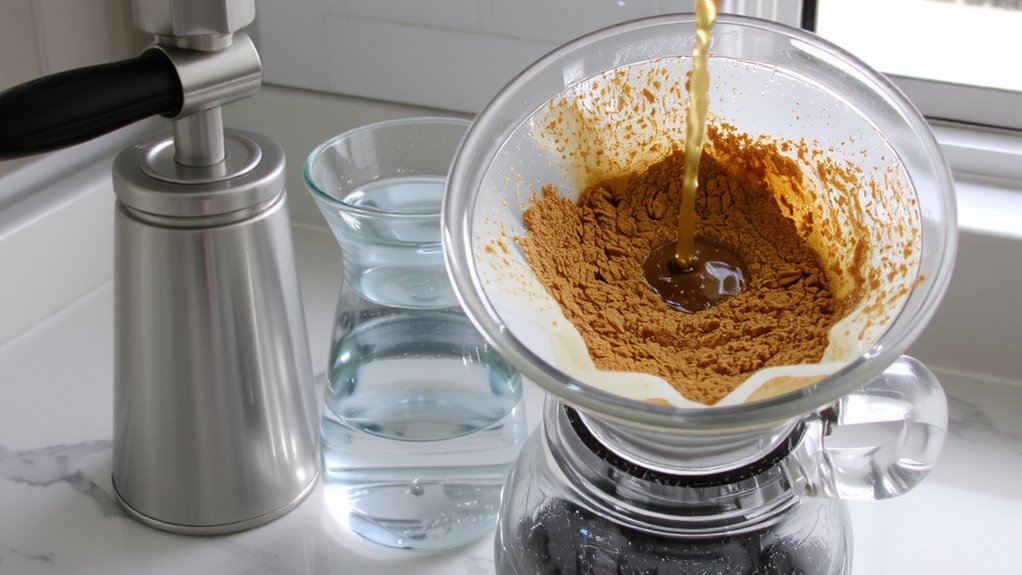
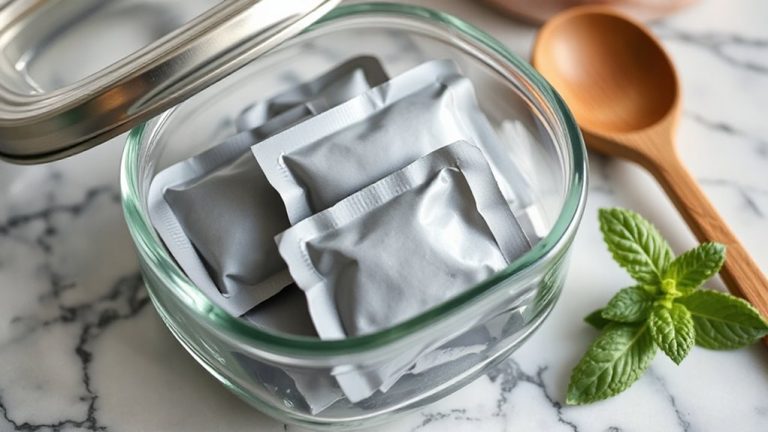
Water’s mineral content plays a key role in how well your coffee extracts, and you might not realize how much it affects flavor. The minerals in your water-like calcium and magnesium-affect water chemistry, which directly impacts the solubility rate of coffee compounds. Soft water, low in minerals, struggles to pull out flavors fully, often resulting in flat, under-extracted coffee. Hard water, rich in minerals, speeds up extraction and can lead to bitterness if not managed. You need a balance: around 100–150 ppm total dissolved solids is ideal. Brands like Third Wave Water offer mineral packets to standardize water chemistry at home. If your tap water’s too soft or too hard, consider a filtration system like Brita to moderate mineral levels. Matching your water’s profile to your grind isn’t just theory-it’s a practical step that improves every cup, especially with precision brewers like V60s or espresso machines.
Hard Water? Use a Coarser Grind
Ever notice how your espresso tastes bitter or your pour-over turns harsh, even when you follow the recipe exactly? Chances are, your water hardness is the culprit. Hard water contains high levels of minerals like calcium and magnesium, which can over-extract coffee, pulling out bitter compounds too quickly. To balance this, you need a grind adjustment-going coarser slows extraction and reduces harshness. For instance, if you’re using a rotary burr grinder like a Baratza Vario, tweak the setting toward larger particles. This works especially well in espresso machines like the Breville Dual Boiler, where pressure amplifies extraction issues. You’ll get cleaner shots and smoother filter coffee. Just remember: as water hardness increases, so should your grind size. It’s a simple, effective fix that doesn’t require changing your water-just your grind.
Soft Water? You Need a Finer Grind
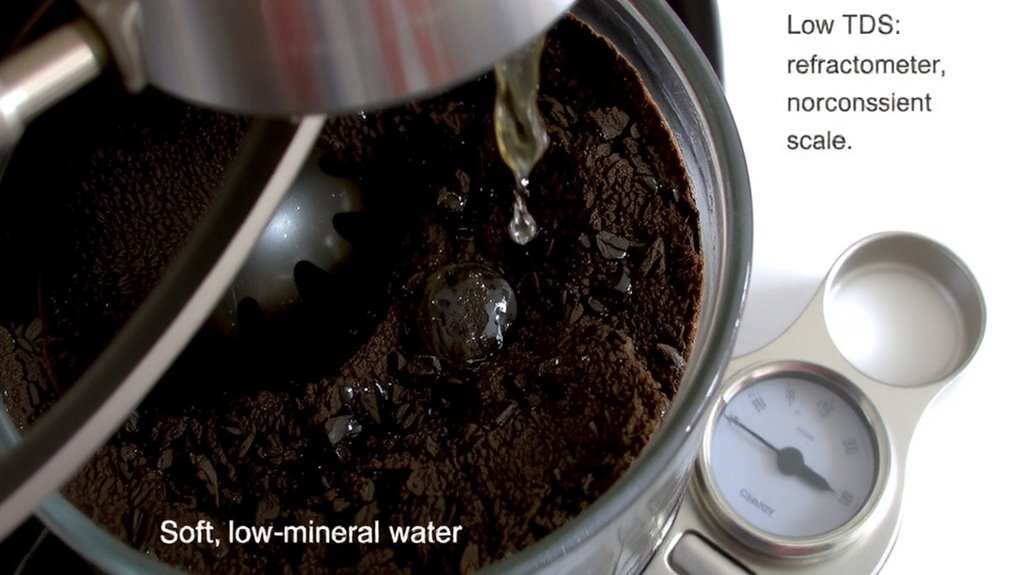
Why does your coffee sometimes taste weak or flat, even when you’re using fresh beans and a solid brew method? If you’re brewing with soft water, that’s likely the culprit. Soft water has low mineral content, which reduces extraction efficiency-your coffee compounds don’t dissolve as easily. That’s where a finer grind comes in. By shrinking your grind size, you increase surface area, helping compensate for the lack of minerals. This adjustment boosts extraction, bringing out sweetness and acidity that soft water might otherwise mute. You’ll notice less under-extracted sourness and more balanced flavor. Just be careful not to go too fine-over-extraction can lead to bitterness, especially with longer brew times. Dialing in a finer grind improves your odds of hitting the sweet spot. Understanding your water’s mineral sensitivity is key: soft water demands more precision in grind size to access the full potential of your beans.
Test Your Water Minerals in 3 Steps
How do you know if your tap water is holding your coffee back? Start with simple mineral testing. First, buy a TDS (total dissolved solids) meter, like the HM Digital TDS-3, for under $20-it gives you a quick snapshot. Second, test your water’s water hardness using test strips, available from brands like AquaChek. They show calcium and magnesium levels, which impact extraction. Third, compare results to the Specialty Coffee Association’s ideal range: 150 ppm TDS and moderate water hardness (50–175 ppm CaCO₃). If numbers are too low, your water’s too soft; too high, it’s overly hard. These tests aren’t lab-perfect, but they’re practical enough to guide adjustments. Skipping mineral testing means guessing blindly-don’t. Knowing your baseline helps you make informed choices without wasting beans or time.
Match Grind Size to Your Water Profile
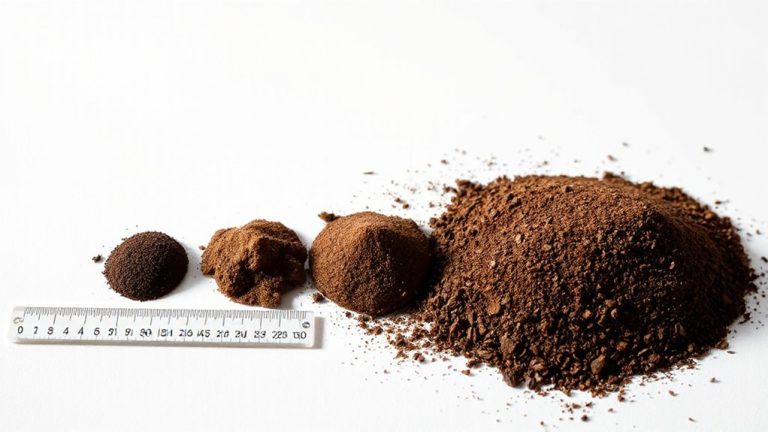
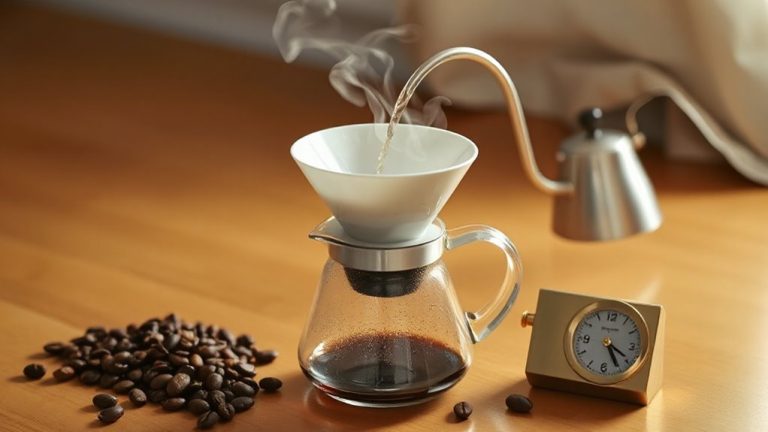
Now that you’ve tested your water and know its mineral content, you’re ready to adjust your grind size for better coffee. If your water is soft (low minerals), it extracts slower, so you’ll need a finer grind to compensate-this helps improve extraction without raising your brew temperature. With hard water (high minerals), try a coarser grind to avoid over-extraction, especially if you’re seeing fast shot timing. Always keep brew temperature steady-around 93°C (200°F)-so you can isolate grind changes. For example, with soft water, a finer grind might extend your espresso shot timing from 23 to 28 seconds, hitting the sweet spot. Hard water may cause shots to run too fast at the same grind, meaning you need to adjust coarser. Match your grind to your water profile first, then fine-tune shot timing.
Bitter or Weak? Fix Your Grind-Water Balance
Ever pull a shot that’s harsh and bitter, or one that tastes thin and lifeless? You’re likely dealing with a grind-water mismatch. High mineral water (like hard tap water) extracts faster, pushing you into over-extraction and flavor distortion if your grind’s too fine. Soft or low-mineral water slows extraction, causing weak, sour shots and extraction inconsistency if the grind’s too coarse. Adjusting your grind keeps extraction in check.
| Water Type | Suggested Grind Setting |
|---|---|
| Very Hard | Coarser than medium |
| Hard | Medium-coarse |
| Balanced (e.g., Third Wave Water) | Medium |
| Soft | Medium-fine |
| Distilled | Fine (but avoid) |
Match your grind to your water’s minerals to avoid bitterness or weakness. It’s not just the coffee-your water’s role is practical, measurable, and fixable.
Balance Your Brew: Adjust Grind for Clarity
When your espresso tastes muddy or dull, even with good water and fresh beans, the grind size might be blurring the clarity you’re after. Too fine, and you risk over-extraction, pulling out muted, ashy notes that mask the bean’s true character. For clarity enhancement, widen your grind slightly-this lets water flow more evenly, reducing channeling and harshness. A coarser setting with medium-mineral water (like 100–150 ppm) often sharpens the cup. You’ll gain flavor precision, noticing distinct fruit, chocolate, or floral notes that were previously muffled. On the other hand, ultra-soft water may require a finer grind to avoid under-extraction, but caution’s needed to prevent imbalance. Dial in slowly, adjusting in small increments. A quality grinder like the Compak K10 or EK43 gives you the control needed for these fine tweaks. Clarity isn’t just about cleanliness-it’s about accuracy in every sip. Choosing the right mill grinders can make a significant difference in achieving consistent particle size distribution.
On a final note
You’ve tested your water, adjusted your grind, and now your coffee tastes balanced. Hard water needs a coarser grind to slow extraction and avoid bitterness; soft water needs finer grinding to boost clarity and strength. Use a reliable grinder like the Baratza Encore or EG-1 for consistency. If your shot pulls too fast or tastes weak, tweak the grind finer. Bitter or harsh? Go coarser. Small changes make a real difference-keep refining.