Why Your Coffee Tastes Sour: Could It Be a Grinder Calibration Issue?
Your coffee might taste sour because your grinder isn’t calibrated, leading to uneven or coarse particles that under-extract. Even with the right brew time and temperature, inconsistent grinds prevent balanced flavor. A poorly aligned burr grinder creates boulders and fines, disrupting extraction. While water quality and bean freshness matter, fixing grinder calibration is often the fastest fix. You might be surprised how much a quick adjustment can improve your cup.
Notable Insights
- A poorly calibrated grinder can cause uneven particle sizes, leading to under-extraction and sour-tasting coffee.
- Dull or misaligned burrs produce inconsistent grounds, which hinder balanced flavor extraction during brewing.
- Sour coffee may stem from coarse grinds due to incorrect calibration, reducing extraction efficiency.
- Static or clumping from grinder issues can disrupt dose consistency, contributing to uneven and sour brews.
- While grinder calibration affects taste, sourness can also result from low water temperature or stale beans.
Is Your Grinder Causing Sour Coffee?
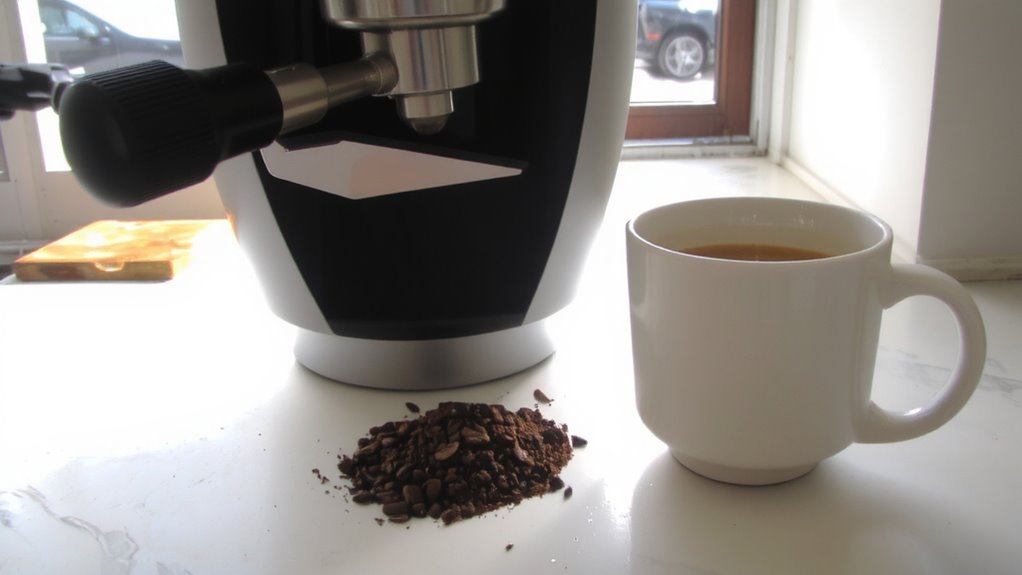
How often do you wonder if your grinder is the real reason behind that sour taste in your coffee? While grind size is a common culprit, your grinder might not be the direct cause if other factors are off. Sourness often points to under-extraction, which can happen even with a proper grind if brew temperature is too low-aim for 195°F to 205°F. Water quality matters just as much; soft or low-mineral water fails to extract flavors fully, leading to sharp, sour notes. A consistent burr grinder helps, but it can’t fix poor water or incorrect heat. Before recalibrating your grinder, check your kettle’s thermometer and consider using filtered or specialty coffee water like Third Wave Water. Adjusting those variables first could save time and improve taste more than a grind tweak alone. For optimal results, choose one of the best grinders for filter coffee to ensure uniform particle size and better extraction. best grinders for filter coffee
How Grind Size Changes Your Coffee’s Flavor
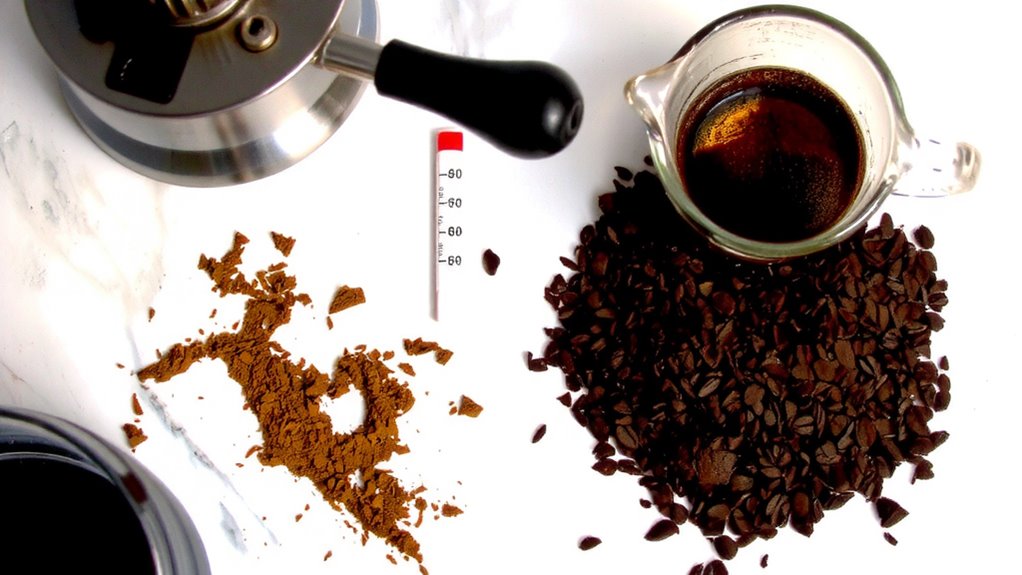
You’ve already checked your water temperature and made sure your water isn’t too soft, so now it’s time to look more closely at your grind size. It directly affects extraction, brew time, and flavor. Too coarse, and your coffee tastes sour from under-extraction. Too fine, and it becomes bitter from over-extraction. Grind size changes how quickly water moves through the grounds, which alters your brew time and interaction with water temperature.
| Grind Size | Effect on Brew Time |
|---|---|
| Coarse | Longer brew time, risk of sourness |
| Medium | Balanced extraction, ideal for most methods |
| Fine | Shorter brew time, increased bitterness risk |
| Extra Fine | Very short brew time, easily over-extracts |
Adjusting grind size helps match your method and keeps flavors consistent. For home baristas on a budget, a quality espresso grinder under $200 can still deliver precise grind control necessary for proper calibration.
Check These Signs Your Grinder Is Off
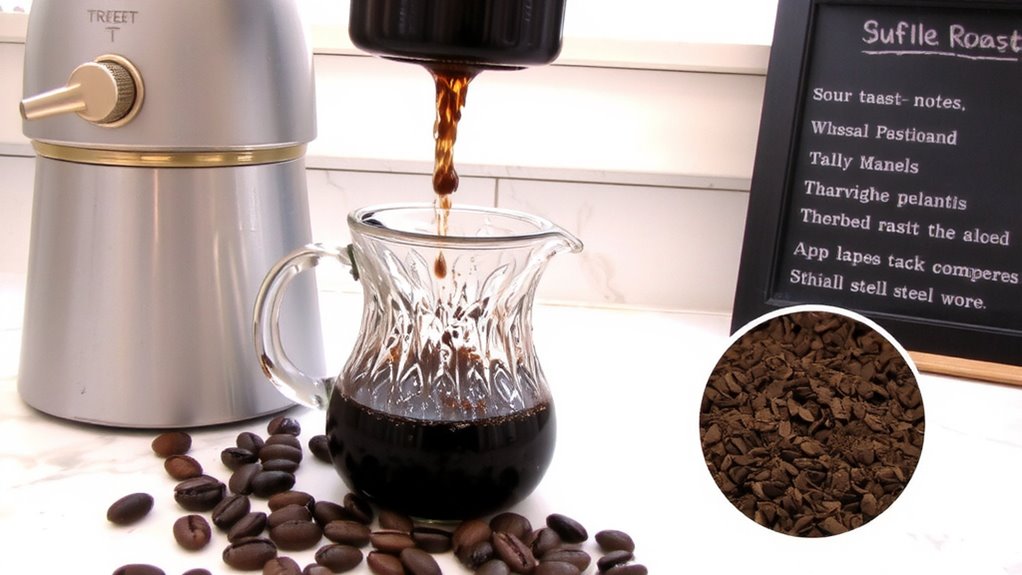
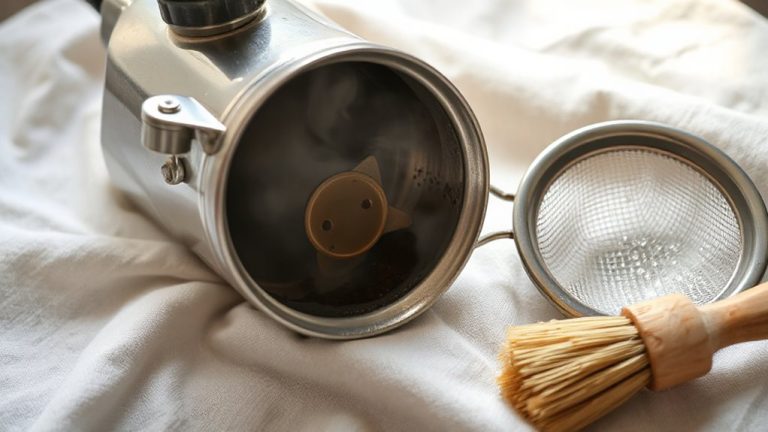
Ever notice how your morning cup suddenly tastes off, even though you’re using the same beans and brew method? That sourness or uneven flavor could mean your grinder’s calibration is off. Inconsistent particle size is a red flag-some grounds look fine, while others are dusty or chunky. That’s often due to blade wear, especially in cheaper bladed grinders, which create uneven cuts over time. Burr grinders aren’t immune either; dull burrs produce similar issues. Static buildup can make grounds cling to the chamber, causing dose inconsistencies and waste. If you see coffee stuck inside after grinding, static’s likely the culprit, worsened by dry beans or low humidity. You might also hear unusual grinding noises or notice longer grind times. These signs don’t always mean replacement-sometimes cleaning or adjustment helps-but they’re clear signals your grinder needs attention to keep your coffee tasting right. For baristas, choosing a high-quality best coffee grinder can significantly reduce these calibration issues and improve shot consistency.
How to Calibrate Your Grinder in 5 Minutes
A quick calibration can make the difference between a sharp, balanced brew and a sour, under-extracted mess. Start by powering off your grinder and emptying the burrs of any coffee. Check the grinder alignment-misaligned burrs create uneven particles, leading to poor extraction. If your grinder came with calibration tools, like a wrench or alignment gauge, use them to adjust the blades evenly. For most flat burr grinders, tighten the outer burr until it gently touches the inner burr, then back it off 1-2 full turns as a baseline. Conical burr users should follow manufacturer-specific steps, since designs vary. Test with a brew: if it’s still sour, tiny tweaks may be needed. Most quality grinders allow micro-adjustments, so make small changes and retest. Proper alignment and using the right calibration tools save time and improve flavor fast.
Still Getting Sour Coffee? Try These Fixes
Even with a properly calibrated grinder, sourness can linger if other factors in your brew process are off. If your water temperature is too low-below 195°F-under-extraction happens, leaving coffee tasting sharp and sour. Most drip machines default to adequate temps, but cheaper models often fall short. Try using a gooseneck kettle to hit 195–205°F consistently. Brew time matters just as much. Too short-like under 2:30 for a pour-over-and acids dominate. Extend contact time by adjusting grind size or pouring slower. For espresso, aim for 25–30 seconds extraction. Cold brew? Steep 12–16 hours. Water-to-coffee ratio also plays a role; 1:15 to 1:17 is safe. If sourness remains, check bean freshness-stale beans lose sweetness. Adjust one variable at a time to isolate what fixes it.
On a final note
Your coffee tastes sour? A miscalibrated grinder might be the culprit. If grounds are too coarse, extraction falls short, leaving acidic, underdeveloped flavors. Most blade or cheap burr grinders struggle with consistency. Fix it fast: adjust settings fine, then test with a fresh brew. If it’s still sour, check water temperature or brew time. But when in doubt, recalibrate first-it’s the simplest, most effective step.