A Guide to Fine-Tuning Infusion Timing Adjustments for Enhanced Flavor Intensity in Turkish Coffee Brewing
You’ll get the best flavor by adjusting infusion time based on grind and roast. Use a fine, powder-like grind and pull the cezve off heat just before foam reaches the rim. For dark roasts, shorten time by 10–20 seconds; light roasts may need a few extra. Finer grinds extract faster-cut 15–30 seconds to avoid bitterness. Let it settle 2–3 minutes before serving. Master these small shifts, and you’ll start pulling consistently rich, balanced cups every time.
Notable Insights
- Adjust grind size to be ultra-fine, ensuring full extraction without bitterness, as finer grinds accelerate infusion.
- Reduce infusion time by 15–30 seconds for finer grinds to prevent over-extraction and maintain flavor balance.
- Shorten infusion by 10–20 seconds for dark roasts due to faster compound release from lower bean density.
- Extend infusion slightly or add 5 seconds for light roasts to compensate for higher density and slower extraction.
- Monitor first rise closely, removing the cezve just before boiling to control timing and enhance flavor intensity.
The Perfect First Rise: When to Watch for Foam and Aroma
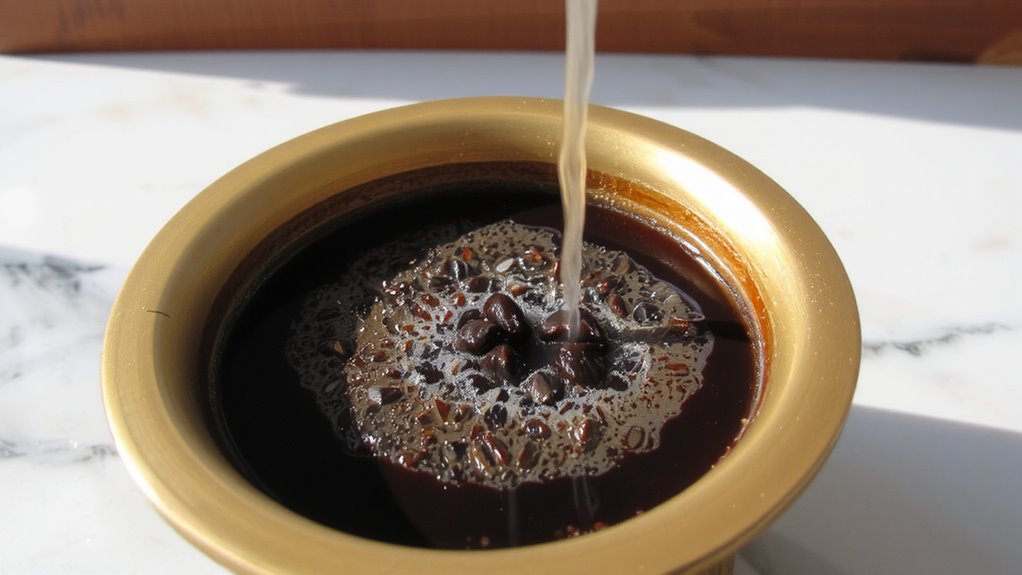
Why does the first rise matter so much in Turkish coffee? Because it’s your best window to catch the early signs of proper extraction. When you heat the cezve slowly over low flame, you’re not just warming water-you’re guiding a reaction. Watch closely: the first rise brings a light foam and a rising aroma, key sensory cues that compounds are releasing. If you miss this moment, the brew can over-extract or lose balance. Use a small cezve (like 200ml ibrik-style) for better control. Gas or electric stoves work, but induction demands extra caution due to rapid heating. Pull it off heat just as foam nears the rim-timing here affects texture and clarity. These sensory cues, combined with vessel size and heat regulation, make or break the cup. React early, adjust fast. For those seeking precision, an electric Turkish coffee maker can provide consistent heat control ideal for mastering the first rise.
How Grounds and Water Create Flavor in Turkish Coffee
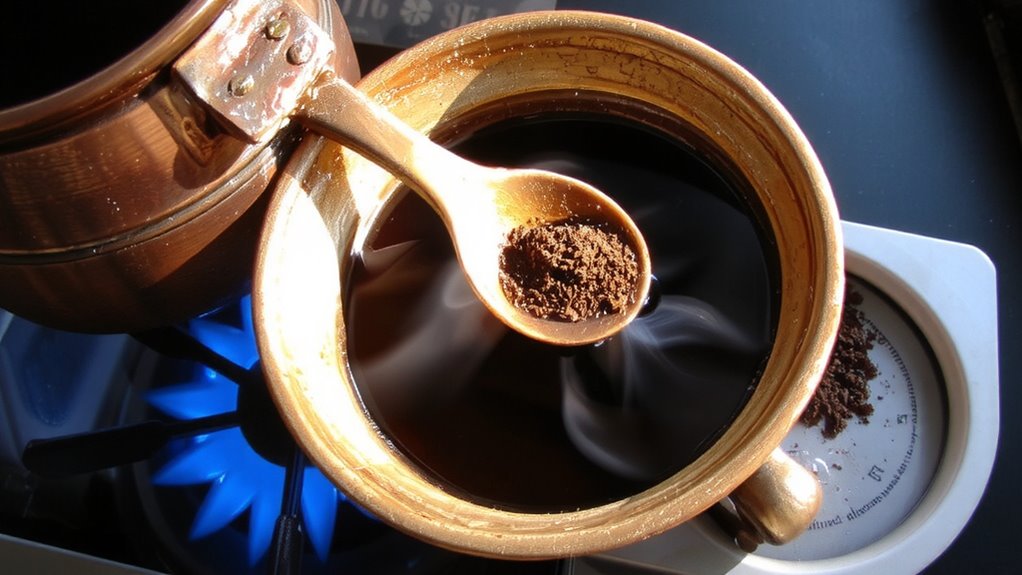
You’ve already learned to watch for foam and aroma during the first rise, and that same attention to detail applies when considering how your coffee grounds and water work together. The extraction process starts the moment grounds meet water, and two key factors-grind size and water temperature-directly shape flavor. Turkish coffee requires an ultra-fine grind, finer than espresso, so more surface area is exposed, allowing quick, intense extraction. If the grind is too coarse, flavor stays weak; too fine, and bitterness takes over. Water temperature should be just below boiling-around 200°F (93°C)-so it extracts fully without scalding the coffee. Cold or lukewarm water under-extracts, leaving sour notes. Together, the right grind size and proper water temperature guarantee balanced, rich flavor before infusion even begins.
Control Heat to Slow or Speed Infusion
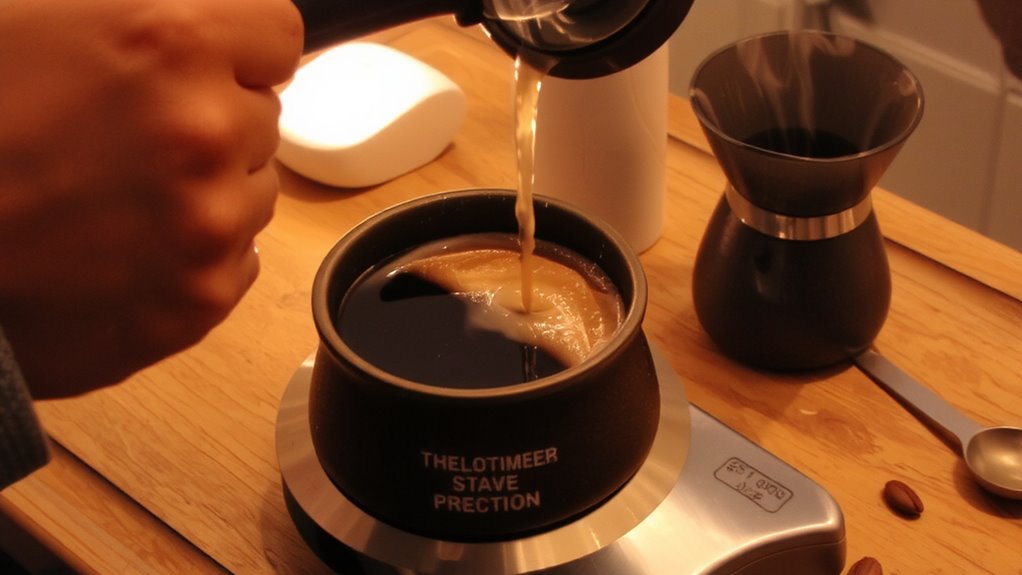
While you can’t change the grind once brewing starts, you do have direct control over the heat, which directly shapes how fast or slow the coffee infuses. Heat control is key to managing infusion speed. Use low, steady heat on a stovetop or electric cezve to slow extraction, bringing out deeper, smoother notes without scorching. Too much heat accelerates infusion speed, causing bitterness from over-extracted fines. If you’re using a traditional ibrik over gas, adjust the flame to medium-low; for electric heat sources, choose models with adjustable dials for finer precision. Pull the pot off the heat just before it boils to slow the process manually. You can even use a heat diffuser for more stable temperature control. Consistent, gentle warming gives you cleaner flavor and better intensity balance. Proper heat management doesn’t need high tech-just attention and timing.
How Long to Let Coffee Settle for Smoothness
A few minutes of patience after brewing can make a noticeable difference in how smooth your Turkish coffee tastes. Let your coffee sit undisturbed for 2 to 3 minutes; this rest allows the grounds to sink, improving coffee clarity and minimizing grit in your cup. The result is a cleaner, more balanced sip. Avoid stirring or shaking the cezve-any agitation disrupts the settling process. Over time, you’ll notice a distinct improvement in sediment texture, with heavier particles forming a tidy layer at the bottom. Pouring slowly and steadily helps preserve this separation. Pour too soon, and you’ll get a muddled mouthfeel; wait too long, and the coffee cools past ideal serving temperature. Aim for 2 minutes if you prefer some body, 3 if you want maximum clarity. Your preference, cup material, and ambient temperature may shift ideal timing slightly.
Adjust Timing for Light, Dark, or Fine Grind Coffee
If you’re using a finer grind than standard Turkish coffee, reduce the infusion time by 15 to 30 seconds to prevent over-extraction, which can lead to harsh, bitter notes. Grind consistency directly affects how quickly flavors extract, so a uniform, powdery grind demands shorter infusion duration. For dark roasts, which are less dense and extract faster, cut the time by 10–20 seconds to avoid imbalance. Light roasts, being denser, often need the full or slightly extended infusion-up to 5 seconds longer-for full flavor development. Always match your infusion duration to both roast level and grind consistency. A burr grinder helps maintain accurate, repeatable results, while blade grinders often create uneven particles. Adjust in small increments and take notes. This targeted approach gives you control, ensuring clarity and intensity without crossing into astringency.
Fix Bitter, Weak, or Muddy Turkish Coffee
What if your Turkish coffee tastes bitter, weak, or muddy despite following the steps? Problems often stem from bean freshness, water mineral content, or mismatched timing. Stale beans produce flat, weak coffee, while overly hard water intensifies bitterness. Muddy texture usually means excessive boiling or poor grind consistency. Adjusting these factors can restore balance.
| Issue | Likely Cause | Quick Fix |
|---|---|---|
| Bitter | Over-extraction, hard water | Use softer water, shorten heat time |
| Weak | Stale beans, soft water | Grind fresh, check mineral content |
| Muddy | Too long on heat, fine grind | Reduce infusion, verify grind size |
Bean freshness guarantees vibrant flavor. Water mineral content affects extraction-moderate TDS (100–150 ppm) works best. Always use cold, filtered water and freshly ground beans for clarity and strength. Match adjustments to your gear and environment.
Why Infusion Timing Is Everything in Turkish Coffee
You’ve adjusted your beans, water, and grind-now it’s time to fine-tune the one variable that shapes the entire cup: how long the coffee spends on heat. Infusion timing directly controls extraction, and even 10 seconds too long or too short changes the flavor dramatically. Lighter roast profiles need slightly longer heat exposure to extract fully, while dark roasts can turn bitter fast. Bean origin matters, too-dense high-altitude beans from Ethiopia may need more time than softer Brazilian ones. Too brief, and you’ll get weak, sour notes; too long, and the sludge turns harsh. Aim for 3 to 4 minutes on low heat for most setups. Use a timer, watch the froth (kaimaki), and adjust in 15-second increments. Your cezve size and heat source-stove vs. sand-also affect timing. Master this, and you control clarity, body, and balance in every cup.
On a final note
You’ve got the tools to adjust infusion timing like a pro. Control heat to slow or speed extraction, watch for that first foam rise, and let the grounds settle for smoother results. Fine grinds need less time; coarse or dark roasts may need slight tweaks. If it’s bitter, shorten the heat time. Weak? Extend it slightly. Small changes make a real difference in flavor intensity.