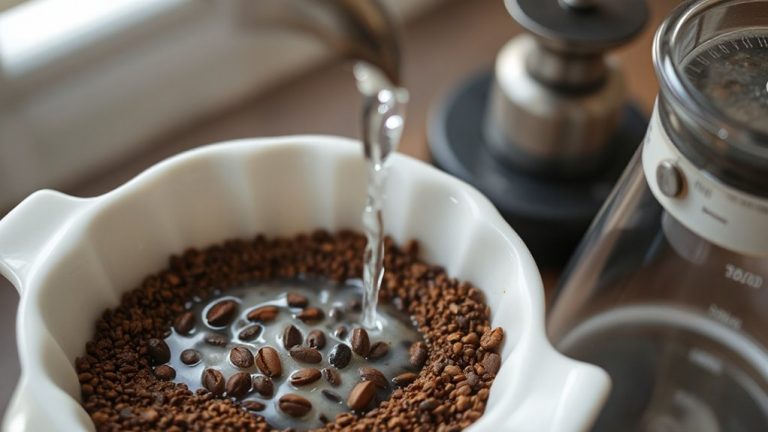
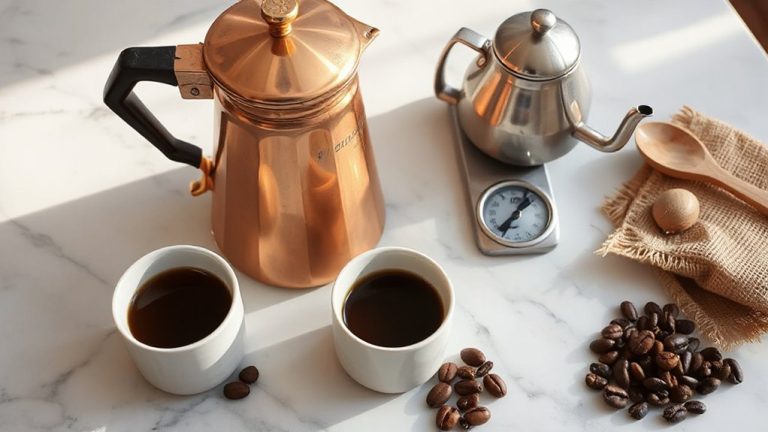
Maximizing Extraction Efficiency in Moka Pot Brewing Through Precise Temperature Control and Proper Pressure Release Techniques
Use medium to low heat to avoid scorching-aluminum pots heat faster, so watch them closely. Preheat water to around 160°F for smoother, faster brewing. Stop the moment you hear gurgling; that’s steam pulling through spent grounds, not stronger coffee. Let pressure drop naturally-don’t cool the pot-to preserve flavor and crema. Clean the valve monthly and replace the gasket regularly for consistent pressure. Get these steps right, and you’ll pull the most balanced, flavorful cup your moka pot can make. Mastering these details reveals subtle improvements most miss.
Notable Insights
- Use medium to low heat to maintain steady temperature and prevent scorching for balanced extraction.
- Ensure airtight sealing with a fresh gasket and clean pressure valve to sustain consistent brewing pressure.
- Employ a uniform, medium-fine grind resembling table salt to optimize water flow and extraction efficiency.
- Remove the moka pot from heat immediately at the first sign of gurgling to avoid over-extraction.
- Allow natural pressure release after brewing to preserve flavor and prevent thermal shock or damage.
Control Heat to Avoid Bitter Moka Pot Coffee
While it might seem tempting to crank up the heat to get your coffee faster, doing so often leads to bitter, burnt-tasting results in a moka pot. You’re better off using medium to low heat-this lets water rise steadily without scorching the coffee. High temperatures extract too quickly, especially if your grind consistency is uneven or too fine, pulling out harsh compounds. A uniform grind, like table salt, works best. Freshly ground beans also matter; stale beans lose volatile oils, leading to flat, dull flavor even with perfect heat. For best results, use beans roasted within the past two weeks and grind right before brewing. You’ll notice a brighter, cleaner cup. Electric stoves may require lower settings than gas, so adjust accordingly. Avoid pre-heating water-start cold. This gives you more control and reduces the risk of overheating the brew chamber. Patience here pays off.
Manage Pressure for Smoother Moka Pot Brewing
Since your moka pot relies on steam pressure to push water through coffee grounds, keeping that pressure in check is key to avoiding harsh, over-extracted brews. You need consistent sealing integrity to maintain the right pressure-any leaks around the gasket or chamber can disrupt flow and ruin extraction. Check the rubber gasket regularly; a worn seal causes steam loss and uneven brewing. Valve maintenance matters too: a clogged or faulty pressure release valve may trap too much pressure, increasing bitterness or creating safety risks. Clean the valve monthly with a pin or small brush to guarantee it functions smoothly. Don’t tamp the coffee too hard-over-packing restricts water flow and builds excessive pressure. Use a coarse enough grind to allow steady passage without channeling. A well-maintained moka pot with good sealing integrity and clear valves delivers balanced, smooth coffee every time. For those seeking a more automated approach, consider exploring electric Turkish coffee makers which offer precise temperature control and consistent brewing results.
Use Low to Medium Heat for Even Extraction
When brewing with a moka pot, keeping the heat low to medium helps you avoid scorching the coffee and guarantees a more even extraction. You want steady heat-not a rapid boil-so the water rises smoothly through the grounds. If the flame’s too high, you’ll get bitter, uneven results, especially if your grind size is even slightly off. Aim for a fine to medium-fine grind, like table salt, so water can pass through without stalling. Water quality matters just as much; hard water leaves mineral buildup and affects taste, so use filtered if possible. Aluminum moka pots heat faster than stainless steel, making heat control even more critical. A knob-controlled gas stove or electric hot plate gives you better precision than a powerful induction burner. Keep an eye on the brew: when you hear a hissing or gurgling sound, reduce heat or pull it off early to avoid over-extraction.
Preheat Water to Prevent Scorching
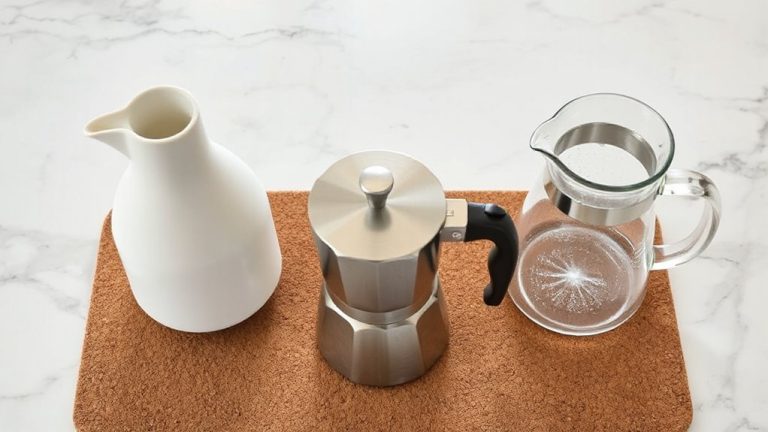
Starting with hot water instead of cold makes a noticeable difference in your moka pot brewing, especially after getting the heat level right. Preheating reduces total brew time, which helps prevent the water from overheating and scorching the coffee. You want to match the water volume to your moka pot’s capacity-don’t overfill, or pressure builds too fast. Use filtered water for better taste and to avoid mineral buildup. When the water is already hot, the shift through the coffee puck happens more smoothly, supporting consistent extraction. That consistency depends heavily on grind consistency-aim for a uniform, fine-to-medium grind, like table salt. Inconsistent grounds lead to uneven flow and potential scorching in spots. Preheating works best with stovetop models where you control the heat source directly. It’s a small adjustment that improves control, especially with aluminum or stainless steel pots like Bialetti or Alessi.
Stop Brewing Before the Bitter Drip
Why do some moka pot brews turn out bitter, even when you nail the grind and heat? It’s because you’re likely letting it brew too long. When the gurgling sound kicks in, most of the coffee’s already in the cup-anything after that is steam forcing water through used grounds. This causes over extraction risks and leads to a sharp, bitter drip. Don’t wait for all the water to push through. Remove the pot from heat just as the coffee flow slows and sputters. That’s your cue. Continuing past this point invites flavor degradation, robbing your cup of balance. For best results, use medium to medium-fine grind and avoid extra-fine or dense tamping. Stop early, preserve taste-clean, strong coffee beats scorched and bitter every time.
Let Pressure Drop Naturally After Brewing
Once the brew cycle finishes, resist the urge to run the pot under cold water or force-cool the base-doing so might seem like a time-saver, but it disrupts the natural release that stabilizes the coffee’s final flavor. Letting pressure drop naturally allows for a gradual cooldown, which helps preserve crema and prevents over-extraction from residual heat shock. Simply remove the moka pot from the heat and let it sit. You’ll hear the gurgling stop and feel the pressure ease in about 30–60 seconds. That’s your signal. Models like Bialetti Moka Express or TIMA Stainless Steel rely on this passive release for ideal results. Skipping natural release can warp aluminum models over time or create inconsistent brews. Patience here improves taste and extends your pot’s life. No shortcuts matter more than this.
Fix Weak or Bitter Coffee by Adjusting Heat
How does your moka pot taste-weak or bitter? If it’s weak, your water likely didn’t reach ideal extraction temperature, often due to too low heat or short contact time. Try increasing the stove setting slightly, but don’t rush it-overheating causes bitterness. Water hardness plays a role too; hard water can hinder extraction and promote scaly buildup, altering heat transfer. Use filtered water to keep things consistent. If your coffee tastes bitter, you may be overheating the grounds, accelerating grind oxidation and releasing harsh compounds. Once the coffee reaches the upper chamber, remove the pot immediately to stop brewing. Preheat water to about 160°F before loading the pot to shorten stove time and improve control. Match your grind size to your heat level-too fine with high heat leads to burning. Adjusting heat gives you better balance and fresher flavor. For optimal performance on electric stoves, consider using a Moka pot designed for electric stoves.
On a final note
You’ll get better coffee by keeping heat low and letting pressure drop naturally. Preheating water helps prevent scorching, while stopping the brew just before the gurgle avoids bitterness. A steady, even extraction beats speed, so skip high heat-it risks off-flavors and uneven flow. If your coffee’s weak or harsh, tweak the flame. Control matters more than power, and consistency beats guesswork every time.