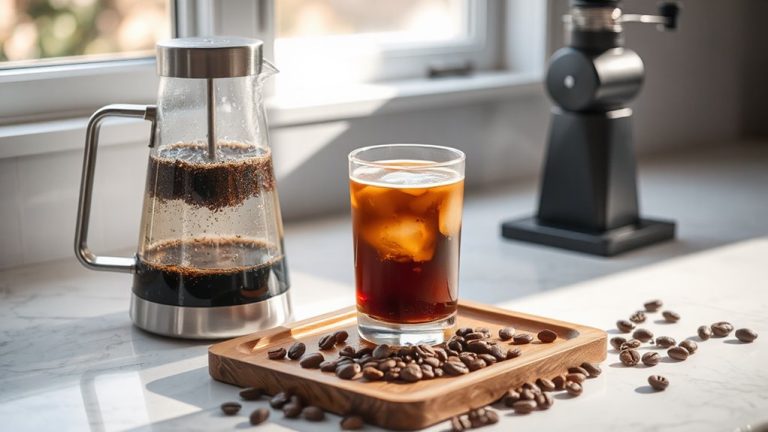
Enhancing Cold Brew Flavor Development Through Controlled Steeping Times and Temperature Adjustments Using Specific Bean Types
Use coarse ground beans and steep light roasts 18–24 hours, medium 16–18, and dark 12–16 hours to match extraction needs. Brew with cold, filtered water (34–72°F) in an airtight container to reduce bitterness and oxidation. African or Central American beans bring out fruity notes with longer steeps, while Brazilian or Sumatran dark roasts deliver smooth chocolatey flavor faster. Adjust your ratio-try 1:8 for concentrate-and you’ll fine-tune results even further.
Notable Insights
- Match steep time to roast level: light roasts need 18–24 hours, dark roasts 12–16 hours for optimal flavor extraction.
- Use coarse-ground Brazilian or Sumatran beans for dark roasts to enhance chocolatey notes and prevent over-extraction.
- Extend steeping to 24 hours for light roasts from Africa or Central America to fully extract fruity and floral complexities.
- Steep at 34–40°F in an airtight container to slow extraction, reduce bitterness, and preserve volatile flavor compounds.
- Maintain a 1:8 coffee-to-water ratio with filtered water to ensure balanced, smooth concentrate across all bean types and roast levels.
Cold Brew Basics: Time, Temperature, and Grind
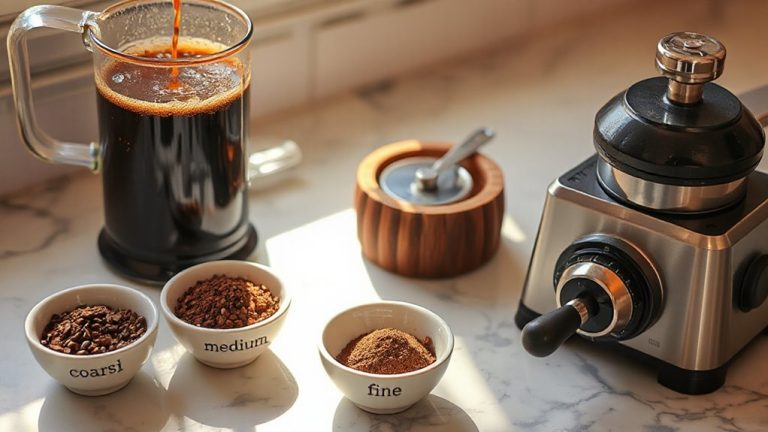
While you might be tempted to rush the process, cold brew coffee relies on time, not heat, so letting it steep slowly is key. Aim for 12 to 16 hours at room temperature or in the fridge for smoother results. Water temperature affects extraction-cooler water slows it, reducing bitterness. Use a coarse grind to prevent over-extraction and sludge; a burr grinder guarantees consistency. The grind size impacts surface area, so uniform particles lead to balanced flavor. Bean origin matters-darker profiles from Brazil or Sumatra often yield richer, chocolatey notes, while African beans can add subtle fruitiness. Always check roast freshness; beans within 2–4 weeks post-roast preserve volatile compounds essential for depth. Stale beans flatten flavor, no matter the method. Time, grind, temperature, origin, and freshness work together-adjust one, and the others respond. A Mason jar or dedicated cold brew pitcher works fine; no special gear required. For the best results, consider using specialty cold brew grounds designed to enhance smoothness and reduce acidity.
Best Beans for Cold Brew: Light vs. Dark Roast
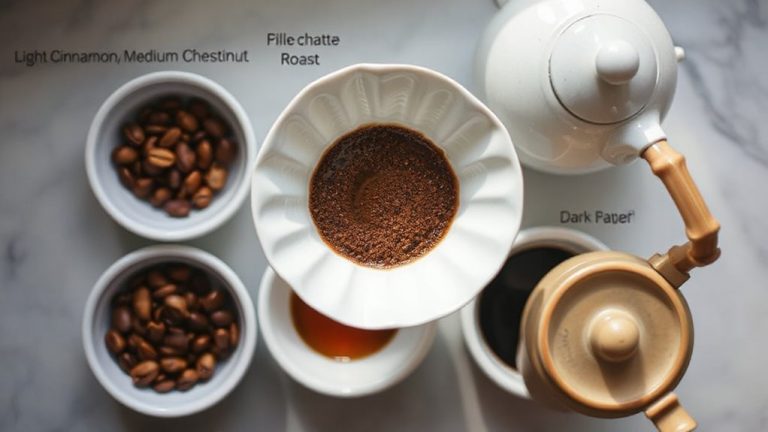
If you’re choosing between light and dark roast beans for cold brew, know that dark roasts often deliver better results thanks to their bold, low-acidity profiles that hold up well during long steeping. The lower acidity smooths out over time, giving you a richer, more balanced cup. Roast level plays a key role-darker beans, like a Sumatran or Brazilian medium-dark roast, offer chocolatey, nutty notes that shine when steeped cold. Light roasts can work but tend to lack body and may taste underdeveloped without longer steep times. Bean origin matters too: dense, low-acid beans from regions like Indonesia or Peru handle prolonged extraction better. For consistent cold brew, stick with a medium to dark roast level and choose beans grown specifically for cold extraction-many roasters now label them that way. For top-quality options, consider trying one of the expert picks from leading coffee bean guides.
Steep Longer for Light Roasts (Up to 24 Hours)
For light roast beans, extending your steep time up to 24 hours can make a noticeable difference in flavor and strength. Light roasts have denser structure and more developed sugars, so they need longer contact with water to fully extract. This extended steep allows for greater extended oxidation, which mutes sharp notes and rounds out the profile. You’ll also notice a delayed acidity-initial brightness softens into a smoother, more balanced cup. Stick to cold or room temperature (68–72°F) water for consistent results. Use a coarse grind to avoid over-extraction and sludge. A French press or dedicated cold brew maker works well. Avoid exceeding 24 hours, as bitterness may creep in. This method shines with African or Central American light roasts, enhancing floral and fruity notes without sourness. Steeping longer reveals complexity you’d otherwise miss. Consider using a coffee scale to ensure precise coffee-to-water ratios for optimal extraction.
Shorten Steep Time for Dark Roasts (12–16 Hours)
Most dark roast beans need only 12 to 16 hours to fully extract, so cutting back your steep time helps avoid bitterness and over-extraction. You gain better flavor preservation and boost dark roast efficiency by not leaving grounds too long in water. Dark roasts have oils and soluble compounds that release faster, meaning longer steeping doesn’t add richness-it adds harshness.
| Roast Level | Ideal Steep Time |
|---|---|
| Light | 18–24 hours |
| Medium | 16–18 hours |
| Dark | 12–16 hours |
| Espresso | 12 hours |
Stick to 12–16 hours for dark roasts to maintain balance. Using a coarser grind also helps control extraction. This method works well with beans like French or Italian roasts, yielding smoother results without cooling time adjustments. You’ll notice cleaner cups with more consistent flavor preservation and less waste-all signs of true dark roast efficiency.
Does Water Temperature Affect Cold Brew Extraction?
Why does your cold brew sometimes taste flat or overly sharp? Temperature plays a bigger role than you might think. Even in cold brewing, slight changes in water temperature shift extraction efficiency. Warmer water speeds up solubilizing acids, sugars, and caffeine-even if it’s still under 40°F. That’s why fridge-brewed batches (34–40°F) often taste smoother than room-temp ones (68–72°F), which can extract too much too soon. Your local water chemistry also interacts with temperature, altering how compounds dissolve. Hard water at high brewing altitude, for example, may reduce extraction due to lower oxygen and altered solubility. Use filtered water to minimize inconsistencies. For best results, keep your steep between 35–40°F. Consistent cold temps give you cleaner, more balanced shots without harsh notes. You don’t need fancy gear-just a reliable fridge and attention to detail.
Stop Bitter Cold Brew: Fix Time, Grind, and Ratio
Bitter cold brew usually comes down to three controllable factors: steep time, grind size, and coffee-to-water ratio. Many cold brew myths suggest longer steeping equals bolder flavor, but over-extraction from too long a soak or too fine a grind leads to bitterness. You don’t need flavor additives to fix it-just adjust the basics.
| Factor | Fix It By |
|---|---|
| Steep time | Reduce to 12–16 hours |
| Grind size | Use coarse, like sea salt |
| Water temp | Keep it cold, below 40°F |
| Ratio | Stick to 1:8 for concentrate |
| Brew vessel | Use airtight mason or Toddy |
Ditch the sugar or syrups-optimizing these variables gives clean, smooth results naturally. Avoid extreme adjustments; small, controlled changes work best.
Fine-Tune Your Cold Brew With the Right Brew Ratio
A well-chosen coffee-to-water ratio can make the difference between a flat, muddy cold brew and one that’s balanced and flavorful. You’ll want to start with a standard 1:8 ratio-1 part coarsely ground coffee to 8 parts cold, filtered water-for a smooth concentrate. If you’re using immersion-style cold brew gear like a mason jar or Toddy system, this ratio works consistently. For a stronger brew that can handle dilution, try 1:4, especially if you plan to add ice or flavor additives like vanilla or cinnamon. Go weaker at 1:10 if you prefer ready-to-drink strength. Adjusting the ratio is easier than changing grind or steep time, making it a practical control point. Always measure by weight for accuracy. The right ratio gives you flexibility without sacrificing clarity or over-extraction, ensuring quality results every time.
On a final note
You’ll get better cold brew by matching bean type to steep time. Light roasts need up to gdy險 愛fake tone 24 hours for full flavor without sourness, while dark roasts do best in 12–16 hours to avoid bitterness. Grind size should be coarse, water cold, and ratios balanced-try 1:4 coffee to water. Adjust based on taste, but always keep time, temperature, and roast in mind for consistent results.