A Guide to Selecting the Ideal Espresso Machine for Optimal Extraction Efficiency Based on Your Preferences
You’ll get the best espresso by matching your skill and routine to the right machine. If you’re short on time, a Nespresso Vertuo gives speed and simplicity. Hands-on users prefer semi-automatics like the Breville BES870 for precise control over grind, dose, and temperature. For consistent heat and pressure, dual boilers like the Rocket R55 deliver pro-level results. Freshly ground beans and proper tamping matter more than price. Machines with easy maintenance and durable parts keep you brewing. Your ideal choice balances control, convenience, and consistency-and there’s more to how each feature shapes your daily cup.
Notable Insights
- Match your machine type to skill level: pod systems suit beginners, while dual boilers serve experts needing precision.
- Align machine choice with morning routine speed and effort tolerance to ensure consistent, timely use.
- Use a high-quality burr grinder for precise, consistent grind size to control extraction and prevent over- or under-extraction.
- Ensure stable brew temperature (195°F–205°F) and 9 bars of pressure for optimal, even extraction results.
- Prioritize machines with durable build quality, easy maintenance, and accessible components to ensure long-term reliability and performance.
Find the Best Espresso Machine for Your Skill Level
What kind of espresso drinker are you-or do you want to become? If you’re new, a pod machine like a Nespresso might suit you-minimal effort, consistent results, and a gentle learning curve. But if you’re keen to refine your technique, a semi-automatic like the Breville Bambino gives you control over grind, dose, and timing, demanding a serious skill assessment. Fully manual machines, such as a Leverpresso, offer maximum control but come with a steep learning curve-best for those committed to mastering extraction. Super-automatics save time but limit customization, while dual boilers like the Rocket R55 target advanced users. Match the machine to your patience and goals. Don’t buy beyond your current skill without a plan to grow into it-otherwise, you’ll fight the machine instead of learning from it. For a curated list of top-performing options, check out the best espresso machines for home use.
Choose the Right Type for Your Morning Routine
Since your morning routine shapes how much time and attention you can give to brewing, picking the right espresso machine means matching it to your daily flow. If your morning ritual is quick and functional, a pod-based machine like a Nespresso Vertuo delivers speed and consistency with minimal effort-ideal when brewing speed matters most. For those who savor a hands-on process, a semi-automatic like the Breville BES870 offers more control without requiring expert timing. Super-automatics, such as the Jura E8, streamline everything from grinding to tamping, fitting seamlessly into tight schedules. But they’re costlier and less customizable. Consider how much time you actually have-rushing through prep means prioritizing reliability and simplicity over manual fine-tuning. Your ideal machine should complement, not complicate, your routine, ensuring quality doesn’t come at the expense of punctuality.
Grind and Dose: What Matters Most
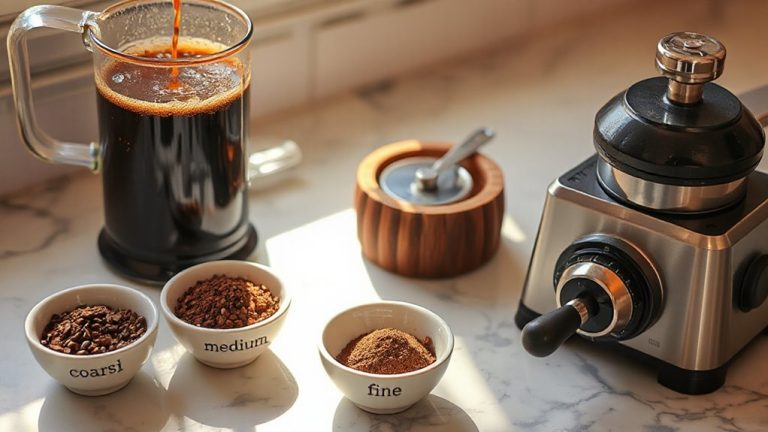
Consistency starts with the grind. If your grind size fluctuates, so will your extraction-even with perfect tamp consistency and stable water temperature. A quality burr grinder gives you control, which is non-negotiable for repeatable results. Dose matters too, but only if your grind supports it.
| Factor | Why It Matters |
|---|---|
| Grind size | Controls flow rate; too fine causes over-extraction |
| Dose | Affects basket pressure; small changes alter taste |
| Tamp consistency | Guarantees even water path; uneven tamping leads to channeling |
You need the right dose for your basket, but precision in grind size and tamp consistency makes or breaks the shot. Even with ideal water temperature, poor grind or tamp ruins balance. Match your grinder to your machine-don’t downgrade your setup with a blade grinder. Invest here, and you’ll extract better, every time. For optimal results, consider upgrading to one of the best burr grinders recommended for coffee enthusiasts.
How Heat and Pressure Shape Your Espresso
When you pull a shot, the machine’s heat and pressure are doing the real work-without both in balance, even the best beans won’t save the espresso. You need stable brew temperature, usually between 195°F and 205°F, to avoid under or over-extraction. Too low, and your shot tastes sour; too high, and it burns. Water pressure should hit around 9 bars-the standard for proper espresso. Less than 7, and it’s weak; more than 10, and you risk channeling. Machines like the Breville BES870XL control temperature well, while dual boilers in La Marzocco machines offer precision. Single boilers are cheaper but less consistent. Fluctuations in heat or pressure ruin extraction. You’ll notice uneven pulls, poor crema, or bitter notes. For reliable results, pick a machine that maintains both elements steadily. That consistency is non-negotiable. Enthusiasts seeking portable solutions may consider Top USB Coffee Makers for convenience without sacrificing basic brewing principles.
Built-In or Separate Grinder? What’s Best
Why does your grinder matter just as much as the machine itself? Because even the best espresso setup fails without fresh, consistent grounds. Grinder freshness is critical-beans ground right before brewing preserve oils and aroma, directly impacting flavor. Built-in grinders save counter space and streamline workflow, like on the Breville Dual Boiler, but often use lower-tier conical burrs and can’t match the grind precision of high-end separate units. A dedicated grinder, such as the Baratza Virtuoso, typically offers superior consistency and dose control. Consider noise level, too-integrated units tend to be louder due to compact motors. If you value taste and customization, a separate grinder is worth the extra footprint. For convenience and simplicity, built-in might suffice. Choose based on how much you prioritize freshness and quiet operation versus kitchen real estate.
Pick a Machine You’ll Actually Maintain
One out of every three espresso machines ends up underused or abandoned, often because maintenance felt too complex or time-consuming. You’re more likely to stick with yours if it’s simple to care for. Pick a model with a clean design-fewer nooks mean less buildup and easier wiping down. Machines with accessible parts, like removable brew groups and drip trays, make daily upkeep manageable. Look for durable materials like stainless steel for the portafilter and housing; they resist wear and don’t corrode easily. Plastic components might save money upfront but often degrade with regular steaming and cleaning. Manual machines require more hands-on care, while super-automatics clean themselves but need frequent descaling. Whichever you choose, match it to your routine. If you won’t backflush weekly, skip a high-maintenance espresso machine. Choose practicality over features you won’t use.
Balance Cost With the Quality You Want
You’ve picked a machine that fits your maintenance habits, but now comes the reality check: how much should you actually spend? It’s easy to chase high-end features, but smart buyers focus on budget quality and value performance. A $200 machine like the Breville Bambino offers solid extraction and quick heat-up, great for beginners. If you’re pulling several shots daily, spending $500–$800 on a Rancilio Silvia gives better temperature stability and durability. Beyond $1,000, gains diminish unless you’re a prosumer. Don’t pay for aesthetics over function. Look at materials, heating systems, and ease of calibration. A well-built mid-range machine often outperforms pricier models that cut corners. Balance what you need with what you’ll use. Prioritize consistent temperature, reliable pressure, and parts that last. That’s where real value performance lies-getting excellent shots without overspending on unused tech.
On a final note
You’ll get the best espresso by matching the machine to your routine and skill. Entry-level models like the Breville Bambino work well for beginners, while experienced users might prefer the control of a Rancilio Silvia. A built-in grinder saves time but limits flexibility-consider a separate one like the Baratza Sette. Regular cleaning and proper dosing matter more than hype. Pick reliability and ease of maintenance over bells and whistles.