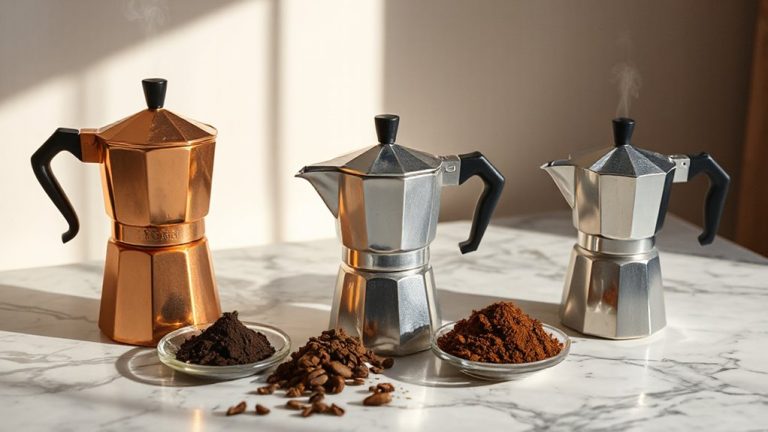
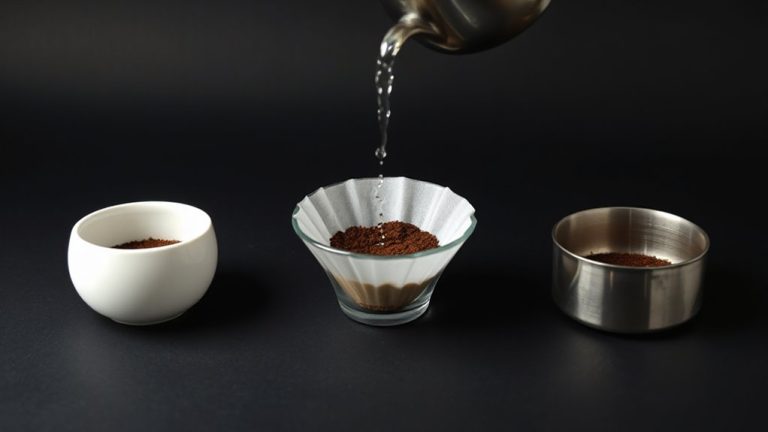
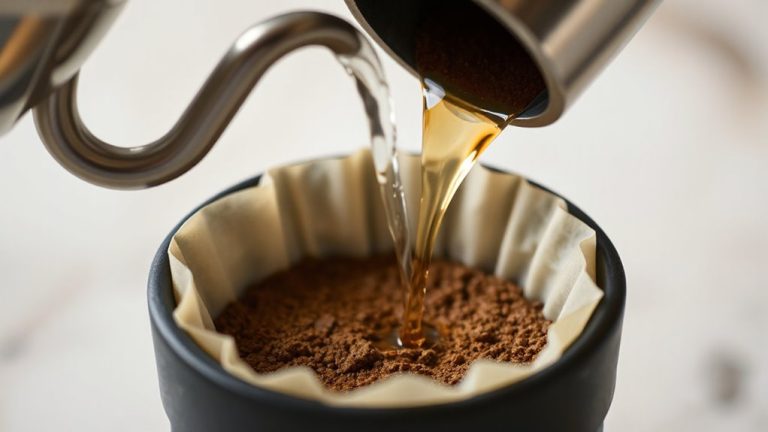
Grind Size Guides Tailored to Every Brewing Method Explained in Detail
You need the right grind size for your brew method to get balanced flavor. Use a fine grind for espresso, medium-fine for pour-over and AeroPress, and coarse for French press and cold brew. A proper grind prevents bitterness or sourness and matches water flow and brew time. For consistency, use a burr grinder over a blade grinder. Adjust if your coffee tastes off-go coarser for bitterness, finer for weakness. Choose uniform grinds, clean your grinder monthly, and weigh doses. You’ll soon discover how small tweaks reveal better results with every batch.
Notable Insights
- Espresso requires a fine grind, similar to table salt, to optimize extraction under high pressure.
- Pour-over methods like Hario V60 and Chemex need medium-fine to medium-coarse grinds for balanced flow and clarity.
- French press brewing uses coarse grounds to prevent sludge and avoid over-extraction during long steeping.
- AeroPress performs best with medium-fine to fine grinds, adjusted based on brew time and desired strength.
- Cold brew demands coarse grounds to minimize bitterness and control extraction during extended steeping periods.
What Grind Size Your Brew Method Needs
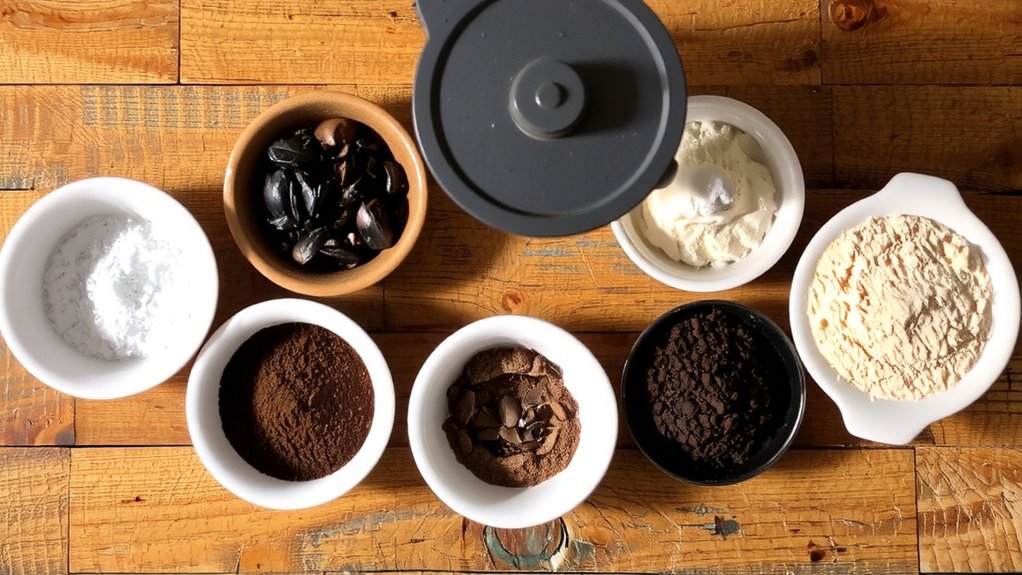
So, what grind size does your coffee method actually need? If you’re using an espresso machine, go fine-like table salt-and apply consistent tamping pressure to guarantee even extraction. Water temperature should stay between 195°F and 205°F for best results. For pour-over methods like the Hario V60, a medium-fine grind works best, slightly coarser than espresso. The AeroPress is flexible, but a medium-fine to fine grind usually performs well, especially with shorter brew times. French press? Use a coarse grind to avoid sludge and over-extraction. Cold brew also demands coarse grounds to limit bitterness during long steeping. Your grinder matters: blade grinders create uneven particles, while burr grinders give you precision. Always match grind size to your method’s brew time-shorter steeps need finer grounds. Adjusting tamping pressure, water temperature, or grind too far can ruin balance fast. For optimal flavor, refer to a detailed grind size chart tailored to each brewing method.
How Grind Size Affects Flavor and Extraction
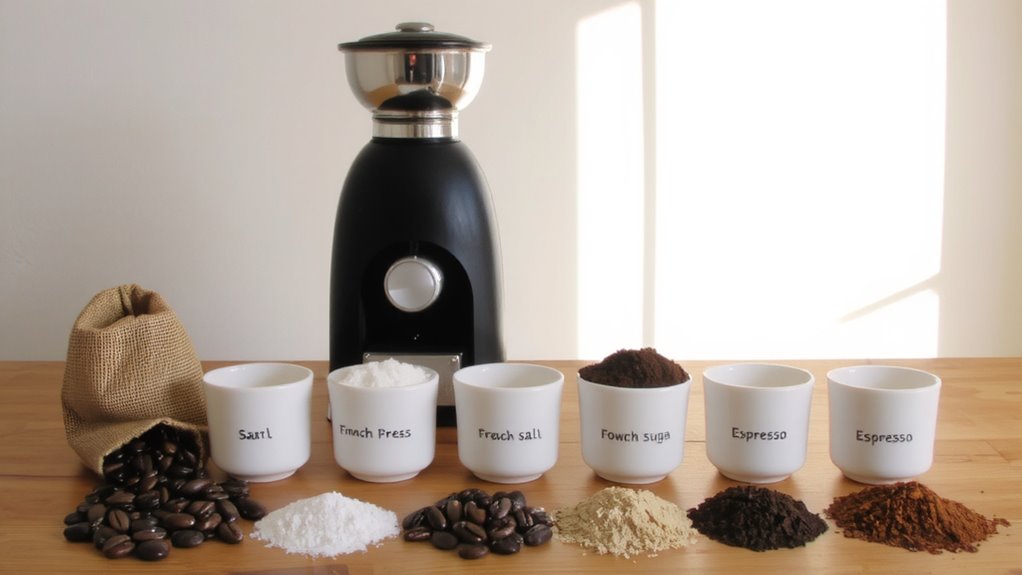
You’ve picked the right grind for your brew method-now let’s talk about what happens after the grinder. Grind size directly controls extraction: too fine, and you risk over-extracting, which brings out bitter, harsh notes; too coarse, and your coffee tastes weak and sour from under-extraction. The ideal grind allows water to pull balanced flavors from the coffee particles. Your bean origin and roast level matter here. Lighter roasts, often from African or Central American origins, are denser and may need a slightly finer grind to extract fully. Darker roasts, like those from Indonesia or typical espresso blends, are more soluble and can handle a coarser grind to avoid bitterness. Adjusting your grind gives you control over flavor without changing beans or equipment. The right balance means sweeter, more nuanced cups-every time.
Coarse vs. Fine: Matching Grind to Brew Style
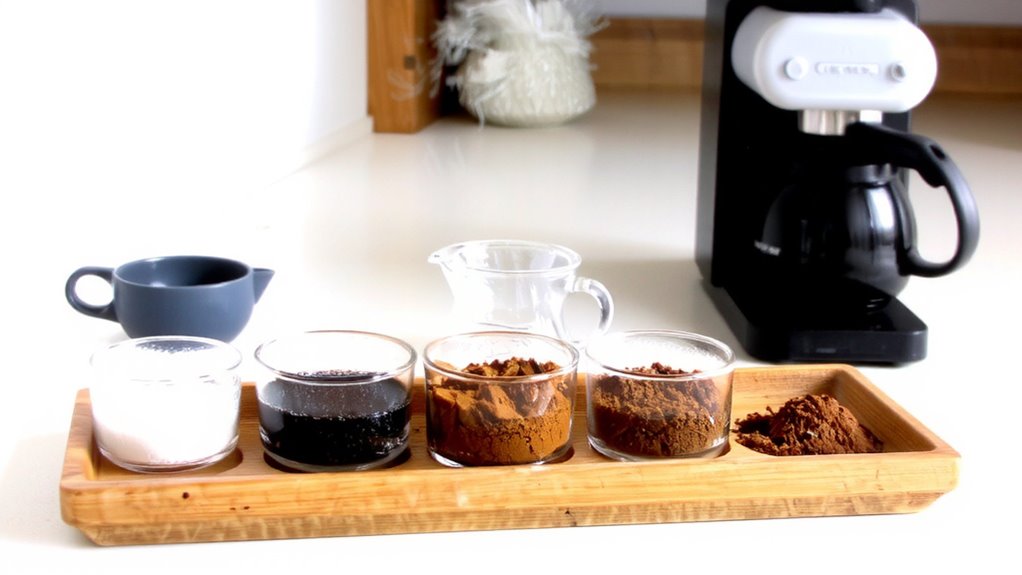
Grind size isn’t one-size-fits-all-it has to match how water moves through your coffee. For quick brews like espresso, you need a fine grind to slow water and boost extraction. For slow drips like French press, go coarse so water doesn’t pull out too much. Your brewer’s contact time with grounds is key. Grind uniformity matters-uneven particle distribution can cause over- and under-extraction at once. A burr grinder beats a blade grinder because it delivers better uniformity. Pour-over setups like Chemex work best with medium-coarse for even flow, while AeroPress handles fine to medium depending on recipe. Cold brew? Stick with coarse to avoid sludge and bitterness. Mismatched grind and method lead to poor results, no matter the beans. Match the grind to your gear, and focus on consistent particle distribution. It’s the practical step toward a balanced, flavorful cup, every time. For optimal results with freshly roasted beans, choose a high-quality coffee grinder that ensures precise and consistent grind size control.
Fix Bitter or Weak Coffee by Adjusting Grind
Why does your coffee taste bitter one day and weak the next? It’s likely your grind size - not your beans or water temperature - is off. Too fine, and over-extraction makes coffee bitter; too coarse, and under-extraction leads to weak, sour brew. Adjusting grind directly influences brewing time and flavor balance.
| Problem | Fix |
|---|---|
| Bitter coffee | Use a coarser grind to shorten brewing time |
| Weak coffee | Use a finer grind to extend brewing time |
Even with steady water temperature, the wrong grind throws everything off. A burr grinder gives you control, ensuring consistent particles. If your French press brews bitter coffee in 4 minutes, go coarser. If your pour-over finishes too fast and tastes flat, try a finer setting. Small tweaks make reliable results possible - no guesswork needed. Investing in a best burr grinder can significantly improve your coffee’s flavor consistency.
How to Grind Consistently at Home
Consistency starts with the right grinder, and that means skipping the blade. Those chop beans unevenly, killing flavor. You need a burr grinder-flat or conical-because it crushes beans to a uniform size. For real consistency, check burr alignment; misaligned burrs create fines and boulders, wrecking your extraction. Even good grinders drift over time. That’s where grinder calibration comes in: tweak the settings regularly, especially when switching beans or brewing methods. Baratza and 1Zpresso models make this easy with numbered rings or stepless dials. Clean your grinder monthly-oil buildup messes with performance. Weigh your beans, don’t scoop, and grind right before brewing. Electricity matters too: inconsistent voltage can jitter motor speed. You won’t nail it the first try, but tracking small changes helps. Consistent grind? That’s the first real step to better coffee.
On a final note
You now know how grind size directly impacts flavor and extraction in every brew method. Whether using a French press or espresso machine, matching the right grind is key. A consistent, proper grind helps avoid bitter or weak coffee. For best results, use a burr grinder, adjust based on taste, and grind just before brewing. Small changes make a real difference in your daily cup.