The Art of Cold Brew: From Choosing the Right Grind Size to Controlling Extraction Time for Optimal Flavor Profiles
Use a coarse grind, like sea salt, to avoid bitterness and guarantee smooth extraction-your burr grinder helps here. Steep for 12 to 16 hours with cold, filtered water for balanced flavor. Pick fresh light-medium roast beans, ideally within four weeks of roast moving forward. Stick to a 1:8 coffee-to-water ratio by weight. Skip dark roasts and hot water-they add unwanted bitterness. Your gear should be simple: glass or stainless steel. There’s more to fine-tune for your ideal cup.
Notable Insights
- Use a coarse grind, similar to coarse sea salt, to prevent over-extraction and bitterness in cold brew.
- Steep coffee for 12–16 hours to achieve balanced flavor, avoiding weak or overly bitter results.
- Choose fresh, light-medium roast beans within 2–4 weeks of roast date for vibrant, nuanced flavors.
- Maintain a 1:8 coffee-to-water ratio by weight for consistent, well-balanced cold brew extraction.
- Use cold, filtered water and a non-reactive vessel to ensure clean flavor and optimal extraction control.
Use Coarse Grind for Smooth Cold Brew
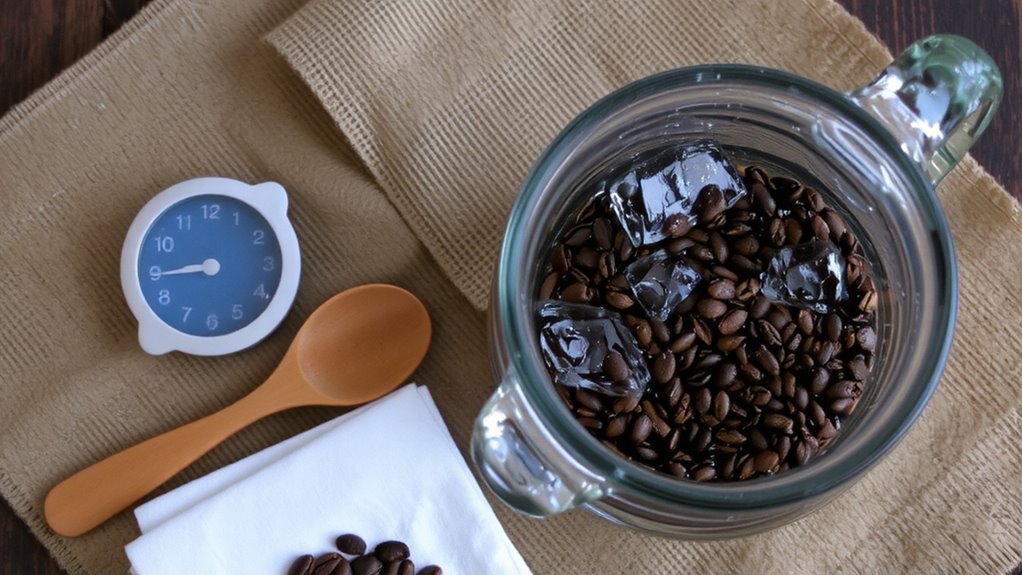
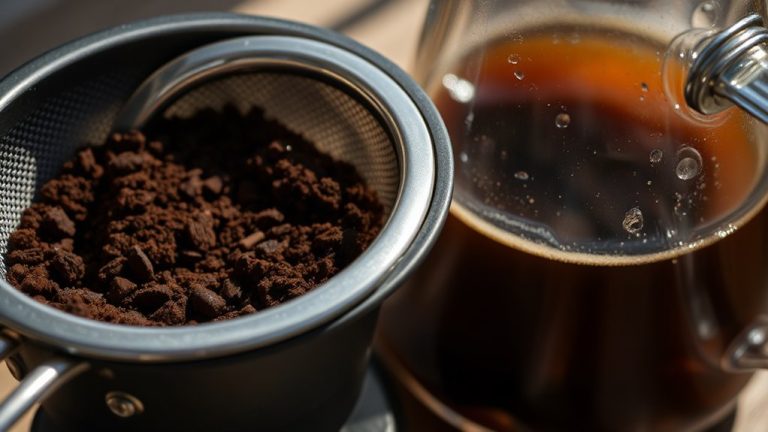
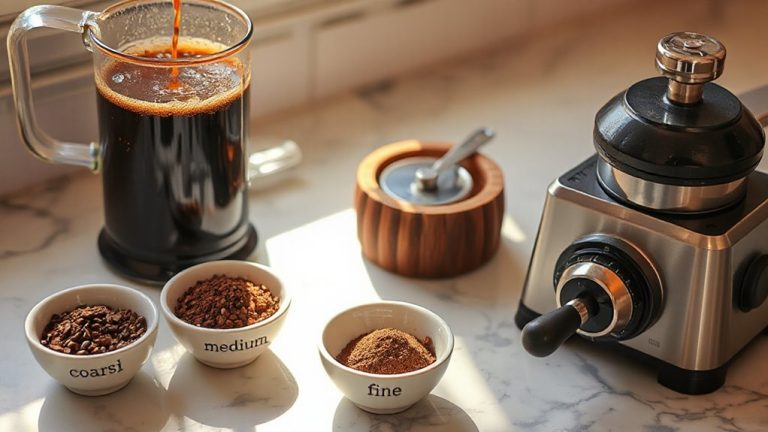
A coarse grind isn’t just recommended-it’s essential for a smooth cold brew. Using the right grind consistency prevents over-extraction and reduces bitterness, especially since cold brew steeps for hours. If your grind is too fine, you’ll get muddy, over-extracted coffee, even at lower brewing temperature. A burr grinder, like the Baratza Encore, delivers more uniform particles than blade grinders, giving you better control. Aim for a size similar to coarse sea salt-this allows water to extract flavor slowly and evenly without pulling tannins. Brewing temperature stays cold or room temp, so inconsistent grind size becomes even more problematic. Uneven particles extract at different rates, leading to off-flavors. Always prioritize consistency over speed. With coarse, uniform grounds, you’ll get a cleaner concentrate, less sediment, and smoother results-all without clogging your filter or French press. It’s the foundation of quality cold brew. For top-performing options, check out the best cold brew coffee grinders to find a model that suits your brewing needs.
Steep 12–16 Hours for Balanced Flavor
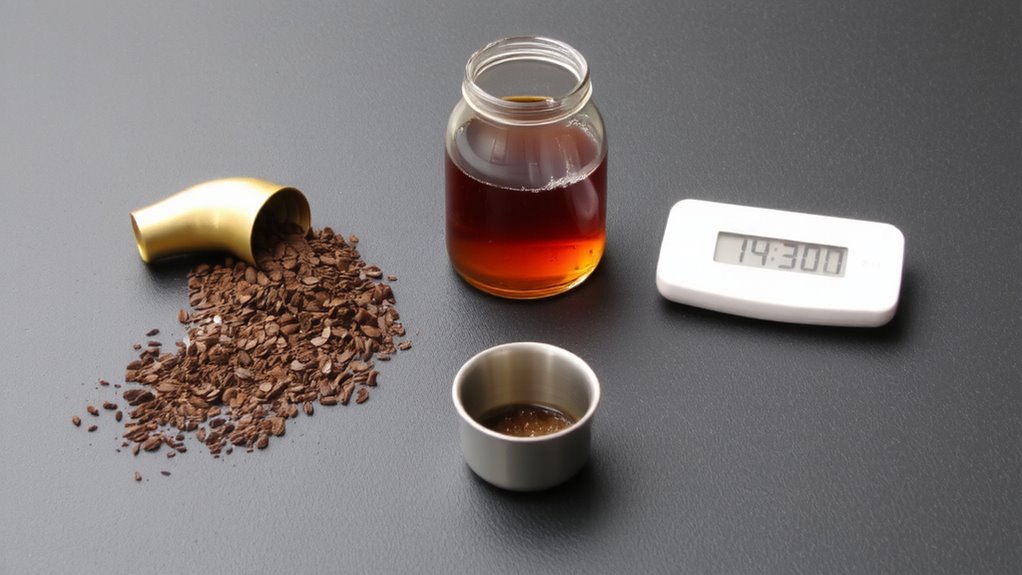
You’ll want to steep your cold brew for 12 to 16 hours to hit that sweet spot of balanced flavor-any less and it tastes weak or sour, any more and it risks becoming overly bold or bitter. Use filtered water for consistent water quality, since chlorine or minerals can distort flavor even with long steeping. Your steeping vessel should be non-reactive-glass, food-grade plastic, or stainless steel work best. A mason jar or a dedicated cold brew maker keeps things simple and seals well. Make sure the container is clean and airtight to prevent off-flavors. Keep it at room temperature for faster extraction, or refrigerate for a smoother result-just know it may lean toward 16 hours. Stir the grounds once after adding water to guarantee even saturation. Let time do the work: no shaking, no stirring after. Steeping too long invites bitterness, so stick to the range. Precision here pays off. For ease and functionality, consider using a cold brew mason jar designed specifically for this process.
Choose Fresh, Light-Medium Roast Beans
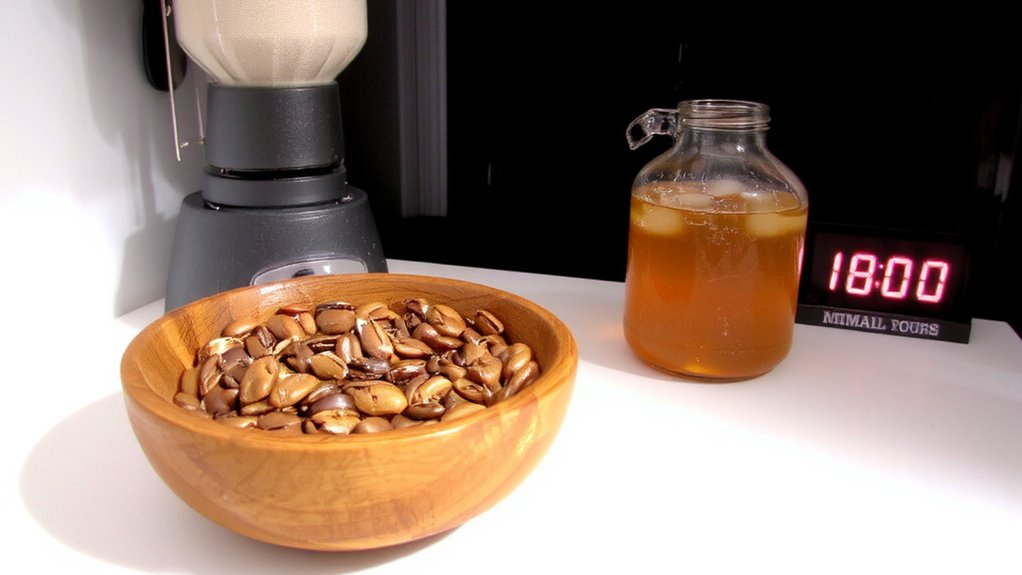
Getting the most from your steep time starts with what you put in the water-fresh, light-medium roast beans make a noticeable difference. These roasts preserve more of the bean’s natural sugars and acids, leading to a brighter, more nuanced cold brew. Always check the roast date; beans within 2–4 weeks of roasting deliver peak flavor. Older beans lose aromatic compounds, resulting in flat, dull coffee. Light-medium roasts also highlight subtle notes tied to bean origin-Ethiopian beans might bring berry tones, while Guatemalans offer cocoa or spice. Single-origin beans let you taste these distinctions clearly, though high-quality blends work too. Avoid dark roasts, which can over-extract and taste bitter, especially over long steeps. Freshness and roast profile directly impact clarity and balance, so don’t skip these details. Your origin choice and roast date aren’t just labels-they’re practical tools for better brewing. For those exploring origin-specific flavors, trying Best Ethiopian Coffee Beans can elevate your cold brew experience with vibrant, fruit-forward profiles.
Use a 1:8 Coffee-to-Water Ratio
One effective starting point for smooth, balanced cold brew is sticking to a 1:8 coffee-to-water ratio by weight-1 gram of coffee for every 8 grams of water. This ratio works well regardless of your brewing vessel, whether it’s a Mason jar, French press, or dedicated cold brew maker. Since cold brew relies on steeping rather than heat, water temperature stays cold or room temp-usually 68–72°F-for 12 to 16 hours. That means extraction is slow and steady, so the right ratio helps prevent over- or under-extraction. Too much coffee intensifies bitterness; too little leaves it flat. The 1:8 ratio strikes a reliable balance, especially with light-medium roasts. You can adjust slightly later based on taste, but starting here gives consistent results across most setups. Just make sure your brewing vessel can hold the full volume during steeping.
Avoid Bitter or Weak Cold Brew: Fix These Mistakes
Sticking to the 1:8 ratio sets a strong foundation, but even with the right measurements, cold brew can still go wrong if other key factors are overlooked. Using warm or hot water speeds up extraction and risks bitterness-always use cold or room-temperature water to keep flavors smooth. Water temperature is critical: too warm, and you pull harsh compounds; too cold, and extraction lags, producing weak results. Your brewing vessel also matters. A sealed mason jar works, but a dedicated container with a tight lid reduces oxidation and leakage. Avoid plastic-it can retain odors and affect taste. Glass or stainless steel are better choices. Grind size and brew time must align; too fine or too long leads to bitterness, too coarse or too short yields weakness. Steep between 12–24 hours, stirring once early on. Strain thoroughly to avoid sludge.
On a final note
You’ll get the smoothest cold brew using a coarse grind-it prevents over-extraction and bitterness. Steep for 12–16 hours at room temperature or in the fridge for balanced flavor. Pick fresh light-to-medium roast beans for brighter notes and avoid stale or oily ones. Use a 1:8 coffee-to-water ratio as a reliable starting point. If your brew tastes weak or bitter, adjust time or grind. Try a French press or dedicated cold brew maker-they’re simple and effective.