What Makes Kayanza Coffee the Most Consistent in Burundi
You get consistent, high-quality coffee from Kayanza because farmers grow beans at high altitudes with slow maturation, boosting sugar development and bright citrus notes. Volcanic soil adds clean body without bitterness. You’ll find only ripe cherries hand-harvested, reducing defects. Wet-milling at co-op stations uses pure stream water and controlled fermentation, locking in sweetness and acidity. These strict steps, refined since the 2000s, guarantee every batch performs predictably-something few regions match. Keep going, and you’ll see how each detail shapes the final cup.
Notable Insights
- Kayanza’s high altitude promotes slow bean maturation, enhancing sugar development and consistent cup brightness.
- Volcanic soils in Kayanza enrich beans with minerals, contributing to a clean, well-balanced body without bitterness.
- Microclimates across Kayanza’s hillsides allow nuanced flavor differentiation while maintaining overall quality consistency.
- Coffee cooperatives in Kayanza centralize processing, enabling standardized harvesting, training, and quality control.
- Strict hand-harvesting of only ripe cherries and precise wet-milling ensure uniformity and reduce defects.
How Altitude and Soil Shape Kayanza Coffee
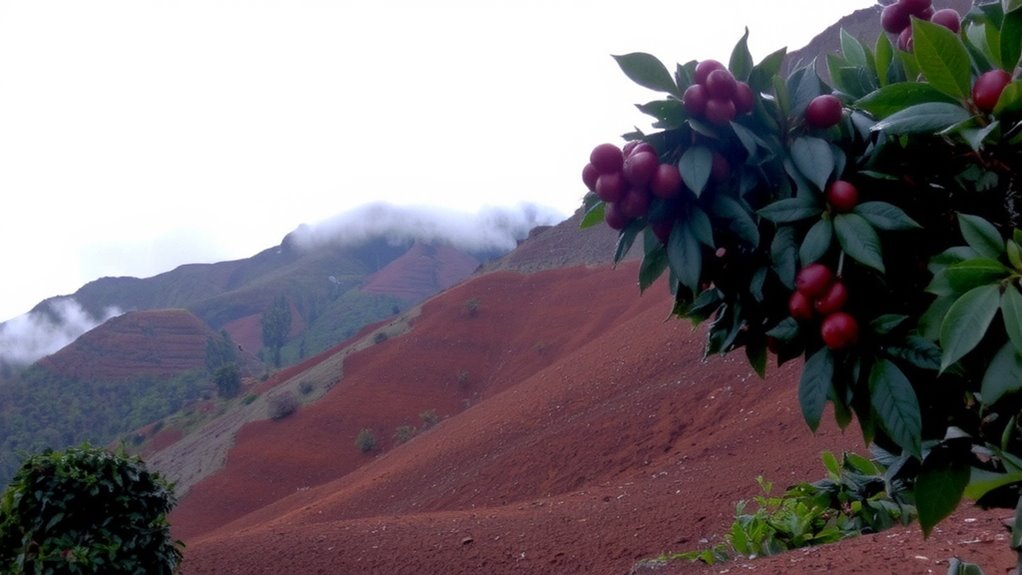
While you might not think twice about where your coffee comes from, the altitude and soil in Kayanza play a defining role in shaping its distinct character. Sitting between 1,600 and 2,000 meters, the high elevation slows bean maturation rates, allowing sugars to develop more fully. This results in a cleaner, brighter cup with notes of citrus and red fruit-ideal for filter brewing methods like pour-over or Chemex. Volcanic soils add mineral richness, enhancing body without increasing bitterness. Microclimate variations across hillsides mean even neighboring farms can yield slightly different profiles, so roasters need consistency checks. If you’re grinding at home, use a burr grinder to preserve nuance. These growing conditions make Kayanza beans less forgiving of poor extraction, so precise water temperature-around 200°F-matters. Altitude and soil aren’t just background details-they directly impact how you should brew.
Why Cooperatives Make Kayanza Stand Out
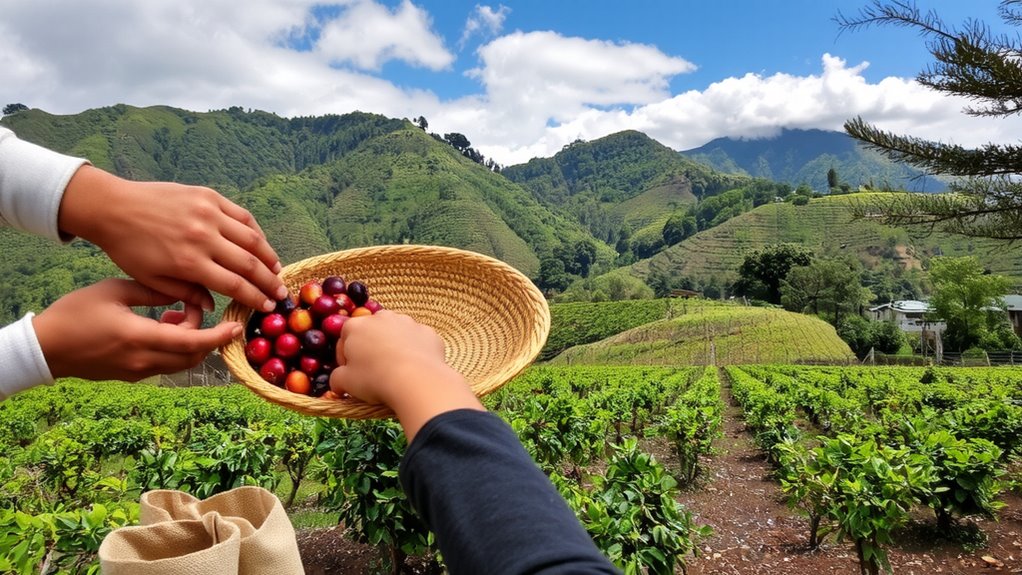
Since smallholder farmers in Kayanza typically manage just a few hundred coffee trees, joining a cooperative isn’t just helpful-it’s essential for survival in the global market. You rely on these cooperatives to pool resources, share costs, and access exporters who demand volume and consistency. Farmer collaboration means better training, shared equipment, and collective bargaining power. It’s how you maintain strong quality control across thousands of small plots. Each cooperative enforces strict harvesting and processing standards, ensuring only ripe cherries are delivered and defects are minimized. They run centralized washing stations where fermentation, washing, and drying are monitored closely-conditions that matter when producing specialty-grade coffee. Without cooperatives, individual farmers couldn’t meet international buyer requirements. The system isn’t perfect-delays or mismanagement can happen-but overall, it’s what makes Kayanza’s output reliable, traceable, and consistently high-scoring in global auctions.
How Kayanza’s Hand-Harvesting Keeps Beans Pristine
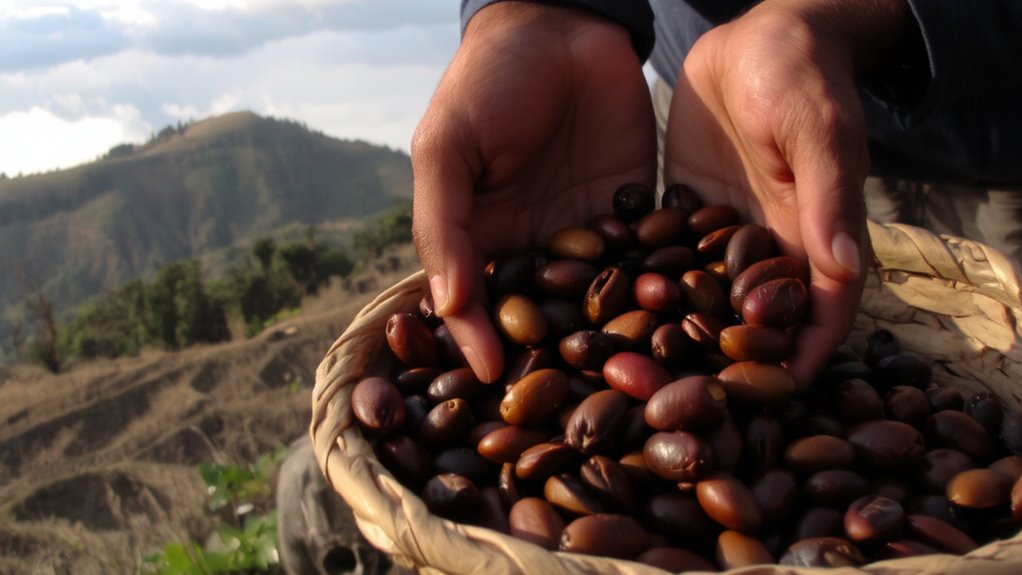
Every single coffee cherry in Kayanza is picked by hand, and for good reason-machines can’t match the precision needed to harvest only the ripest fruit. This careful approach guarantees superior bean selection, a critical step in maintaining consistency. Workers inspect each cherry, choosing only the red-ripe ones, which directly supports strict quality control. By avoiding underripe or overripe fruit, they reduce defects and off-flavors before processing even begins.
| Factor | Hand-Harvesting Advantage |
|---|---|
| Ripeness Accuracy | Targets only ripe cherries |
| Bean Selection | Enables early quality sorting |
| Defect Rate | Markedly lower |
| Labor Need | Higher, but justifies premium |
| Quality Control | Integrated from harvest start |
Hand-harvesting isn’t faster or cheaper, but it’s far more accurate. You’ll taste the difference in every clean, balanced cup. For serious coffee, this step isn’t optional-it’s essential.
Why Kayanza’s Wet-Milling Defines Its Flavor
If you’ve ever wondered what gives Kayanza coffee its bright, clean taste, the answer starts the moment the cherries are picked-because once they’re harvested, they head straight to wet-mills, locally known as washing stations, where the real flavor shaping begins. You’ll find that these stations use precise fermentation control, typically lasting 12 to 36 hours, ensuring the mucilage breaks down evenly without sour or off flavors. That consistency matters, especially when you’re brewing for clarity and balance. The water purity in Kayanza’s high-altitude streams also plays a key role-free from contaminants and rich in oxygen, it supports clean microbial activity during washing. Compared to dry-milling or honey processes, this wet-milling method gives you more predictable acidity and sweetness. If you value a clean cup with vibrant notes, this level of process control isn’t just helpful-it’s essential.
How Kayanza Built Coffee Excellence Over Time
While coffee has grown in Kayanza for decades, it wasn’t until farmers began organizing into cooperatives in the early 2000s that quality started climbing consistently. You see, this historical evolution transformed smallholder plots into coordinated producers of specialty-grade beans. By pooling resources, farmers improved washing stations and adopted uniform drying practices, which directly boosted cup consistency. These aren’t flashy upgrades-they’re practical steps grounded in local knowledge. The cultural practices of careful cherry selection and timely pulping are now standard, not exceptions. You’ll find that this region’s reliability comes from systems, not luck. Traceability programs and agronomic training further cement results. Unlike areas relying on individual effort, Kayanza’s model scales quality. If you’re sourcing or brewing, that means fewer surprises and more predictable acidity, sweetness, and clarity in every batch. It’s not magic-it’s method.
On a final note
You can count on Kayanza coffee for consistent quality because of its high-altitude farms and rich volcanic soil. Local cooperatives guarantee careful hand-harvesting and precise wet-milling, which sharpens flavor. Over time, disciplined farming and processing have built reliability. If you want a clean, bright cup with notes of citrus and tea, Kayanza delivers-especially when roasted light. For pour-over or drip, it performs well with standard gear like a Hario V60 or AeroPress.