Why Your Espresso Machine Isn’t Building Pressure During Preinfusion
Your espresso machine might not build preinfusion pressure because of clogged shower screens or a worn group gasket letting steam escape. Check if the pump reaches 3–4 bars using a blind basket-low output could mean a faulty pump or pressure stat. A coarse grind or low dose also reduces resistance, stalling pressure. Make certain your grind size and dose are consistent, and inspect solenoid valves on machines like the Lelit Mara X. You may be overlooking a simple fix that clears the issue fast.
Notable Insights
- Clogged group heads or shower screens restrict water flow, leading to uneven pressure and weak preinfusion.
- A worn group gasket fails to seal properly, causing leaks and preventing pressure buildup during preinfusion.
- Incorrect pump pressure output-below 3–4 bars-may indicate calibration issues or pump failure during preinfusion.
- Coarse grind size or low coffee dose reduces resistance, stalling pressure development in the preinfusion phase.
- Faulty pressure stats or solenoid valves disrupt water delivery, commonly affecting preinfusion in PID-controlled machines.
Check for Clogged Group Heads and Shower Screens
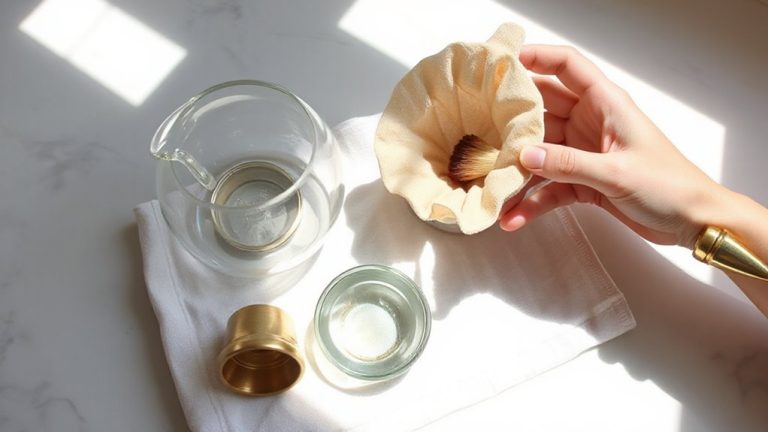
A clogged group head or shower screen can quietly wreck your espresso’s quality, so it’s one of the first things you should check when pressure seems off. Restricted water flow from coffee oils and fines causes uneven pressure, which hurts extraction. You’ll notice weak shots or sputtering during preinfusion. To fix it, backflush with water or detergent weekly-especially on machines like the Gaggia Classic or ECM Mechanika. Remove and soak the shower screen in a cleaning solution to dissolve built-up residue. A clean screen guarantees even water flow across the puck, reducing the risk of channel formation. Left unchecked, channels let water race through weak spots, making sour, hollow shots. If your machine struggles to ramp up pressure smoothly, don’t assume it’s a pump issue-inspect the group path first. Routine cleaning takes minutes but keeps performance steady and shots balanced. Prevention beats repair.
Replace a Worn Group Gasket Causing Pressure Loss
You’ve cleaned the group head and shower screen, but if pressure still falters during extraction, the issue might be hiding under the surface-a worn group gasket. Over time, heat and compression cause gasket deformation and seal degradation, letting steam and water escape. This compromises preinfusion pressure and extraction quality. Replacing the gasket restores a tight seal and consistent brewing conditions.
| Machine Model | Gasket Type | Replacement Frequency |
|---|---|---|
| La Marzocco Linea Mini | Rubber | Every 6–12 months |
| Rancilio Silvia | Silicone | Every 12–18 months |
| Rocket Appartamento | Rubber | Every 6–10 months |
| Gaggia Classic | Silicone | Every 12 months |
| Expobar Brewtus | Rubber | Every 8–12 months |
Choose silicone for longer life or rubber for tighter initial seal. Check for gaps or flattening during portafilter removal. Replace proactively to avoid pressure loss.
Test Your Pump’s Preinfusion Pressure Output
How do you know if your machine’s pump is delivering the right pressure during preinfusion? You’ll need to perform pressure testing with a blind basket and portafilter. Insert the blind basket, start a brew cycle, and watch the pressure gauge. Most machines should reach 3–4 bars during preinfusion before ramping up. If the pressure is too low or spikes too fast, your pump calibration might be off. Machines with rotary pumps often allow manual adjustment via a regulator, while vibratory pumps usually can’t be fine-tuned. Consistent, stable pressure at this stage means the pump is working as intended. Inaccurate readings could point to a faulty gauge or worn pump. Pressure testing isn’t a one-time fix-it’s part of routine pump calibration. Accurate output guarantees even saturation, which sets the foundation for proper extraction. Don’t guess; test and verify.
Fix Grind Size and Dose to Improve Preinfusion
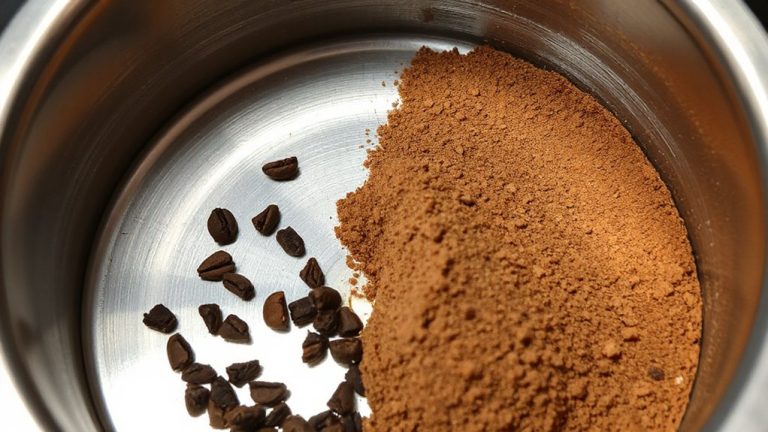
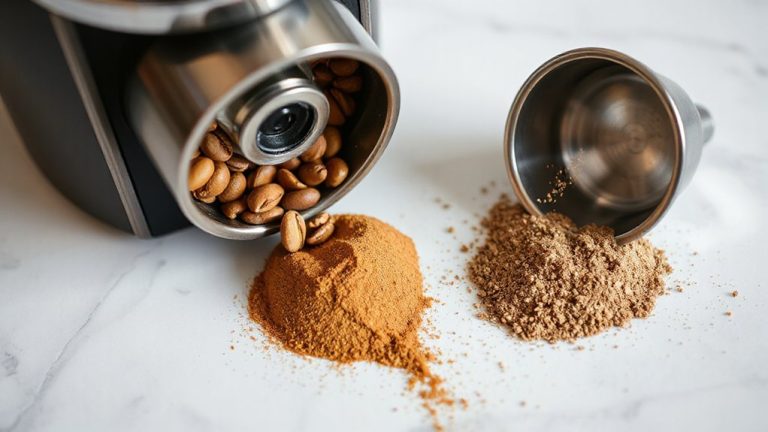
While pressure during preinfusion depends partly on machine design, your grind size and dose play a critical role in how effectively that pressure builds. If the grind is too coarse or the dose too low, water slips through too easily, stalling pressure development. A finer grind and proper dose increase resistance, helping build steady preinfusion pressure. For best results, aim for consistent grind distribution-uneven particles can cause channeling, undermining pressure stability. Upgrading to a high-quality espresso grinder can significantly improve grind consistency and shot repeatability.
| Factor | Ideal Setting |
|---|---|
| Grind Size | Adjust until flow resists gently, not fast or stalled |
| Dose Consistency | Stay within ±0.5g of your target dose per shot |
Good dose consistency and uniform grind distribution make a noticeable difference, especially on entry- to mid-tier grinders. If your espresso puck looks patchy or dry, revisit these two variables before blaming the machine.
Inspect for Faulty Pressure Stats or Solenoid Valves
A consistent grind and dose set the foundation for stable pressure, but if your machine still struggles during preinfusion or fails to reach target pressure, the issue may lie within its internal components. Faulty pressure stats or solenoid valves are common culprits, especially in dual-boiler or PID-controlled machines. If pressure reads inaccurately, you’ll need to check the pressure stats calibration-misaligned readings can prevent the pump from responding correctly. A failing solenoid valve won’t open or close as needed, disrupting water flow during preinfusion. Performing solenoid valve diagnostics involves testing for resistance with a multimeter or listening for audible clicks during operation. Machines like the Rocket R58 or Lelit Mara X often show these symptoms when components wear. While not user-serviceable on most models, identifying the failed part helps determine if professional repair or replacement is necessary. Always disconnect power before inspection.
Apply Quick Fixes for Immediate Pressure Recovery
What if your espresso machine suddenly drops pressure mid-shot-could it be something you can fix right now? Yes-if you act fast. Start by checking the water temperature; if it’s too low, the viscosity increases, reducing flow rate and pressure buildup. Let the machine heat up fully. Next, descale the group head-mineral buildup restricts water flow. Also, guarantee the portafilter is locked in properly; a loose fit breaks seal integrity. If using a VST basket, verify it’s seated right. Here’s a quick-reference table:
| Issue | Quick Fix |
|---|---|
| Low water temperature | Wait for proper heat-up (90–96°C) |
| Clogged filter | Backflush with water or cleaner |
| Incorrect grind | Adjust for balanced flow rate |
| Loose portafilter | Lock it in fully |
| Air in line | Purge group before brewing |
These steps often restore pressure fast.
Understand Why Preinfusion Pressure Matters
Why does your espresso sometimes taste sharp or uneven? Because preinfusion pressure sets the stage for balanced espresso extraction. If pressure ramps up too fast, water forces through weak spots in the puck, creating channeling and sour, uneven shots. Proper preinfusion allows the coffee bed to saturate evenly, preventing dry pockets and stabilizing flow. That’s where pressure profiling matters-many high-end machines let you control how pressure builds, giving you more control over flavor. Starting at 2–4 bars for 5–10 seconds before ramping up helps compact the puck gently. Machines like the Decent EP5 or Profitec Pro 800 offer this flexibility, while basic models often don’t. Without proper pressure profiling, you’re more likely to under-extract or over-extract. Getting preinfusion right isn’t just about gear-it’s about consistency, control, and better-tasting espresso.
On a final note
You’ve checked the usual suspects-clogged screens, worn gaskets, grind issues-and they can all kill preinfusion pressure. If problems persist, test the pump or inspect valves; sometimes a faulty stat or solenoid is to blame. Quick fixes might help temporarily, but lasting results demand proper diagnosis. Good preinfusion isn’t optional; it guarantees even extraction. Fix the root cause, and your espresso will show it.