What Makes Bench Maji a Frontier for Untapped Ethiopian Coffee Potential
You’re tasting coffee shaped by isolation and altitude-Bench Maji’s highland farms at 1,800–2,200 meters preserve rare heirloom varietals through traditional, low-input farming. Cool, misty slopes slow bean development, boosting citrus and floral notes you won’t find in lower-grown beans. Smallholders handpick cherries and use rising wet mills with pH control to refine quality. Despite poor roads limiting access, direct partnerships and new processing mean cleaner, more consistent cups are finally reaching specialty markets-what comes next changes how you see Ethiopian coffee.
Notable Insights
- Bench Maji’s isolation preserves rare, genetically diverse heirloom coffee varietals free from modern agricultural influence.
- High altitudes and microclimates enhance bean density, acidity, and complex flavor notes like citrus and stone fruit.
- Smallholder farmers use traditional, low-impact methods that maintain ecosystem health and coffee quality.
- Modern processing upgrades improve consistency while respecting traditional practices and enhancing unique cup profiles.
- Improved infrastructure and direct trade access unlock market potential for previously isolated, high-quality coffee.
Why Bench Maji’s Isolation Protects Rare Coffee Varietals
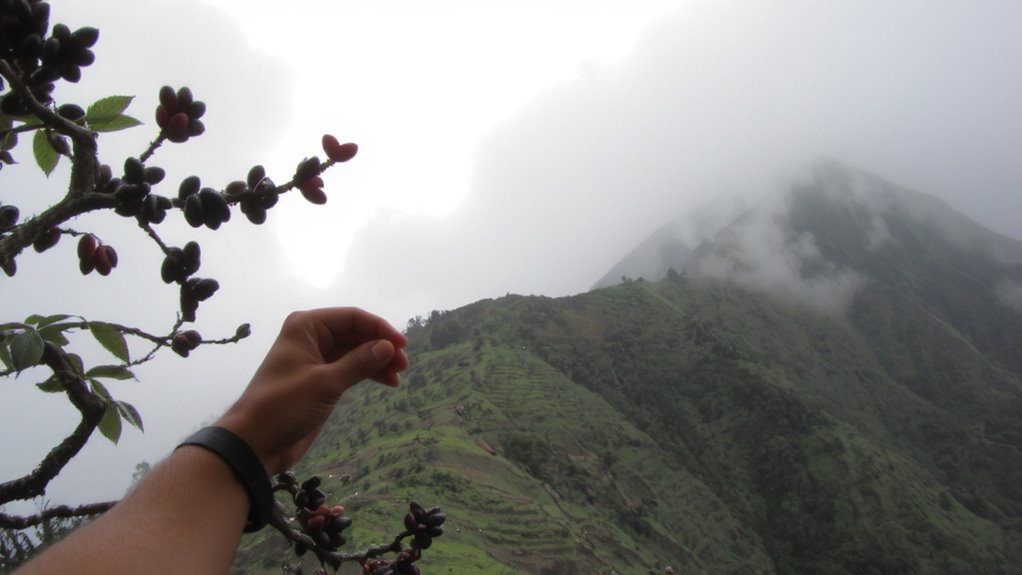
While most coffee-growing regions face pressure from modernization and crop standardization, Bench Maji’s remote location in southwestern Ethiopia has kept its rare coffee varietals safe from widespread cultivation and genetic dilution. You benefit from this isolation because it supports genetic preservation, maintaining heirloom varieties that commercial farms often replace. Farmers there rely on traditional cultivation, passing down methods through generations without heavy machinery or chemical inputs. This low-tech approach limits yield but protects plant integrity and local ecosystems. Unlike high-output regions using cloned stock, Bench Maji’s coffee grows in diverse microclimates with minimal crossbreeding, preserving original traits. You’ll find these beans aren’t uniform, but that variability offers unique cup profiles worth exploring. For roasters and brewers, this means prioritizing careful batch control. You’re trading consistency for rarity, so adjust grind, time, and temperature to highlight nuanced flavors. Knowing the source helps you make informed choices without overpaying for hype. Exploring these distinct flavors begins with selecting best Ethiopian coffee beans that highlight regional terroir and varietal diversity.
How Altitude and Biodiversity Create Unique Coffee Flavors
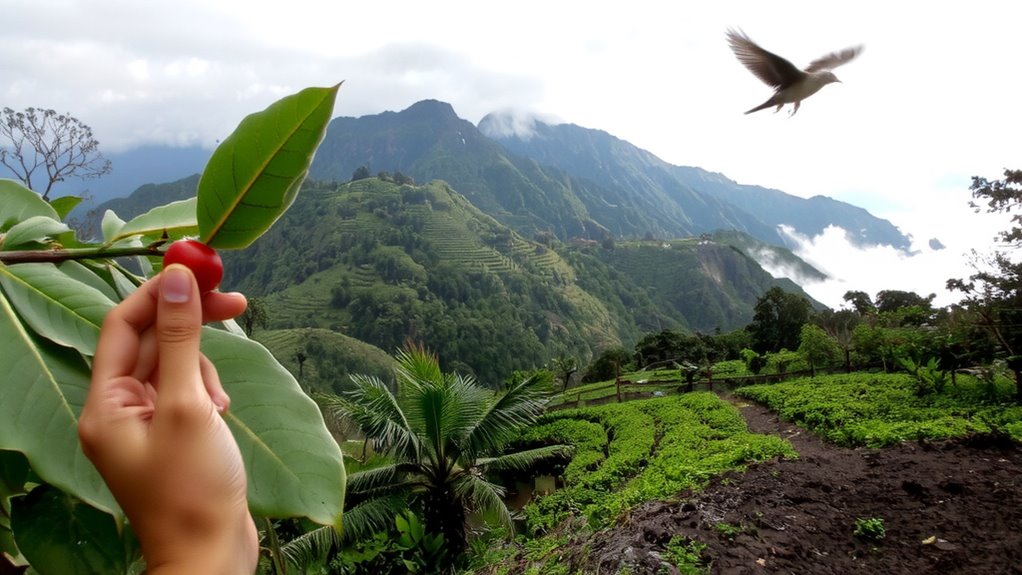
Because Bench Maji sits between 1,800 and 2,200 meters above sea level, the cool, misty highlands slow coffee bean development, which concentrates sugars and leads to brighter acidity and clearer flavor notes in the cup. You’ll notice this altitude directly boosts flavor complexity-think layers of citrus, floral hints, or stone fruit, not just generic “coffee” taste. The region’s dense forests and varied terrain create distinct microclimate influence across small areas, so beans from nearby farms can taste different. Biodiversity plays a role too: shade from native trees regulates temperature and soil health, helping roots absorb unique minerals. These natural conditions mean less need for artificial inputs, which keeps flavors clean and expressive. When you brew Bench Maji coffee, use filtered water and a medium grind for best clarity. The beans respond well to pour-over or Chemex, highlighting their inherent brightness and subtle sweetness without overpowering. For those seeking exceptional cup profiles, exploring best Ethiopian coffee picks can guide you to standout origins like Bench Maji.
Meet the Smallholder Farmers Behind Bench Maji’s Coffee
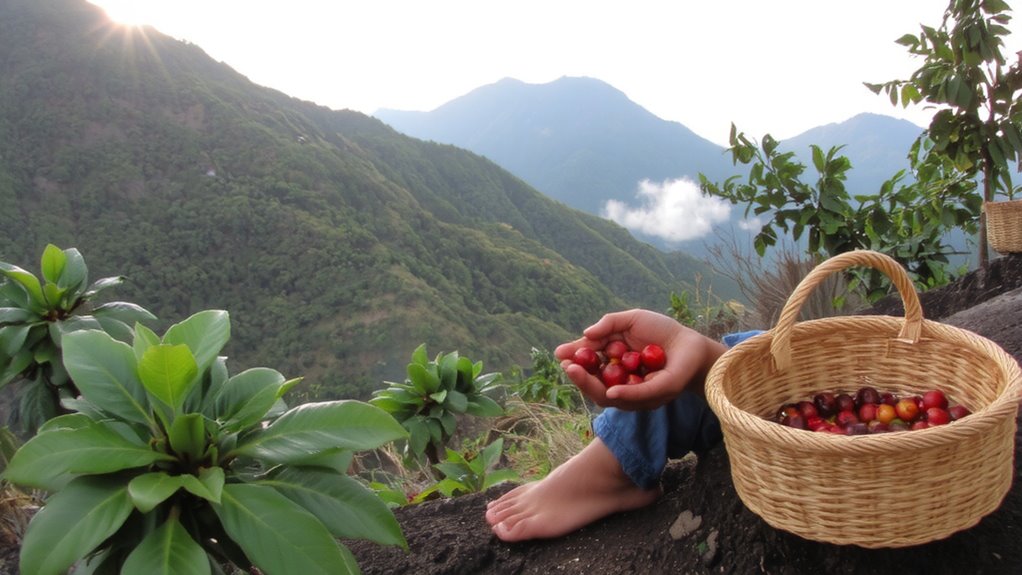
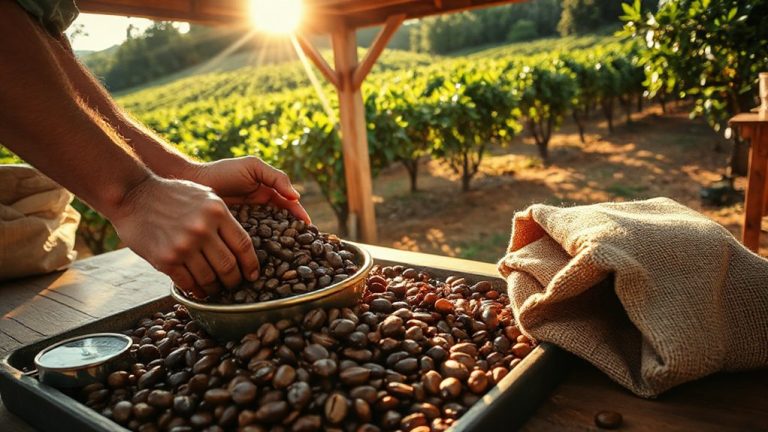
You taste the bright citrus and floral notes in your cup, and now it’s time to meet the people who made that flavor possible. In Bench Maji, smallholder farmers tend coffee using世代-long farming traditions, often on steep forested plots between 1,800 and 2,200 meters. These elevations define key coffee origins in Ethiopia, where biodiversity and climate shape bean development. Farmers typically grow heirloom varieties under native shade trees, limiting chemical inputs and supporting natural pest control. Most harvest by hand, selecting only ripe cherries to maintain quality. Their plots are small-often less than two hectares-and coffee is one part of mixed farming, which includes maize and enset. Post-harvest, cherries are processed with basic tools; many use home-built raised beds for drying. While infrastructure is limited, their role in preserving genetic diversity and traditional methods is critical to Ethiopia’s coffee identity.
How Modern Processing Is Transforming Forest-Harvested Beans
As you step beyond the farm and into the transformation phase, the way beans are processed after harvest is beginning to shift in Bench Maji, even though many traditions remain. You’ll now see modern wet mills replacing basic washing stations, improving consistency. Controlled fermentation techniques allow precise timing and pH monitoring, directly shaping flavor profiling. Producers test small batches with varying durations-12, 24, or 36 hours-to highlight floral or citrus notes in heirloom varieties.
| Method | Equipment Used | Flavor Impact |
|---|---|---|
| Washed | Fermentation tanks | Clean, bright acidity |
| Natural | Raised beds | Fruity, full body |
| Honey | Semi-dry mills | Balanced sweetness |
| Anaerobic | Sealed fermentation | Winey, complex depth |
These methods give you better traceability and quality control, essential for specialty markets. You’re not abandoning tradition-you’re refining it with tools that reveal the forest’s true taste.
Building Roads and Routes to Export Bench Maji Coffee
Even with high-quality beans coming from improved processing, getting Bench Maji coffee to international buyers still hinges on one critical factor: reliable transport. You can’t move delicate green coffee fast or affordably without decent road infrastructure. Right now, many farmers rely on rough, seasonal paths that slow down export logistics and risk bean quality. Upgrading roads means trucks reach collection points faster, cutting delays that lead to moisture loss or mold. Paved or well-gravelled routes also reduce vehicle wear, lowering shipping costs over time. Some cooperatives are pushing for better access, partnering with local governments to prioritize key corridors. While air freight is an option, it’s too expensive for most smallholders. Stronger road infrastructure doesn’t just improve timing-it builds trust with importers who need consistency. When your coffee moves smoothly from farm gate to port, export logistics become predictable, opening doors to premium markets. You’re not just selling flavor-you’re proving reliability.
Can Bench Maji Define the Future of Ethical Coffee?
Bench Maji’s growing reputation isn’t just about cleaner roads or faster exports-it’s becoming a test case for what ethical coffee can look like when quality, fairness, and sustainability are built in from the start. When you choose beans from here, you’re often supporting direct sourcing, where farmers get paid fairly without layers of middlemen. Unlike standard Fair Trade models that set minimum prices but don’t guarantee quality premiums, direct sourcing lets roasters pay more for better beans-rewarding skill and care. This system works best when buyers build long-term relationships, not one-off deals. You’ll find these coffees often have traceable farms, transparent pricing, and consistent cup scores. For brewing, use a medium grind and 200°F water in a pour-over or Aeropress to highlight clarity. Bench Maji won’t define ethical coffee alone, but it shows how direct sourcing, not just certification, can create real impact.
On a final note
You’ll find Bench Maji’s coffee delivers unique, complex flavors thanks to its high altitude and untouched biodiversity. While remote, improved roads now make these rare, forest-harvested beans more accessible. Smallholder farmers use modern processing to preserve quality. For you, this means a truly distinct cup-worth exploring if you value origin, ethics, and flavor clarity. Consider beans from trusted importers like Catalyst or Nordic Approach.