Decoding Coffee Terminology: The Essential Guide to Understanding Industry Jargon and Slang Terms
You pull a shot of espresso using 9 bars of pressure for 25–30 seconds, with a ristretto giving a sweeter, concentrated version. Light roasts offer bright, floral notes; dark roasts bring out chocolate and smoke. A cortado balances espresso and milk, while lattes are milk-heavy. Third wave emphasizes single-origin beans and precise roasting. Baristas “dial in” grinds and watch for “splitting” flow. Names like Lelit or Elektra mean control and consistency-knowing these terms sharpens your coffee choices. More insights await as you explore further.
Notable Insights
- Espresso is extracted under 9 bars of pressure in 25–30 seconds, with “pulling” a shot referring to any espresso preparation.
- Ristretto uses the same coffee dose as espresso but less water, yielding a sweeter, more concentrated flavor.
- A cortado balances equal parts espresso and warm milk in a 6-ounce serving, distinct from milk-heavy lattes or foam-rich cappuccinos.
- Third wave coffee emphasizes single origin beans, direct trade, and light roasts to highlight unique regional flavor profiles like berry or citrus.
- Baristas use “dialing in” to adjust grind, dose, and tamp for balanced extraction, with “splitting” indicating even espresso flow.
What Is Espresso? Key Terms Like Ristretto and Pulls
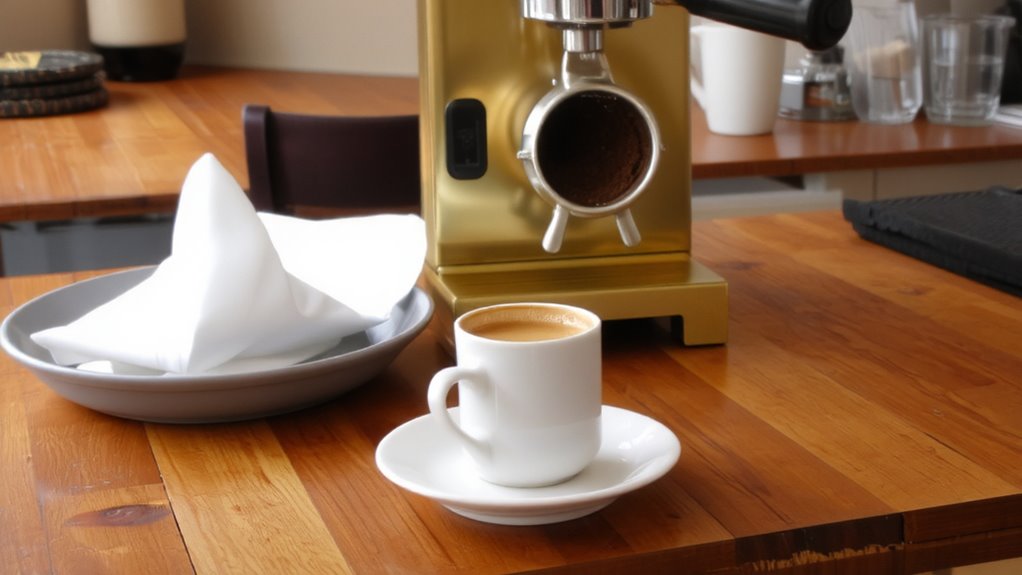
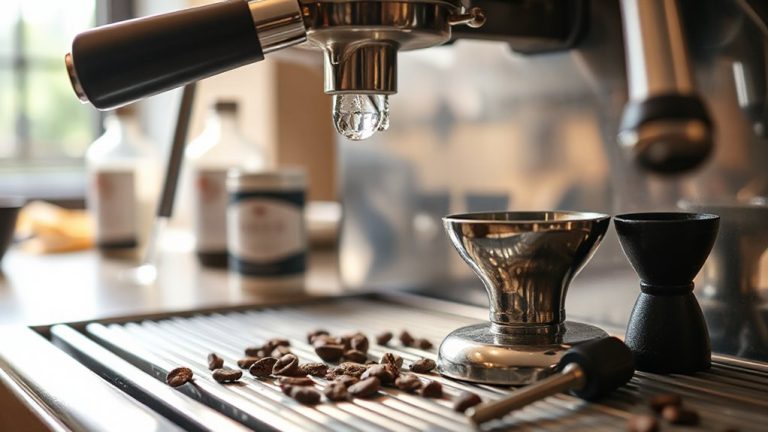
Espresso isn’t just a type of coffee-it’s a brewing method that forces hot water through finely-ground coffee under high pressure, delivering a concentrated shot in about 25 to 30 seconds. You need at least 9 bars of brewing pressure for proper extraction-most home and commercial machines meet this standard. The term “pull” comes from manual levers, when you’d literally pull a handle to initiate the shot; today, it refers to starting any shot, automatic or not. A ristretto is a shorter pull, using the same coffee dose but less water, resulting in a sweeter, more concentrated flavor. Understanding espresso origins-early 20th century Italy-helps explain its efficiency and strength. Machines like the Elektra Micro Casa or Lelit Bianca offer precise control, essential for consistency. Pulls vary based on grind, dose, and machine stability, so dialing in fresh beans daily is key. It’s not about flashy gear-it’s about repeatable results. Portable options like the best espresso makers for hiking allow enthusiasts to enjoy quality shots even in remote outdoor settings.
Your Guide to Coffee Roast Levels: and Their Flavors
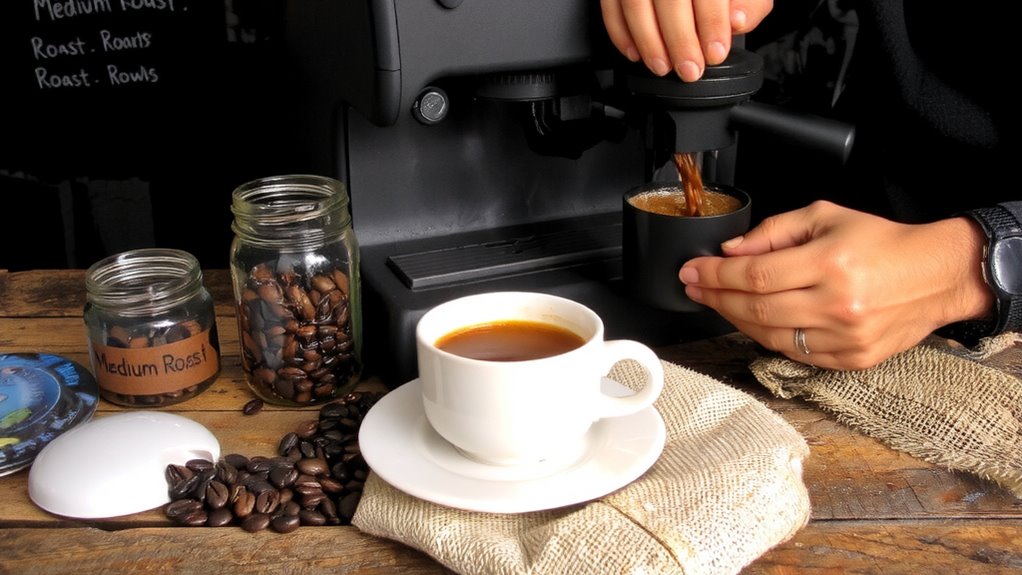
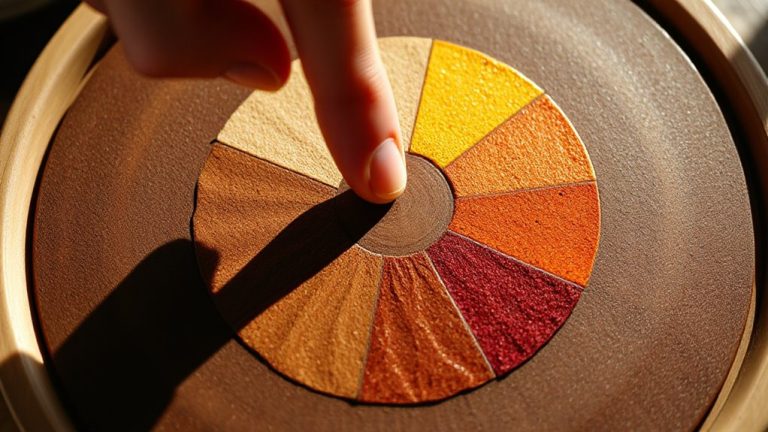
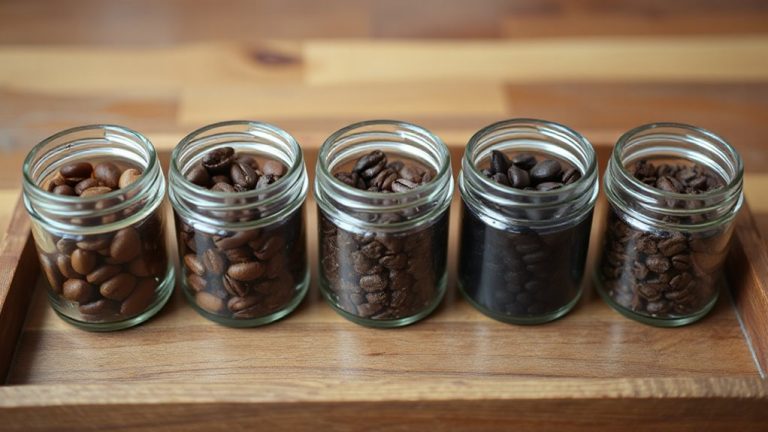
Roast level shapes how your coffee tastes more than almost any other factor after the bean itself. A light roast preserves the bean’s original characteristics, offering brighter acidity, more floral or fruity notes, and a thinner body. These work well for pour-over or drip brewing where clarity matters. As beans roast longer, they lose moisture and expand, developing deeper, richer flavors. A dark profile brings bolder, smokier tones, sometimes with chocolate or caramel hints, and lower acidity. Oils rise to the surface, making them ideal for espresso or French press, where body counts. Don’t assume darker means stronger in caffeine-light roasts actually retain slightly more. Pick based on your brew method and taste: if you like complexity, go light roast; for bold, straightforward flavor, choose a dark profile. Match roast to your preferred balance of brightness and depth.
How Coffee Menus Work: Lattes, Cortados, and More
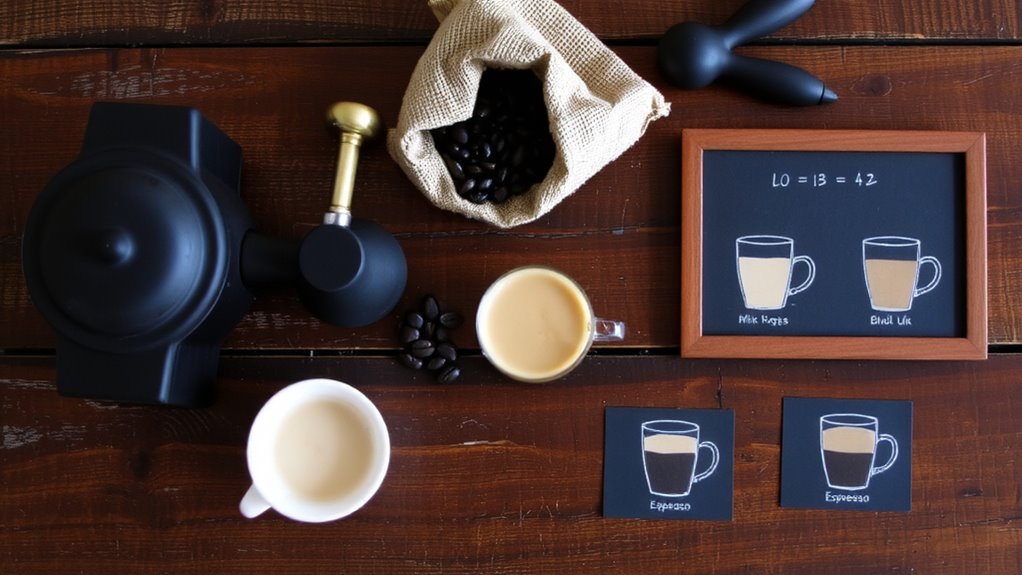
Ever wonder why coffee menus can look more confusing than a chemistry chart? You’re not alone. Behind the names like latte, cortado, or cappuccino are real differences in cup sizing standards, espresso shots, and milk steaming techniques. A cortado uses equal parts espresso and warm milk, served in a 6-ounce glass-ideal for balanced flavor. Lattes, usually 8–12 ounces, blend one or two shots with a lot more steamed milk and a light foam layer, relying on proper milk steaming techniques for smooth texture. Cappuccinos pack dense foam over less milk, often in 5–6 ounce servings. These cup sizing standards affect strength and mouthfeel. Knowing them helps you order based on preference, not guesswork. Baristas use these specs consistently, so you get the same drink each time. Understanding the basics means you aren’t just choosing a name-you’re choosing how your coffee tastes and feels.
What ‘Third Wave Coffee’ Means in Barista Terms
The term *third wave coffee* treats coffee as an agricultural product with distinct terroir, much like wine. You’ll notice baristas focus on quality and origin, not just caffeine. These shops often feature single origin beans-coffee from one region or farm-so you can taste subtle differences in flavor. They value direct trade, meaning roasters buy straight from farmers, ensuring better pay and higher bean quality. You’ll pay more, yes, but you’re also getting beans roasted in small batches for peak freshness. Unlike mass-market blends, third wave emphasizes clarity, brightness, and specific flavor notes-like berry or citrus-rather than heavy roast flavors. If you want to explore what coffee can truly taste like, try a single origin pour-over. It’s simple, clean, and shows why third wave changed the game.
Brewing Methods Explained: Drip, French Press, and Beyond
Now that you know where your beans come from and why origin matters, it’s time to look at how brewing method shapes your cup. Drip coffee makers are convenient and consistent, great for everyday use, but often lack nuance. For more control, try pour over methods like the Hario V60 or Chemex-they highlight clarity and brightness, especially with light roast single origins. The French press delivers a full-bodied, sediment-rich cup by steeping grounds for four minutes; it’s simple but less precise. Cold brew, steeped for 12–24 hours, yields a smooth, low-acid concentrate perfect for iced drinks. Each method varies in contact time, water temperature, and filtration, directly affecting flavor extraction. Choose pour over for complexity, French press for richness, drip for ease, or cold brew for refreshment. Your gear and grind size matter-match them to your brew style for best results. For office environments seeking reliable performance, consider commercial coffee machines designed for high-volume use and minimal maintenance.
Barista Slang Decoded: What They Say Behind the Counter
Why does your barista keep talking about shots “splitting” or beans “dialing in”? Those terms aren’t just flair-they’re part of daily espresso prep. “Splitting” refers to the even flow of espresso from both spouts during a pull, indicating balance. If it streams from one side faster, the grind or dose needs adjusting. “Dialing in” means fine-tuning your grind size, dose, and tamp to hit the right extraction time. You’ll hear bean slang like “fruity,” “tight,” or “baked” to describe roast quality or flavor traits, helping baristas spot issues fast. Baristas also rely on order cues-phrases like “two oat lattes, one shot split” help them move quickly without confusion. Understanding these cues improves speed and accuracy, especially during rushes. Knowing this language helps you communicate better and appreciate the precision behind your drink. It’s not just talk-it’s workflow.
On a final note
Now you know the basics: espresso isn’t just strong coffee-it’s concentrated, brewed fast under pressure. Light roasts keep more origin flavor; dark roasts bring bold, roasted notes. A latte’s mostly milk; a cortado cuts espresso with a splash. Third wave focuses on quality and process. For brewing, drip is simple, French press gives body. Choose gear that fits your taste and routine-no single method wins for everyone.