A Comprehensive Guide to Espresso Machine Maintenance for Baristas: Tips and Tricks to Keep Your Equipment Running Smoothly
You should clean your group head and portafilter daily with warm water-no soap-to prevent residue. Backflush weekly with a blind basket and detergent to clear oil buildup. Descale every three months using Durgol or Dezcal, especially if you have hard water. Wipe and purge the steam wand after each use to avoid clogs and sour flavors. Check seals, screens, and valves monthly for wear. Keep up these habits, and you’ll stay ahead of most machine issues before they start.
Notable Insights
- Clean the portafilter and group head daily by rinsing with warm water and wiping the gasket to ensure optimal espresso extraction.
- Perform weekly backflushing with a blind basket and detergent to remove coffee oils and maintain consistent brew pressure.
- Descale the machine every three months using a dedicated solution to prevent mineral buildup and maintain water flow.
- Purge and wipe the steam wand immediately after each use to prevent milk residue buildup and bacterial contamination.
- Inspect seals, screens, and valves monthly for wear or damage to prevent leaks and ensure proper machine function.
Clean the Group Head & Portafilter Daily
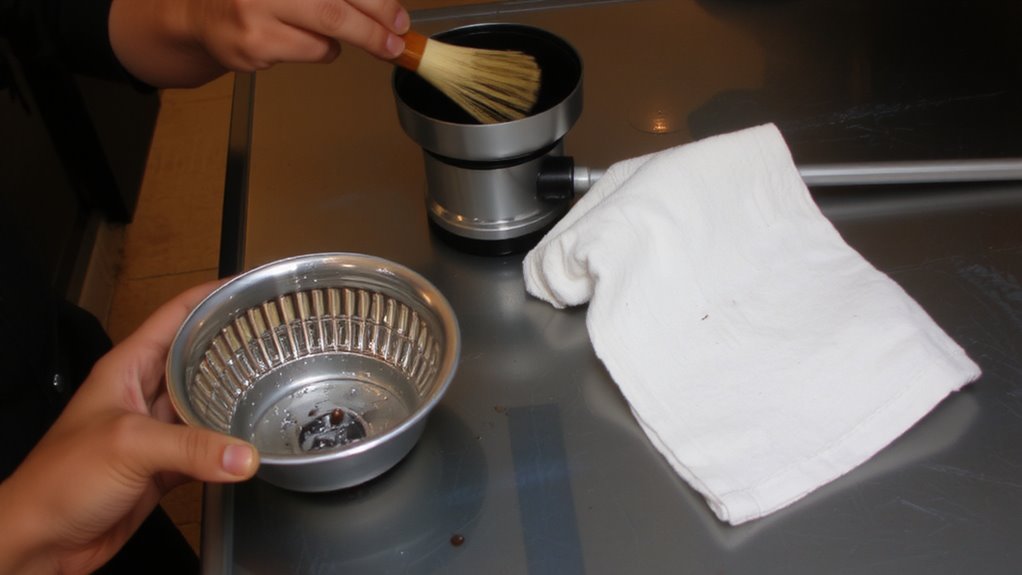
You should clean the group head and portafilter daily to prevent old coffee oils from building up and ruining your shots. After each use, knock out the puck and rinse the portafilter with warm water-don’t use soap, as it can leave residue. Wipe the group head gasket with a damp cloth to remove coffee grounds. A clean setup guarantees better espresso grind consistency and extraction. Over time, grime affects how water flows through the coffee bed, especially with fine or dense grinds. Different portafilter basket types-single, double, pressurized, or naked-require thorough inspection; naked baskets show channeling clearly, so any leftover debris impacts results fast. Check for clogs and scrub baskets weekly with a soft brush. Stainless steel baskets last longer than chrome-plated ones. Keeping everything clean means fewer variables, more reliable shots, and longer machine life. For deeper cleaning, using a backflush disc can help remove stubborn oils from the group head.
Backflush Your Espresso Machine Weekly
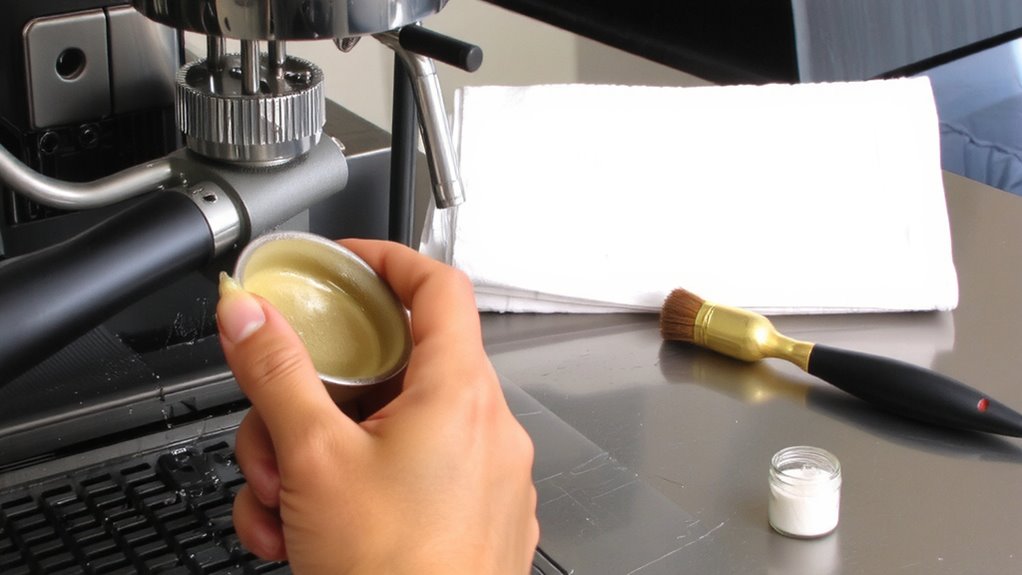
Usually done once a week, backflushing helps remove built-up coffee oils and residue from the group head and shower screen that regular cleaning misses. You’ll need a blind basket and a small amount of cleaning detergent made for espresso machines. Lock the portafilter in, start a brew cycle, and let it run for about 10 seconds-this builds espresso pressure to force grime out. Stop, wait a few seconds, then repeat 5–6 times. This keeps the group head clear, which helps maintain consistent espresso pressure and accurate brew timing. Without it, clogs can form, leading to uneven extraction or slow shots. Machines like the Lelit or ECM benefit just as much as commercial units. Skip this, and you’ll likely see changes in flow rate or pressure stability. It’s a quick step but makes a real difference in performance and shot quality. Just don’t overdo detergent-rinse well after.
Descale Every 3 Months (Step by Step)
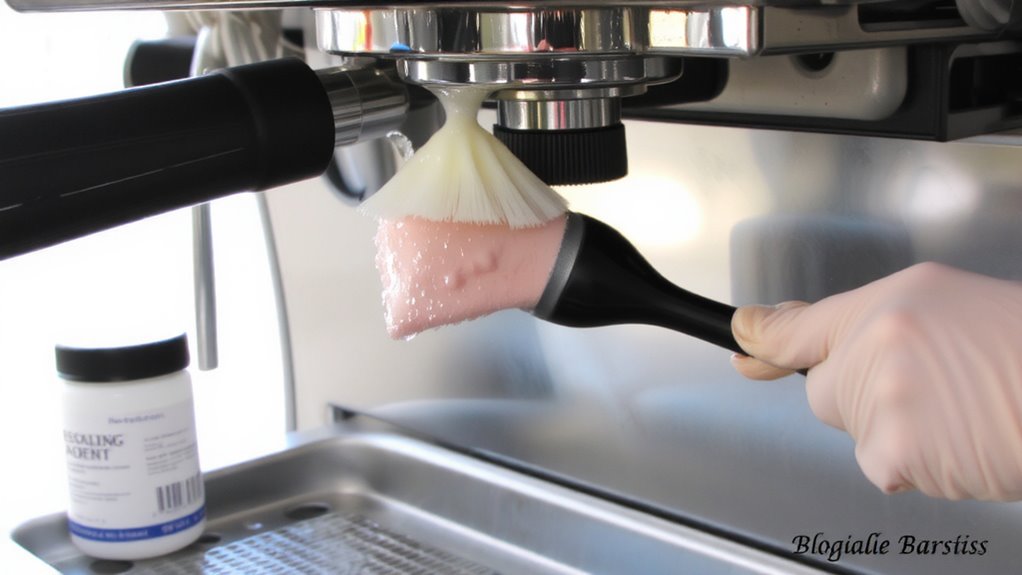
Every three months, scaling should be part of your routine to keep the internal water pathways of your espresso machine clear of mineral buildup. You’ll need a descaling solution-like Durgol or Dezcal-and access to your machine’s group head and boiler. Start by turning off the machine and draining the water tank. Mix the solution with water according to instructions, then pour it in. Run the solution through the group head and hot water dispenser in cycles, letting it sit for 10–15 minutes halfway. Then flush with fresh water at least three times to remove residue. Water hardness in your area affects how quickly scale accumulates-hard water needs more frequent attention. Skipping this step can throw off machine calibration, leading to poor temperature control and inconsistent shots. Stay consistent and your machine will perform reliably. Using the right coffee machine maintenance tools can simplify the descaling process and improve overall equipment longevity.
Wipe and Purge the Steam Wand After Each Use
After handling the deeper internal maintenance like descaling, attention shifts to daily habits that keep your machine functioning smoothly-starting with the steam wand. You should purge the wand right after steaming milk to clear any lingering milk residue from the nozzle. This simple blast of steam takes just a few seconds but prevents clogs and buildup inside the tip. Right after purging, wipe the wand thoroughly with a damp cloth. Don’t skip this-even if it looks clean, dried milk can harbor bacteria and affect steam hygiene. Buildup can also alter steam pressure, weakening your ability to texture milk properly. Make it a rule: purge, then wipe, every time. Using a dedicated steam wand towel helps avoid cross-contamination. Over time, this routine prolongs wand performance and keeps your machine sanitary, avoiding sour flavors and potential health risks from old milk residue. A high-quality milk frother can complement your espresso machine by offering precise milk texturing off-machine, ideal for lower-volume setups or alternative milk types.
Inspect Seals, Screens, and Valves Monthly
Once a month, check the seals, screens, and valves on your espresso machine-they wear down over time and can subtly affect performance. Poor seal durability leads to pressure loss, while misaligned valve alignment disrupts water flow, both harming extraction. Catching wear early saves time and money.
| Component | What to Check |
|---|---|
| Group head seal | Cracks, hardening, or warping |
| Steam wand seal | Leaks or looseness when tightened |
| Portafilter screen | Holes, warping, or clogs |
| Brew valve | Smooth movement and alignment |
| Overpressure valve | Proper placement and sealing |
Replace worn parts promptly. Use OEM or reputable aftermarket parts for best fit. Keep spare seals on hand. Regular inspection guarantees consistent pressure and flavor. Don’t wait for failure-prevent it.
Stop Oil Buildup With a Deep Clean Routine
You’ve checked the seals, screens, and valves-now turn your attention to what’s lurking beneath the surface: coffee oil buildup. Those oils, a byproduct of coffee chemistry, cling to group heads, portafilters, and shower screens, turning rancid over time and harming shot quality. A deep clean routine every 7–10 days prevents this. Use a powdered detergent like Cafiza: mix with water, let it soak group heads and portafilters for 20 minutes, then brush and rinse thoroughly. Don’t forget backflushing with water and detergent to clear internal lines. Consistent grinder calibration helps too-dosing too much or too fine increases surface area, accelerating oil release. Avoid aggressive scrubbing that damages stainless steel. A clean machine pulls cleaner shots, maintains temperature stability, and lasts longer. Make deep cleaning non-negotiable, not reactive.
On a final note
Keep your espresso machine in top shape by sticking to a simple routine: clean the group head and portafilter daily, backflush weekly, and descale every three months. Wipe the steam wand after each use to prevent milk buildup. Check seals and screens monthly for wear. A deep clean prevents oil residue from affecting taste. Consistent care means better shots, fewer breakdowns, and longer machine life-no guesswork needed.