Backflushing an Espresso Machine: Weekly Water + Cafiza Guide
You should backflush your espresso machine’s group head weekly with water to clear coffee oils and keep shots tasting clean. For a deeper clean, use a portafilter filled with spent grounds to gently scrub the screen. Every 1–2 weeks, run a detergent like Cafiza if pulls slow or taste off-never use vinegar. Stick to brew pressure, avoid steam, and always remove the puck first. Machines like the Rocket R58 or Lelit Lydia respond well to this routine. Do it right, and you’ll avoid clogs and stale flavors-there’s more to get right with timing and technique.
Notable Insights
- Backflushing with water removes loose coffee oils and residue from the group head between deep cleanings.
- Use an empty portafilter or blind filter to perform a short water-only backflush under brew pressure.
- For deeper cleaning, backflush with damp spent grounds to dislodge fines and oil buildup from the shower screen.
- Apply cleaning detergent every 1–2 weeks if water backflushes fail to restore flow or remove stubborn residue.
- Avoid steam pressure and always remove used pucks before backflushing to prevent clogs and machine damage.
Backflush Your Group Head With Water Only
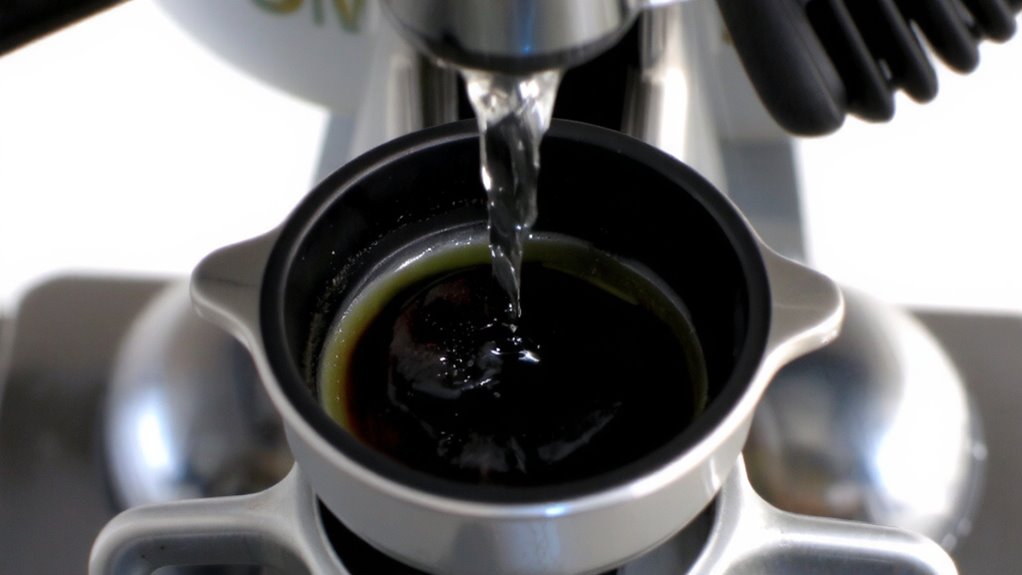
While you don’t need detergent for every cleaning cycle, rinsing your group head with water alone can help clear loose coffee oils and residue between deeper cleans. You simply lock in a portafilter-empty or with a blank filter-and run a short backflush cycle. This uses your machine’s normal water pressure to push out debris caught around the group head and shower screen. It’s quick, doesn’t require chemicals, and helps maintain consistent flow during shots. Just be sure your group seal is in good condition; a worn seal can leak during pressurized cycles and reduce cleaning effectiveness. Do this daily if you pull multiple shots, or every few days for lighter use. While not as thorough as detergent-based backflushing, water-only cycles are a practical way to extend machine life and maintain performance without over-cleaning.
Why Backflushing Keeps Your Espresso Machine Clean
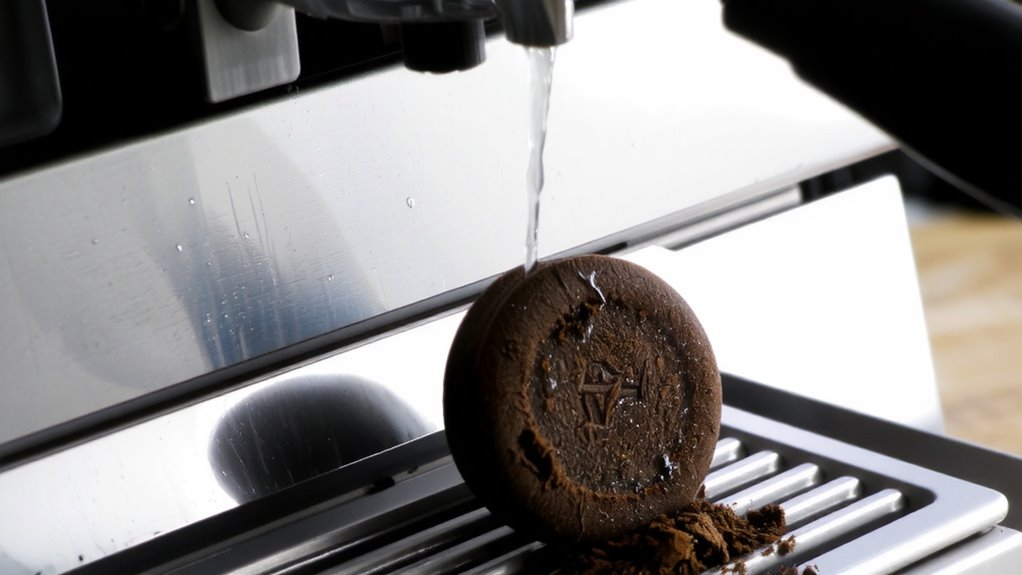
Since espresso leaves behind oils and fine coffee particles each time you pull a shot, those residues build up in your group head, shower screen, and dispersion block over time. Left unchecked, they restrict water flow and affect shot quality. Backflushing helps by using water pressure to force out debris trapped in these parts. When you lock the portafilter in without coffee, the machine’s pump creates resistance, triggering rapid bursts of water that cause group agitation. This pulsing action shakes loose stubborn grime more effectively than rinsing alone. Regular backflushing every few days keeps internal components cleaner, prolongs machine life, and guarantees consistent extraction. It’s a quick maintenance step, taking under a minute, but makes a noticeable difference in performance. Machines like the Rocket R58 or Lelit Lydia benefit just as much as commercial units. Skip it, and you risk clogs, uneven flow, and off-tasting shots.
Deep Clean the Group Screen With Spent Grounds
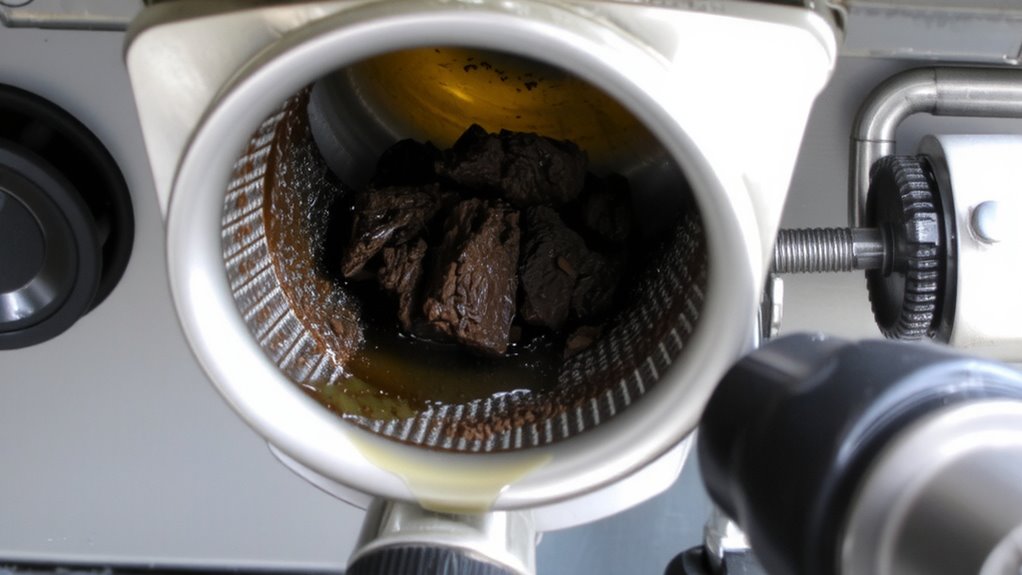
You’ve already seen how backflushing clears built-up oils and particles from your machine’s internal parts, but the group screen itself often needs extra attention. Over time, coffee fines and oil residue clog the tiny holes, leading to uneven water flow and poor extraction. To deep clean it, remove screen and inspect for stubborn buildup. Place the portafilter basket back in without the filter, then add a small handful of spent coffee grounds. Lock it into the group head and run a 10–15 second backflush. The damp grounds act as a mild abrasive, helping dislodge grime. Repeat once or twice, then rinse the screen thoroughly. You don’t need chemicals for regular maintenance-just spend time on consistent cleaning. This simple step keeps flow even and your shots tasting fresh. For optimal results, pair this cleaning routine with a high-quality espresso grinder to ensure consistent grind size and reduce fines production.
Add Cleaning Solution? Here’s When You Need It
When should you reach for a cleaning solution instead of relying on plain backflushing? You need it when regular water backflushes aren’t cutting through stubborn coffee oils and residue. While daily backflushing with water helps, using detergent is essential for a deeper clean-typically every 1–2 weeks, depending on use. Machines like the Breville Dual Boiler or La Marzocco Linea Mini build up gunk over time, especially with high daily shot counts. When to backflush with cleaning solution? When you notice slow pull times, inconsistent flow, or lingering bitter tastes. Cafiza or Puly Caff are reliable options-just don’t use vinegar or homemade mixes that can damage seals. Using detergent backflushes dissolves oils water alone can’t. Skip it daily; reserve it for targeted deep cleaning. Always rinse thoroughly afterward to avoid chemical flavor carryover. For Breville machine owners, using a best descaler for Breville ensures optimal performance and longevity.
How Often Should You Backflush Your Machine?
Regularly backflushing your espresso machine keeps the group head and portafilter union free of coffee buildup that can affect performance. For most home users, backflushing weekly with water is enough to maintain cleanliness and machine function. If you pull multiple shots daily, consider increasing your flushing intervals to twice a week. Machines used in busy environments, like cafes, often need daily backflushing to sustain performance. Maintenance frequency depends on usage, water quality, and how much fine grind escapes the puck. Over-backflushing won’t harm most machines, but it’s unnecessary if buildup isn’t present. A good rule: stick to a consistent schedule based on your shot volume. For example, a home barista making 2–3 shots daily can safely backflush once per week. This simple habit extends machine life and guarantees consistent extraction. Always refer to your machine’s manual for model-specific guidance on flushing intervals.
Avoid These Common Backflushing Mistakes
Why do some backflushing attempts do more harm than good? Because of mistakes like improper pressure control and incorrect puck disposal. If you don’t control pressure, you risk damaging the group head or portafilter. Always use the correct amount of water-too much pressure can stress seals and gaskets, especially on older machines like the Rocket R58. Never backflush with steam pressure; stick to brew pressure only. Another frequent error is incorrect puck disposal. Leaving old coffee grounds in the group head before backflushing clogs the screen and reduces cleaning effectiveness. Always knock out the puck and rinse the basket first. Skipping this step forces dirty water through grinds, spreading debris. Use a blind basket correctly and add only cleaning solution when needed. Regular, proper backflushing keeps your machine running clean-when done right.
On a final note
Backflushing keeps your group head working well by clearing coffee oils and residue. Do it regularly with water after daily shots, and use spent grounds once a week for a deeper clean. Add a cleaning solution monthly if you run hard water or pull lots of shots. Avoid over-tightening the blind basket or using abrasive tools. Stick to a routine, and your machine will last longer and make better espresso.