Adjusting Grind Size Settings for Different Espresso Machines to Enhance Crema Consistency Across Brands
Your machine’s design directly shapes the grind size you need for consistent crema. Lever machines like the Bezzera Strega need a coarser grind, while dual boilers like the Lelit Mara X work better fine. Dial in by starting medium-fine, then tweak in 5–10 micron steps based on shot time and crema. Match your grind to the bean-denser light roasts need finer settings. Use even distribution and consistent tamp pressure. Every machine, from La Marzocco to Rancilio, responds differently, so small changes make big differences in results. You’ll find your ideal setup through precise, patient adjustments.
Notable Insights
- Match grind size to machine type: finer for high-pressure dual boilers, coarser for lower-pressure lever machines.
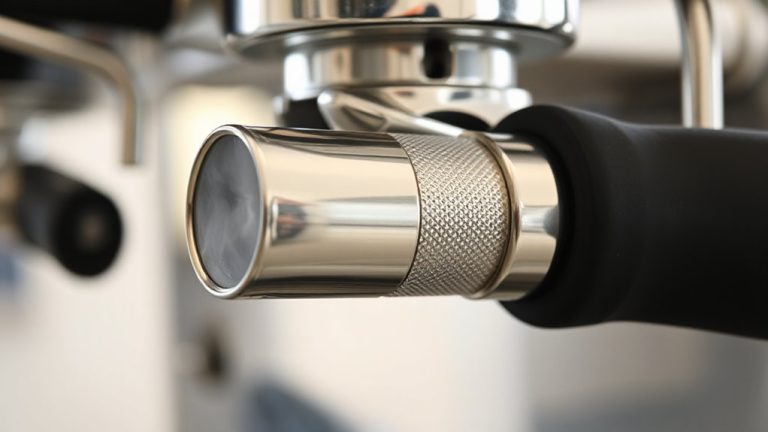
- Adjust for portafilter design-bottomless and low-clearance models require finer, more even grinds.
- Calibrate grind based on roast profile: finer for dense light roasts, slightly coarser for softer dark roasts.
- Re-dial grind when switching machines due to differences in pressure, temperature, and group head flow.
- Use consistent tamping and extraction time (25–30 seconds) to fine-tune grind for optimal crema.
Why Grind Size Determines Your Crema Quality
While you might think crema comes down to the espresso machine alone, the truth is your grind size plays a major role in how thick, rich, and lasting that golden layer turns out. Too coarse, and water zips through, under-extracting-crema fizzles fast. Too fine, and you risk clogging or bitter shots. Bean density matters: dense beans, like high-altitude Arabicas, often need a finer grind to reach proper resistance. Lighter beans may require a slightly coarser setting. Water temperature also interacts with grind-higher temps speed extraction, so you might need a coarser grind to balance it. Dialing in means adjusting grind based on these factors. Consistency starts with fresh, evenly ground beans. A quality burr grinder helps. Remember, even small changes-5–10 microns-shift results. Test, time, and tweak. Your crema’s texture and retention depend on it. Investing in one of the best burr grinders can significantly improve grind uniformity and espresso quality.
How Your Espresso Machine Affects Grind Needs
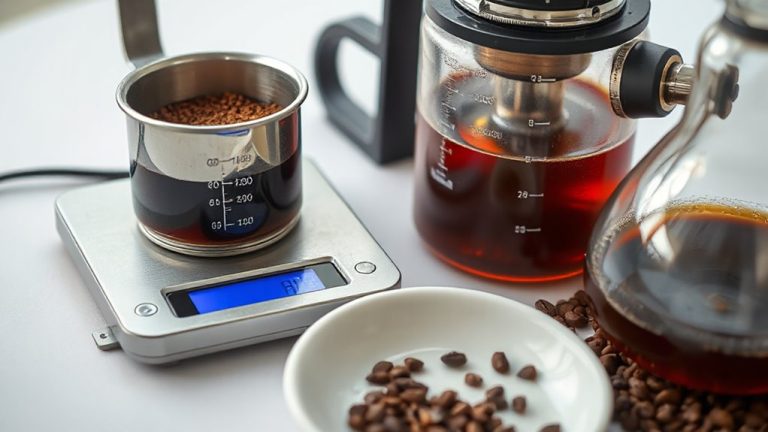
Your grinder isn’t working in a vacuum-what machine you’re using directly shapes the grind size you’ll need. Machines differ in pressure, water temperature, and flow control, all affecting extraction. For example, older spring-piston levers like the Bezzera Strega need a coarser grind than modern dual-boiler machines like the Lelit Mara X because of their lower, inconsistent pressure. Portafilter design also plays a role; bottomless portafilters expose channelling easily, often requiring a finer, more even grind to maintain crema. Water temperature matters too-higher temps, like on the Rocket R58 (around 206°F), may call for slightly coarser settings to avoid over-extraction. Conversely, lower temps, common on entry-level models, often need a finer grind to compensate. You’ll adjust your grind not just for beans, but for how your machine delivers heat and pressure. Machines aren’t interchangeable-your grind must adapt to their limits and strengths. Using a coffee scale with a built-in timer functionality can help you monitor extraction time more accurately, improving consistency across different machines.
Dialing In: Step-by-Step for Rich Crema
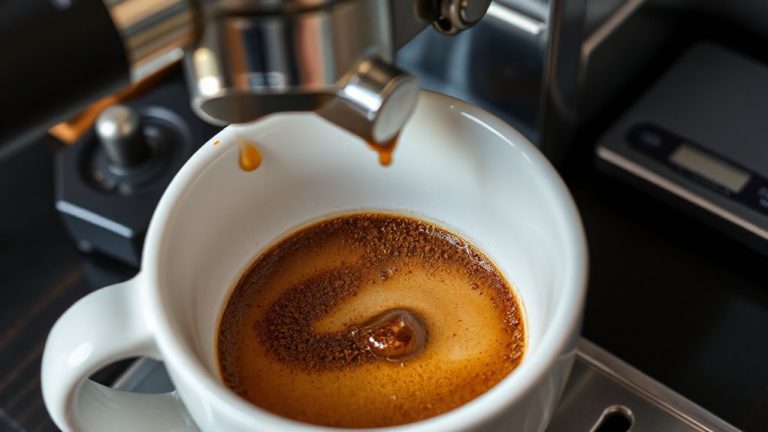
How do you get that thick, golden crema that signals a perfectly pulled shot? Start by setting your grind size medium-fine-like table salt-and adjust from there. Use a consistent tamping pressure of about 30 pounds to guarantee even extraction. Pull a shot and time it: 25–30 seconds for 1 ounce of espresso is ideal. If it’s too fast, the grind’s too coarse; if too slow, it’s too fine. Always change one variable at a time. Check your brew temperature-most machines perform best between 195°F and 205°F. Too low, and you’ll lack crema; too high, and the shot tastes bitter. Dial in fresh for each bean type, as density and roast affect extraction. This method works reliably across brands, whether you’re using a Breville, Lelit, or Gaggia. Precision here means consistency in every cup. For optimal results, pair your machine with a high-quality burr grinder, as consistent grind size is critical for balanced extraction and rich crema.
Fixing Common Grind Mistakes by Machine Brand
Grind inconsistencies can quickly ruin an espresso shot, and each machine brand handles them differently. With La Marzocco, low portafilter clearance means you’ll need a fine, even grind to avoid puck damage and channeling. Accidental contact between the group head and portafilter can disrupt extraction, so check fit before dosing. For Rocket machines, pay attention to their unique filter basket design-many use triple baskets that demand precise distribution. If you’re using an older Rancilio Silvia, its pressurized portafilter masks grind errors, but upgrading to a non-pressurized basket exposes poor consistency. You’ll need to tighten your grind and tamp evenly. With Lelit, the narrow tolerance in portafilter clearance limits basket options, so stick to OEM or low-profile baskets. Always match your grinder’s output to your machine’s filter basket design-otherwise, you’ll fight spray, uneven saturation, or clogging.
Adjusting Grind for Single-Origin vs. Blends
While single-origin beans and blends behave differently under pressure, adjusting your grind based on bean type can make or break the shot. Single-origins often have higher bean density and unpredictable roast variance, needing a finer, more precise grind to extract evenly. Blends, crafted for balance, usually tolerate a slightly coarser setting thanks to their consistent roast profile. Your grinder must respond accurately-especially when switching between the two.
| Bean Type | Grind Adjustment Tip |
|---|---|
| Single-Origin | Go finer; watch for clogging |
| Light Roast | High bean density = finer grind |
| Dark Roast | Softer beans = slightly coarser |
| Espresso Blend | Balanced roast variance = mid setting |
| Freshly Blended | Check for even particle distribution |
Account for bean density and roast variance daily-your crema depends on it.
How Pressure and Flow Change Your Grind Setting
When the pump kicks in, your grinder’s setting has to match the machine’s pressure and flow dynamics, or you’ll end up with under-extracted sourness or over-extracted bitterness. If your machine runs at 9 bars but restricts flow, you’ll need a coarser grind than on high-flow models, even at the same pressure. Machines like the Lelit Bianca allow manual flow adjustment, meaning you must tweak your grind finer or coarser based on real-time flow changes. Tamping pressure matters too-if you tamp too lightly, water channels through weak spots, causing uneven extraction. Keep tamping firm and consistent. Water temperature also interacts with grind: hotter water extracts faster, so you may need a slightly coarser setting to avoid over-extraction. Always adjust grind first when troubleshooting shot time-flow and pressure profiles shape how water moves through the puck, directly impacting balance.
What to Watch When Switching Machines
How different are your shots going to taste if you switch from a Vibiemme Domobar to a Rocket R58? More than you’d think - and it’s not just the machine. Portafilter design, group head calibration, and water hardness all shift your grind needs. Even with the same beans, you’ll need to re-dial. Screen size, basket depth, and flow rates vary, so your old settings won’t translate directly.
| Machine | Portafilter Design | Ideal Grind Adjustment |
|---|---|---|
| Vibiemme Domobar | 58mm, triple-screen | Medium-fine |
| Rocket R58 | 58mm, pressure-profiling | Slightly finer |
| Slayer Single | Bottomless, hybrid | Fine |
| La Marzocco GB5 | Saturated group | Medium |
| Decent DE1 | Adjustable flow | Variable |
Adjust for water hardness early-softer water extracts slower, affecting grind. Test shots, tweak in small steps.
On a final note
You’ve seen how grind size directly shapes crema, and how machines like the Lelit Bella or Breville Dual Boiler respond differently. Always dial in fresh when switching beans or devices. Single-origins often need finer tweaks than stable blends. Monitor pressure and flow to avoid under or over-extraction. Consistency comes from small, deliberate changes-weigh shots, time them, and adjust. Your machine’s design matters, but your grinder’s precision matters more.