Explore Traditional Turkish Coffee Brewing Methods by Fine-Tuning Heat Source, Grinding Technique, and Steeping Time Control for Optimal Flavor Development Precision Adjustment
You need steady, low heat to avoid scorching-copper or brass cezves work better than stainless steel, especially on gas stoves. Use a burr grinder like the Baratza Virtuoso for an ultra-fine, powder-like consistency that extracts full flavor. Let the coffee steep slowly to build thick foam, removing it just before boil-over. Traditional demitasse ratios and pre-dissolved sugar matter. Get these steps right, and you’ll access the depth and texture that define authentic Turkish coffee.
Notable Insights
- Use low, steady heat to prevent scorching and allow gradual extraction for rich flavor and stable foam.
- Grind coffee to a powder-fine consistency, matching espresso or cocoa, for full suspension and optimal flavor release.
- Choose a copper or brass cezve for superior heat retention and precise temperature control during brewing.
- Steep the coffee just below boiling to develop dense, velvety foam without causing it to collapse.
- Add sugar before heating and maintain a 1:10 coffee-to-water ratio for balanced strength and traditional authenticity.
Why Heat Control Makes or Breaks Turkish Coffee
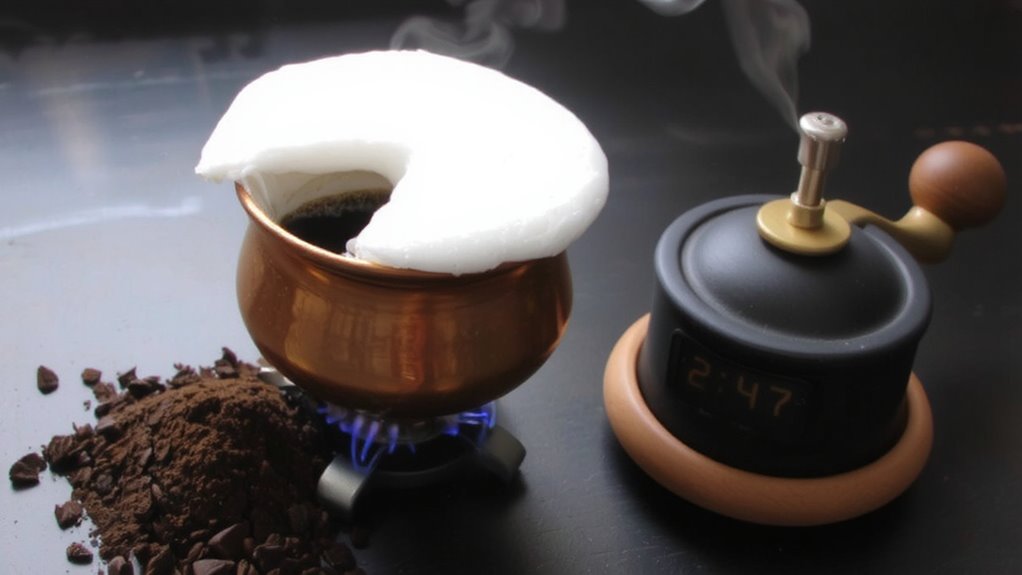
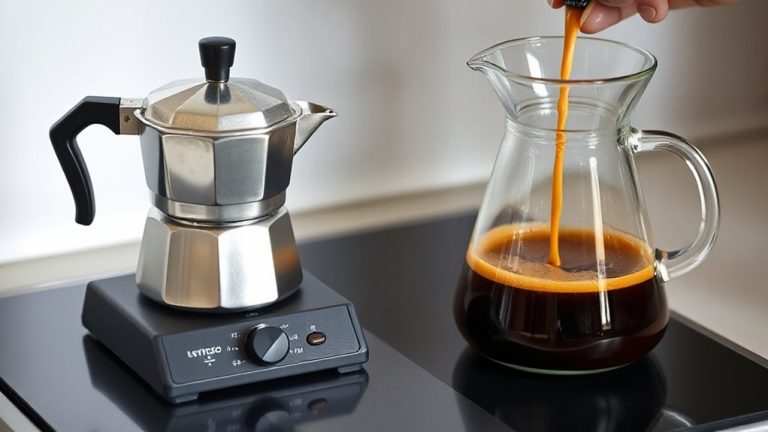
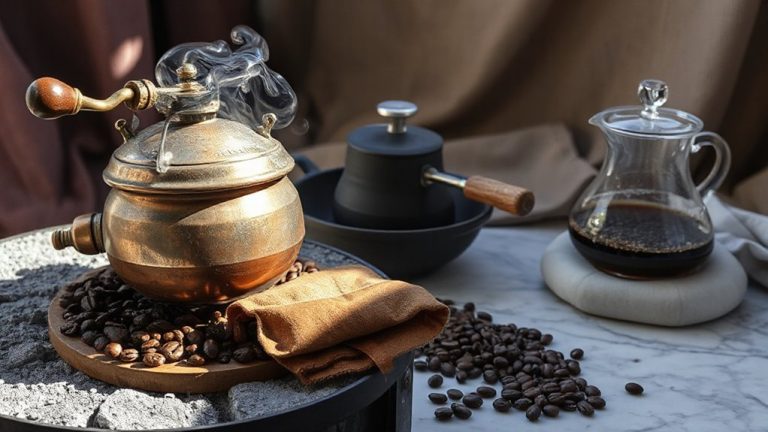
While you might think boiling the coffee quickly gets the job done, controlling the heat during brewing is actually the key to getting the rich flavor and signature foam that Turkish coffee is known for. Using low, steady heat allows the grounds to infuse gradually without scorching. Your brewing vessel-traditionally a cezve-plays a big role here, as materials like brass or copper offer better heat retention than stainless steel. This steady temperature helps form the prized foam, or *kaymak*. If heat rises too fast, the coffee burns, ruining the taste. A narrow neck on the cezve slows boiling, giving you more control. You’ll want to remove it just before it overflows. Consistent heat retention means fewer mistakes and better results, especially on stovetops with uneven output. Choose a vessel suited to your heat source-small electric burners need more attention than gas. Proper heat control isn’t just technique; it’s built into the right tool.
How an Ultra-Fine Grind Transforms Turkish Coffee
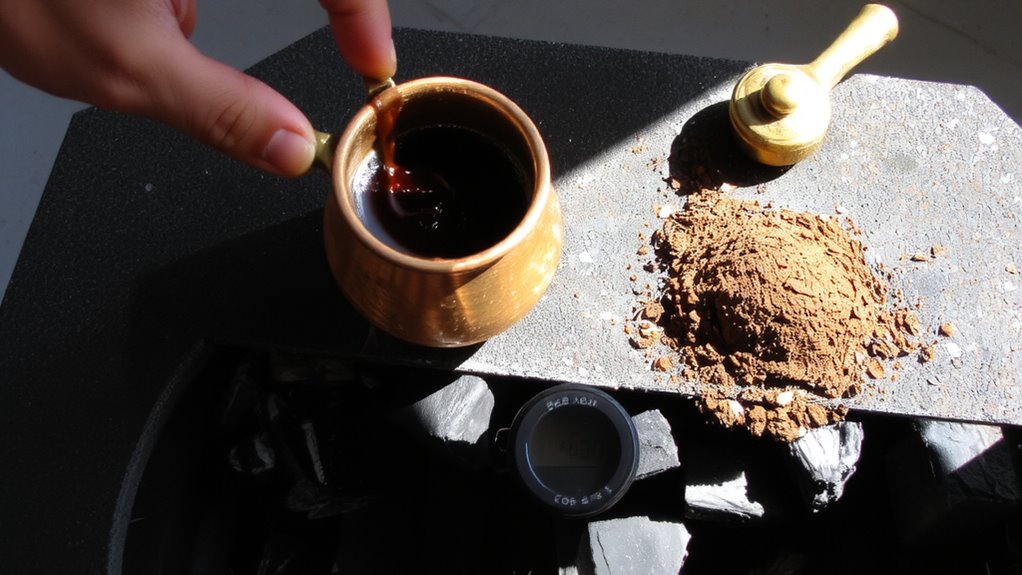
If you want authentic Turkish coffee, you need an ultra-fine grind-finer than espresso, almost like powdered sugar. This fine texture lets the grounds fully suspend in water, extracting deep flavor without filtration. The grind size matters because it interacts directly with bean density and roast profile. Denser beans, like Ethiopians, resist grinding and may need burr mills with precision settings to avoid overheating. Lighter roast profiles retain more acidity, which the ultra-fine grind amplifies, so balance is key. A consistent grind guarantees even extraction, preventing weak or bitter notes. Blade grinders often fail here-lacking uniformity. Go for a high-quality burr grinder, like the Baratza Virtuoso, to get it right. If the grind’s too coarse, you’ll lose the rich body Turkish coffee is known for. Get it wrong, and no amount of heat control can fix it. Grind fresh, grind fine, and match it to your bean’s traits for best results. For portable precision grinding, consider a mini coffee hand grinder that delivers uniformity even on the go.
How Steeping Time Builds the Foam in Turkish Coffee
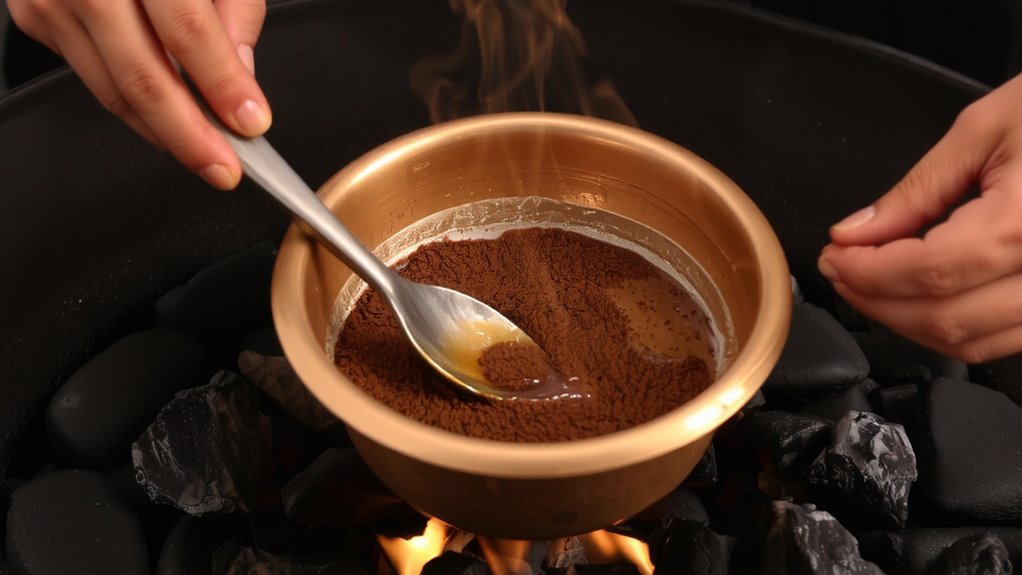
Since foam defines a well-made cup of Turkish coffee, getting the steeping time right is essential. You need just the right heat and timing to develop foam density without boiling over. When you heat the coffee slowly, crema formation happens naturally as gases release and emulsify with oils. Too short a steep, and the foam thins; too long, it collapses. Watch it closely-your payoff is a rich, velvety layer that carries flavor and tradition. For consistent results, using an electric Turkish coffee maker can help maintain optimal temperature control throughout the brewing process.
Why Tradition Requires Precision in Turkish Coffee
Because Turkish coffee carries centuries of cultural practice, getting it right means respecting more than just the recipe-it’s about mastering the details that affect flavor, texture, and presentation every time. You’re working with cultural heritage, where each element-from bean grind to heat control-has purpose. The ritual significance isn’t just symbolic; it shapes the outcome. Using a cezve (ibrik) demands exact heat levels: too high, and the foam breaks; too low, and extraction stalls. Your grind must be powder-fine, like cocoa, or the sediment and strength suffer. Even water quantity needs consistency-typically one demitasse per serving. These aren’t arbitrary rules. They’ve been refined over generations to guarantee balance. Deviate, and you lose authenticity. Precision isn’t perfectionism; it’s tradition working as intended. When done right, each cup honors both craft and custom, delivering the rich, layered experience Turkish coffee is known for.
What Most Beginners Get Wrong About Turkish Coffee
Where do most beginners go wrong with Turkish coffee? You often rush the process, ignoring how heat, grind, and timing shape the final cup. Common misconceptions lead you to use regular ground coffee, but Turkish demands an ultra-fine powder-almost like flour-best achieved with a burr grinder. Pre-ground usually isn’t fine enough and dulls the flavor. Then there’s the heat: cranking the cezve too high burns the brew, creating bitterness instead of rich crema. You should use low, gradual heat-preferably from a sand bath or simmering water-to let the foam rise slowly. Brewing myths suggest adding sugar after, but it must dissolve during heating. Skipping precise water-to-coffee ratios (typically 1:10) throws off strength. And skimping on steeping time? That hinders body development. Mastery means respecting each variable. Stick to tradition, control the details, and you’ll pull balanced, aromatic shots every time.
On a final note
You need steady heat, an ultra-fine grind, and careful timing to brew true Turkish coffee. Use a cezve and low heat to avoid boiling-scorching kills flavor. Grind beans until powdery; blade grinders work but aren’t ideal. Let foam rise slowly; rushing ruins texture. Skip sugar mistakes by adding it early. This isn’t instant-it’s precision. Stick to tradition, watch variables, and you’ll get rich, authentic results every time.