Optimizing Aroma Release Through Controlled Water Flow in Pour Over Brewing Methods
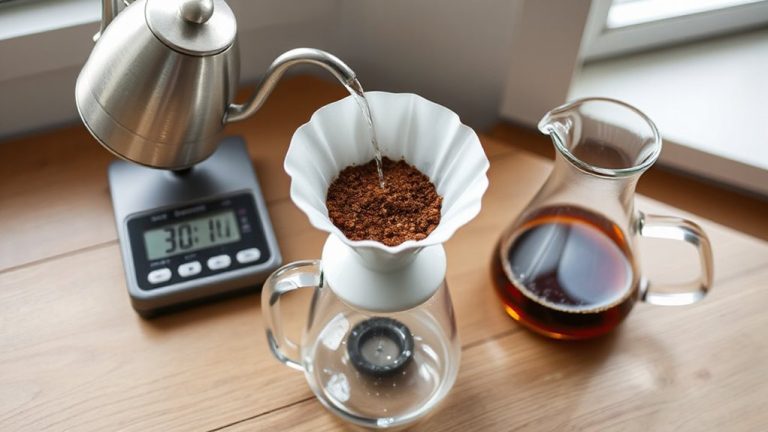
You control aroma in pour over by adjusting water flow to match your beans’ age and roast. Use a gooseneck kettle like the Hario Buono for steady, slow pours that extract floral notes without bitterness. Bloom fresh grounds with twice the water weight to release CO₂ and prep for even extraction. Try 3–4 timed pulses to sharpen fragrance, especially with light roasts. Too fast a flow mutes delicate aromas; too slow risks over-extraction. With the right technique, you’ll bring out more of what’s in the bean-and there’s more to getting it right than most realize.
Notable Insights
- Use a gooseneck kettle to maintain precise water flow control for optimal aroma extraction.
- Adjust pour rate based on bean age: slower for fresh, floral beans; faster for older, less volatile beans.
- Execute a proper bloom with twice the water weight of grounds to release CO₂ and enhance fragrance.
- Apply pulse pouring with 3–4 controlled infusions to promote even extraction and layered aromatic clarity.
- Match flow speed to roast profile: slow pours (2–3 g/s) highlight brightness in light roasts.
Why Water Flow Shapes Coffee Aroma
How much control do you really have over your coffee’s aroma? More than you think-especially when you consider how water flow interacts with your beans. The rate and pattern of your pour directly impact how aroma compounds are extracted, but other factors like coffee origin and bean age set the baseline. Beans from Ethiopia, for instance, often carry delicate floral notes that need gentle, even pouring to fully express. Older beans, losing volatility over time, respond better to faster flows that maximize what’s left. Light roasts from high elevations demand precision; dark roasts from lower regions are more forgiving. If your beans are past three weeks post-roast, you’ll likely need to adjust flow to compensate for diminished aromatic potential. A gooseneck kettle, like the Fellow Stagg or Hario Buono, gives you that control. Your pour isn’t just technique-it’s chemistry in motion. For consistent results, consider using one of the top pour-over coffee makers that balance design and functionality.
How Water Flow Releases Volatile Aroma Compounds
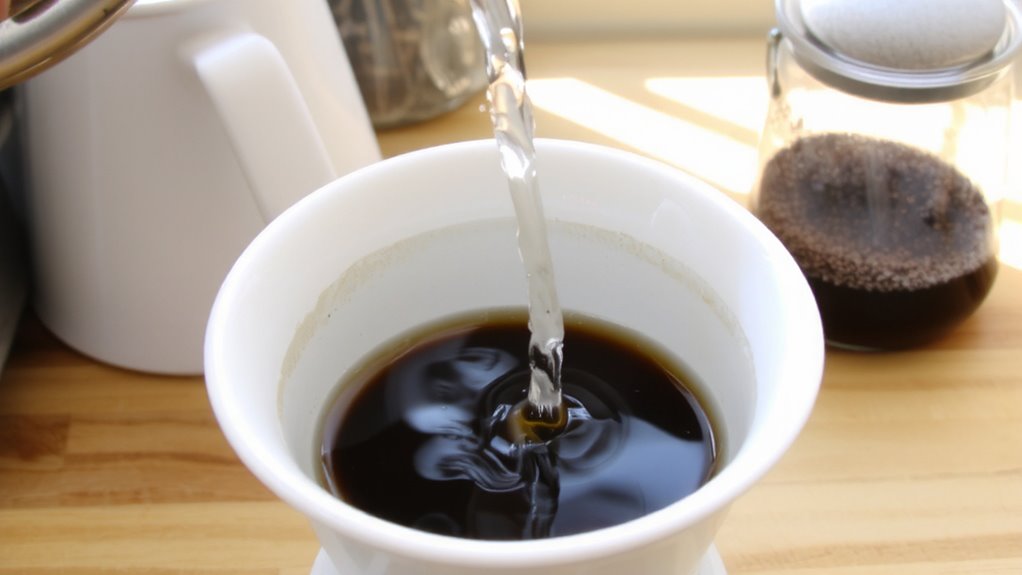
Though you might not see it, your pour is doing more than just wetting grounds-it’s releasing the aromatic core of your coffee. As water moves through the bed, it carries volatile aroma compounds from the grinds into the air and your cup. This process, called volatile extraction, depends on flow rate and temperature. Too fast, and you miss delicate notes; too slow, and you risk over-extracting bitter tones. Controlled flow promotes even aroma diffusion, letting fragrance unfold progressively. A gooseneck kettle helps here-its narrow spout gives you precision, letting you manage flow to match your grind. Paper filters limit oils but enhance clarity in aroma diffusion, while metal may pass more volatiles but can muddle the profile. Your technique directly shapes what you smell and taste, so consistent, deliberate pouring isn’t just ritual-it’s essential for accessing the coffee’s volatile compounds effectively. Compact and efficient, a well-chosen pour-over travel coffee kit can maintain these precision parameters even on the go.
The Bloom’s Role in Unlocking Fragrance
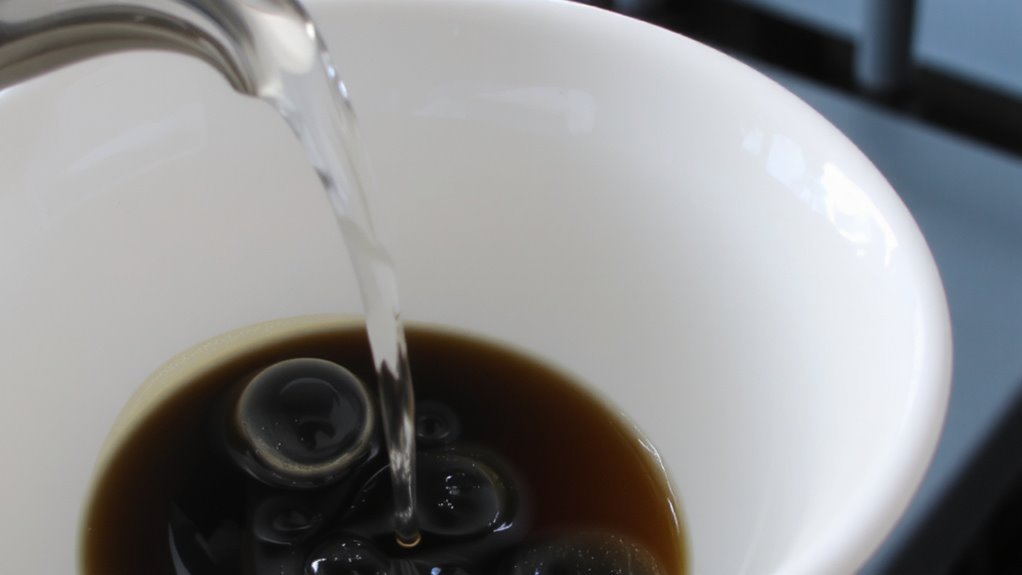
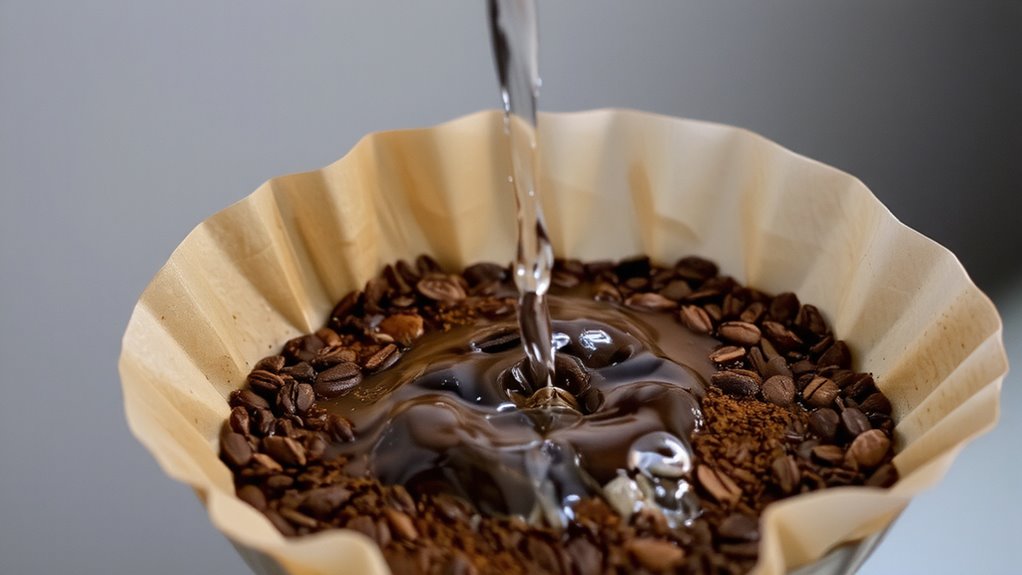
Why do your coffee grounds rise and bubble when you first wet them? That’s the bloom-trapped carbon dioxide escaping after roasting. You need this step if you want to access the full fragrance of your coffee. Fresh beans release more gas, so a strong bloom usually means your coffee freshness is high. Light roasts from high-altitude bean origins, like Ethiopian Yirgacheffe or Guatemalan Huehuetenango, often bloom vigorously. If you skip blooming, gas can block water flow, leading to uneven extraction and dull aromas. Pour just enough hot water-about twice the weight of the grounds-to saturate them evenly. Let it sit for 30–45 seconds. This sets the stage for better aroma release later. A proper bloom doesn’t guarantee great taste, but without it, you’re likely missing key volatile notes tied to origin and roast quality. Using a high-quality pour-over coffee dripper can enhance this process by promoting consistent water distribution and optimal contact time.
Time Your Pulses for Clearer Aromatic Notes
After you’ve let the coffee bloom, the way you add the rest of the water starts to shape the clarity of the aroma. Using consistent pulse timing helps extract delicate top notes without stirring up bitterness. Short, even pours-about 10–15 second pulses-let gases escape gradually, boosting aromatic clarity. Too fast or irregular pulses cause chaotic flow, muddying the scent. A gooseneck kettle like the Fellow Stagg EKG gives you the control needed to time pulses accurately. Aim for 3–4 pulses total, letting the water level drop between each. This method works best with medium-fine grind sizes and fresh, light-to-medium roast beans, which carry more nuanced fragrance. Over-pulsing or waiting too long between pulses can cool the slurry, dulling the aroma. Proper pulse timing isn’t just rhythm-it’s about syncing flow with extraction needs for cleaner, more defined scent in your cup.
Use Flow-Control Tools for Better Scent
When you’re aiming for the clearest possible aroma in your pour over, controlling the flow of water isn’t just helpful-it’s essential. Using flow-control tools like the KettleStat or Fellow Stagg EKG gives you real-time feedback and consistent output. These kettles allow flow precision, meaning you can match the pour rate to your grind size and desired extraction window. Without precise control, water moves too fast or too slow, muddying the scent profile. Proper tool calibration guarantees the flow rate stays accurate over time, especially after repeated use. Some models let you adjust needle valves or preset flow settings, which helps maintain consistency between brews. While manual pouring works, it demands practice and steady hands. Flow-control tools reduce variability, making them ideal for repeatable aromatic results. They’re not cheap, but if clarity of scent matters, the investment often pays off.
Optimize Pour Rate for Brighter Aromatics
How fast should you pour to get the brightest, cleanest aromatics in your cup? A slower, steady pour enhances volatile compound release, especially with a consistent grind consistency and stable water temperature. Too fast, and you risk uneven extraction; too slow, and you may over-extract bitter notes. Aim for a pour that saturates evenly without channeling.
| Pour Rate | Aromatic Result |
|---|---|
| Slow (2–3 g/s) | Bright, floral, clear top notes |
| Moderate (4–5 g/s) | Balanced, mild complexity |
| Fast (6+ g/s) | Muted, uneven scent profile |
| Pulsed | Layered, but inconsistent |
Use a gooseneck kettle to control flow. Higher water temperature (92–96°C) lifts delicate aromatics best when paired with medium-fine grind consistency. Adjust slightly based on bean origin and freshness.
Balance Contact Time to Prevent Aroma Loss
While you can control pour rate and temperature, getting the most out of your coffee’s aroma means paying close attention to how long the grounds stay in contact with water. Too long, and volatile aromatic compounds dissipate; too short, and you under-extract delicate top notes. Aim for a total brew time of 2:30 to 3:30 minutes, depending on your method and dose. Grind consistency plays a vital role-uneven particles lead to uneven extraction, which distorts aroma release. Use a high-quality burr grinder like the Baratza Encore to maintain uniformity. Freshly roasted beans are essential; coffee loses aromatic intensity rapidly after roasting, peaking in freshness within the first two weeks. Store beans in an airtight container away from light and moisture. Balancing contact time with grind consistency and bean freshness guarantees vibrant, lasting aromatics in every cup-don’t overlook any of the three.
On a final note
You control aroma by managing water flow. A steady, slow pour during bloom releases trapped gases and boosts fragrance. Pulsing water helps highlight distinct notes, especially with light roasts. Use a gooseneck kettle for precision-brands like Fellow or Hario offer good control. Too fast a flow dulls aromatics; too slow risks over-extraction. Aim for 2.5 to 3.5 minutes total brew time to preserve volatile compounds.