Choosing Container Material to Enhance Cold Brew Coffee Aroma and Flavor Development
Your cold brew’s flavor stays freshest in glass, which won’t leach chemicals or absorb oils and blocks light when kept in the dark. Stainless steel is durable and blocks light well, but can sweat and dilute your brew. Plastic is lightweight and safe if BPA-free, though it may dull flavor over time due to slight oxidation and light exposure. Ceramic looks great but often lacks an airtight seal, risking stale coffee. Each material affects aroma and shelf life differently-knowing their trade-offs helps you pick the best one for your routine.
Notable Insights
- Glass preserves cold brew aroma and flavor by being non-reactive and preventing absorption of oils or residues.
- Stainless steel limits oxidation and blocks light, helping maintain flavor stability during storage.
- Plastic containers may allow oxygen ingress and light exposure, leading to dulled flavors over time.
- Use food-grade, BPA-free, opaque plastic to reduce flavor degradation and protect against light.
- Ceramic offers aesthetic appeal and temperature stability but lacks airtight sealing, increasing oxidation risk.
Why Material Affects Cold Brew Taste
A growing number of coffee lovers realize the container they use isn’t just about looks or convenience-it can actually influence how their cold brew tastes. The material impacts oxidation levels and light exposure, both of which affect flavor stability. Plastic containers, for example, may let in small amounts of oxygen over time, speeding up oxidation and dulling the brew’s brightness. They also tend to be translucent, increasing light exposure that can break down delicate flavor compounds. Stainless steel blocks light completely and limits oxidation better than plastic, making it a solid middle-ground choice. But if you’re storing cold brew for more than a few days, even slight air leaks in metal containers can degrade quality. You’ll want something that seals tightly and shields the liquid from air and light. Choosing the right material isn’t just about durability-it directly shapes how fresh your cold brew stays from day one to day five. For optimal results, consider containers with an airtight seal and best coffee storage containers that are specifically designed to minimize degradation.
How Glass Keeps Cold Brew Pure
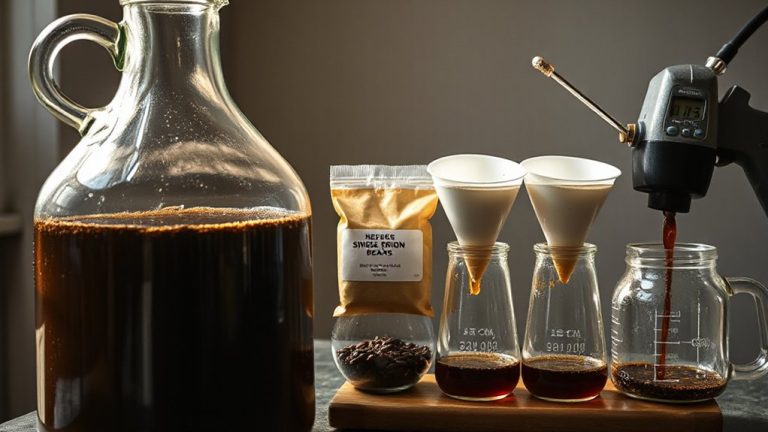
Glass stands out as the go-to choice for keeping cold brew flavor pure over time. It’s non-reactive, so it won’t leach chemicals or alter taste, ensuring flavor purity with every sip. Since glass doesn’t absorb oils or residues, your brew stays clean and consistent. It also offers excellent aroma preservation-essential for fully experiencing cold brew’s subtle notes. Transparent walls let you monitor clarity and sediment, helping you fine-tune steep time and filtration. While fragile and heavier than plastic, modern tempered glass-like that in mason jars or branded dispensers-adds durability. Light exposure can degrade coffee if left too long, so store your glass container in a dark cabinet or fridge. For short to medium-term storage-up to two weeks-glass is ideal. If you value aroma preservation and flavor purity, and don’t mind handling it carefully, glass is a reliable, low-risk option for daily cold brew prep. For those using mason jars, pairing them with specially designed cold brew mason jar lids ensures optimal filtration and ease of use.
Stainless Steel: Pros and Cons for Cold Brew
Durability meets function with stainless steel, a solid pick if you’re after a long-lasting cold brew container that won’t chip or shatter. Its corrosion resistance makes it ideal for prolonged liquid storage, and it won’t leach flavors. However, stainless steel has high thermal conductivity, so it transfers heat easily-great if you want chilled brew fast, risky if temperature swings cause condensation and dilute your concentrate over time. For those on the go, consider pairing your container with a best portable coffee bean storage option to maintain freshness from bean to brew. Check out how it stacks up:
| Feature | Stainless Steel | Glass |
|---|---|---|
| Durability | High | Low |
| Corrosion Resistance | Excellent | Good |
| Thermal Conductivity | High | Low |
| Flavor Neutrality | Good (if high-grade) | Excellent |
| Weight | Moderate to Heavy | Moderate |
Choose based on your routine-portability and use matter just as much as material.
Is Plastic Safe for Cold Brew?
You’ve seen how stainless steel stands up to wear and handles temperature shifts, but what if you’re leaning toward something lighter and less prone to dents or breakage-like plastic? Food-grade plastics such as Tritan or polypropylene are generally safe and resist chemical leaching, especially when not exposed to high heat. Since cold brew steeps at room or refrigerated temps, the risk drops further. Still, cheap or scratched plastics might harbor odors and affect aroma preservation over time. These materials aren’t as inert as steel or glass, so long-term storage can dull your coffee’s brightness. If you choose plastic, go for BPA-free, opaque bottles that block light-this helps protect flavor. They’re great for travel or gym use thanks to their durability and low weight. Just don’t leave cold brew in plastic for more than a few days if you want peak taste. For short-term use, it’s a practical, budget-friendly option-just not the best for long-term aroma preservation.
Ceramic: Aesthetic or Practical Choice?
Why do so many coffee lovers reach for ceramic when storing or serving cold brew? You’re likely drawn to its smooth finish and classic look-ceramic has undeniable visual appeal, elevating any kitchen or café setup. But beyond looks, it offers decent thermal retention, keeping your cold brew chilled longer than glass or metal when served over ice. That stability helps preserve flavor and aroma during slow sipping. However, ceramic isn’t perfect. It’s heavy, fragile, and often not ideal for long-term storage. Most ceramic containers aren’t airtight, exposing your brew to oxygen and risking flavor loss. For serving, especially in a relaxed setting, ceramic mugs or carafes make sense. But for daily storage, glass or stainless steel with secure seals is more practical. Choose ceramic when presentation and short-term use matter most.
On a final note
You’re better off choosing glass or stainless steel for cold brew storage. Glass won’t react with acids and preserves flavor cleanly, while stainless steel offers durability and insulation but may subtly affect taste over time. Avoid plastic unless it’s food-grade and BPA-free, as it can leach odors. Ceramic works if sealed well, but chipping can be an issue. Pick based on use-fridge steeping favors glass; serving or travel leans toward insulated steel.