How Different Materials in Moka Pots Impact Espresso Flavors
Your moka pot’s material changes how evenly and quickly it heats, directly shaping your espresso’s flavor. Aluminum heats fast and boosts brightness, great for bold dark roasts but may add a slight metallic note over time. Stainless steel is neutral and durable, preserving clean, balanced flavors, ideal for light roasts. Copper offers the smoothest heat control, improving clarity, while clad bases (like in Bialetti Expert or Alessi 9090) help prevent hot spots, especially on electric stoves. Each choice affects extraction, so your coffee style and stove matter. Pick based on the taste and consistency you’re chasing-you’ll find how small changes make a noticeable difference.
Notable Insights
- Aluminum enhances brightness and acidity, intensifying fruity or citrus notes in espresso, especially with light to medium roasts.
- Stainless steel provides a neutral, clean taste by preventing metal reactivity, preserving the original flavor of single-origin or delicate beans.
- Copper ensures even heat distribution, minimizing scorching and improving flavor clarity and extraction consistency in espresso.
- Clad base construction combines materials to optimize heat spread, reducing hot spots and enhancing brew uniformity across stove types.
- Material impacts heat response and maintenance: aluminum reacts with oils, while stainless steel resists corrosion and flavor absorption over time.
Why Moka Pot Material Affects Your Coffee’s Taste
Material matters. The material of your moka restructuring and state pot directly shapes your coffee’s taste because it interacts with heat, water, and coffee over time. Aluminum is common-it heats quickly and evenly, but you must watch for material corrosion, especially if not dried properly after use. Older or pitted aluminum can taint your brew. Stainless steel resists corrosion better and lasts longer, though it’s usually pricier. Both materials materials can cause flavor absorption if not cleaned well; coffee oils build up, leading to stale or off-tasting espresso over time. You’ll want to hand-wash and avoid soap when possible to preserve the pot’s seasoned state. While aluminum has a cult following, stainless steel offers durability and less maintenance. Your brewing habits-frequency, cleaning routine, preferred taste-should guide your choice. Pick based on how you use it, not just price. For those using electric stoves, ensure compatibility by choosing models designed for even heat distribution, such as top Moka pots for optimal performance.
How Aluminum Moka Pots Create Bold, Bright Flavor
While aluminum moka pots aren’t as flashy as stainless steel models, they’re known for bringing out a bold, bright character in your espresso-and that’s mostly due to how they handle heat. Aluminum heats quickly and evenly, which extracts more acidity and sharpness from the beans. This metal reactivity subtly influences flavor, often enhancing citrus or fruity notes in light to medium roasts. Over time, oxidation effects may form a thin layer inside the pot, slightly mellowing the taste. Proper cleaning helps maintain flavor consistency. Best Moka Pots & Buying Guide can help you choose a model that suits your brewing preferences.
| Feature | Effect on Flavor |
|---|---|
| Fast heating | Increases brightness |
| High conductivity | Promotes even extraction |
| Metal reactivity | Enhances acidic notes |
| Oxidation effects | Can reduce metallic aftertaste |
Use gentle cleaners to preserve the interior and avoid scratching.
Stainless Steel vs Aluminum: Taste, Safety, and Longevity
You’ve seen how aluminum moka pots shape a livelier, more acidic cup by heating fast and reacting slightly with the brew, but now let’s compare that to stainless steel-the other main option sitting on stovetops worldwide. Stainless steel doesn’t react with coffee, so your brew tastes cleaner and more neutral. It’s far more durable than aluminum, resisting dents and scratches over time-material durability matters if you use your pot daily. Aluminum is lighter and heats quicker, but it can wear down faster, especially if hand-washed or mishandled. From a user safety standpoint, stainless steel wins too; no risk of metal leaching, even if scratched. High-end models like Bialetti’s 6-cup Stainless Steel or Moka Express Pro use 18/10 steel for long-term reliability. If you want consistent flavor, low maintenance, and a pot that lasts decades, stainless steel’s your best bet. For those seeking authentic Italian coffee at home, choosing the right Best Italian Coffee Picks can elevate your moka pot experience.
How Copper Moka Pots Improve Heat Control and Clarity
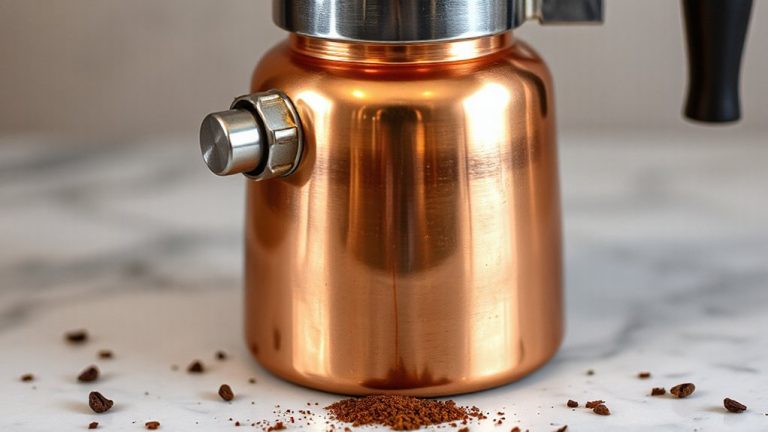
A copper moka pot isn’t just a showpiece-it delivers sharper heat control and cleaner flavor clarity than most other materials. That’s because copper has exceptional thermal conductivity, meaning it heats quickly and evenly across the base and sides. You’ll notice the temperature rises smoothly, reducing hot spots that can burn coffee and muddle taste. This precise heating helps extract flavors more consistently, boosting flavor clarity in your cup. Compared to aluminum or stainless steel, copper responds faster to stove adjustments, giving you more control during brewing. Traditional Italian makers like Faema or Bialetti’s copper models showcase this advantage well. Just keep in mind, copper requires more care-it tarnishes over time and needs occasional polishing. And while it conducts heat superbly, the exterior can get hot to the touch. Still, if you value clean, bright espresso notes and responsive brewing, a copper moka pot is a practical upgrade worth considering.
Do Clad Bases Make Moka Coffee More Consistent?
Many modern moka pots come with clad bases-layers of aluminum or copper sandwiched between stainless steel-and they’re built this way for a reason. The clad conductivity helps heat spread evenly across the bottom, so you’re less likely to get hot spots that scorch the coffee. That means each brew starts under more consistent conditions, especially on electric or induction stoves. The base insulation also plays a role, slowing down heat loss and smoothing out temperature spikes. You end up with more predictable extraction, shot after shot. Pots like the Bialetti Expert or Alessi 9090 use this design to improve reliability. While they cost more, the trade-off is fewer variables when brewing. If consistency matters to you-and your stovetop isn’t perfectly even-a clad base could make a real difference in your daily cup.
How Material Impacts Heat Response and Brew Quality
Stainless steel, aluminum, and copper each respond to heat differently, and that affects how your moka pot performs on the stove. You’ll notice aluminum heats up fast thanks to its high thermal conductivity, delivering quick brews but risking uneven temperature spikes. Copper goes even further-excellent conductivity means precise heat control, but it’s pricey and needs careful maintenance. Stainless steel responds slower, which can mean more patience on the stove, but it offers steady, consistent heating once hot. Material reactivity also matters: aluminum may subtly influence taste over time, especially with acidic water, while stainless steel and copper are more inert. If you value responsiveness, copper’s your top pick; for durability and neutrality, stainless steel wins. Your stove type-gas, electric, induction-also plays a role in how each material behaves, so match your pot to your setup.
Choose Your Moka Pot Material Based on Coffee Style
If you’re chasing a bright, clean cup with distinct flavor notes, stainless steel’s consistency and resistance to reactivity make it your best bet-its slower heat ramp-up smooths out temperature swings, which helps preserve the clarity of light- to medium-roast beans, especially in single-origin espressos where subtlety matters. You’ll want precise brew timing and a finer grind size to avoid under-extraction. For bolder, heavier profiles like dark roasts or Italian-style blends, aluminum works well-it heats faster but demands attention. You’ll need slightly coarser grind size and tighter brew timing to prevent bitterness. Non-reactive stainless steel also won’t retain old oils, making it easier to clean and more consistent over time. While aluminum is cheaper and conducts heat quicker, it’s less durable and can subtly alter flavor with acidic beans. Choose stainless for control and longevity; pick aluminum if you prefer traditional builds and quick heat. Match material to your coffee style for best results.
On a final note
Your moka pot’s material shapes flavor, heat control, and durability. Aluminum delivers bright, bold espresso but needs care to avoid corrosion. Stainless steel lasts longer and is safer if scratched, though it may brew slightly cooler. Copper offers even heating and cleaner taste but costs more. Clad bases improve heat response on electric stoves. Pick aluminum for traditional strength, stainless steel for daily use, or copper for precision-match the pot to your stove, grind, and coffee style for best results.