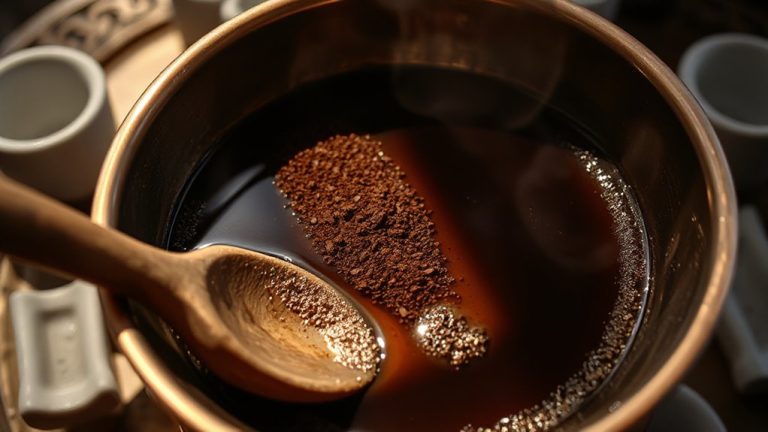
Moka Pot Fundamentals: Achieving Balanced Espresso Flavors Through Pressure Control and Proper Dose Measurement
Your moka pot makes strong coffee, not true espresso, since it uses 1–2 bars of pressure versus 9. For balanced flavor, use a medium-fine grind-like table salt-with a burr grinder like the Baratza Encore. Don’t tamp; just level the grounds and wipe the rim. Start on medium heat, then lower it when steam appears to avoid bitterness. Match your pot to your stove-stainless steel works best on induction. Aluminum heats fast but risks scalding. You’ll find the sweet spot with consistent dose and heat control. Fine-tuning these variables reveals richer, cleaner results.
Notable Insights
- Moka pots generate 1–2 bars of pressure, far below espresso’s 9 bars, limiting true espresso flavor and crema development.
- Use a medium-fine grind, similar to table salt, to balance extraction and avoid bitterness or weak coffee.
- Always fill the filter basket without tamping to prevent excessive resistance and uneven brewing.
- Start on medium heat and lower it when steam appears to avoid scalding and bitter over-extraction.
- Use a scale or consistent scoop for accurate coffee dosing and repeatable, balanced brews.
How Is Moka Pot Espresso Different From Real Espresso?
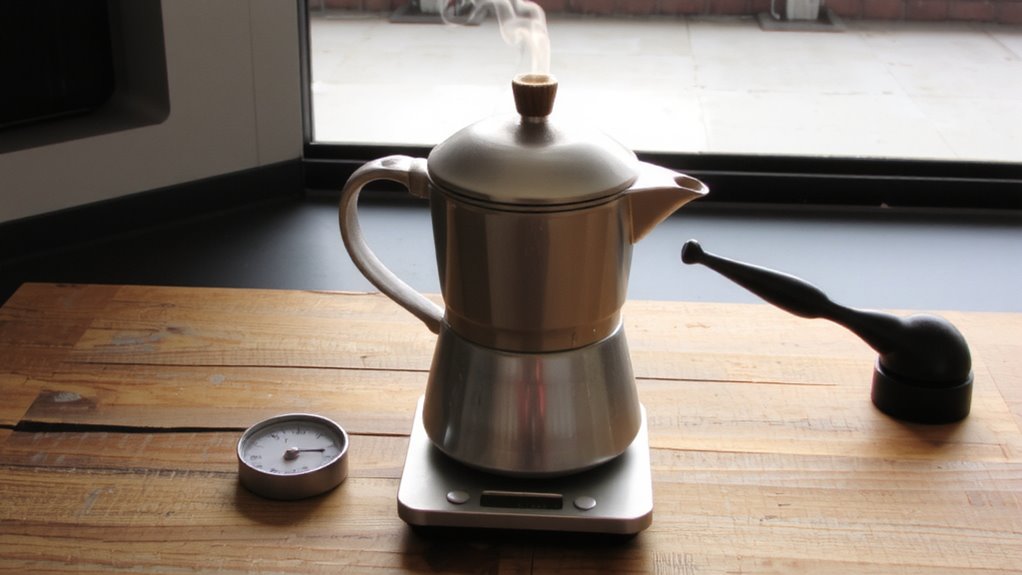
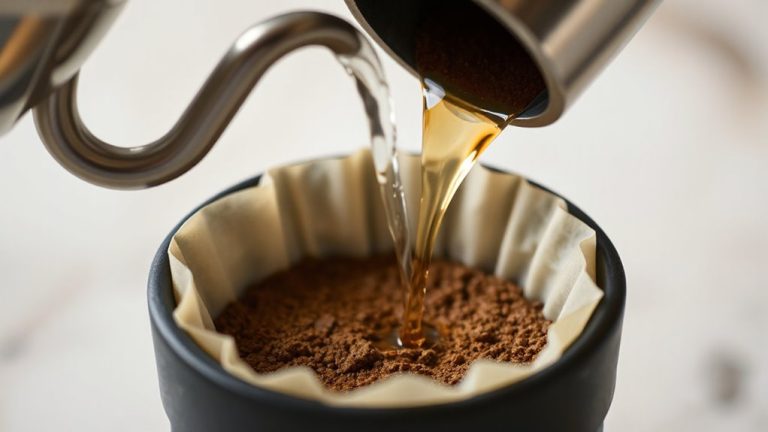
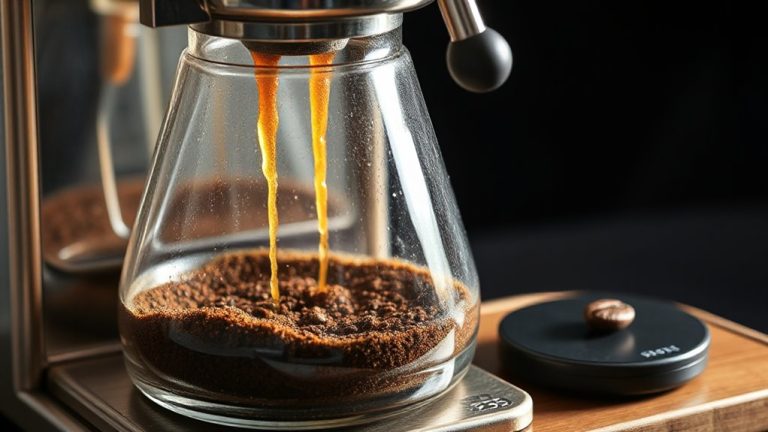
While it might look similar, the coffee a moka pot makes isn’t true espresso, even though people often call it that. Real espresso uses 9 bars of pressure; your moka pot only generates about 1–2, giving you a stronger brew, not actual espresso. You’ll notice the difference in body and crema. Brew time matters-typically 4–5 minutes on medium heat. Too fast, and the coffee’s weak; too slow, and it’ll overextract, turning bitter. Water quality plays a big role, too. Always use fresh, filtered water. Impurities or minerals can affect taste and buildup inside the pot. Unlike espresso machines with precise temperature control, moka pots rely on your stove, making consistency harder. Still, they’re affordable, portable, and reliable. They’re great for strong coffee at home or camping. Just manage expectations: it’s concentrated coffee, not espresso. Use proper dose and clean parts regularly for best results. Exploring Portland’s best espresso spots can help deepen your understanding of authentic espresso characteristics.
What Is the Best Grind Size for Moka Pot Coffee?
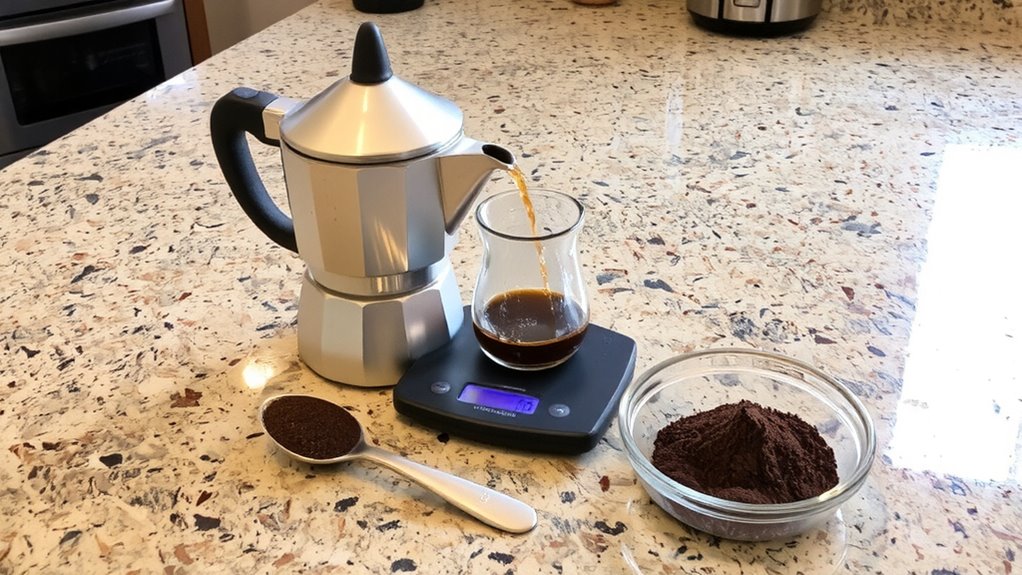
Grind size is one of the most critical factors in pulling off a great moka pot brew. You want a medium-fine grind-finer than drip coffee but coarser than espresso. Think table salt texture. This balances extraction without clogging the filter or causing bitter, over-extracted coffee. A burr grinder helps maintain consistent grind consistency, which is key for even brewing. Uneven particle distribution leads to some grounds extracting too fast (bitter) and others too slow (sour). Blade grinders often create poor particle distribution, making extraction erratic. For best results, use a conical burr grinder like the Baratza Encore or Fellow Ode. They give tighter particle distribution and better control. Don’t grind too fine-jamming the filter or increasing pressure too much can damage your pot or create harsh coffee. Stick to medium-fine, prioritize consistency, and you’ll get cleaner, more balanced results every time. For trusted recommendations, check out the best coffee grinders for Moka pot.
How to Fill and Level Coffee in Your Moka Pot
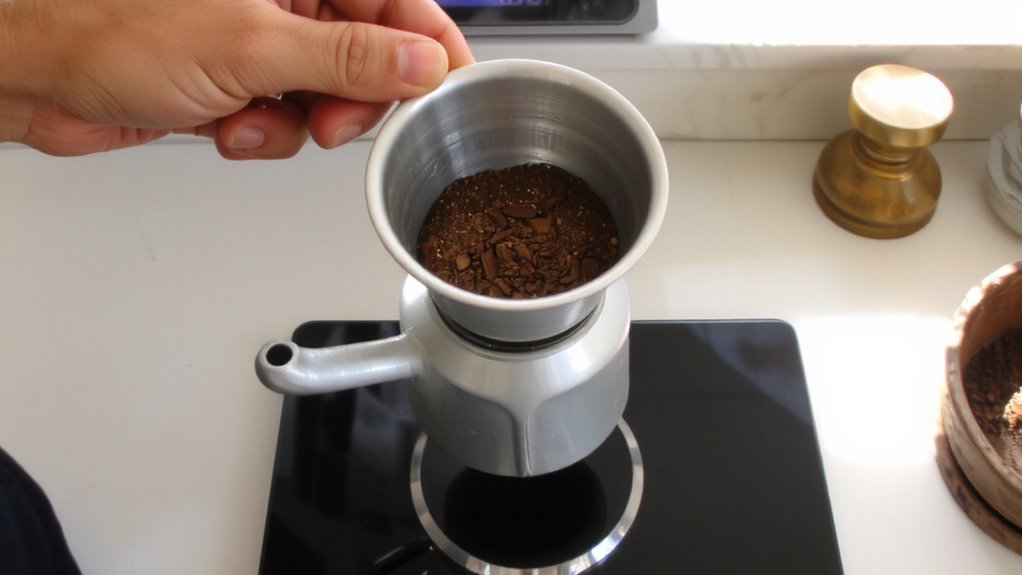
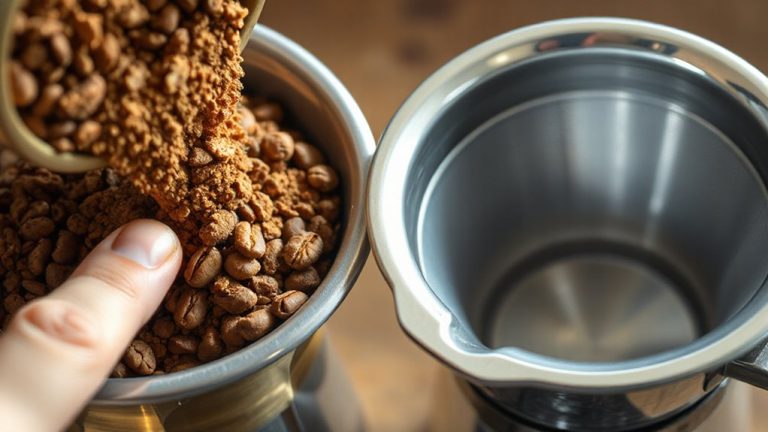
Fill the moka pot’s filter basket with freshly ground coffee, making sure not to pack it down. Level the grounds gently with the back of a spoon or your finger to guarantee even coffee distribution. Proper dose consistency starts here-overfilling or tamping can restrict water flow and create bitter results. Use a scale for accuracy, or stick to a consistent scoop size. Avoid shaking the basket, as this causes uneven settling. For optimal performance on electric stoves, choose a moka pot with a flat bottom design to ensure even heat distribution.
| Step | Action | Purpose |
|---|---|---|
| 1 | Add grounds loosely | Prevents over-extraction |
| 2 | Level without tamping | Promotes even coffee distribution |
| 3 | Use consistent dose | Guarantees dose consistency |
| 4 | Wipe rim clean | Helps seal prevent leaks |
Good coffee distribution and dose consistency are key for balanced flavor. Don’t skip weighing or measuring-small errors affect pressure and taste.
How Heat Control Prevents Bitter Moka Pot Coffee
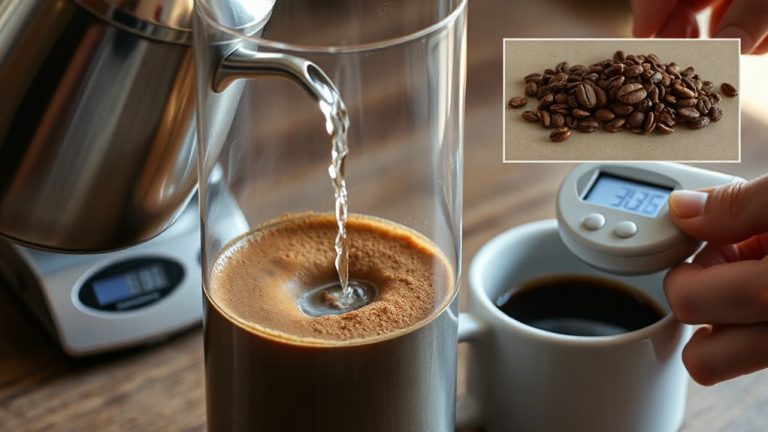
If you want to avoid harsh, bitter coffee from your moka pot, managing heat is just as important as using the right grind or dose. Too high water temperature scalds the grounds, extracting unwanted bitter compounds. Start with medium heat and lower it once steam begins to rise. This helps maintain steady heat distribution, preventing hotspots that unevenly extract flavors. Aluminum pots heat quickly but can overheat fast; stainless steel offers more even heat retention. Never let the pot fully boil dry-it increases temperature suddenly and burns the coffee. Using a heat diffuser on powerful burners can help balance heat distribution, especially with gas stoves. Keep the process controlled and watch the brew closely. You’ll notice smoother results when you manage water temperature carefully and avoid aggressive boiling. Slow, even heating gives the best balance.
Gas vs. Electric: How Your Stove Impacts Brewing
While both gas and electric stoves can brew great moka pot coffee, they deliver heat differently, and that affects how evenly your coffee extracts. Gas stoves offer immediate control and visible flame type adjustment, letting you fine-tune heat quickly. The open flame provides more responsive heating, but uneven heat distribution can create hot spots, especially if the pot doesn’t sit level. Electric coils heat more slowly and retain energy longer, which can lead to overheating if you’re not careful. Glass-top electric ranges spread heat more evenly across the base, improving heat distribution, but respond slower to adjustments. Induction cooktops are precise and efficient, but only work with magnetic-bottom pots. For consistent results, match your moka pot material to your stove-stainless steel works across all types. Watch the flame size on gas; keep it just under the pot base to avoid overheating.
Why Your Moka Pot Coffee Tastes Bitter or Weak
Your stove choice sets the foundation for heat control, but even with the right setup, off flavors like bitterness or weak coffee can still ruin your brew. If your coffee tastes bitter, you’re likely over-extracting, often due to excessive tamping pressure-pressing too hard compacts the grounds, slowing water flow and increasing resistance. Unlike espresso machines, moka pots don’t need tamping; just level the coffee. Weak coffee usually points to under-extraction, caused by low water temperature or too coarse a grind. Water hardness also plays a role-soft water can lead to flat, sour tastes, while very hard water may cause scaling and uneven heating. Use filtered water with moderate mineral content for consistent results. Adjust one variable at a time: grind size, heat level, or dose. That way, you’ll isolate what’s causing off flavors and fix them efficiently.
How to Perfect Your Moka Pot Brew Routine
Though small and simple, a moka pot can deliver rich, concentrated coffee when used correctly-so getting the routine down matters. Start with fresh, medium-fine coffee-about 18–20 grams for a six-cup Bialetti-and don’t tamp. Use filtered water to improve water quality; minerals in tap water can alter flavor and damage the pot over time. Fill the chamber just below the safety valve. Heat on medium: too high and you’ll scorch the brew, too low and it’ll take too long. Watch the brew timing-ideally 4–5 minutes from start to finish. A faster pull risks under-extraction; slower risks bitterness. Remove from heat as soon as you hear gurgling. Let it rest 30 seconds before serving. Consistent grind, clean equipment, and attention to timing make all the difference.
On a final note
You won’t get true espresso from a moka pot, but you can brew rich, concentrated coffee with the right technique. Use a medium-fine grind, level the dose without tamping, and apply steady, low-to-medium heat. A gas stove offers better control than electric. Avoid overheating-it causes bitterness. Clean your pot regularly and dry it after each use to prevent stale flavors. With practice and consistency, your moka pot delivers reliable, balanced results.