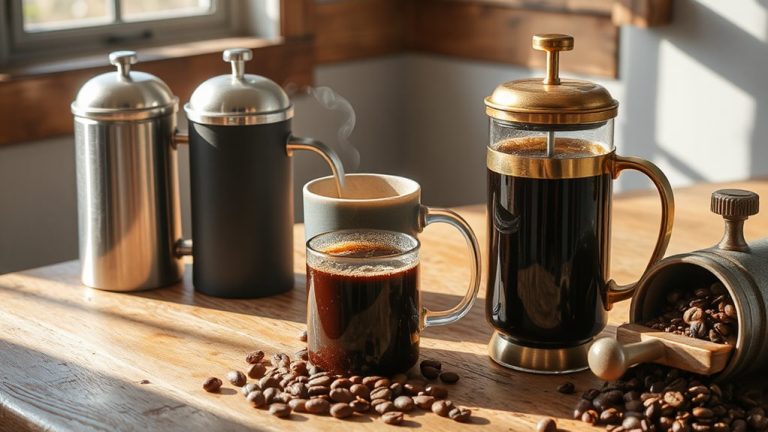
Fine-Tuning French Press Brewing Parameters to Achieve Ideal Flavor Profiles Every Time
Use a 1:15 coffee-to-water ratio-30g coffee to 450g water-as your starting point. Grind your beans coarse, like sea salt, to avoid bitterness or weak flavor. Pour water just off the boil (195–205°F) over the grounds and steep for exactly 4 minutes before pressing. If the coffee tastes off, adjust one variable: tweak grind size, time, or dose. Your ideal cup is consistent and balanced-and you’re closer than you think.
Notable Insights
- Use a 1:15 coffee-to-water ratio as a baseline, adjusting to 1:14 for bright or 1:16 for bold profiles.
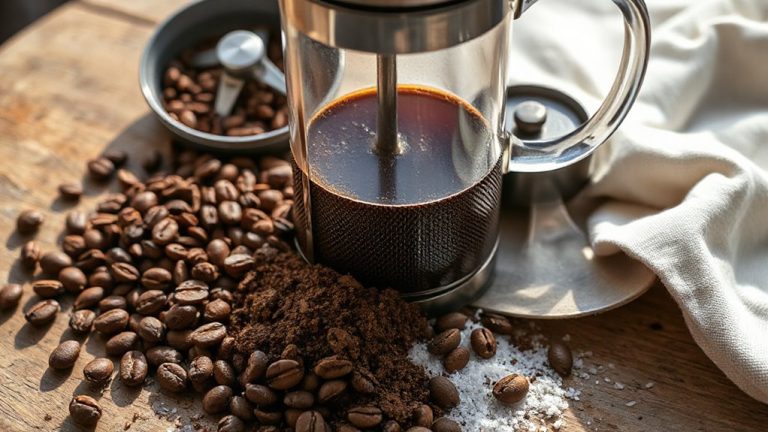
- Grind coffee coarsely, like sea salt, to prevent bitterness and ensure even extraction.
- Heat water to 195–205°F; avoid boiling to prevent scalding and excessive bitterness.
- Steep for exactly 4 minutes, using a timer to avoid under- or over-extraction.
- Adjust one variable at a time-grind size, brew time, or ratio-to troubleshoot flavor issues systematically.
Use the Right Coffee-to-Water Ratio for Balanced French Press Coffee
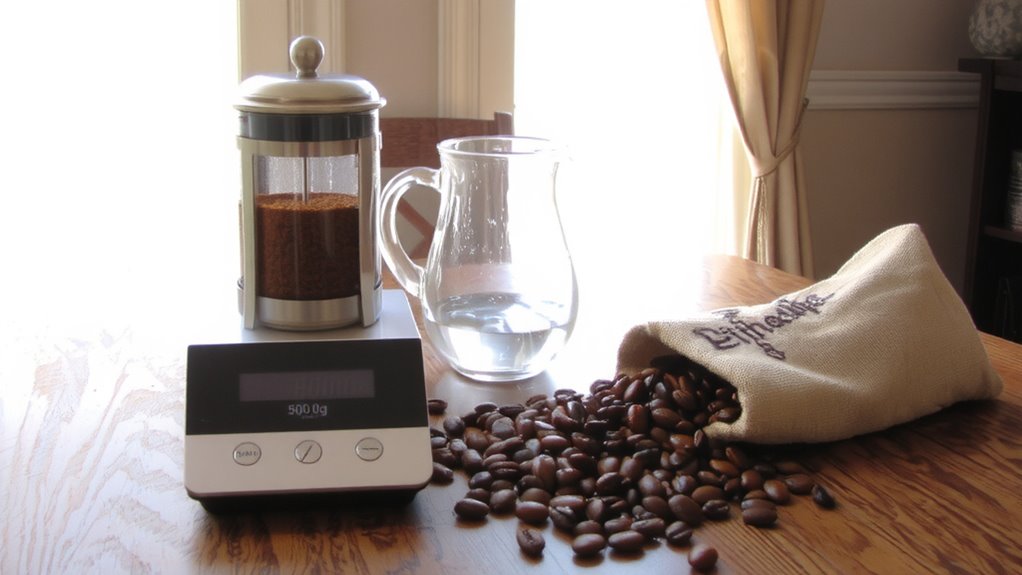
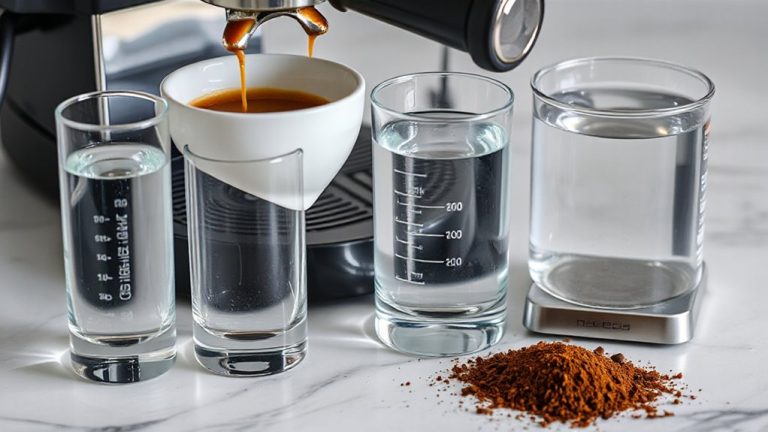
A ratio of 1 to 15-about 30 grams of coffee per 450 grams of water-is a reliable starting point for balanced French press coffee. You can adjust slightly based on coffee origin; beans from Ethiopia might shine at 1:14 for more brightness, while a Sumatran blend could handle 1:16 to soften heaviness. Always use freshly boiled water, but let it cool about 30 seconds-ideal brewing happens around 195–205°F. That also influences serving temperature; pour too soon, and you risk scalding the grounds, leading to bitterness. Serve within five minutes after pressing to maintain peak heat, ideally between 155°F and 175°F. Insulated presses help retain warmth longer than glass. If you’re using a lighter roast or high-altitude bean, stick closer to the 1:15 ratio and monitor how serving temperature affects perceived acidity and body. Small tweaks make noticeable differences-track your variables for consistency. For consistent results, consider investing in a high-quality French press that matches your brewing preferences and lifestyle needs.
Grind Size for French Press: Too Fine or Too Coarse?
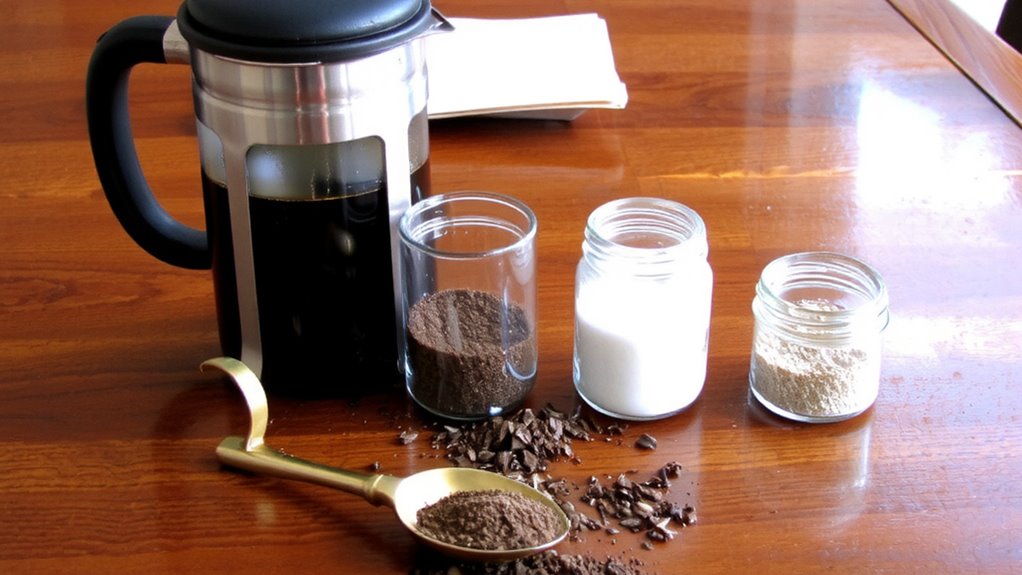
Getting the grind size right makes or breaks your French press brew, even if you’ve nailed the coffee-to-water ratio. You need a coarse grind-think sea salt-to prevent sludge and over-extraction. If it’s too fine, your coffee turns bitter and clogged, especially since the French press uses a metal mesh filter type that lets more oils and fines through than paper. A burr grinder helps maintain consistent grind consistency, which guarantees even extraction. Blade grinders often create uneven particles, leading to some grounds over-brewing while others under-extract. Coarse isn’t just preference; it’s functional. Too coarse, though, and your brew tastes weak or hollow. Aim for uniformity: this balances clarity and body without sacrificing smoothness. Avoid espresso or drip grind settings-they’re too fine. Stick with a dedicated French press setting on your grinder, if available, or adjust manually until you hit that sweet spot between bitterness and blandness. For optimal results with freshly roasted beans, choose a high-quality coffee bean grinder that ensures uniform particle size and minimizes heat buildup during grinding.
Set the Best Water Temperature to Avoid Bitter French Press Coffee
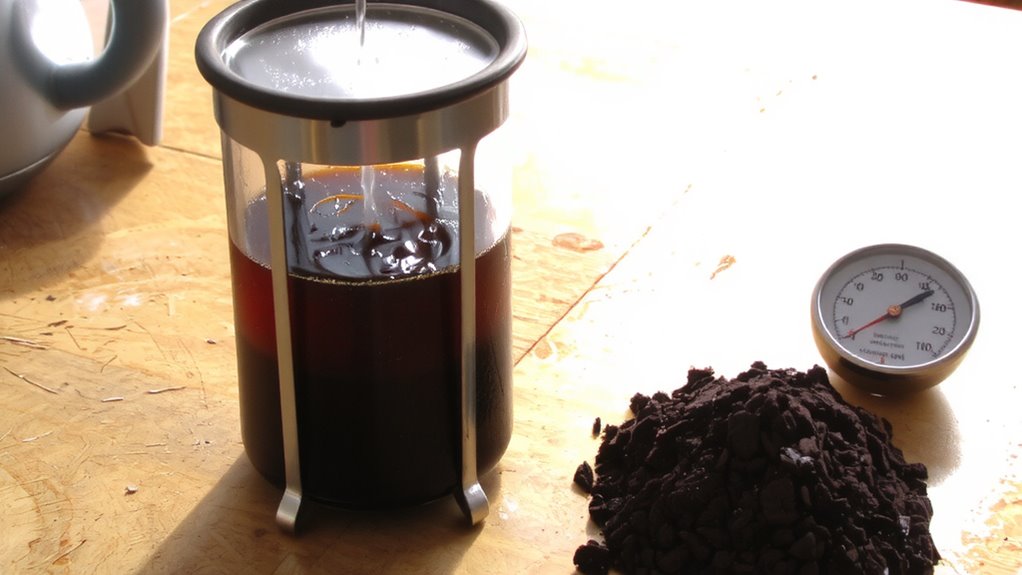
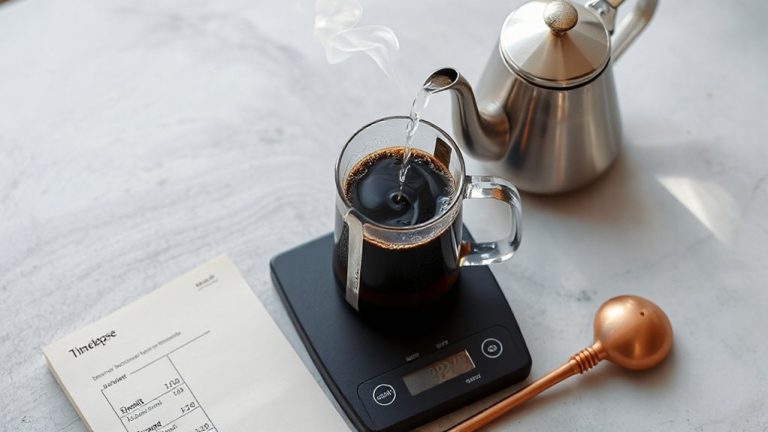
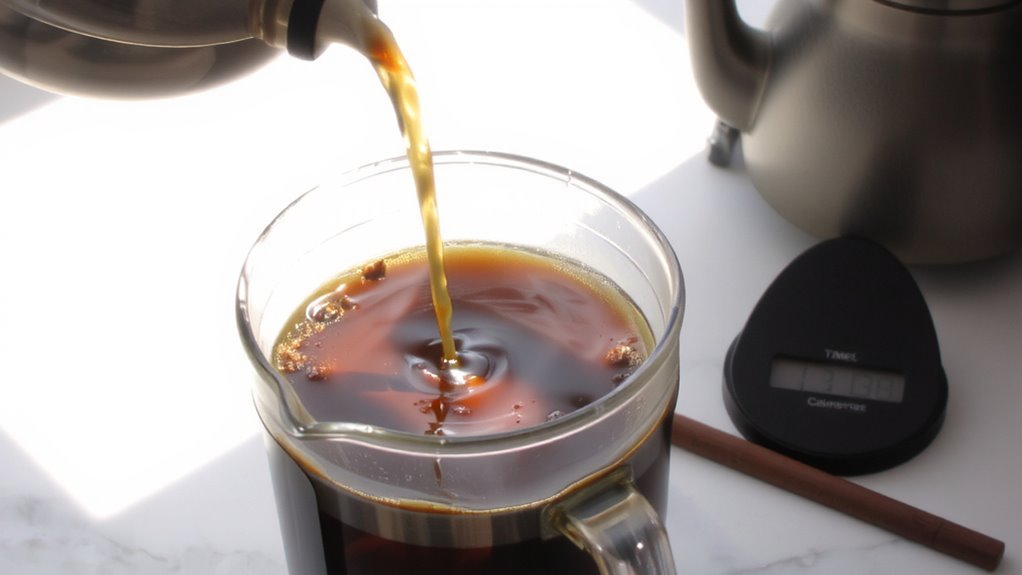
Water temperature plays a critical role in how your French press coffee tastes, and getting it wrong is one of the fastest ways to brew bitterness. You want water just off the boil-around 195°F to 205°F-since boiling water (212°F) can scald your grounds, especially if your beans are fresh. Fresh beans release more gases and extract faster, making them more prone to over-extraction with overheated water. On the flip side, water that’s too cool leads to under-extraction, yielding flat, sour coffee. Your water chemistry also matters; balanced minerals help extract flavor evenly, while overly soft or hard water skews taste. Use a gooseneck kettle with a thermometer or an electric kettle with temperature control for accuracy. This small step, combined with attention to bean freshness and clean water, dramatically reduces bitterness and improves clarity in every cup. Don’t guess-measure. That’s how consistency starts. A gooseneck kettle provides precise pour control, enhancing extraction consistency during brewing. Best Gooseneck Kettles – Top Picks & Buying Guide
Control Your Brew Time for Smooth, Full-Flavored Coffee
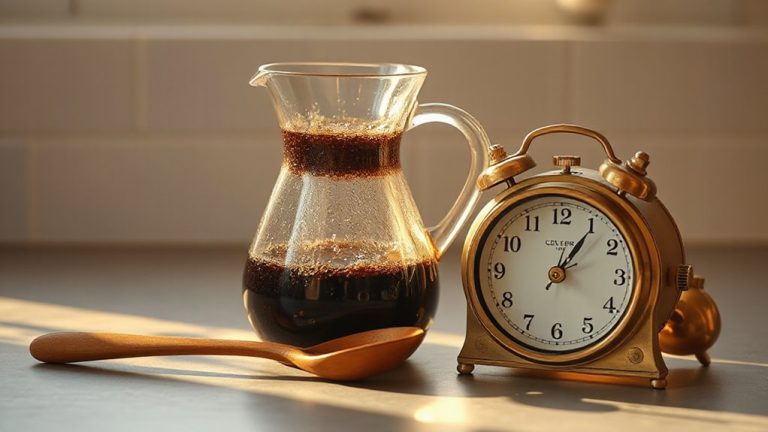
Keep that water temp steady and your grind consistent-now it’s time to nail the clock. Brew duration directly affects flavor, and with French press, the ideal steep time is 4 minutes. Go shorter, and your coffee tastes weak or underdeveloped. Let it go longer-past 5 minutes-and you risk over-extraction, increasing bitterness even with perfect water temp. Use a timer every time; it’s the simplest way to guarantee consistent brew duration. Some experiment with a bloom phase (adding a little water first, waiting 30 seconds), but this doesn’t replace total steep time-it’s part of it. Stick to 4 minutes for balanced results. If using a metal mesh press, don’t press too early or too late. Precision here matters just as much as grind size or heat. Master the clock, and you’ll access smoother, fuller flavor without fuss.
Fix Weak or Bitter Coffee by Adjusting the Brew Variables
If your French press coffee comes out too weak or unpleasantly bitter, it’s usually not bad beans or poor equipment-just a few off-target variables. The immersion method means all grounds soak evenly, so strength hinges on grind size, brew time, and dose. If it’s weak, try a finer grind or extend brew time beyond four minutes. If bitter, coarsen the grind or shorten steeping-you might also be using too much coffee. Check your water quality; hard or off-tasting water skews flavor no matter the technique. Use filtered water for consistent results. Stick to a 1:15 coffee-to-water ratio, adjust one variable at a time, and take notes. A burr grinder guarantees uniform particles, boosting control. Small tweaks make big differences-precision beats guesswork.
On a final note
You’ve got better control over your French press coffee by adjusting a few key variables. Use a 1:15 coffee-to-water ratio, grind coarse like sea salt, and keep water around 200°F-just off boil. Steep for 4 minutes, then press. If it’s bitter, shorten time or coarsen the grind; if weak, do the opposite. These tweaks, consistently applied, deliver balanced, rich coffee every time.