How to Use a Chaff Collector to Monitor Grind Consistency During Calibration
Your chaff collector shows grind consistency-check it after each grind. If chaff is evenly spread, your grind’s likely uniform. Clumps or one-sided piles suggest channeling or static issues, common in grinders like the EK43. Fines or boulders mean poor particle distribution, often from dull or misaligned burrs. Clean the tray regularly with a dry brush, especially on models with removable trays like the Compak K10. Adjust settings or calibrate if you spot inconsistencies. Watch the pattern over time to fine-tune performance.
Notable Insights
- Examine chaff distribution in the collector for even spread, indicating consistent grind particle size.
- Look for clumps or one-sided accumulation, which may signal grinder channeling or static issues.
- Identify fines and boulders in chaff as signs of uneven grinding requiring burr adjustment.
- Clean the chaff collector regularly to prevent residue buildup that can skew visual assessments.
- Adjust grind settings or burr alignment based on chaff patterns to improve consistency and reduce retention.
What the Chaff Collector Reveals About Grind Consistency
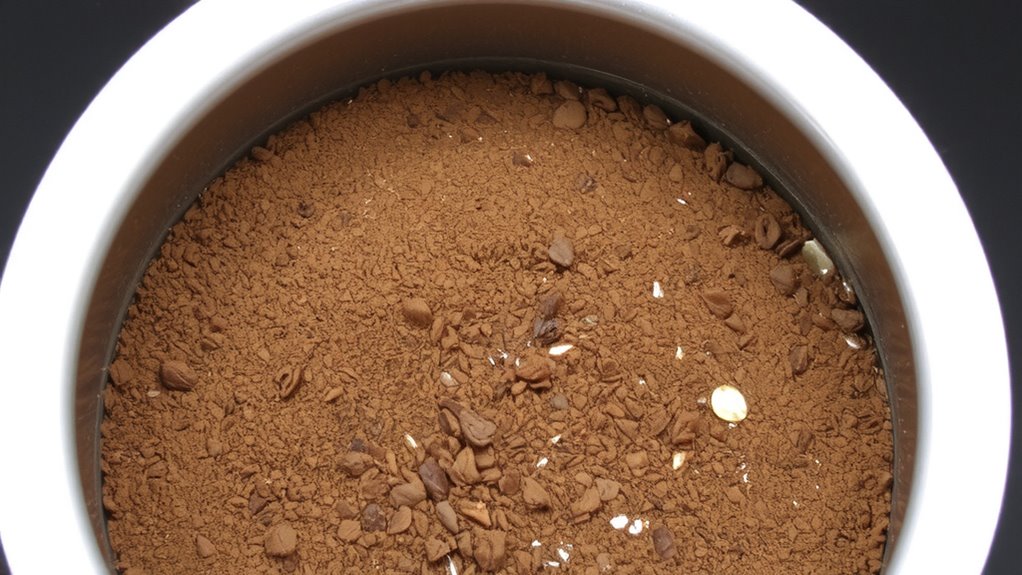
While you might think the chaff collector is just a dustbin for leftover coffee husks, it can actually give you real insight into your grind consistency. The way chaff distribution spreads in the container often mirrors how evenly your grinder is processing beans. A uniform spread usually means solid particle separation, while clumping or uneven piles can signal inconsistent grinding. If most chaff clings to one side, your grinder may be channeling or producing fines and boulders. This matters because uneven grinds lead to unbalanced extraction. With flat or conical burr grinders like the Baratza Encore or Fellow Ode, checking chaff patterns helps spot issues before they ruin your brew. It’s not a perfect diagnostic, but it’s a quick, visual cue. You don’t need lab tools-just attention. Over time, you’ll notice how adjustments affect both chaff and coffee, making this a practical part of dialing in.
How to Check the Chaff Collector After Grinding
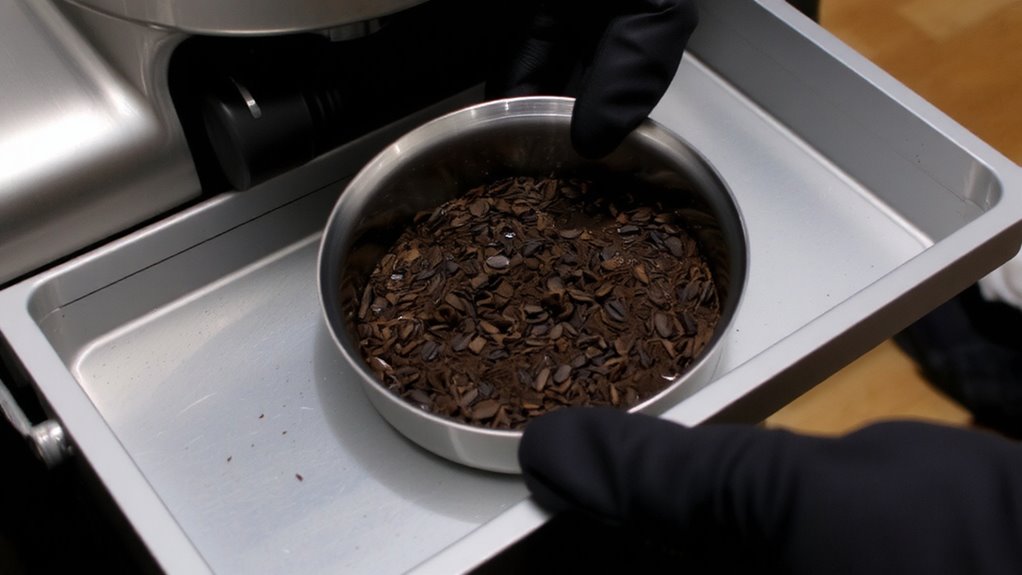
A quick look at your chaff collector after grinding tells you more than you might think. Remove the tray and examine the chaff distribution-ideally, it should be even, with no dense clumps or bare spots. Uneven spread could indicate inconsistent bean flow or grinder channeling. Check the tray accumulation closely; too much in one area suggests the grinder chute isn’t directing waste properly, which may affect dosage or grind path. Models like the Acaia Scale with built-in collectors make this easier to monitor. Minimal accumulation might mean static is pulling chaff elsewhere, common in dry beans or low-humidity environments. You’ll want to clean the tray regularly to avoid old residue mixing with new grinds. Doing this simple check after each session helps catch grinder issues early. It’s a small step, but one that supports better shot consistency over time.
Look for Fines and Boulders in the Chaff Tray
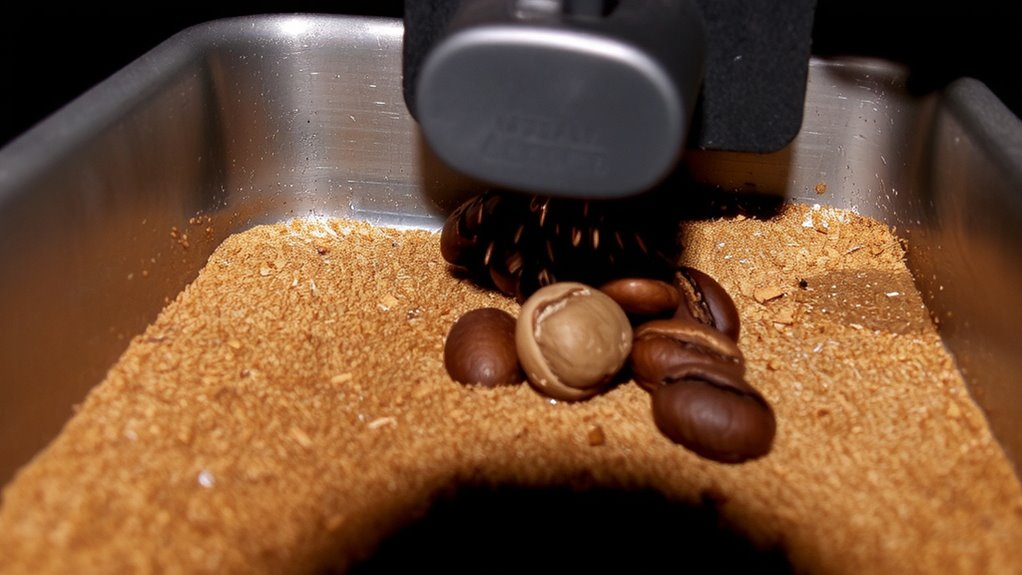
Fines and boulders in your chaff tray can tell you a lot about grind quality. If you see a lot of fines-tiny particles mixed in-your grind isn’t uniform, which hurts extraction. Boulders, or unusually large chunks, mean some beans aren’t being ground finely enough. Both indicate poor particle distribution, leading to uneven brews. A consistent grinder should produce mostly similar-sized grounds, so spotting too many extremes suggests your equipment may need checking. Blade grinders often struggle here, while good burr grinders offer better grind uniformity. Look closely after grinding: a mix of fines and boulders usually means the burrs are dull, misaligned, or the grind setting is unstable. You don’t need perfect symmetry, but extremes in size hurt flavor clarity. Monitoring this helps you catch issues before brewing, saving time and beans.
Adjust Your Grinder Based on Chaff Patterns
If you’re noticing a mix of fines and boulders in your chaff tray, it’s a clear sign your grinder needs adjusting. This inconsistency often points to uneven particle size, which can hurt extraction. You’ll want to tweak your grinder’s burr alignment or calibration to tighten the distribution. High static buildup can cause grounds to clump or stick, skewing what you see in the chaff tray and increasing grind retention. That trapped coffee affects dose accuracy and flavor over time. If static seems bad, try adjusting grind settings slightly finer or coarser-sometimes that reduces cling. On grinders like the Compak K10 or EK43, you might also benefit from anti-static brushes or humidity-controlled environments. Make small adjustments, then recheck the chaff. Consistent patterns mean you’re getting closer to ideal performance. Keep notes on changes. This method helps you dial in more precisely, reducing waste and improving shot quality. Choosing the right Best Mill Grinders can significantly reduce variability and make calibration easier.
Clean the Chaff Collector for Reliable Results
That chaff collector might seem like a small part of your grinder, but skipping regular cleaning throws off your entire grind assessment. Chaff buildup skews your ability to see true grind particles, making it harder to judge consistency. You need a clean surface to compare results accurately. For reliable readings, empty the tray after each session and wipe it down with a dry brush or cloth. Built-up residue can trap new chaff, distorting patterns and leading to false conclusions. Stick to a routine tray maintenance schedule-daily wiping, deeper cleaning weekly. Some models, like the EK43 or Compak K10, have removable trays that make cleaning easier. Plastic trays may scratch if scrubbed too hard, so be gentle. Metal or stainless steel options often resist buildup better. Consistent tray maintenance guarantees clarity in your grind analysis. It’s a small step that keeps your calibration meaningful and repeatable.
Compare Grind Settings Using the Chaff Tray
How do you know if a new grind setting is actually improving your results? Use the chaff tray to compare side-by-side samples. After running coffee through your grinder, collect the chaff and leftover fines. Spread them out on a flat surface and visually scan for differences in size and texture. Tighter grind distribution shows more uniform particles, while clumping or wide variation suggests inconsistency. You’re doing basic particle analysis-no tools needed. Compare settings like 14 to 16 on a Forté: the better setting yields fewer boulders and fines. This method won’t replace lab equipment, but it highlights clear shifts in output. If one setting produces visibly more even results, it’s likely improving espresso extraction. Make comparisons under the same conditions-same beans, room temp, and dose. Trust what you see over what you assume.
Make Chaff Checks Part of Your Daily Routine
You’ll often catch small changes in grind performance by checking the chaff tray every day, especially as temperature and humidity shift. Making this a daily habit helps you spot inconsistencies before they affect your espresso shots. Over time, chaff buildup or unusual patterns can indicate grinder wear, static issues, or dose variance. A quick 30-second check each morning takes little effort but provides immediate feedback. Routine integration means pairing the check with another daily task-like turning on your grinder or wiping down the machine-so it becomes second nature. No special tools are needed; just open the tray and look. If chaff looks clumped, dry, or uneven, adjust your grind setting or clean the burrs. Doing this consistently improves shot quality and reduces dial-in time. It’s a simple, low-cost way to maintain precision without guesswork.
On a final note
You can use your chaff collector to spot grind inconsistencies quickly. Look for fines or boulders-these signal uneven grinding. Adjust your grinder if you see clumping or large chunks. Clean the tray regularly so old residue doesn’t skew results. Compare settings by checking changes in chaff patterns. Make this quick check part of your daily setup. It’s a simple, reliable way to maintain shot quality without extra tools.