The Science of Coffee Bean Genetics: Understanding Varietal Development
Your coffee’s flavor and resilience start with its genes. Arabica and robusta are the main species, but varietals like Bourbon, Geisha, and Catuai offer distinct traits. Genetics shape everything from blueberry tones in Geisha to disease resistance in Lempira. Breeders cross plants for better yield, structure, and adaptability, often using F1 hybrids like Starmaya. CRISPR and genetic markers now speed up development, helping plants thrive in changing climates. There’s more to how these traits unfold in real-world farms.
Notable Insights
- Coffee varietals like Bourbon, Geisha, and Catuai have distinct genetic traits influencing flavor, yield, and climate adaptation.
- Genetic makeup determines flavor compounds, with Geisha expressing floral notes and Bourbon offering caramel and stone fruit tones.
- Breeders develop new varieties by crossing plants to enhance disease resistance, yield, and plant structure.
- F1 hybrids combine vigor and uniformity but require new seeds annually due to genetic inconsistency in later generations.
- CRISPR and genetic markers accelerate breeding by enabling precise selection for disease resistance and climate resilience.
What Is Coffee Bean Genetics?
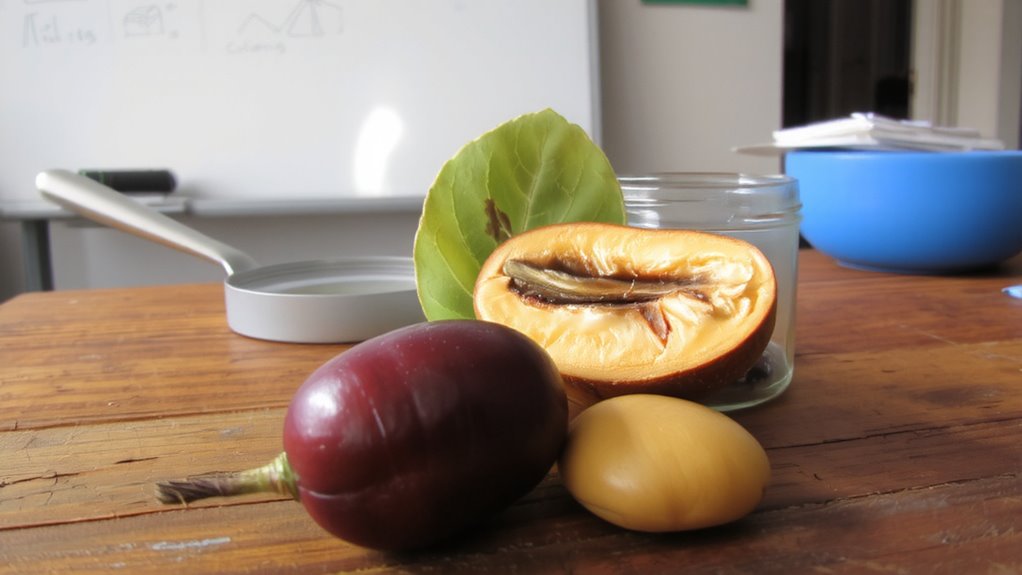
Coffee starts with a bean, and that bean’s genetics shape nearly every part of your morning cup. You’re probably familiar with arabica and robusta, but within those, there are varietals like Bourbon, Geisha, or Catuai, each with unique genetic traits. These genetics influence how the plant grows, resists disease, and responds to climate. Bean origin matters-Ethiopia’s highlands produce different results than Colombia’s mountains-not just because of soil or weather, but because local genetics have adapted over time. Growing altitude also plays a role: higher elevations often slow growth, potentially improving density and quality. However, not all varietals thrive at high altitudes. Some do best below 1,200 meters; others need 1,800+ to express their potential. Knowing the genetics helps you predict performance and flavor behavior-practical info when selecting beans or planning a roast profile.
How Genetics Influence Coffee Flavor
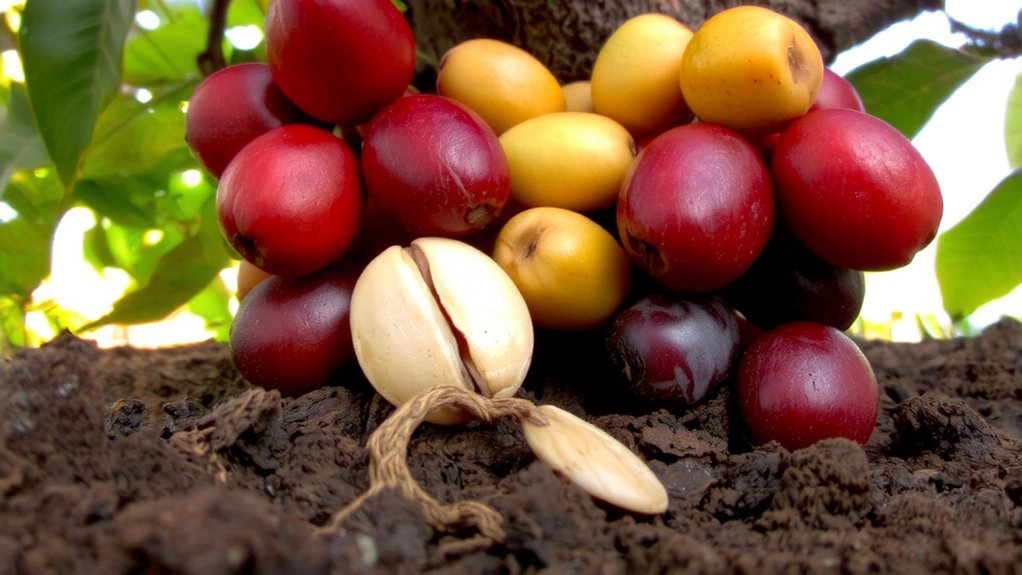
What makes one coffee taste like blueberries and another like dark chocolate? It’s mostly genetics. Your coffee’s flavor profiles are hardwired into the plant’s DNA. Different varietals produce distinct levels of sugars, acids, and aroma compounds during growth and processing. For example, Geisha naturally develops intense floral and tea-like notes, while Bourbon often delivers caramel and stone fruit tones. These traits aren’t accidents-they’re inherited. The presence of certain aroma compounds, like aldehydes for citrus or pyrazines for earthiness, is controlled by gene expression in the bean. You can’t change these with brewing alone. While roast and grind affect intensity, they won’t transform a Typica into a fruity Ethiopian. Choosing beans starts with understanding that genetics set the baseline. You’re not just buying a roast-you’re working with a plant’s built-in flavor potential shaped long before harvest.
How Breeders Develop Better Coffee Plants
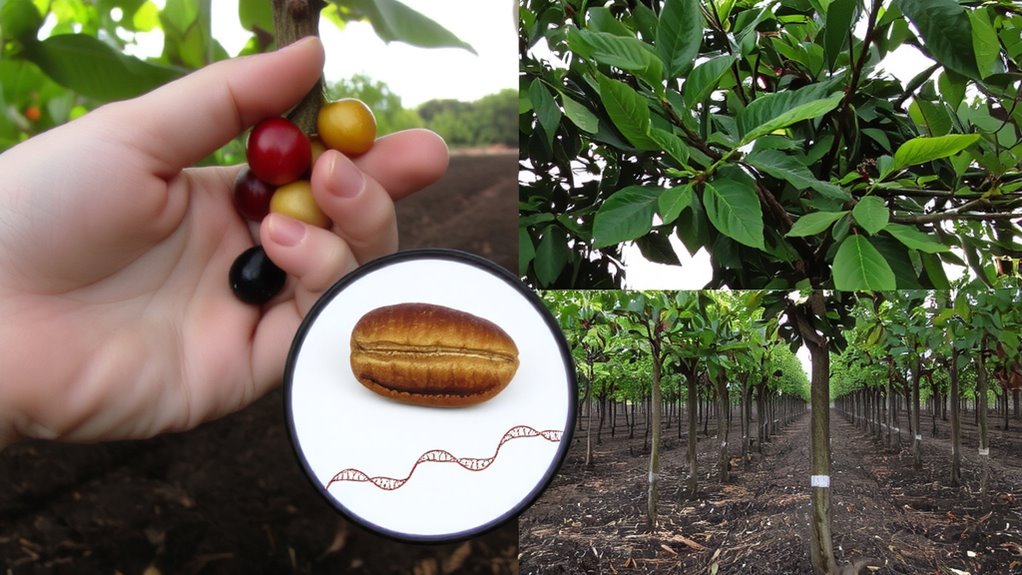
While flavor starts in the bean, it’s breeders who shape what’s possible long before the first sip. You rely on their work every time you brew a consistent, high-quality cup. Breeders cross plants to improve traits like disease resistance, plant structure, and yield optimization. A compact, sturdy plant structure helps coffee thrive in dense farms and resist wind damage. Taller, spreading types may yield less per hectare but can suit shade-grown systems. When breeders focus on yield optimization, they select plants that produce more cherries without sacrificing bean quality or taxing the soil. They test offspring over years in real-world conditions, eliminating weak performers. Varieties like F1 hybrids offer vigor and uniformity, though they cost more and can’t be replanted from seed. You get reliability and volume, but must plan for crop cycles and budget carefully. It’s science-backed farming-no shortcuts, just results.
Genetic Lineage of Major Coffee Varietals
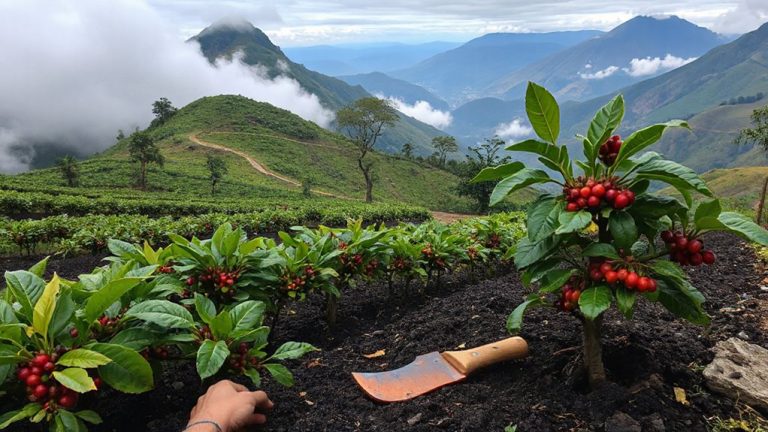
You’ve seen how breeders shape coffee plants for better performance, but the story doesn’t stop there-what’s behind those improvements is a history written in genetics. You’re looking at centuries of movement and adaptation. Major varietals like Bourbon and Typica trace their historical origins to Ethiopia, then spread through trade and colonization. Each mutation, like Caturra or Pacas, emerged naturally or through selection. Their geographic distribution now spans Latin America, Africa, and Asia, shaped by climate and farming needs. For example, Catuai thrives in Brazil due to its compact size and yield, while Geisha gained fame from Panama’s high altitudes. Understanding lineage helps you predict how a plant might perform. It’s not just about flavor-it’s about matching genetics to environment for reliable results you can count on in the field.
Building Disease Resistance Through Genetics
Since coffee plants face constant threats from diseases like leaf rust and coffee berry disease, breeders have focused on embedding resistance directly into their genetics. You can speed this up using genetic markers to identify resistant traits early, reducing years of trial and error. These markers act like flags, showing scientists which plants carry protective genes without waiting for disease exposure. With gene editing, you can now modify specific DNA sections to boost resistance-techniques like CRISPR offer precision, though regulations and public acceptance vary by region. Some resistant varieties, like Lempira or Starmaya, already perform well in high-risk areas. While traditional breeding still plays a role, combining it with modern tools gives you faster, more reliable results. Just keep in mind that resistance isn’t absolute-pathogens evolve. Rotating varieties and monitoring field performance helps maintain long-term protection. You’re not eliminating risk, but stacking the odds in your favor.
Breeding Coffee for a Changing Climate
Climate change is pushing coffee farmers to adapt fast, and breeding efforts are shifting hard toward resilience in the face of rising temperatures, erratic rainfall, and longer dry spells. You need varieties that offer solid climate adaptation without sacrificing cup quality. Breeders now prioritize traits like drought tolerance, selecting plants that maintain yield and vigor even with less water. Hybrids such as F1 crosses from *Coffea arabica* and *Coffea canephora* (robusta) show real promise, combining hardiness with better flavor than traditional robustas. These new lines aren’t immune to stress, but they buy you time and stability. You’ll see improved performance in marginal areas where older varieties struggle. While they may take longer to establish than standard crops, the payoff comes in consistent harvests under tough conditions. Choosing such varieties means planning ahead, not just for today’s weather but for what’s coming. It’s practical risk management built into the seed.
CRISPR and the Future of Coffee Breeding
A growing number of coffee breeders are turning to CRISPR gene-editing technology to speed up the development of improved varieties, and it’s easy to see why. With gene editing, you can precisely modify DNA to achieve targeted trait enhancement-something traditional breeding can’t do as quickly or accurately. CRISPR allows you to develop plants with better disease resistance, climate tolerance, and bean quality in years, not decades.
| Trait | Traditional Breeding | CRISPR Gene Editing |
|---|---|---|
| Disease Resistance | 10–15 years | 3–5 years |
| Drought Tolerance | Variable results | High precision |
| Flavor Quality | Indirect selection | Direct gene targeting |
| Development Cost | Lower per cycle | Higher upfront, faster ROI |
You’re not swapping beans here-you’re reshaping their genetic future with practical, measurable results.
On a final note
You now see how genetics shape coffee’s taste, resilience, and adaptability. Varietals like Bourbon, Typica, and Castillo offer different flavor profiles and disease resistance. Breeders use crossbreeding and tools like CRISPR to develop plants that withstand climate stress. Choosing the right beans means considering origin, varietal, and farming conditions. This knowledge helps you make smarter brewing choices, from bean selection to method, ensuring better, more consistent results in your cup.