The Impact of Grind Consistency on French Press Clarity and Sediment Levels
You need a consistent, coarse grind for clear French press coffee-uneven particles cause some to over-extract (bitter) and others to under-extract (weak). Fines from blade grinders increase sediment and muddiness. A burr grinder like the Baratza Encore delivers uniform grounds that improve clarity and reduce sludge. Pair it with a coarse setting, skip stirring the crust, and pour carefully to leave sediment behind. Better results start with better grinding-and there’s more to getting it right.
Notable Insights
- Consistent grind size prevents over-extraction and under-extraction, enhancing flavor balance and clarity in French press coffee.
- Uniform coarse particles reduce fines that contribute to sediment and muddied brews.
- Burr grinders produce even particle distribution, critical for minimizing sludge and improving cup clarity.
- Inconsistent grinds from blade grinders increase sediment due to unpredictable fines and erratic extraction.
- Proper grind consistency allows clean separation of grounds, reducing sediment when pouring the brewed coffee.
Why French Press Needs Consistent Grind
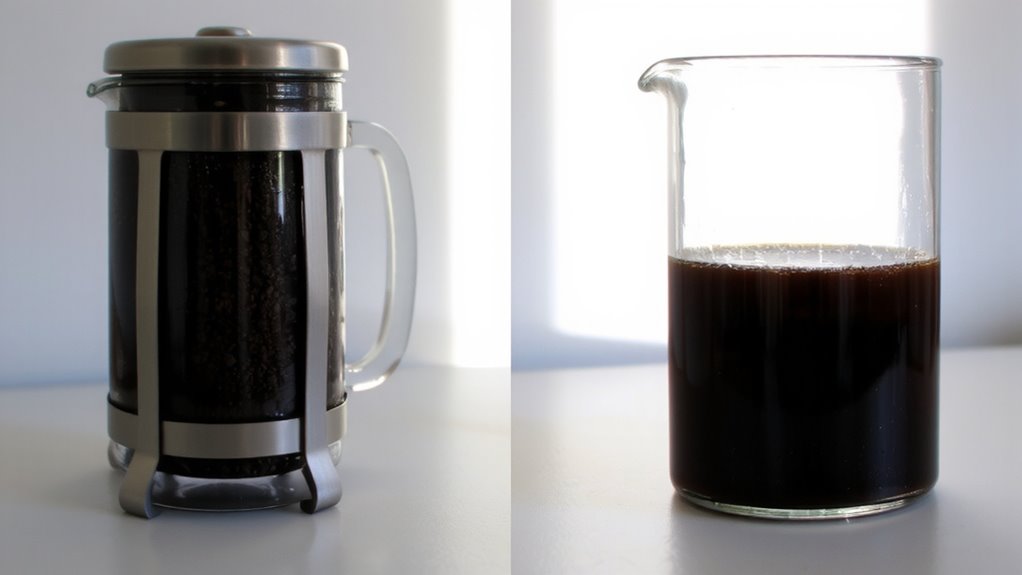
A consistent grind isn’t just helpful for French press-it’s essential. When your coffee grounds are even, extraction happens uniformly, which directly affects flavor, brew time, and clarity. Fine particles brew faster and can over-extract, adding bitterness, while coarse bits under-extract and taste hollow. With a French press, uneven grinds mean more sediment in your cup and muddy results. You’re aiming for a coarse, sea salt-like texture-anything finer increases silt. Use a burr grinder like the Baratza Encore to hit consistency; blade grinders just won’t cut it. Water quality matters too-use filtered water to avoid off-flavors and guarantee proper extraction. Keep brew time to four minutes; longer steeping pulls more sediment and bitterness. Stick to these basics and you’ll get cleaner coffee, less sludge, and better control over every cup-no guesswork needed. For pour-over brewing, achieving the ideal grind size and uniformity is equally critical, and a reliable coffee grinder for pour-over can make all the difference in clarity and flavor balance.
How Uneven Grinds Create Muddy Coffee
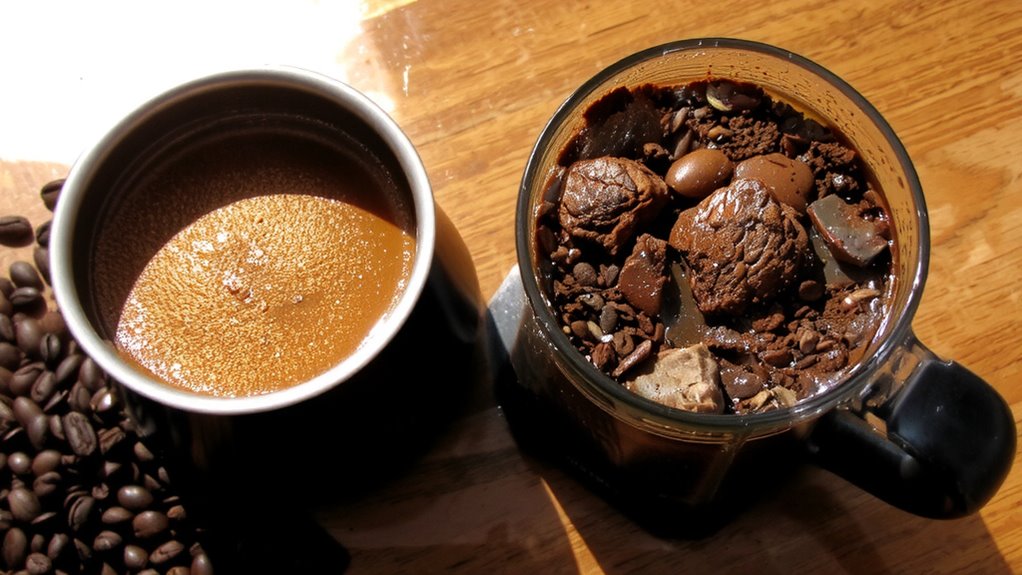
That gritty layer at the bottom of your French press cup? It’s not just sediment-it’s a sign of uneven extraction caused by poor grind texture. When your grinder produces an inconsistent particle distribution, some grounds end up fine as flour while others are coarse. The fines over-extract instantly, releasing bitter compounds and muddying your brew. Meanwhile, the larger particles under-extract, adding little flavor. This imbalance creates a murky, heavy cup instead of a clean, balanced one. Blade grinders often worsen this issue due to their chaotic chopping motion. A burr grinder, especially a conical one like the Baratza Encore, guarantees more uniformity. You’ll get clearer coffee with less sludge at the bottom. Consistent particle distribution isn’t just ideal-it’s essential for clean French press results. Fix your grind, and you’ll fix your clarity. Home brewers seeking espresso-level precision may also benefit from exploring the best Italian espresso machines for consistent grind and extraction performance.
How Grind Size Affects French Press Extraction
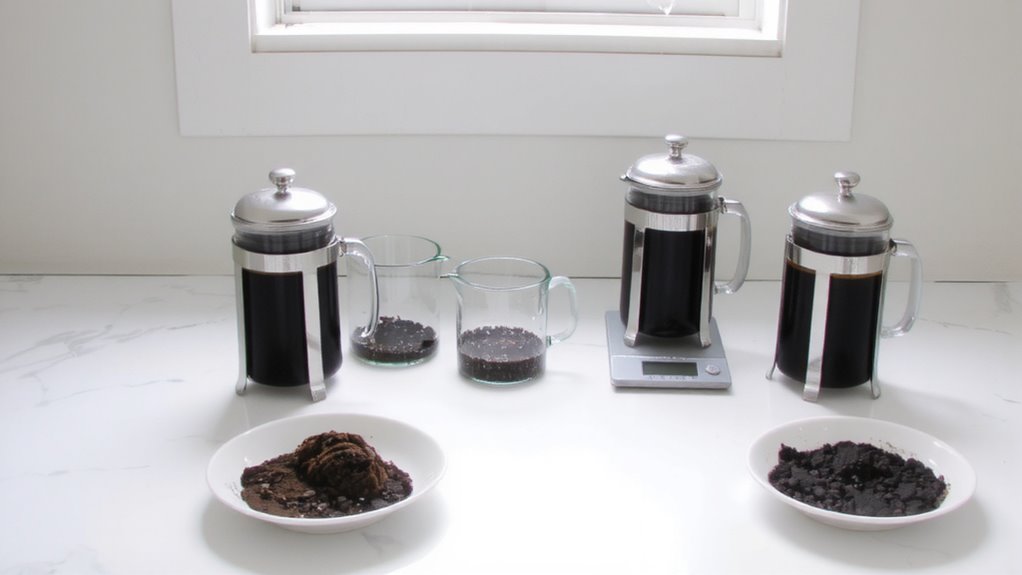
Getting the grind right means more than just avoiding sludge-it starts with choosing the right size. If your grounds are too fine, they’ll over-extract quickly, especially with standard water temperature around 200°F, leading to bitter, muddy coffee. Too coarse, and they under-extract, producing weak, hollow flavors even with a full four-minute brew time. The sweet spot balances surface area and extraction efficiency. A consistent medium-coarse to coarse grind allows water to pull flavor evenly without forcing fines into your cup. You’ll get better clarity and fewer sediments, but only if grind size matches your brew time and water temperature. Pre-ground coffee often fails here-blade grinders create uneven particles that skew extraction. For control, use a burr grinder like the Baratza Encore. It’s affordable and repeatable, helping you dial in the right grind for clean, full-bodied results without guesswork. The best coffee grinders for espresso also excel in French press brewing by ensuring uniform particle distribution.
The Ideal Coarse Grind for French Press
Most French press enthusiasts find the best results come from a grind resembling coarse sea salt-just the right size to balance extraction and filtration. You want a consistent grind texture so water extracts evenly without over-pulling bitter compounds. Too fine, and you’ll get muddiness and excess sediment; too coarse, and your coffee tastes weak. A uniform grind lets you rely on a standard brewing time-typically four minutes-without rushing or extending it. Stick to burr grinders when possible; they give far better control than blade models. If your grind texture varies, some particles extract too fast while others lag, hurting clarity. With the right coarse setting, you’ll see clean separation between liquid and grounds after pressing. This means less sludge in your cup and better flavor overall. Adjust slightly if needed, but start coarse and tweak only if your brew feels off.
Top Grinders for French Press Coffee
A good grinder makes a noticeable difference in your French press coffee, and if you’re serious about clarity and flavor, you’ll want one that delivers a consistent coarse grind. Blade grinders won’t cut it-they create uneven particles, leading to muddled results. Instead, go for a burr grinder like the Baratza Encore or the Bodum Bistro. These give you precise control, ensuring uniform grounds that enhance extraction while reducing unwanted fines. A consistent coarse grind is also useful for cold brew methods, where even particle size prevents over-extraction and bitterness. Just avoid going too fine-dialing into an espresso grind will ruin your French press clarity and increase sediment. Grinders with stepped settings or macro adjustments let you fine-tune with little guesswork. Even budget models like the Capresso Infinity offer better consistency than blade options. Choose one with minimal retention and steady output, so every cup stays clean and true to flavor.
How to Reduce Sediment in French Press
While you can’t eliminate sediment entirely with a French press, you can notably reduce it with the right technique and tools. Use a burr grinder to achieve a consistent coarse grind-uneven particles worsen sediment. After brewing, let the coffee sit for a minute before pouring; this allows sediment settling, so the last bit stays in the carafe. Avoid stirring the crust vigorously after pressing, as it disturbs settled grounds. Consider using a dual-layer metal filter or an additional paper filter with your plunger to improve press filtration, though some claim it dulls flavor. Chambord models often offer better filtration than cheaper presses due to tighter filter screens. Pour slowly and stop before reaching the sludge at the bottom. These practical steps won’t remove every speck, but they notably cut down mess and grit without needing specialty gear.
French Press Brew Tips for Cleaner Coffee
Every successful French press brew starts with clean, controlled variables-use freshly ground beans, ideally from a burr grinder set to a coarse consistency, since uneven or fine particles increase sediment and muddiness. Stick to a water temperature between 195°F and 205°F; boiling water scalds the coffee, while cooler water under-extracts, affecting clarity and taste. Use a gooseneck kettle for better control. For brewing time, 4 minutes is standard-any longer and you risk over-extraction and extra sediment. Stir the crust gently after pouring to guarantee even saturation, then let it steep without agitation. When plunging, do it slowly and steadily to avoid disturbing the grounds at the bottom. Pre-wetting the filter isn’t an option here, but a coarser grind and precise water temperature are your best tools. Always decant immediately after brewing to prevent continued extraction and sediment搅动.
On a final note
A consistent coarse grind gives you clearer French press coffee with less sediment. Uneven particles lead to over-extraction and sludge. A burr grinder-like the Baratza Encore or 1ZPress Mini-delivers uniform grounds better than blade grinders. Combine proper grind size with a gentle push and a clean filter for best results. Pre-wetting the paper filter can help too. Small changes in grinding make a noticeable difference in cup clarity and texture.