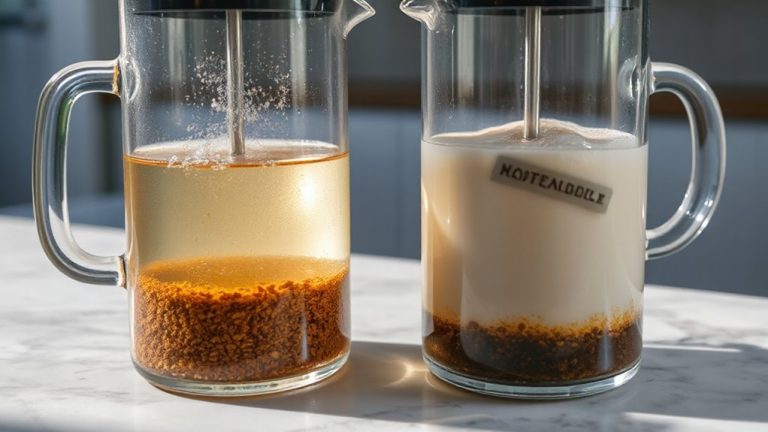
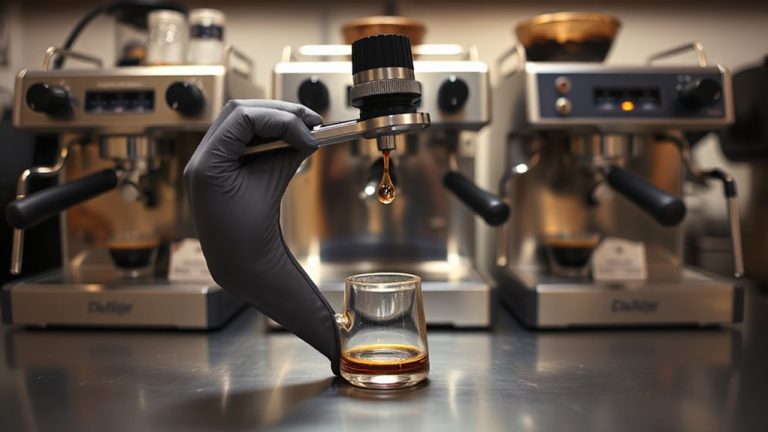
How the Choice of Filter Paper Can Impact Espresso Extraction and Aroma Intensity
Your filter paper affects espresso extraction and aroma by controlling flow, fines, and taste. Thicker, finer papers like Hario’s slow flow for even extraction but can clog. Bleached filters avoid papery notes, while unbleached need rinsing. Medium porosity balances body and clarity. For dark roasts, use thinner filters to prevent bitterness; for light roasts, higher retention helps. Picking the right filter sharpens flavor and performance-your next shot’s quality might depend on it.
Notable Insights
- Filter texture affects taste clarity: smoother papers trap fines, enhancing brightness and acidity in espresso.
- Thicker filters slow water flow, improving extraction evenness but risking channeling or clogging under high pressure.
- Bleached filters eliminate lignins, preventing papery or wood-like tastes that can dull espresso aroma intensity.
- Medium porosity filters balance fines retention and oil passage, preserving body and aromatic complexity.
- Dark roasts need faster-flow filters to avoid over-extraction, while light roasts benefit from slower, higher-retention papers.
Espresso Filter Material: Clarity and Flavor
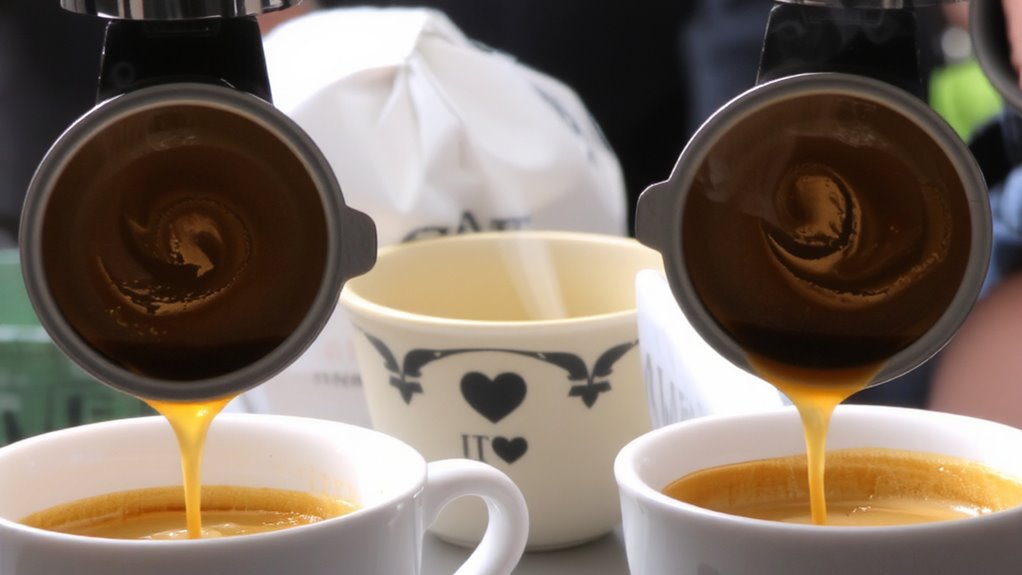
The paper filter you use in your espresso machine plays a direct role in how clean and defined your shot tastes. A smooth filter texture traps fine coffee particles more effectively, leading to a brighter, cleaner cup with sharper acidity and distinct flavor notes. Rougher textures may allow more sediment through, adding body but potentially muddying clarity. The material finish also matters-bleached filters tend to have a neutral impact, while unbleached ones can introduce a slight papery taste if not rinsed. Brands like Hario and Melitta use different finishes and textures; Hario’s soft white filters, for example, offer a balanced profile with minimal flavor interference. Choosing the right one depends on your preference: clarity over richness. Always consider both filter texture and material finish when fine-tuning your espresso. They shape mouthfeel, aroma definition, and overall taste purity without altering brew time. For a detailed overview of top-performing options, check out the Best Paper Coffee Filters buying guide.
Espresso Filter Thickness and Extraction
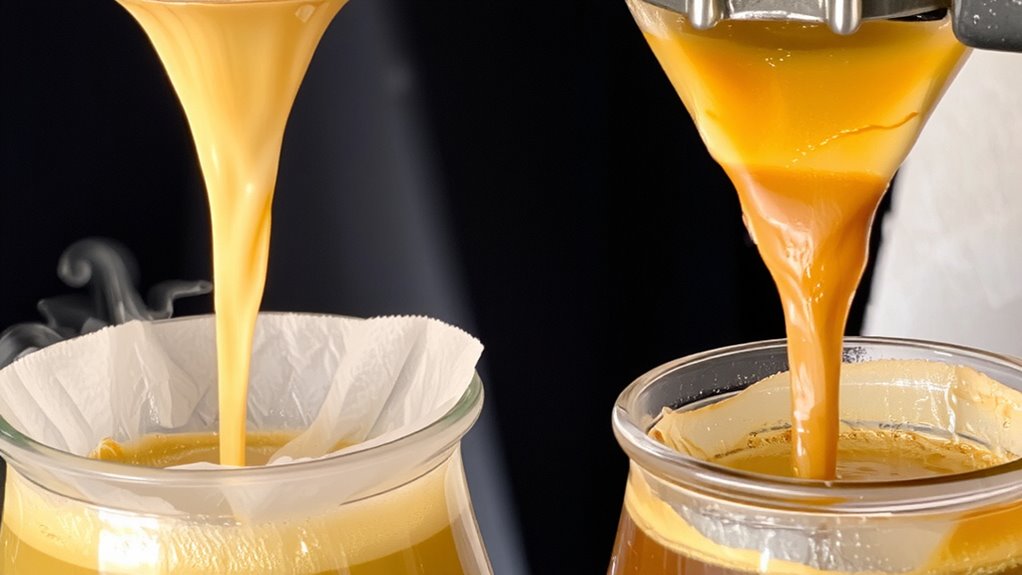
Filter thickness changes how evenly water moves through your coffee bed, and that shapes extraction. Thin filters let water pass quickly, which can shorten extraction time and risk under-extraction if not monitored. Thicker filters, like those from brands such as Hapifilt or Puqpress, slow flow slightly, promoting more even saturation and longer contact time-helping pull out deeper flavors. But go too thick, and you might choke the shot, especially with fine grinds. Filter durability also matters: thicker paper resists tearing during handling, making it more reliable in daily use. However, excessive thickness can mute clarity. For most home baristas, a medium-thick filter strikes the best balance-consistent extraction, reliable durability, and controlled flow. Adjust grind size and dose as needed to maintain ideal extraction time, typically 25–30 seconds. Choose thickness based on your machine’s pressure and your preferred shot profile.
Bleached vs Unbleached Espresso Filters
You’ve likely noticed how filter thickness shapes flow and extraction, but another subtle choice sits right alongside it-whether your paper’s bleached or unbleached. Bleached filters are processed to remove natural lignins, which helps guarantee taste neutrality-meaning they won’t add paper or wood notes to your espresso. Most baristas prefer them for clean, accurate flavor profiling. Unbleached filters skip the chemical treatment, appealing to those concerned with environmental impact due to fewer processing chemicals and bleaching agents like chlorine. However, they often require a thorough rinse to avoid imparting a faint papery taste. While both types work in standard filter baskets, your choice affects more than flavor: bleached offers consistency, while unbleached supports eco-conscious brewing. Pick based on your priority-taste neutrality or reduced environmental impact-without sacrificing reliability.
Espresso Filter Porosity: Aroma and Body
While it might seem minor, the porosity of your espresso filter plays a key role in shaping both aroma and body. If the pores are too large, water passes through quickly, reducing contact time and weakening aroma. Too small, and you risk over-extraction, especially under high brewing pressure, leading to bitterness. Your filter size affects flow rate, which interacts with grind size and pressure for ideal balance. Papers with medium porosity, like those from Hario or Able, often strike the best compromise-letting oils through for body while filtering fines that cloud the shot. Lower porosity filters can restrict flow, increasing pressure and potentially enhancing body, but may clog with finer grinds. You’ll want to match filter porosity to your machine’s pressure output and your grind setting. It’s not just about cleanliness-it’s about controlling what stays in and what gets filtered out.
Best Filters for Light, Medium, Dark Roasts
The roast level of your beans changes how water moves through the puck and what compounds end up in your cup, so the filter you pick should respond to those shifts. Light roasts are denser, with higher bean density, and need even extraction-opt for thicker, slower filters that boost contact time and clarity. These beans also benefit from fresh roast age, so paired with a high-retention filter, you get balanced acidity and sweetness. Medium roasts are more balanced; use mid-weight filters that let oils and aromas pass without overloading body. As beans darken, oil rises and bean density drops-dark roasts extract faster. Choose thinner, faster-flow filters to prevent bitterness. Older roast age increases solubility, so avoid high-retention papers that amplify staleness. Match the filter to both roast and age for cleaner, more accurate results.
Top 5 Espresso Filter Brands
A solid espresso filter can make or break your shot, and a few brands stand out for consistency, design, and performance across roast types. VST filters lead with precise engineering and excellent brand reputation, ensuring even extraction-just make sure you check for compatibility issues with your basket. Fellow’s filters are affordable and reliable, working well with most machines, though some users report slight fit variations. Cafelat’s reusable options offer sustainability, but you’ll need to clean them thoroughly to avoid residue. Kalita’s paper filters fit their brewers perfectly, yet may not suit third-party portafilters. Nordic Approach delivers specialty-grade results, favored in labs, but at a higher cost. You’ll want to match each filter to your machine and grind style. Trusting brand reputation helps, but always test for compatibility issues before committing.
On a final note
Your filter choice affects clarity, body, and aroma in espresso. Thin, bleached filters give cleaner shots; unbleached or thicker ones add depth but may mute acidity. Porosity matters-tight filters slow flow, boosting intensity, while looser ones suit light roasts needing speed. For dark roasts, try Hario or Melitta bleached filters; for bright, complex beans, Cafec or Kalita unbleached work well. Match filter to roast and taste preference.