The Impact of Water Quality on French Press Coffee Taste Profiles: An In-Depth Analysis
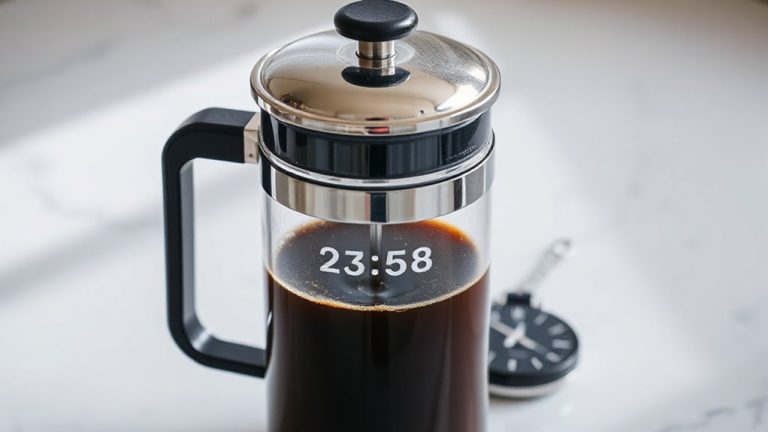
Your French press coffee tastes flat or bitter because your water’s mineral balance is off. Soft water under-extracts, making sour coffee; hard water over-extracts, bringing out bitterness. Aim for 100–150 ppm TDS-filtered tap or brands like Aquafina work well. Avoid distilled or softened water. Use a Brita filter to remove chlorine while keeping minerals. Keep brew time at 4 minutes and water between 195–205°F. Test your water with $10 strips-then adjust with mineral packets if needed.
Notable Insights
- Water mineral content directly influences extraction, affecting flavor balance in French press coffee.
- Hard water causes over-extraction and bitterness due to high calcium and magnesium levels.
- Soft or distilled water leads to under-extraction, producing flat, sour, or weak coffee.
- Ideal brewing water has 100–150 ppm TDS and a pH of 6.5–7.5 for optimal flavor.
- Filtering tap water improves taste by removing chlorine while preserving essential minerals for extraction.
Why Water Quality Makes or Breaks French Press Coffee
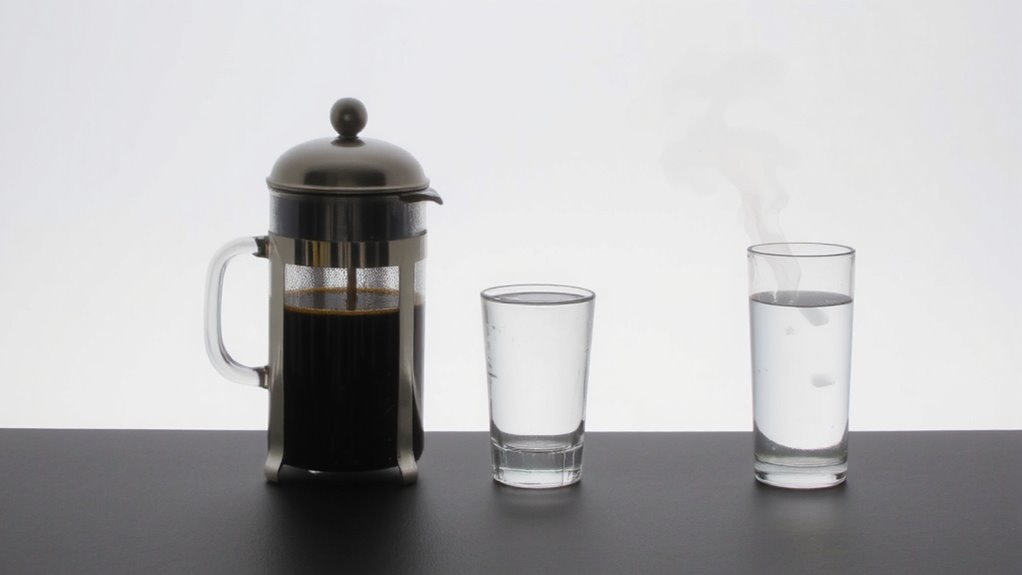
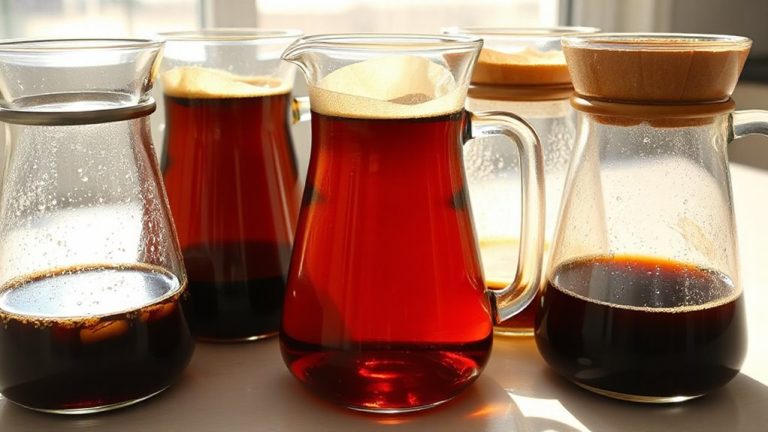
Water quality is the silent player in your French press brew-skip it, and even top-tier beans won’t save your cup. You’re extracting flavor over four minutes, and every impurity or imbalance gets pulled into your mug. Your water’s mineral content directly affects how oils and acids dissolve; too soft, and coffee tastes flat; too hard, it brews bitter. But it’s not just minerals-organic impurities like chlorine or algae from tap sources add off-flavors fast. A basic carbon filter removes most of these, especially in municipal water, giving you cleaner extraction. Bottled spring water works, but check labels: some have excessive minerals. Ideal water balances both factors-low organic impurities and moderate mineral content (like calcium and magnesium). For consistent results, use filtered tap or a brand like Third Wave Water’s base mineral product. It’s the cheapest upgrade with the highest return. Control the water, and you control the cup. The best water for coffee enhances extraction and preserves perfect coffee flavor.
How Hardness and pH Affect French Press Extraction
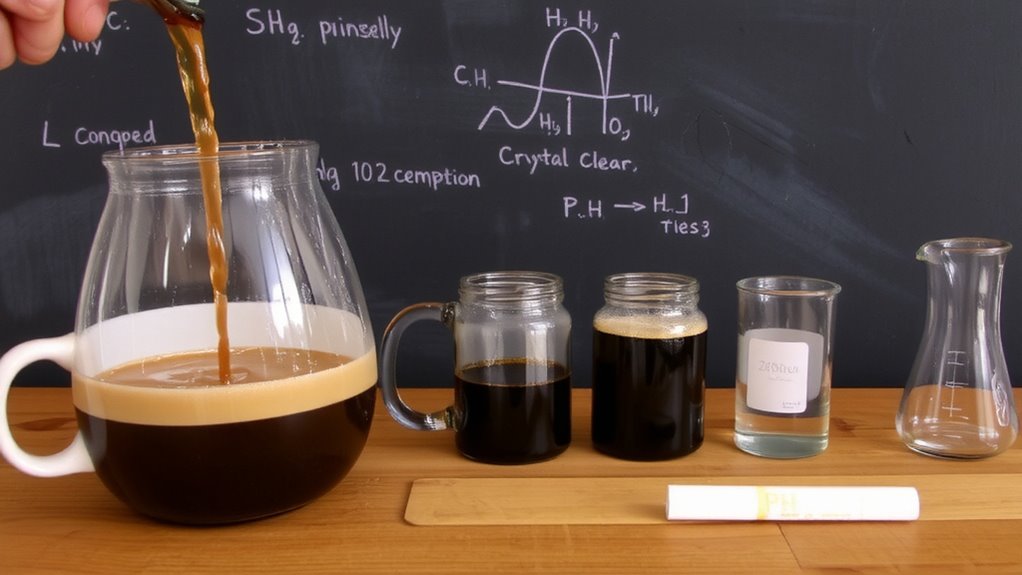
While you might not think about it at the time, the hardness and pH of your water quietly shape how your French press coffee extracts. Too much hardness-high mineral content-can over-extract bitter compounds, especially if calcium and magnesium dominate. Too little, and your coffee tastes flat due to weak extraction. You need a balanced mineral profile to help pull flavor evenly from the grounds. pH also matters: water that’s too acidic speeds extraction, risking sourness, while overly alkaline water slows it, possibly yielding dull or muted notes. For best results, aim for slightly acidic to neutral pH (around 6.5–7.5) and moderate hardness to support a stable mineral balance. This promotes better flavor clarity, letting the coffee’s natural characteristics shine without interference. Distilled or softened water lacks essential minerals, so avoid them. Opt for water with measured mineral content to guarantee consistent, clean results every time. For optimal flavor, consider using best water for coffee machines that supports balanced extraction.
Tap, Filtered, or Bottled: Best Water for French Press?
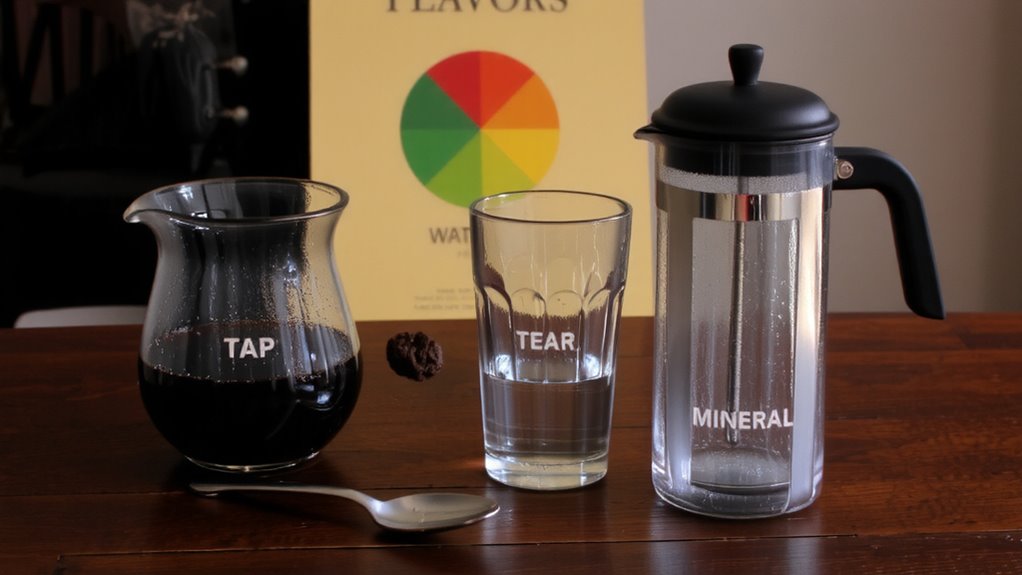
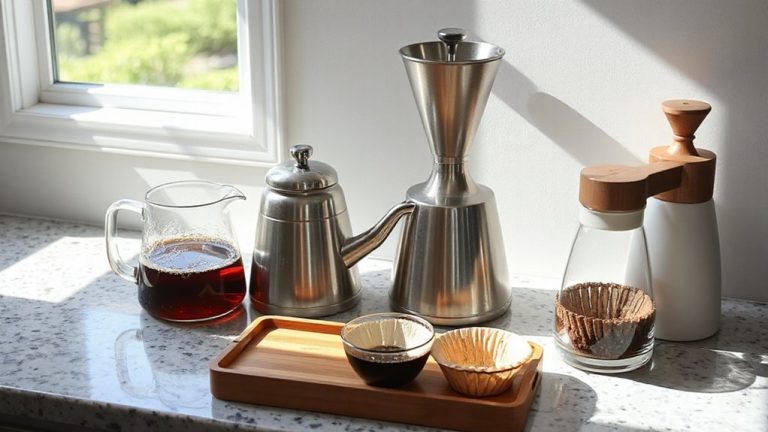
You already know mineral balance and pH play a big role in how your French press brew turns out, but now it’s time to look at what actually comes out of your faucet or bottle. Your water source directly impacts flavor and extraction. Tap water is convenient but varies widely-some municipal supplies have off-flavors or chlorine that affect taste. Bottled water offers consistency, especially labeled drinking water or brands like Aquafina, but it’s less eco-friendly and costlier over time. Filtered water, using a Brita or countertop filter, strikes a smart middle ground: it removes chlorine and sediments while retaining enough minerals to support extraction. Keep brewing time consistent-about 4 minutes-regardless of water type, since that stability helps compare results. For most home brewers, filtered water gives the best balance of quality, cost, and convenience without needing precise mineral add-ons.
Is Your Water Too Hard or Too Soft for Good Coffee?
What makes your French press coffee taste flat or overly bitter? Your water’s hardness might be the culprit. If it’s too hard-loaded with minerals like calcium-your coffee can turn harsh and over-extracted, even with the right water temperature and brewing time. Hard water also builds scale in kettles and can interfere with heat consistency. On the flip side, soft water, especially distilled, lacks minerals needed to extract flavor, leaving your brew weak and empty. You’re left with imbalance-either too sharp or too dull. For French press, aim for balanced mineral content: around 50–150 ppm. This range supports even extraction when using water just off boiling (195–205°F) and a brewing time of 4 minutes. Regular tap water varies, so knowing its profile matters. You don’t need lab tests-just observe taste clues. For optimal results, consider using expert-recommended brewing water tailored to enhance coffee flavor.
Test and Fix Your Water for Better French Press Taste
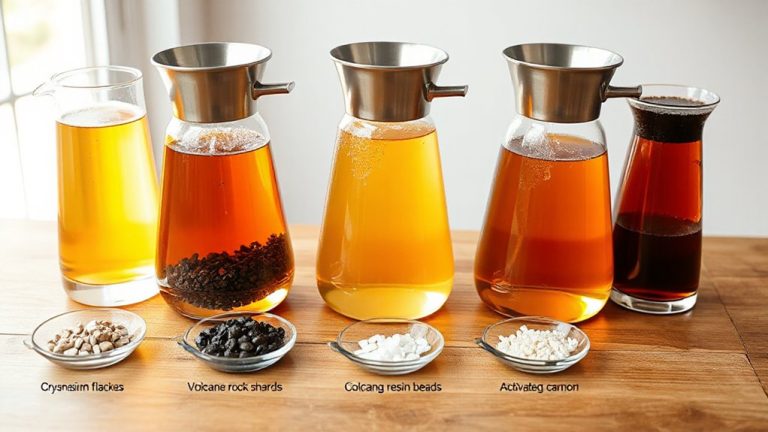
Ever wonder why your French press coffee still falls flat even with a perfect grind and brew time? The problem might be your water source. Start by testing your water-use a $10 test strip to check mineral levels. Ideal water has 100–150 ppm total dissolved solids (TDS) for balanced extraction. If your tap water is too soft, coffee tastes sour; too hard, and it’s bitter or dull. You can fix this: try Third Wave Water mineral packets, or mix distilled and tap water to hit the sweet spot. Don’t forget brewing temperature-aim for 195°F to 205°F. Boil water, then wait 30 seconds before pouring. Using filtered or customized water not only improves taste but stabilizes extraction. Small adjustments to your water make a significant difference. It’s not just about the beans or grind-water matters just as much, and it’s an easy fix you’re probably overlooking.
On a final note
Your water quality directly shapes your French press coffee’s flavor. Hard water can make coffee taste flat or bitter, while soft water may lead to sourness. Aim for balanced minerals-filtered tap water often works well. If your water’s off, use a filter or add mineral drops. Test with a simple TDS meter, then adjust. Better water means clearer, more balanced coffee-every time.