How Different Mineral Filters Affect Cold Brew Tastes and Extraction Speeds
Your filter changes your cold brew’s taste and extraction speed by altering mineral levels. Activated carbon removes chlorine but keeps minerals, preserving body and sweetness. Reverse osmosis strips almost everything, slowing extraction and flattening flavor unless you add minerals back. Filters like Third Wave Water or Peak Design let you control calcium and magnesium for faster, richer extraction, while too many bicarbonates can mute brightness. For consistent, balanced results, mineral-balanced water is key-your next brew might be the best yet.
Notable Insights
- Calcium and magnesium in mineral filters enhance cold brew extraction, improving body, sweetness, and brightness when balanced between 50–100 ppm and 10–30 ppm, respectively.
- Bicarbonates in water buffer acidity, yielding a smoother cold brew, but excess levels above 100 ppm can dull flavor and reduce perceived brightness.
- Activated carbon filters improve taste by removing chlorine while retaining essential minerals, preserving extraction efficiency and flavor neutrality in cold brew.
- Reverse osmosis produces pure water that slows extraction and weakens flavor, often resulting in flat or underdeveloped cold brew without remineralization.
- Mineral-reintroducing systems restore optimized levels of calcium and magnesium post-RO, enabling faster extraction and balanced, repeatable cold brew flavor profiles.
How Calcium and Magnesium Speed Up Cold Brew Extraction
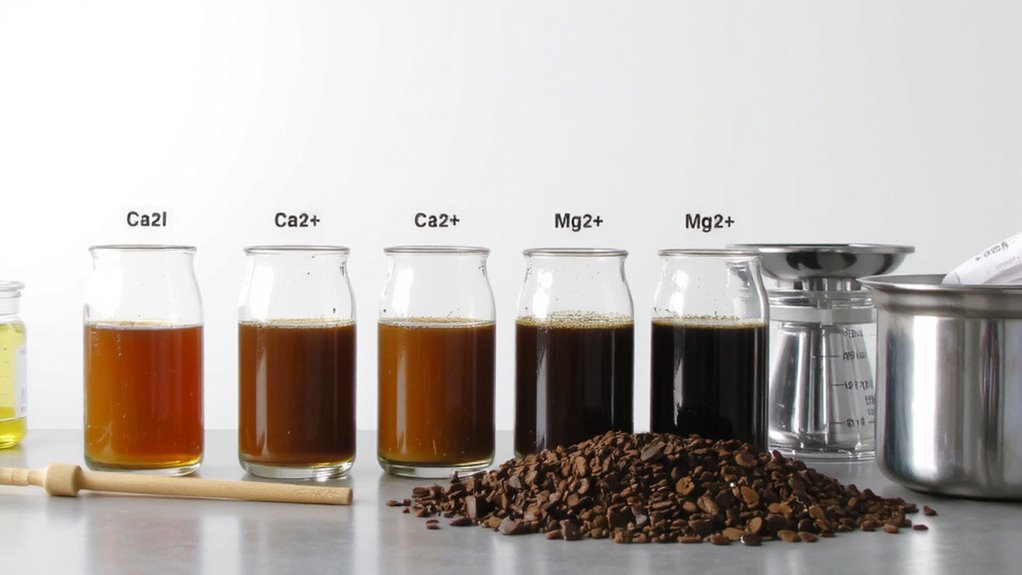
Calcium and magnesium ions in water actively boost cold brew extraction by binding to coffee compounds more effectively than other minerals. You’ll notice a faster, more complete draw of flavors when using mineral-rich water, especially with medium to dark roasts. The calcium boost enhances body and sweetness, while the magnesium impact pulls out brighter, more acidic notes-even in cold water. This means you can shorten steep times slightly without losing depth. However, too much hardness can lead to over-extraction or scale buildup in gear. Aim for 50–100 ppm of calcium and 10–30 ppm of magnesium, like in Third Wave Water’s mineral sachets or softened tap water adjusted with drops. Avoid untreated hard water if your brew tastes harsh or leaves residue. Balanced minerals improve extraction consistently across batches-just test your water with strips to fine-tune results. For optimal equipment performance and taste, consider using best water for coffee machines.
How Bicarbonates Reduce Acidity in Cold Brew
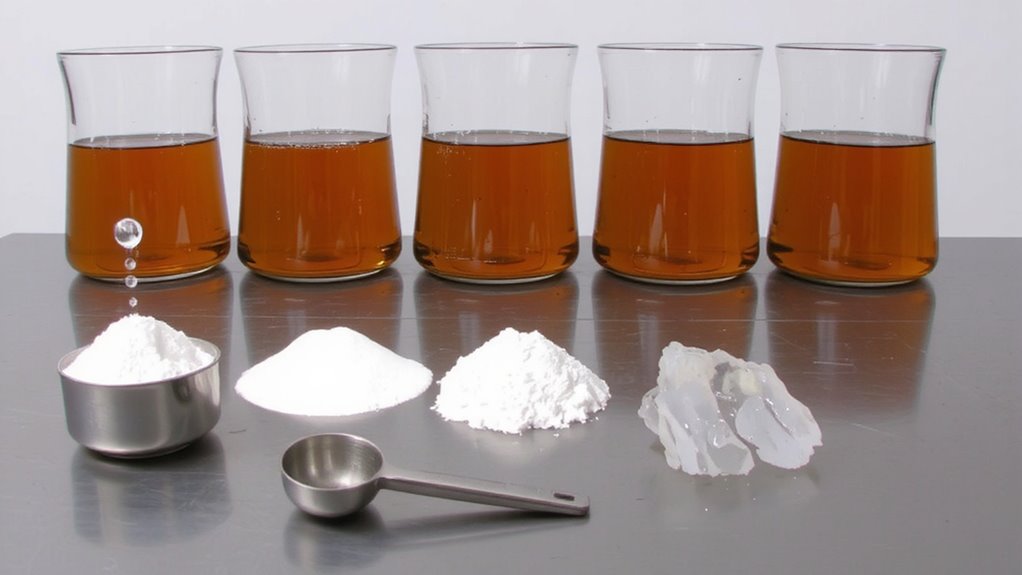
If you’ve ever found your cold brew tasting too sharp or sour, bicarbonates in your water might be the reason-these minerals act as a buffer, neutralizing some of the acidic compounds that coffee releases during steeping. By raising the water’s pH balance, bicarbonates reduce overall acidity, resulting in a smoother, more mellow cup. This shift can enhance flavor neutrality, making your brew less influenced by harsh notes and more consistent across batches. Too much bicarbonate, though, can flatten the coffee’s character or cause over-extraction, dulling the subtle brightness even cold brew lovers appreciate. Water with 50–100 ppm bicarbonates tends to strike a good balance for most beans. If your tap water runs high in bicarbonates, consider a filter that adjusts mineral content, like a reverse osmosis unit with remineralization. That way, you keep control over pH balance and get cleaner, more predictable results every time. For best results, use expert-recommended brewing water that optimizes mineral balance for cold brew extraction.
Activated Carbon Filters: Removing Chlorine, Not Minerals
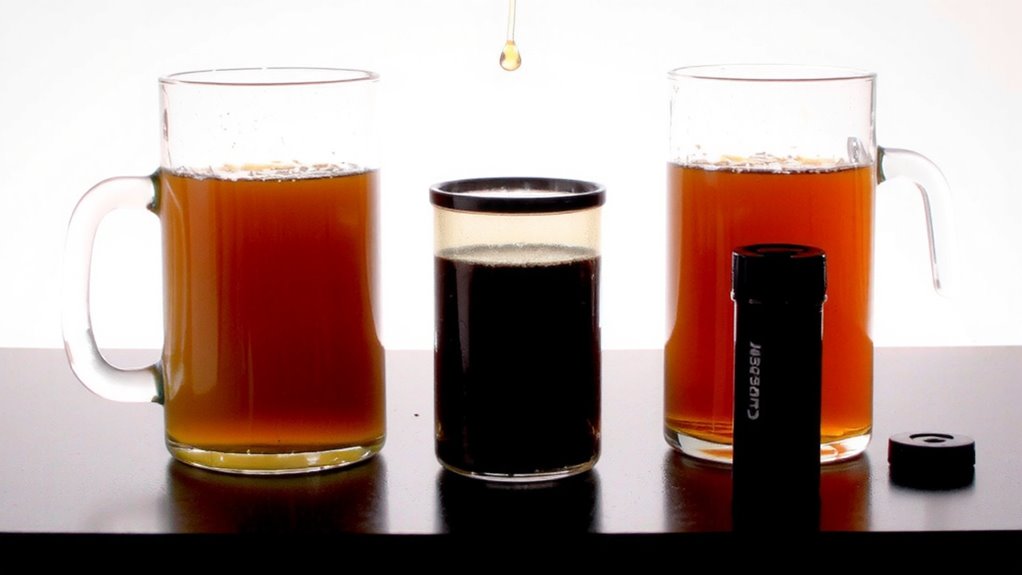
You might have adjusted your water’s bicarbonate levels to smooth out harsh acids in cold brew, but that won’t fix off-flavors from chlorine or odd smells in your tap water. Activated carbon filters specialize in chlorine removal, making them ideal when your main issue is chemical taste or odor. They don’t strip minerals, so your water keeps its brewing-friendly hardness. That means better taste neutrality compared to aggressive systems like reverse osmosis. For cold brew, this balance matters-preserve minerals for extraction, but eliminate chlorine for clean flavor. Achieving optimal mineral balance is key to unlocking the full flavor potential of your coffee.
Reverse Osmosis: Pure Water, Weaker Flavor?
While reverse osmosis gives you the purest water by stripping out nearly all dissolved solids, including minerals and contaminants, it can leave cold brew tasting flat or underdeveloped. You get maximum water purity, which sounds great, but without essential minerals like calcium and magnesium, extraction slows and flavors don’t fully emerge. This often leads to flavor dilution-your brew might seem weak or one-dimensional, even if you use the right coffee-to-water ratio. RO systems, like the APEC RO-90, excel in removing impurities, but that comes at a cost to taste. If you’re using RO water, you’ll likely need to reintroduce specific minerals, though that’s a fix for later. For now, just know that ultra-pure isn’t always better. Your cold brew depends on balanced water chemistry, not just cleanliness. Consider this trade-off before going all-in on reverse osmosis.
Mineral-Reintroducing Filters: Tailoring Your Brew Profile
What if you could have the cleanliness of reverse osmosis without sacrificing flavor? Mineral-reintroducing filters make that possible. These filters strip impurities like RO but then add back essential minerals such as magnesium and calcium to restore mineral balance. That balance is vital-it directly influences extraction speed and cold brew strength. Brands like Third Wave Water and Peak Design offer packets or integrated systems that let you control what goes back into your water. This gives you real flavor customization: tweak the mineral profile to highlight brightness, body, or sweetness in your coffee. It’s more precise than relying on tap water, which varies by region and can introduce inconsistent tastes. While slightly more involved than using a basic carbon filter, these systems provide repeatable results. They’re ideal if you want clean brewing water with tailored flavor outcomes, especially in areas with poor tap quality.
Choosing the Right Filter for Your Cold Brew Taste
The right water filter can make or break your cold brew, depending on your starting water and flavor goals. Your choice affects both filter texture and brew clarity, which in turn shape body and taste. A paper filter gives clean, bright results but can slow flow. Mesh offers reusability but may let fines through. Here’s how common filters compare:
| Filter Type | Brew Clarity | Filter Texture |
|---|---|---|
| Paper (e.g., Chemex) | High | Fine, porous |
| Metal Mesh | Low-Medium | Coarse, rigid |
| Cloth | Medium | Soft, dense |
| Carbon Stick | Medium-High | Smooth, minimal |
| Osmosis System | Very High | Ultra-fine |
Pick based on speed, maintenance, and how smooth or bold you like your cold brew.
How Water Filtration Changes Every Batch of Cold Brew
If you’ve ever noticed slight shifts in your cold brew from one batch to the next, water filtration is likely the quiet variable making the difference. Your tap water’s mineral content, especially calcium and magnesium,直接影响水的硬度(water hardness),which directly affects extraction. Too much hardness and your brew turns bitter; too little and it tastes flat. Mineral filters, like the Peak Water pitcher or AquaTru under-sink model, balance these minerals to stabilize extraction. This means you get better flavor consistency across batches. Unlike basic carbon filters that only remove chlorine, mineral-focused ones actively shape the brew’s profile. Even small changes in pH or mineral levels can speed up or slow extraction. If you want repeatable results, don’t just filter-choose a system that manages water hardness. It’s one of the most cost-effective upgrades for home brewers serious about control.
On a final note
Your water filter shapes your cold brew’s flavor and strength. Hard water with calcium and magnesium speeds extraction but may increase bitterness. Bicarbonates tame acidity, smoothing the taste. Activated carbon removes chlorine without altering minerals, while reverse osmosis strips everything-flavor included-unless you add minerals back. Mineral-reintroducing filters give you control. Pick based on your brew time, taste preference, and bean type. Test small batches. Adjust until it’s right.