Adjusting Water Filtration Methods to Suit Various Brewing Techniques and Coffee Beans
Your water’s mineral balance directly affects flavor extraction, so match filtration to your brew method and beans. Use carbon filters for chlorine removal, or reverse osmosis (RO) with remineralization for precise control. Pour-over and light roasts need balanced minerals; espresso requires consistent TDS around 100–150 ppm. Soft water suits dark roasts, while older beans need slightly higher minerals. Get this right, and you’ll uncover cleaner, more accurate flavors in every cup.
Notable Insights
- Match water mineral content to brewing method: pour-over thrives with balanced 100–150 ppm TDS for bright, clean flavors.
- Use remineralized reverse osmosis water for espresso to ensure consistent extraction under high pressure.
- Soften water for dark roasts and French press to prevent over-extraction and bitterness from high alkalinity.
- Apply carbon filtration to remove chlorine while retaining minerals that enhance medium roast complexity.
- Adjust filtration by bean age-older, less dense beans benefit from slightly higher mineral content for better extraction.
Understand Why Water Makes or Breaks Coffee
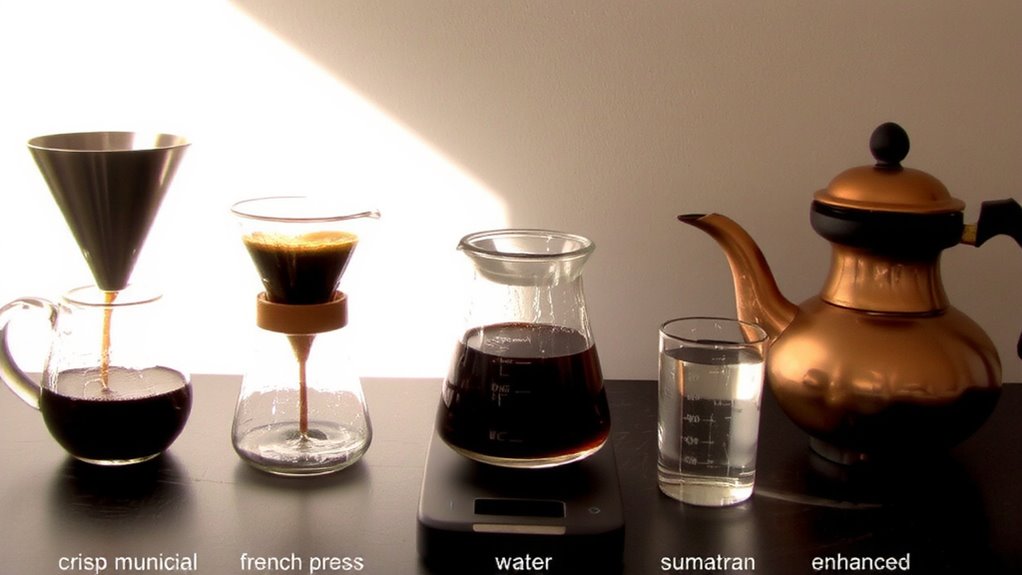
Even if you’ve sourced the freshest beans and dialed in your grind size perfectly, your coffee can still fall flat-if your water isn’t up to par. Water chemistry plays a bigger role than most realize. Your brew water isn’t just a carrier; it extracts flavor, for better or worse. Too few minerals, and coffee tastes flat-distilled water strips richness. Too many, especially high levels of calcium or magnesium, and your machine risks scale buildup while bitter notes dominate. A balanced mineral balance is key: aim for 50–150 ppm total dissolved solids (TDS), with a mix of calcium, magnesium, and some bicarbonate. Third-party test kits or benchtop meters help gauge this. Some baristas use specialty bottled water or additives like Alphabet Water or Barista Hustle’s kits for consistency. Tap water varies widely-don’t assume it’s ideal. Filtering helps, but standard filters often remove beneficial minerals too. Ultimately, controlling water means controlling flavor. For optimal results, consider the best water for perfect coffee flavor as a benchmark when selecting or adjusting your water source.
Match Your Water to Brewing Methods
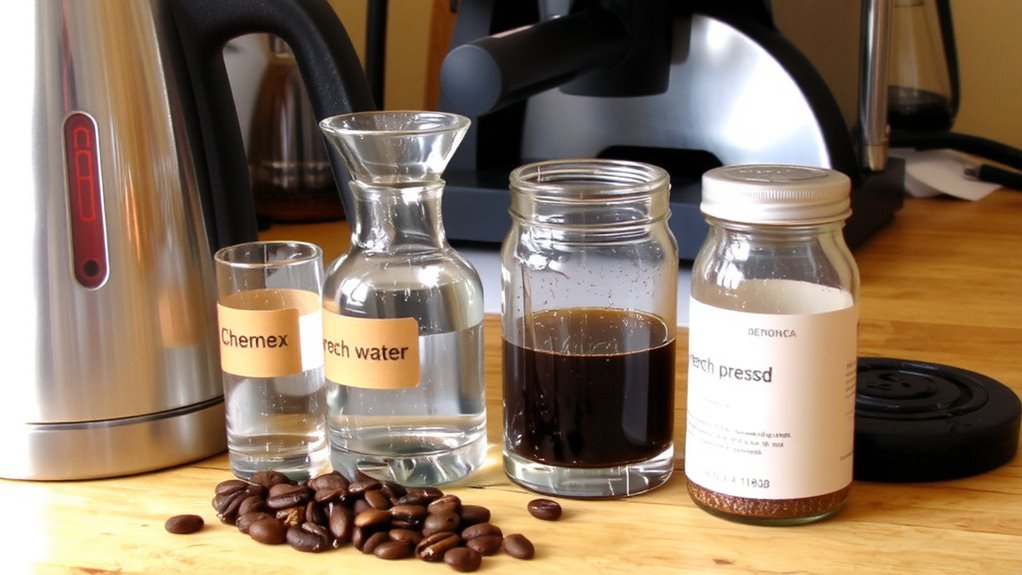
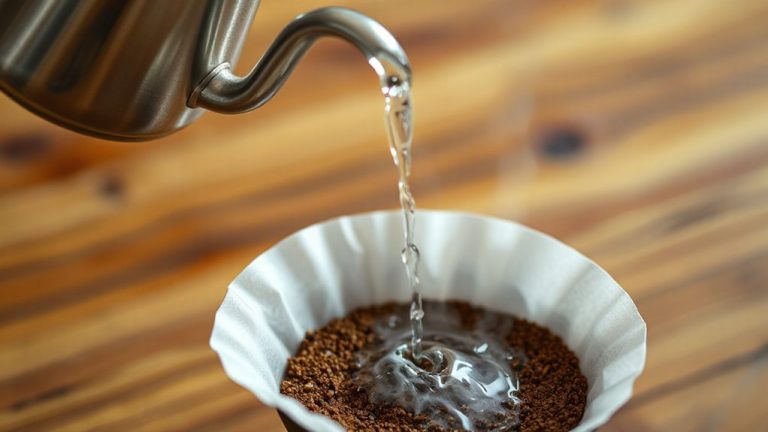
You’ve got your beans right and your grind dialed-now it’s time to think about how your water choices affect different brewing methods. For pour-over, you need precise water temperature-around 195°F to 205°F-and a fast brewing time, so clean, balanced water helps extract bright notes without bitterness. With espresso, high pressure means shorter brewing time, but the water must be consistent in mineral content to avoid clogging or uneven pulls. French press uses longer brewing time and lower water temperature, so slightly softer water prevents over-extraction and dull flavors. Automatic drip machines often heat water to fixed levels, so using filtered water guarantees reliable results across cycles. Matching your water to the method means aligning mineral content, water temperature, and brewing time. That way, every cup hits the mark-no guesswork, no frustration. For optimal performance and flavor, consider using best water for coffee machines tailored to your brewer’s needs.
Choose Filtration for Your Roast Type
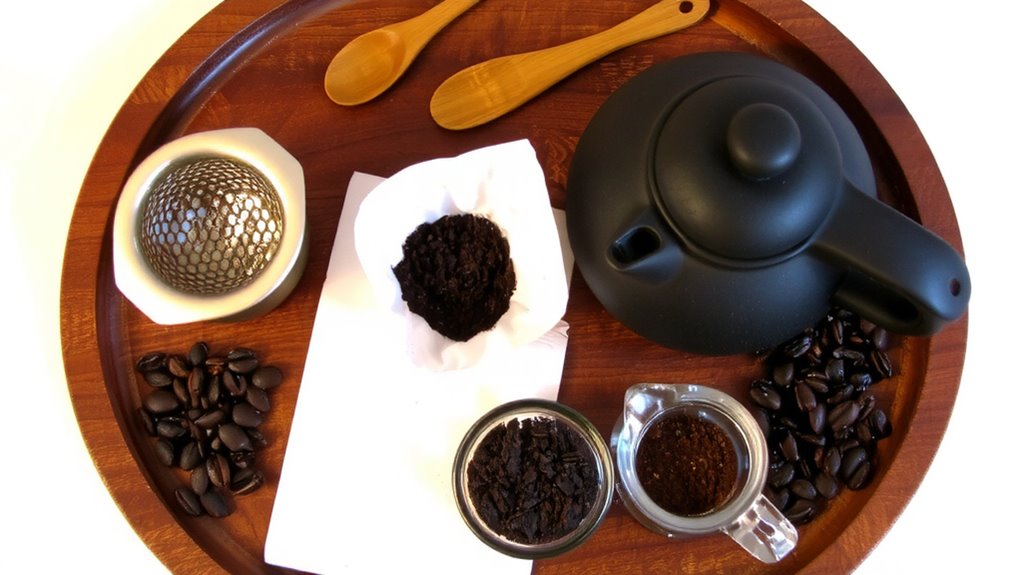
While lighter roasts tend to highlight acidity and nuanced flavors, they respond best to water that’s soft to moderately hard, with balanced minerals like calcium and magnesium to support extraction without harshness. As roasts darken, bean density decreases and solubility increases, so you’ll want slightly softer water to avoid over-extracting bitter compounds. Roast age also matters-older beans lose moisture and extract more easily, so fresher roasts need more precise mineral balance. For optimal results, consider using best coffee brewing water tailored to your specific brewing method and roast profile. Here’s a quick guide:
| Roast Type | Ideal Water Profile |
|---|---|
| Light | Soft to moderate, balanced minerals |
| Medium | Moderate hardness |
| Dark | Softer water, low alkalinity |
| Old beans | Slightly higher mineral content to boost extraction |
Adjust based on bean density and roast age to maintain clarity and balance.
Carbon, RO, or Remineralized: Best Water for Coffee
When it comes to brewing coffee, your choice of water isn’t just background noise-it directly shapes extraction, flavor, and how your gear holds up over time. Carbon filters reduce chlorine and some impurities, but they don’t fully control water chemistry, leaving mineral levels inconsistent. Reverse osmosis (RO) strips nearly all minerals, giving you a blank slate-great for precision, but too pure for peak flavor extraction on its own. That’s where remineralized water comes in: after RO, specific minerals like calcium and magnesium are added back to support balanced extraction and brighter, clearer taste. For consistent results, especially in espresso or pour-over, third-party tested remineralized water or in-house RO with controlled re-mineralization is ideal. While carbon filtering is cheaper and easier, it can’t match the control of RO plus remineralization when dialing in for peak flavor extraction and equipment longevity.
Fix Chlorine, Hardness, and Flat Taste
If your coffee tastes dull or leaves scale buildup in your gear, chlorine, hard water, or mineral imbalances are likely to blame-and fixing them starts with understanding what’s in your tap water. Chlorine removal is essential, as even small amounts ruin aroma and create off-flavors; a simple carbon filter handles this effectively and affordably. Hard water, high in calcium and magnesium, causes scale in kettles and espresso machines while over-extracting coffee. You can reduce hardness using reverse osmosis (RO) or water softeners, but remember that stripping all minerals leads to flat taste. That’s where taste enhancement comes in-adding back balanced minerals improves clarity, sweetness, and body. Don’t just remove impurities; optimize for flavor. A two-stage filter with activated carbon and selective ion exchange offers solid protection and better extraction without complexity. Test your water regularly to match filtration to your coffee’s needs.
Build Your Ideal Coffee Water Step by Step
You’ve tackled chlorine, managed hardness, and avoided flat-tasting water-now it’s time to build your ideal brewing water from the ground up. Start with smart water sourcing: use filtered tap or distilled water as a clean base. Then focus on mineral balancing-add precise amounts of magnesium, calcium, and bicarbonate to enhance extraction and flavor clarity. Brands like Third Wave Water or Magnesium solutions let you adjust mineral content easily. Too little mineral content leads to under-extraction; too much causes bitterness or scale. Aim for 100–150 ppm total dissolved solids with a balanced ratio of minerals. Use a TDS meter to verify consistency. This method gives reliable results across pour-over, espresso, and immersion brewing. It takes a few extra steps, but the payoff-brighter acids, richer body, and sweeter notes-is worth it. Control your water, and you control your coffee.
On a final note
You’ve got the tools to make better coffee by adjusting your water. Use filtered tap or carbon-treated water for drip machines; go for remineralized if you have an espresso setup. Light roasts need softer, mineral-balanced water to highlight acidity, while dark roasts work with slightly harder water. Avoid plain RO or distilled-it strips flavor. Test your water’s taste and hardness, then tweak filtration to match your gear and beans. It’s simple chemistry, not magic.