The Influence of Container Material on Final Cold Brew Coffee Taste Profile and Complexity
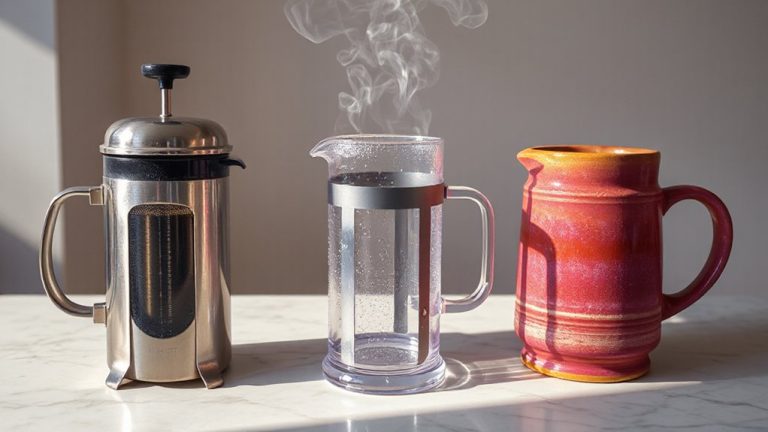
Your cold brew tastes cleaner and brighter in glass or stainless steel because they’re non-reactive and resist odor buildup-think Hydro Flask or mason jars. Glass shows the steep but needs fridge space; stainless holds cold longer. Ceramic’s smooth, glazed interior gives consistent results but is fragile. Plastic, even BPA-free, can turn stale fast from trapped oils and oxygen seepage. For lasting clarity and complexity, skip plastic and pick sealed, inert containers-your next batch’ll benefit.
Notable Insights
- Stainless steel preserves flavor purity and maintains stable temperatures, enhancing consistency in cold brew extraction.
- Glass offers non-reactive brewing that retains bright, crisp notes without flavor interference or odor absorption.
- Ceramic’s steady insulation and glazed surface support smooth, complex extraction while preventing contamination.
- Plastic may impart off-flavors due to oil retention and oxygen permeability, reducing freshness and flavor clarity.
- Airtight, low-oxygen-permeable containers like stainless steel and glass prolong sweetness, acidity, and overall flavor stability.
Why Container Material Changes Cold Brew Flavor
Your cold brew’s container isn’t just a vessel-it plays an active role in shaping the final taste. The material affects temperature stability and oxygen exposure, both of which influence extraction. Stainless steel, for example, insulates well and limits oxidation, helping maintain consistent coffee density throughout brewing. Plastic containers, while lightweight, may retain odors and subtly alter flavor over time. Materials also impact grind retention-rougher surfaces like those in some ceramic jars can trap fine grounds, leading to uneven extraction and potential bitterness. Smoother interiors, such as in high-grade acrylic, reduce grind retention, promoting cleaner results. Your choice should balance durability, insulation, and surface texture. If you steep for 12+ hours, low oxygen transfer and minimal grind adherence matter most. For best results, pick non-reactive, smooth-walled containers sized appropriately to limit air space.
Glass and Clean, Bright Cold Brew Taste
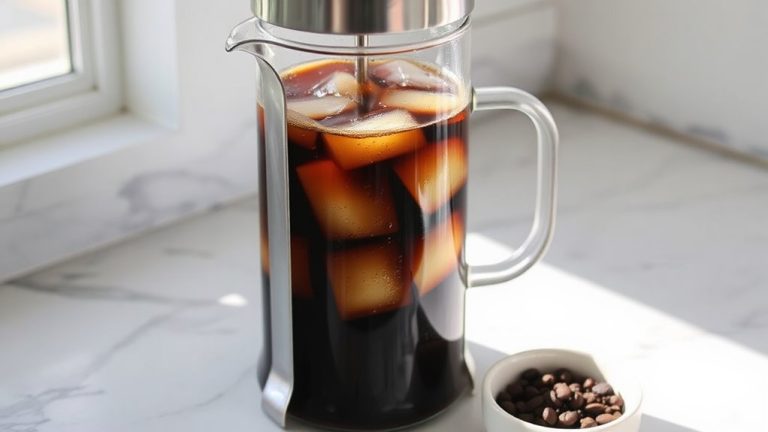
A clear, neutral vessel does more than just let you watch the steep-it shapes the flavor. When you brew cold brew in glass, you get minimal interaction between the container and the coffee, preserving the bean’s original character. Glass clarity isn’t just visual-it signals purity in taste. Since glass doesn’t absorb odors or residues when cleaned properly, it won’t impart off-notes over time. This helps maintain clean, crisp profiles, especially in light-roast or single-origin beans where bright notes matter most. You’ll often detect more citrus, floral, or tea-like tones compared to brews stored in reactive materials. Just remember: glass doesn’t insulate, so keep it refrigerated to avoid flavor degradation. Mason jars, Bormioli containers, or dedicated glass cold brew makers all work well. If you want flavor accuracy and brightness, glass is a reliable, low-maintenance choice for both brewing and storage. For optimal results, consider using cold brew mason jar lids designed to seal tightly and reduce oxidation during steeping.
Stainless Steel for Cold Brew: Purity and Temperature
Durability meets flavor stability in stainless steel, a top pick when you want cold brew that stays cold and tastes clean. Its high thermal conductivity keeps temperatures steady, slowing chemical degradation and preserving clarity in flavor. Thanks to material inertness, stainless steel won’t interact with coffee compounds-no off-flavors or unwanted changes over time. It’s ideal for long brews or storage in warm environments.
| Feature | Stainless Steel | Glass |
|---|---|---|
| Thermal Conductivity | High | Low |
| Material Inertness | Excellent | Good |
| Break Resistance | High | Low |
Double-walled models like Hydro Flask or Thermos improve insulation, locking in cold temps. Unlike reactive metals, stainless steel won’t leach or corrode, ensuring purity. While not transparent like glass, it offers better temp control. Choose it when keeping brew cold and stable is a priority. Travel-friendly options such as cold brew travel coffee makers provide convenient on-the-go access without sacrificing temperature or taste integrity.
Ceramic’s Impact on Smooth Cold Brew Extraction
Ceramic containers offer a middle ground in cold brew extraction, combining decent insulation with a non-reactive surface that won’t alter your coffee’s flavor. You’ll appreciate the steady temperature retention, which helps maintain a consistent extraction over 12–24 hours. Unlike metal, ceramic doesn’t conduct heat quickly, so your brew stays cool and stable, especially if kept in a fridge. But watch for ceramic porosity-cheaper or unglazed versions might absorb oils or odors over time, subtly affecting future batches. Go for fully glazed interiors to minimize this risk. While heavier than plastic and more fragile than stainless steel, ceramic’s balance of thermal performance and flavor neutrality makes it a solid pick. Use it for small-batch brewing where you value smoothness and aren’t moving the container often. It’s not the fastest option, but it delivers reliable, clean results if you maintain it well. For long-term storage before brewing, consider transferring grounds to an airtight coffee storage containers to preserve freshness.
Plastic and Cold Brew: Off-Flavors and Oil Buildup
You might be drawn to plastic containers for cold brew because they’re lightweight and cheap, but they come with real trade-offs. Over time, plastic can develop oil residue from coffee, which is hard to remove even with scrubbing. This buildup can taint your next batch with stale, rancid notes. Also, lower-quality plastics may allow plastic leaching, especially if exposed to warmer cleaning water or sunlight. These chemicals can subtly affect taste, adding off-flavors that dull the coffee’s brightness. Unlike glass or stainless steel, plastic is more porous and absorbs odors. If you do use plastic, pick food-grade, BPA-free versions like HDPE or PP, and replace them regularly. Still, expect less flavor clarity over time. For clean, consistent cold brew, non-reactive materials are a smarter long-term choice. Clean plastic thoroughly after each use to minimize residue and contamination risks.
How Container Choice Affects Cold Brew Oxidation
While oxidation happens naturally over time, the container you use can either slow it down or speed it up. Oxygen exposure is the main culprit, and your choice直接影响 how quickly flavors degrade. Containers with high permeability, like some plastics, let more oxygen seep in, speeding up staleness. Glass and stainless steel, on the other hand, offer low permeability, preserving freshness longer. Even small gaps in lids or seams matter over days of steeping. For best results, pick airtight, non-reactive options.
| Material | Perceived Freshness After 7 Days |
|---|---|
| Plastic | Stale, flat taste |
| Stainless Steel | Clean, bright flavor |
| Glass | Slight sweetness retained |
| Ceramic | Muted acidity |
| Aluminum (lined) | Oxidized, metallic hint |
Matching Your Cold Brew Style to the Right Container
What kind of cold brew are you making-smooth and sippable, bold and concentrated, or maybe something floral and delicate? Your choice affects which container works best. If you’re steeping light roast beans with a delicate bean origin profile, like Ethiopian Yirgacheffe, and planning a longer brew time (16–24 hours), glass or glazed ceramic keeps flavors pure without interference. For bold, concentrated brews using dark roasts from Sumatra, and shorter brew times (12–16 hours), stainless steel is durable and blocks light, reducing oxidation. Plastic containers are cheap and lightweight but can retain odors and aren’t ideal for long brew times. Always match your container to your method: cold brew isn’t one-size-fits-all. Glass jars are great for beginners, while serious brewers may prefer insulated steel for consistency. Your bean origin and brew time guide the right pick.
On a final note
Your container choice directly affects cold brew flavor. Glass preserves clean, bright notes but doesn’t insulate. Stainless steel maintains temperature and purity, ideal for long steeping. Ceramic offers stable, smooth extraction if glazed properly. Avoid plastic-it can retain oils and cause off-flavors. All containers impact oxidation, so seal tightly. Match the material to your brewing style: clarity with glass, control with steel, or smoothness with ceramic for best results.