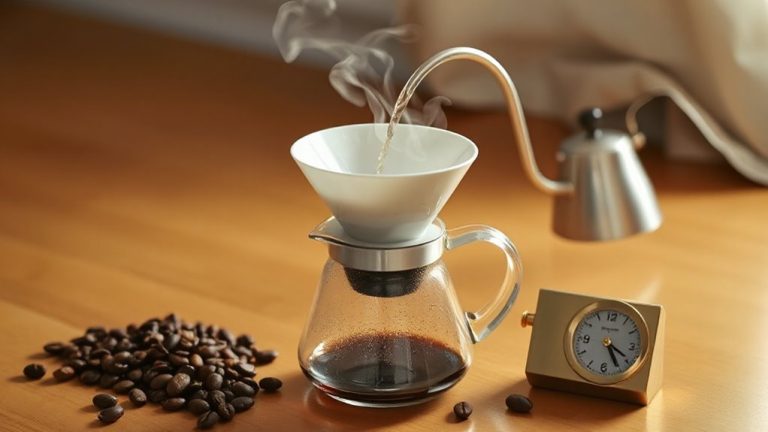
French Press Coffee and Reheating: Why It Ruins Flavor and What to Do Instead
Reheating your French press coffee ruins its flavor by speeding up oxidation and breaking down delicate oils that give it richness. Heat also turns acids bitter, especially as chlorogenic acid degrades into sharp-tasting quinic acid. Instead of reheating, try chilling leftover coffee and serving it over ice-it stays smoother and tastes better. Store it in an airtight container and use it within a day. For better results next time, brew only what you’ll drink right away-you might discover a fresher, more satisfying way to enjoy it.
Notable Insights
- Reheating French press coffee accelerates oxidation, degrading delicate oils and diminishing flavor richness.
- Heat breaks down aromatic compounds, making coffee taste flat and stale instead of vibrant.
- Chlorogenic acids decompose when reheated, increasing bitterness and unbalanced off-notes.
- Cooling leftover coffee quickly and serving it over ice reduces bitterness and improves drinkability.
- Store brewed coffee in an airtight container and use within 24 hours, or freeze as cubes for iced coffee.
Why Reheating French Press Coffee Ruins the Flavor
While you might be tempted to reheat leftover French press coffee to save time or avoid waste, doing so almost always degrades the taste. Once brewed, coffee begins experiencing oxidation effects within minutes, breaking down delicate compounds that contribute to its richness. This process accelerates when exposed to air and heat, leading to noticeable flavor fading. French press coffee, which relies on full immersion and oily bean extracts, is especially vulnerable. Even gentle reheating in a microwave or on a stove can’t reverse this chemical decline. The result? A flat, dull cup lacking the nuance you enjoyed moments after brewing. Freshly pouring a new cup is almost always better than reviving an old one. If you regularly have leftovers, consider brewing smaller batches using a 12-ounce press or switching to single-serve methods. Prevention beats correction when preserving flavor integrity. For those concerned about environmental impact, choosing a plastic-free French press can eliminate harmful materials from your brewing routine-explore top models in the best plastic-free French press picks guide.
How Heat Destroys Coffee’s Oils and Aromas
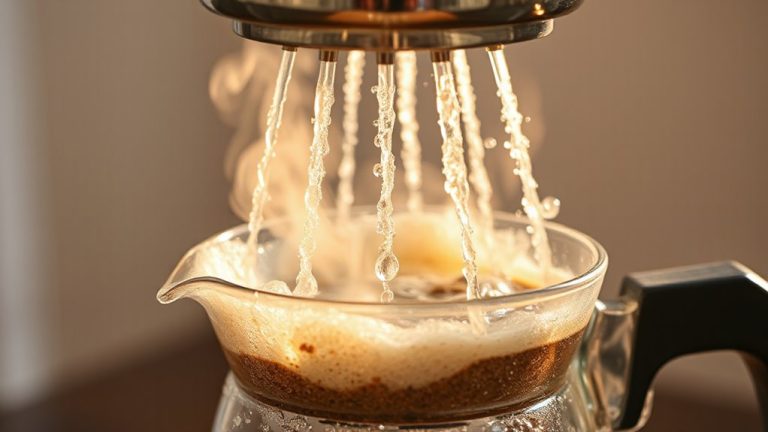
Heat is the enemy of fresh coffee’s volatile oils and delicate aromas-once that French press brew cools, reheating it doesn’t just warm the liquid, it damages the very compounds that give your cup its character. You’re accelerating oxidation effects and triggering volatile compound loss, stripping away complexity. The aromatic top notes fade fast, leaving flat, dull flavor.
| Factor | Impact on Coffee |
|---|---|
| Heat exposure | Breaks down aromatic oils |
| Oxidation effects | Dulls brightness over time |
| Volatile compound loss | Reduces flavor depth |
| Reheating method | Amplifies stale, flat taste |
Gently sipping cooled coffee preserves more nuance than zapping it in a microwave. If you must reheat, use low heat briefly-but know the trade-offs. Fresh brewing remains the only real fix.
The Science Behind Bitterness in Reheated Coffee
If you’ve ever reheated leftover French press coffee, you’ve likely noticed it tastes harsher and more bitter than when first brewed-and there’s a clear chemical reason for that. Reheating accelerates chemical breakdown in the coffee’s compounds, especially oils and acids that degrade when exposed to heat a second time. This leads to increased bitterness and noticeable flavor degradation. The delicate balance of flavors extracted during brewing gets distorted as certain compounds break down faster than others. Chlorogenic acids, for example, decompose into quinic acid, which your tongue perceives as sharp and unpleasant. Microwaving or stovetop reheating doesn’t restore freshness-it intensifies stale, off-notes. Unlike freshly brewed coffee, where flavor is controlled and balanced, reheated coffee skews toward harshness. To preserve taste, it’s better to brew only what you’ll drink. Reheating may be convenient, but it compromises quality every time.
Enjoy Leftover French Press Coffee Cold
Ever wonder why that leftover French press coffee tastes better the next day when served cold? The cooling process mutes stale or bitter notes, making the flavor more palatable than reheated coffee. Instead of tossing it, pour it over ice for a quick iced coffee alternative. While not as smooth as cold brewing methods, this approach gives you a satisfying cold drink without waste. Just remember, chilled coffee naturally suppresses acidity and perceived bitterness, so even day-old coffee can seem fresher. For best results, use a 1:1 ratio of coffee to ice to avoid heavy dilution. If you regularly want cold coffee, consider switching to proper cold brewing methods-they yield a smoother, less acidic result by design. But when you’re short on time, leftover French press coffee served cold is a solid, practical option and a smarter choice than reheating. A dedicated cold brew French press can enhance your iced coffee experience with less effort and better consistency.
Store French Press Coffee for Later Use
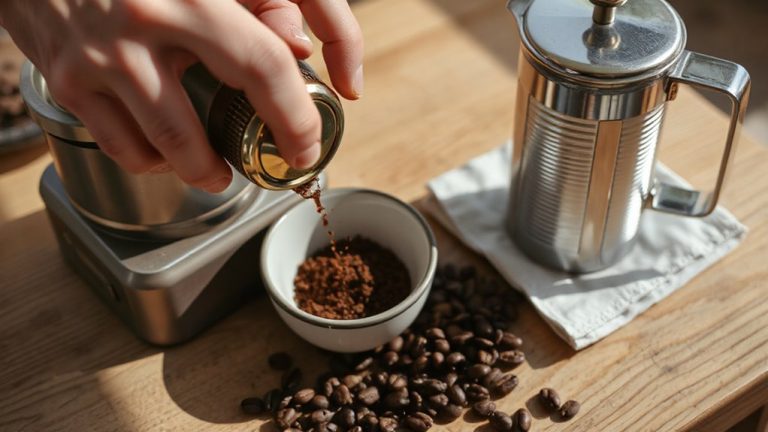
Storing French press coffee properly can help preserve its flavor, but results depend heavily on how you handle it after brewing. For best coffee storage, transfer the brewed coffee to an airtight container immediately and cool it to room temperature before refrigerating. Leaving it in the press causes over-extraction and bitterness. Use glass or stainless steel containers-they don’t absorb odors and support better flavor preservation. Airtight coffee grounds containers are ideal for maintaining freshness and preventing flavor degradation. Consume within 24 hours for ideal taste, though it’s safe longer. Avoid reheating, as high heat degrades delicate compounds and creates off-flavors. If you plan to drink it cold, this method works well. For longer storage, consider freezing in ice cube-sized portions for use in iced coffee. Always label with the date to track freshness. Proper coffee storage isn’t perfect, but it makes a noticeable difference in maintaining quality without shortcuts.
How to Revive Cold French Press Coffee Without Heat
While you might be tempted to reach for the microwave, reviving cold French press coffee without heat preserves its original flavor profile more effectively. Instead of reheating, try adding a splash of hot water to gently raise the temperature without over-extracting bitter compounds. This method supports better flavor preservation by avoiding thermal degradation. You can also stir in a small amount of freshly brewed coffee for a quick temperature and taste boost. For a completely cold approach, pour your leftover coffee over ice and dilute slightly with chilled water-this mimics a cold infusion technique, smoothing out harsh notes while keeping brightness intact. Just avoid leaving coffee out too long; consume within a few hours for best results. While not as fresh as a new brew, these tricks offer a practical way to enjoy your coffee without ruining its character.
Brew Only What You’ll Drink to Keep Flavor Fresh
Because coffee begins losing its ideal flavor shortly after brewing, the best way to maintain freshness is to brew only what you plan to drink right away. French presses come in various sizes-3-cup, 8-cup, 12-cup-so match your brew to your needs. Using a smaller press or adjusting your coffee and water ratio gives you better brew control. Leftover coffee turns stale and bitter, especially when reheated. Practicing portion discipline means measuring beans and water carefully, avoiding waste while preserving taste. A 3-cup press (about 12 oz) suits one or two people; larger groups may need a 12-cup, but only brew what’s needed. It’s better to make two small batches than one large, stale one. This approach saves time, reduces reheating, and keeps flavors crisp. With proper brew control and portion discipline, every cup stays fresh, clean, and balanced-just as good coffee should be.
On a final note
Reheating French Press coffee breaks down delicate oils and amplifies bitterness, degrading the flavor you intended. Instead of using a microwave, consider drinking leftover brew cold or repurposing it into iced coffee. For best results, brew only what you’ll drink right away. If storing, refrigerate briefly-up to 12 hours-but know freshness declines fast. A thermal carafe helps maintain temperature without reheating, preserving taste more effectively than reheating ever can.