How to Diagnose Sour Coffee by Analyzing Brew Time and Grind Settings
Your coffee’s sourness likely comes from under-extraction caused by a grind that’s too coarse or brew time that’s too short. Water passes too fast, pulling acids but leaving sugars behind. For pour-over, aim for a medium-fine grind and a 3-minute brew; for French press, use a coarse grind and at least 4 minutes. Adjust grind size first, then time, and keep water between 195°F and 205°F. You’ll find the fix is simpler than you think.
Notable Insights
- Sour coffee often results from under-extraction caused by brew times that are too short for full flavor development.
- A coarse grind size speeds up water flow, reducing extraction and leaving acidic, sour notes dominant.
- Inconsistent grind size from blade grinders creates uneven extraction, contributing to imbalanced sour flavors.
- Extending brew time allows more extraction of sugars, balancing acidity in pour-over and French press methods.
- Adjusting grind finer and maintaining brew time within 3–4 minutes helps achieve balanced flavor and reduce sourness.
Why Is My Coffee Sour? (Hint: It’s Under-Extracted)
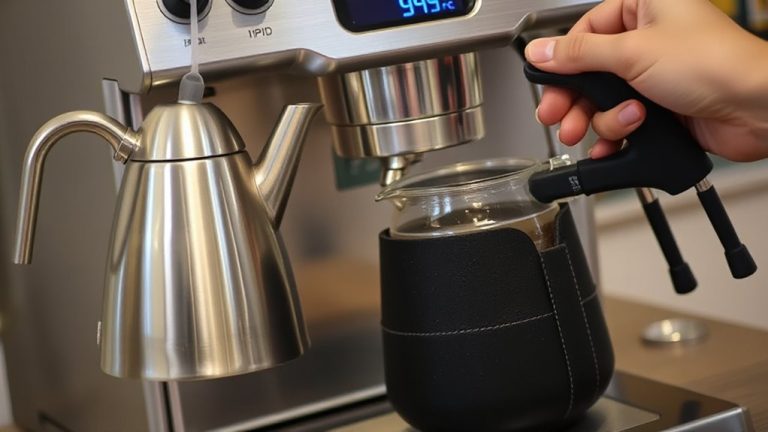
That sour tang in your coffee usually means the grounds didn’t release enough flavor during brewing-commonly called under-extraction. When this happens, acidic notes dominate because sugars and bitter compounds haven’t fully dissolved. Your water temperature is a key factor-aim for 195°F to 205°F. Too low, and you’ll stall extraction, especially with dense beans from high-altitude coffee origin regions like Ethiopia or Colombia. These beans often need precise heat to access balanced flavor. If your machine runs cool, consider a gooseneck kettle with temperature control. You’re not just heating water-you’re tuning a chemical process. While grind size matters, don’t overlook equipment limitations. A cheap drip brewer may never hit ideal ranges, leaving even fresh beans tasting sharp and hollow. Adjust temperature first; it’s a faster fix than replacing gear or chasing roast dates.
Is Your Grind Too Coarse for Balanced Flavor?
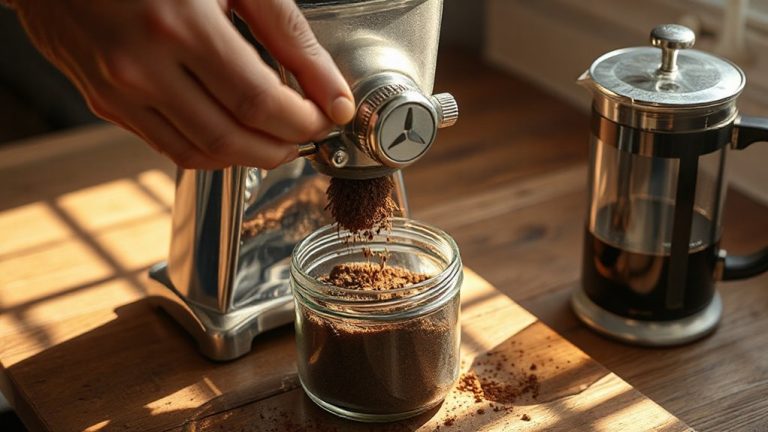
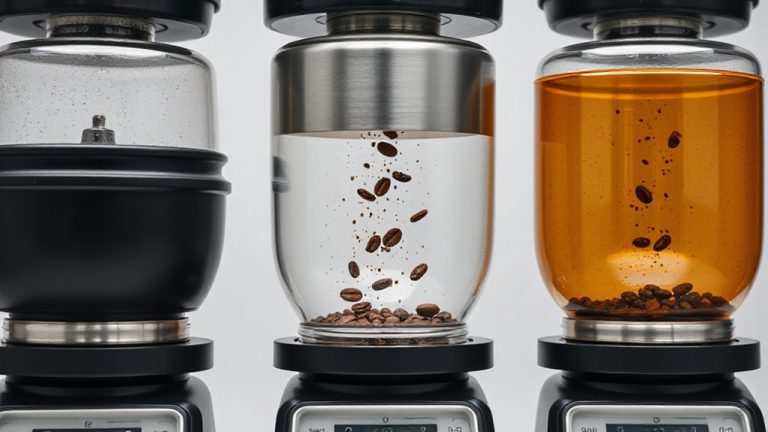
How’s your grind size holding up? If your coffee tastes sour, a coarse grind might be the culprit. When particle size is too large, water passes through too quickly, pulling out acids before sugars have a chance to extract. This under-extraction leads to sharp, unbalanced flavors. A consistent grind matters-uneven grind consistency creates both fines and boulders, causing some particles to over-extract while others stay sour. For methods like pour-over or drip, a medium-fine setting often works best. Blade grinders tend to produce irregular particle size, making it harder to achieve balance. A burr grinder, like the Baratza Encore, gives you better control and uniformity. Adjusting finer usually improves extraction, but don’t go too far-too fine can make coffee bitter. Start small, tweak gradually, and watch how flavor shifts. Upgrading to one of the top-rated burr grinders can significantly improve your brew’s flavor balance.
Is Your Brew Time Too Short to Extract Sweetness?
Could your brew time be cutting sweetness short? If your coffee tastes sour, it might be. Short brew times often fail to pull out the sugars and complex flavors hidden in your grounds. Depending on your brewing method-like pour-over or French press-ideal extraction needs time. For example, a quick 1.5-minute pour-over with a coarse grind won’t extract like a 3-minute one. Even with proper water temperature (aim for 195–205°F), too little contact time leaves sweetness behind. Fast brews often highlight acidic notes, making coffee taste sharp or thin. A French press needs 4 minutes; going under 3 means under-extraction. Your gear matters, but time matters more. If you’re rushing the clock, you’re likely rushing past sweetness. Adjust slowly and monitor taste. Consistency with time, water temperature, and brewing method improves results.
How to Fix Sour Coffee in 3 Easy Steps
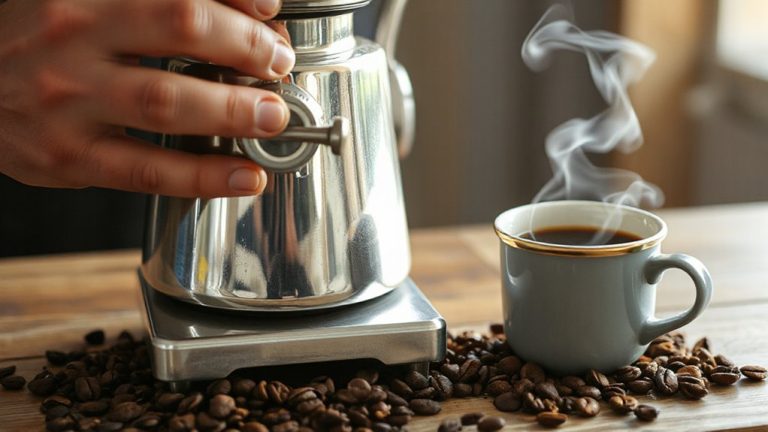
Fixing sour coffee starts with understanding what went wrong during brewing, especially if you’ve already checked your brew time. First, adjust your grind-finer particles extract more, countering sourness. If your grounds are too coarse, flavor drops off fast. Second, check your water temperature. It should be between 195°F and 205°F; otherwise, under-extraction happens, leaving acids dominant. A gooseneck kettle with a built-in thermometer helps maintain consistency. Third, confirm your bean freshness-stale beans lose sweetness fast, no matter your method. Use beans roasted within the past 2–4 weeks and store them in an airtight container away from light. You’ll taste the difference quickly. These steps target root causes, not symptoms. They work whether you use a pour-over, French press, or espresso machine. For precise control, consider using a best coffee brewing kettle designed for optimal pour-over results.
Dial in the Perfect Cup: A Home Barista’s Checklist
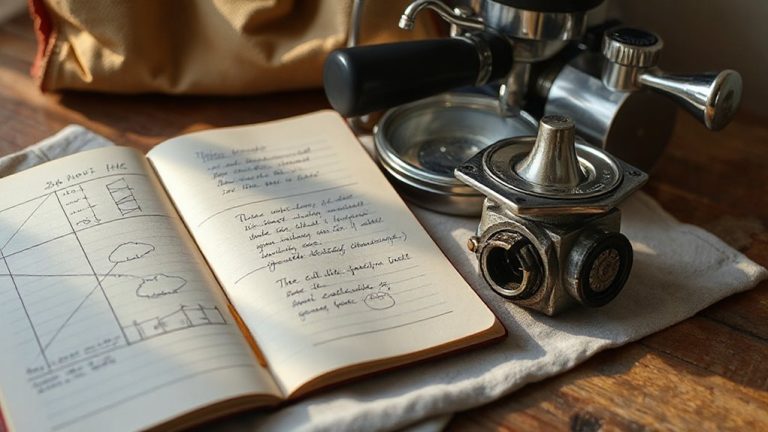
Though you might be tempted to blame your beans or brew method, dialing in the perfect cup starts with consistent variables you can control. First, lock in your grind size-too fine leads to bitterness, too coarse brings sourness. Adjust your grinder in small increments. Next, check your water temperature; it should be between 195°F and 205°F. If it’s too low, under-extraction occurs, which often causes sour notes. Use a gooseneck kettle for better control, especially with pour-over. Match your dose and brew time to your brew method-French press needs a coarser grind and longer steep, while espresso demands precision and pressure. Keep notes on each variable. When you change one thing-like switching beans-reset and re-dial. Consistency beats guesswork every time. For pour-over, using the best coffee grinds ensures balanced extraction and rich flavor, so choose a medium-fine grind for optimal pour-over results.
On a final note
You’re likely under-extracting if your coffee tastes sour. Start by refining your grind-too coarse leads to weak, sharp flavors. Try a finer setting on your burr grinder, like the Baratza Encore, and check brew time. For pour-over, aim for 2:30–3:30 minutes; for French press, 4 minutes. Adjust in small steps, tasting as you go. Fresh beans and proper water temperature (195°–205°F) also matter. Dialing in takes practice, but consistency brings balance.