Converting Commercial Espresso Machine Settings to Home Lever Machines
You can’t directly transfer commercial espresso settings to a home lever machine. Spring piston models like the Flair or Elektra rely on manual force and spring tension, delivering a gentler 6–7 bar pressure curve instead of an instant 9-bar pump. Start with 18–20g dose, 36g yield, and adjust grind in small steps. Use pre-infusion for even saturation, and aim for a smooth, honey-like flow. Watch for dribbling or sour shots-they’ll tell you when to tweak. There’s more to fine-tune once you grasp the rhythm.
Notable Insights
- Leverage mechanical advantage and spring tension instead of electric pumps to replicate commercial pressure profiles manually.
- Aim for a 2:1 brew ratio, using 18–20g dose to target 36–40g yield, adjusting for spring piston limitations.
- Use pre-infusion for 5–8 seconds to saturate the puck, mimicking commercial pressure profiling and reducing channeling.
- Optimize grind size to control flow rate, as lever machines peak early and lack sustained pump pressure.
- Monitor shot texture and timing; early dribbling or sourness may indicate spring fatigue or incorrect grind calibration.
Why Lever Machines Pull Shots Differently
Why do lever machines feel so different from your standard espresso setup? Because they rely on mechanical advantage and spring tension to generate pressure, not electric pumps. When you pull the lever, you’re manually driving water through the puck, with the lever amplifying your force. Spring piston models, like the Flair or Elektra Microcasa, use spring tension to modulate pressure-less peak force than commercial machines, but with a natural pressure profile that ramps up and down. This affects extraction: smoother, often more nuanced shots, but with less consistency if your technique varies. You’re directly involved in the process, so hand strength and timing matter. Compared to portafilter machines with stable 9-bar pumps, levers demand practice. But they offer control and ritual most home baristas don’t get elsewhere. They’re portable, quiet, and don’t need a plumbed line. Just remember, the mechanical advantage helps, but your input directly shapes the shot.
Dial in Dose and Yield for Spring Piston Machines
You’re already aware that spring piston lever machines rely on your physical input to shape pressure during the shot, which sets them apart from pump-driven models. To dial in dose and yield, start with a standard 18–20g dose and target a 36g yield. Pull timing depends heavily on spring tension-older springs may weaken, reducing peak pressure and stretching shot time. Check for consistent flow; if it dribbles early, the spring may be fatigued. Piston wear also impacts sealing and pressure buildup, often causing uneven extraction. Machines like the Bezzera Lever or La Pavoni Pro need regular inspection for both issues. Adjust dose slightly-up or down by 0.5g-to correct for volume discrepancies. Stick to a stable yield-to-dose ratio, usually 2:1, to gauge changes accurately. Track results over several pulls to account for mechanical variance. Avoid tweaking multiple variables at once-focus on dose first, then evaluate yield stability.
Grind for Pressure: Find the Right Setting
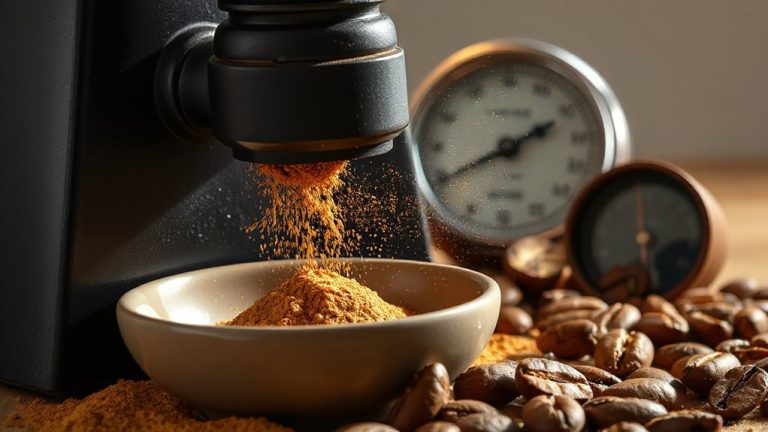
While your lever machine’s spring and piston assembly sets the foundation for pressure, the grind size is what fine-tunes how that pressure translates into extraction. You need to adjust your grind until the shot flows steadily-too fine clogs the puck, too coarse rushes it. Unlike commercial machines with stable pumps, lever pressure peaks early, so consistent grind particle size is critical. Inconsistent grinds will clog some areas and channel others, ruining balance. Use a high-quality burr grinder like a Niche Zero or Compak Apollo for best grind consistency. Tamping pressure matters less here-since the piston builds resistance, even slight variations in tamping don’t affect the outcome as much as they do on portafilter machines. Aim for firm, even tamping, but focus more on dialing the grind. Small changes make big differences. Test shots between 20–30 seconds for 1:2 or 1:3 brew ratios. For optimal results, consider one of the Best Mill Grinders based on performance and consistency.
Use Pre-Infusion to Mimic Commercial Flow
How do commercial machines pull smooth, even shots with such consistency? They use flow control and pressure profiling to manage extraction from the first drop. On your home lever machine, you can mimic this by using pre-infusion-the brief, low-pressure soak before full pressure hits. Instead of slamming the lever down, ease into it. Let water saturate the puck for 5–8 seconds at half pressure. This helps prevent channeling and evens out extraction, especially with uneven grinds. Machines like the Slayer or Synesso use advanced pressure profiling, but you’re doing a version of that manually. While not as precise, your lever gives natural feedback-resistance tells you when to increase pressure. It’s basic flow control, but effective. Just remember: pre-infusion isn’t a fix for bad grind or dose. It works best when paired with proper prep and fresh beans. Used right, it brings commercial-like flow to your countertop setup. For those using pod-based systems, selecting the right best coffee pods for Delonghi can also influence extraction quality and convenience.
Perfect Your Pull for Even Flow
Getting the shot started right sets the stage, but dialing in the full pull is where even flow really takes shape. You need consistency from start to finish, and your tamping technique plays a big role. If you tamp unevenly, water will channel, causing uneven extraction. Make sure you’re applying even pressure and using a level surface-many baristas prefer calibrated tamper models like the Pullman Big Step for accuracy. Water temperature also matters: too high and you’ll over-extract, too low and the shot stalls. Most home lever machines run around 90–94°C, which works well for most roasts. Adjust your grind size and dose slightly if flow speeds up or slows down mid-pull. Watch the stream- it should be steady, like warm honey, not spluttering or dripping. Small tweaks make the difference between a good shot and a great one. A well-organized workspace can improve tamping consistency, so consider investing in a dedicated espresso tamping station.
Troubleshoot Under- and Over-Extraction
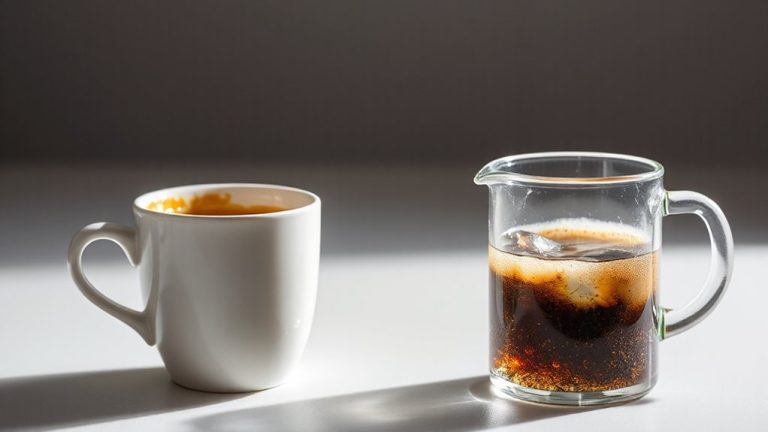
Why does your espresso taste sour or bitter when you’re following the same steps? Under-extraction often brings sour notes, while over-extraction leads to bitterness. With lever machines, small changes in grind, dose, or water hardness make a big difference. Hard water can amplify extraction, increasing the chance of bitterness, while soft water may under-extract. Channeling effects-where water follows the easiest path-also disrupt even extraction, especially if your tamp is uneven or grind inconsistent.
| Issue | Likely Cause |
|---|---|
| Sour taste | Under-extraction, too coarse grind, soft water |
| Bitter taste | Over-extraction, fine grind, high water hardness |
| Uneven flow | Channeling effects, poor distribution, uneven tamp |
Adjust your grind first, then check tamp pressure and water quality. Pre-wet the puck to reduce channeling effects. Use filtered water with balanced mineral content to moderate extraction.
On a final note
You’ll need to tweak your approach when moving from a commercial espresso machine to a lever machine. Adjust dose, yield, and grind to match lower pressure and flow. Use pre-infusion to stabilize the puck, then time your pull for even extraction. Watch for signs of under- or over-extraction-sour or bitter flavors-and dial in step by step. Spring piston models like the Flair or Manuali demand practice, but consistency comes with attention to detail.