Applying Third Wave Principles to Everyday Auto-Drip Coffee Brewing
Use fresh, single-origin beans like Ethiopian or Guatemalan, roasted within the last month. Grind them just before brewing with a burr grinder for even extraction. Stick to a 1:15 to 1:17 coffee-to-water ratio, measured with a scale. Use filtered water with balanced minerals-try Third Wave Water if yours is too soft or hard. Keep your auto-drip machine clean and run it with water near 200°F. Adjust grind size or dose to fine-tune flavor, and you’ll get cleaner, more nuanced coffee every time-closer to what the roaster intended.
Notable Insights
- Use freshly roasted, single-origin beans to highlight distinct flavor profiles unique to their growing region.
- Grind beans immediately before brewing with a burr grinder for consistent particle size and maximum flavor retention.
- Follow a 1:15 to 1:17 coffee-to-water ratio, adjusting based on taste preferences and roast level.
- Use filtered water with balanced mineral content (50–150 ppm) to ensure clean, balanced extraction.
- Maintain equipment with regular cleaning and brew within optimal temperature (195°F–205°F) for consistent results.
Choose Third Wave Beans for Superior Flavor
While any coffee can taste good with the right method, if you’re after clean, complex flavors that highlight a bean’s origin, third wave beans are your best bet. These roasters focus on origin selection, sourcing beans from specific farms or micro-lots known for distinct taste profiles-like Ethiopian beans with floral, citrus notes or Guatemalan ones with chocolatey depth. Large commercial brands often blend beans from multiple regions, muddying the flavor, but third wave roasters keep lots small and traceable. Bean freshness matters just as much: they roast to order or in small batches, often listing roast dates on the bag. That means you get coffee at its peak, usually within 2–6 weeks post-roast, not stale beans sitting on shelves for months. Skip the supermarket bags with no roast date. Instead, try beans from roasters like Onyx, Stumptown, or Counter Culture-available online or in specialty stores-for better flavor clarity and consistency in your daily brew. For a curated selection of top-rated options, check out expert picks in the Best Coffee Beans buying guide.
Grind Fresh for Maximum Flavor
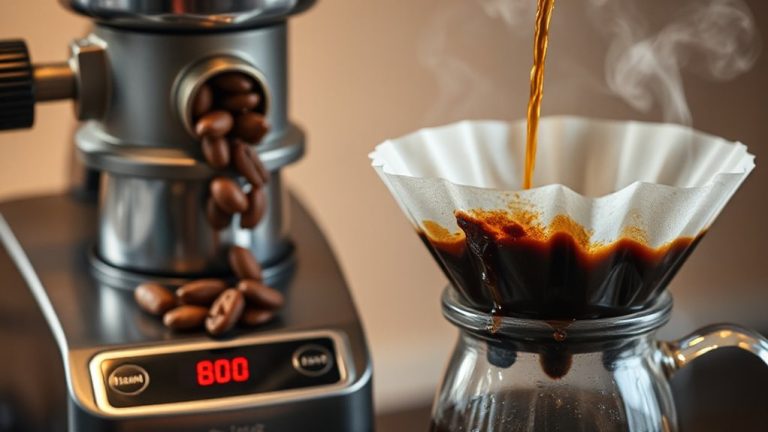
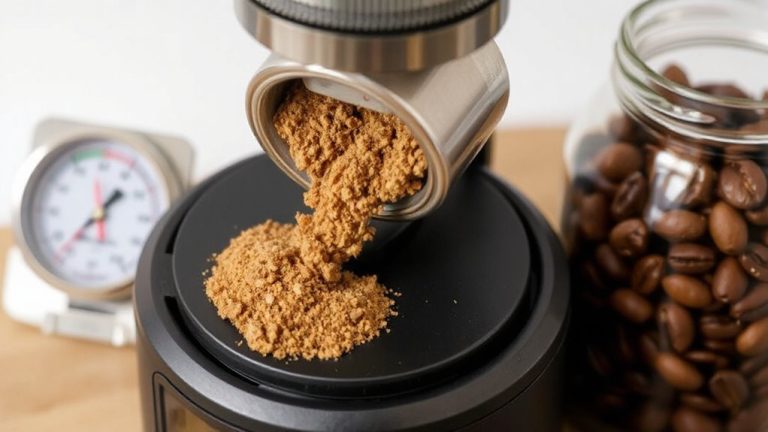
Because flavor starts to degrade the moment coffee is ground, you’ll want to grind your beans just before brewing to get the most out of third wave coffee. Pre-ground coffee loses aroma and complexity quickly, so a burr grinder-like the Baratza Encore or 1ZPressio-is a smart investment. These grinders deliver a consistent particle size, which is essential for even extraction. Fresh grinding also accounts for variables like bean density and roast consistency, both of which affect how coffee responds to water. Beans from single origins often have unique density, requiring slight grind adjustments. Roast consistency guarantees each batch behaves the same way, avoiding sour or bitter cups. Blade grinders won’t cut it-they produce uneven grounds that hurt flavor balance. For auto-drip machines, aim for medium-fine grounds. If your coffee tastes flat or uneven, revisit your grind. Freshness isn’t just a detail-it’s foundational. A high-quality mill grinder ensures uniformity and precision that enhances every cup.
Use the Right Coffee-to-Water Ratio
You’ve got your freshly ground beans, and now it’s time to get the proportions right-because the coffee-to-water ratio makes a real difference in how your brew turns out. For most auto-drip machines, a 1:15 to 1:17 ratio-about 60 grams of coffee per liter of water-works well. This range balances strength and clarity without over-extracting. If your machine struggles with bloom consistency, a slightly finer grind or pre-wetting the grounds can help, though auto-drip systems usually skip a formal bloom. Paper filter choice matters, too: bleached filters reduce paper taste, while unbleached may add a slight earthiness. Thicker filters like Chemex or gold-tone alternatives affect flow rate, but most drip machines use flat-bottom #4 filters. Adjust the ratio slightly if you switch. Too weak? Go to 1:14. Too bitter? Try 1:18. Consistency starts here-measure every time. For precise measurements, using best coffee scales for precision brewing ensures accuracy and repeatability in every brew.
Use Filtered Water With Balanced Minerals
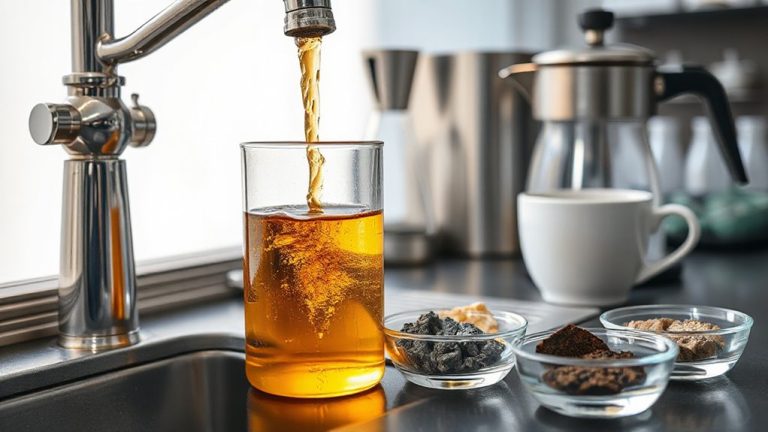
Even if you’re using top-tier beans and a precise brew ratio, your coffee can still fall flat if the water isn’t up to par-filtered water with balanced minerals makes a noticeable difference in extraction and taste. Tap water often lacks consistency, with impurities or uneven mineral levels that hurt water purity and ruin flavor clarity. You don’t need lab-grade filtration, but a simple carbon filter, like Brita or TAPP, helps remove chlorine and sediments. For better mineral balance, consider third-wave options like Third Wave Water mineral packets, especially if your water is too soft or too hard. Too few minerals and extraction slows; too many and your brew turns bitter or metallic. Aim for moderate hardness-around 50–150 ppm-with a balanced mix of calcium and magnesium to support even extraction. Using water with proper water purity and mineral balance consistently improves clarity, sweetness, and acidity in your cup. It’s an easy upgrade that actually shows results.
Keep Your Dripper Clean: A Third Wave Priority
A clean dripper isn’t just about looks-it’s a foundation of consistent extraction. Oils from coffee build up over time, especially in plastic or ceramic brewers, which harms coffee hygiene and skews flavor. Residue can clog flow paths, leading to uneven saturation and bitter or flat brews. That’s why dripper maintenance matters. Rinse your dripper after each use, but don’t stop there-wash it weekly with a soft brush and mild, unscented detergent. For stubborn buildup, use a diluted vinegar solution or a dedicated coffee equipment cleaner like Cafiza. Stainless steel and glass dripers resist staining better than plastic, making them easier to maintain. Skipping cleaning might seem harmless, but it compromises taste and machine performance over time. Good coffee hygiene isn’t obsessive-it’s practical. A few minutes of regular dripper maintenance saves you from off-flavors and guarantees your brew stays fresh, balanced, and true to the bean.
Dial In Temperature and Brew Time
Clean equipment sets the stage for a reliable brew, but it’s your control over temperature and time that shapes the final cup. For auto-drip machines, aim for a brewing temperature between 195°F and 205°F-the sweet spot for even extraction. If your machine doesn’t display temperature, consider a model like the Technivorm Moccamaster, known for hitting ideal ranges. Water saturation starts at the first pour; even coverage guarantees consistent extraction. Let the bloom duration last 30–45 seconds so trapped CO2 escapes, especially with fresh beans. This step improves overall clarity. Most drip machines complete brewing in 5–6 minutes-too fast, and under-extraction happens; too slow, and bitterness rises. You can’t adjust time directly on most units, but grind size and dose indirectly affect flow. Track your variables: a stable baseline makes differences easier to spot. Stick to measurable inputs. That’s how you dial in reliably.
Taste and Adjust: Refine Your Brew Method
How does your coffee taste right now-balanced, sour, or overly bitter? If it’s sour, your brew might be under-extracted-try a finer grind or longer brew time. If it’s bitter, it’s likely over-extracted; go coarser or shorten the brew. Your water hardness plays a key role: soft water can lead to over-extraction and sharpness, while very hard water causes scale and muffled flavors. Use filtered water to stay in the sweet spot. Consider your bean origin too-Ethiopian beans often shine with brighter, floral notes when slightly under-extracted, while Sumatran beans handle longer extraction for deeper, earthy tones. Adjust your method based on taste, not theory. Change one variable at a time, then taste. Repeat until it’s balanced. Your machine’s consistency makes this process reliable-if you know the inputs, you control the output.
On a final note
You’ve picked quality beans, ground fresh, and used clean gear-now stick to a 1:16 coffee-to-water ratio and filtered water with balanced minerals. Brew between 195°F and 205°F; most auto-drippers hit this if preheated. Check that your machine soaks grounds evenly and finishes in about 5 minutes. Taste daily-adjust grind or ratio slightly if it’s bitter or weak. It’s not magic, just repeatable science. Keep it consistent, and your coffee improves without extra effort.