The Ideal Temperature Range for Cold Brew Concentrate to Avoid Sourness
Keep your cold brew concentrate between 60°F and 70°F (15°C–21°C) while steeping to avoid pulling out harsh acids that cause sourness. Warmer temps speed up extraction and can make flavors sharp, especially with fruity African beans. For smooth, balanced results, stick to cooler, stable temps-ideally in the fridge at 35–40°F. Use filtered water and a sealed container to prevent off-flavors. You’ll get cleaner, sweeter concentrate with less bitterness and sourness every time-there’s more to optimizing the process.
Notable Insights
- Steep cold brew concentrate between 60°F and 70°F (15°C–21°C) to minimize sourness and promote smooth extraction.
- Use filtered water to avoid impurities that can amplify acidic or off-flavors in the final brew.
- Choose low-acidity beans like Brazilian or Colombian for a smoother, less sour cold brew concentrate.
- Store the concentrate in the back of the fridge at 35–40°F (2–4°C) during steeping for consistent, sourness-free results.
- Avoid heating cold brew above 160°F to prevent oxidation and the development of sour, bitter notes.
What Makes Cold Brew Taste Sour?
While cold brew is prized for its smooth, low-acidity profile, it can turn out sour if the brewing process isn’t properly controlled. You might not realize it, but water quality plays a direct role-using hard or mineral-heavy tap water can exaggerate off-flavors, including sourness. Always opt for filtered water to keep your brew clean and balanced. Bean origin matters too; beans from regions like Ethiopia or Kenya often have bright, fruity acids that don’t fully mellow during cold brewing, leading to an unintended tang. If you’re chasing a smoother concentrate, choose beans from Brazil or Colombia, known for nutty or chocolatey profiles with lower perceived acidity. Grind size and brew time matter, but getting the fundamentals right-water quality and bean origin-gives you the best shot at avoiding sour notes from the start.
How Heat Triggers Bitter and Sour Notes
If you’ve ever heated up cold brew concentrate and noticed a sharp, bitter bite or unexpected sourness, you’re not imagining it-heat changes the chemistry of your coffee. When you apply heat, you trigger the Maillard reaction and speed up oxidation effects, both of which alter flavor. The Maillard reaction creates deeper, sometimes harsher notes, while oxidation effects can turn bright tones sour. Even gentle warming can pull out compounds not meant for high temperatures, increasing bitterness and acidity.
| Temperature | Effect on Flavor | Risk Level |
|---|---|---|
| 140°F | Mild warming | Low |
| 160°F | Bitter notes emerge | Medium |
| 180°F | Sourness increases | High |
| 200°F+ | Strong off-flavors | Severe |
The Best Temperature for Smooth Cold Brew
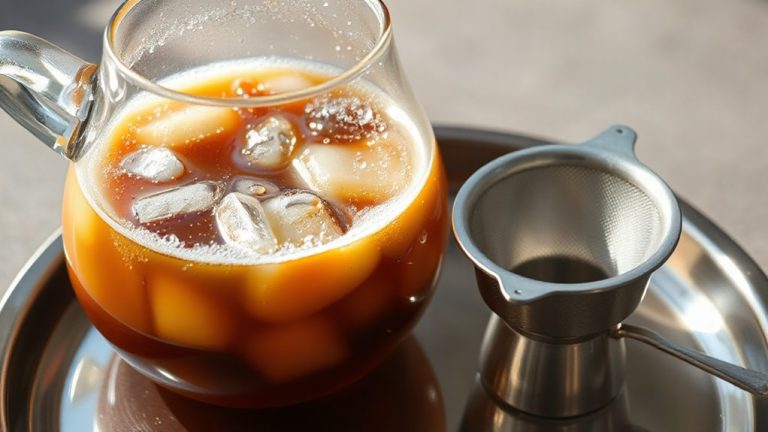
Since cold brew is brewed without heat, keeping it cool or warming it gently preserves the smooth profile you’re after. For the best results, brew your concentrate between 60°F and 70°F (15°C–21°C) over 12 to 18 hours. This range promotes a smooth texture and rich flavor without pulling out harsh acids. Use filtered water and coarsely ground beans to reduce bitterness. A sealed mason jar or a Toddy system works well-both limit oxidation. If you serve it cold, chill it quickly after steeping. For iced drinks, cold concentrate over ice maintains balance. You can gently warm a portion with hot water or milk, but don’t heat the whole batch. Keeping it cool during brewing and storage avoids sourness and preserves the clean, rounded notes cold brew is known for. The right coffee for cold brew can significantly enhance smoothness and sweetness in your final concentrate.
Why Warm Steeping Ruins Your Concentrate
Keeping your cold brew in the ideal 60°F to 70°F range isn’t just about preference-it’s about chemistry. When you steep your coffee warmer than that, you speed up coffee oxidation, which dulls flavor and brings out unwanted bitterness. Heat also highlights grind inconsistency, pulling unevenly from finer and coarser particles-fines over-extract while larger bits under-extract, giving a muddy, unbalanced concentrate. Most home grinders aren’t perfect, so temperature control becomes even more critical. Room temp or warm steeping worsens these flaws, making your brew taste sour or flat, even with quality beans. You’re not just making coffee-you’re managing extraction variables. Staying within the ideal range suppresses harsh compounds and oxidation, letting clean, sweet notes come through. If you skip this, you lose control, and your concentrate suffers. Stick to cool, stable temps to protect flavor and consistency. It’s not fussy-it’s necessary.
Keep Your Brew Cold While Steeping
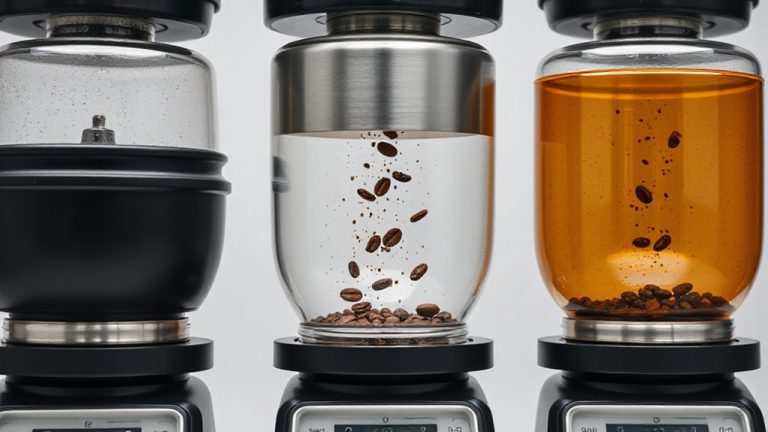
Though room temperature steeping might seem convenient, going colder gives you more control over flavor and extraction. Keeping your brew cold while steeping slows down the process, reducing the risk of over-extraction and sour notes. For consistent results, use refrigerator placement-store your jar or pitcher in the back, where temperatures stay steady at around 35–40°F (2–4°C). This stable environment guarantees even extraction over the full steeping duration, typically 16 to 24 hours. Glass containers like mason jars or dedicated cold brew makers work well, but make sure they’re sealed to prevent odors from affecting taste. Avoid the fridge door; frequent opening disrupts the temperature. Cold steeping takes longer than room temp methods, but the trade-off is a smoother, more balanced concentrate. Stick to cold extraction if clean flavor is your goal. For reliable and convenient options, consider one of the best at-home cold brew makers available, such as the Oxo Cold Brew Grinder and Steeper.
Pro Tips for Balanced, Clean Cold Brew Every Time
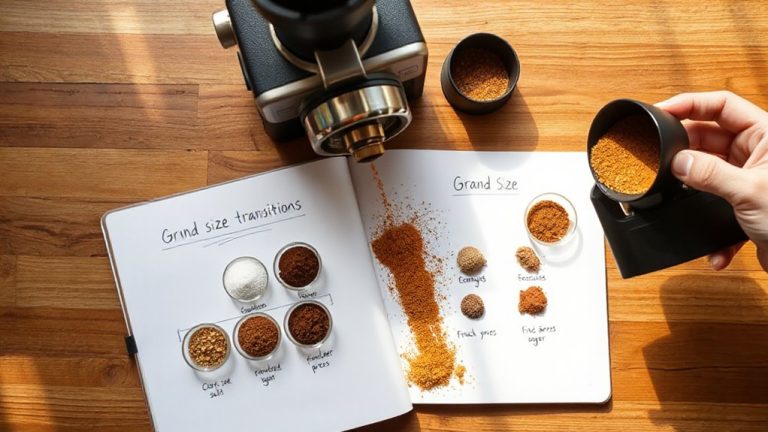
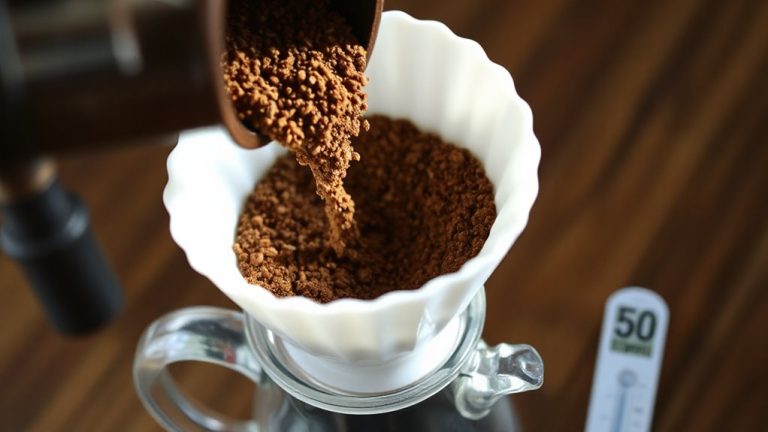
If you want a consistently smooth and well-rounded cold brew, paying attention to grind size and water quality makes a big difference. Use a coarse grind-similar to what you’d use for a French press-to prevent over-extraction and bitterness. Fine grinds can clog filters and make your brew muddy. Always start with filtered cold water; impurities in tap water can introduce off-flavors. Use a ratio of 1:4 coffee to water for a balanced concentrate. Keep your steep time between 12 and 16 hours-any longer and you risk extracting harsh notes. Stick to a 34–40°F range during steeping to slow extraction and reduce acidity. Avoid room temperature steeping unless refrigeration isn’t an option. Airtight containers like mason jars or specialized cold brew makers work well. Rinse the grounds thoroughly when filtering to minimize sediment. For optimal results, consider using a cold brew French press designed to simplify steeping and filtration.
On a final note
Keep your cold brew concentrate below 40°F (4°C) while steeping to avoid sourness. Warm temperatures extract bitter and acidic compounds, ruining smoothness. Use a fridge-safe container like a mason jar or French press and steep for 12–16 hours. Avoid room-temperature brewing if you want clean, balanced results. Cold water extraction takes patience, but staying cold guarantees a consistently smooth concentrate every time.