Cold Brew With Cold Filtered Water: Enhancing Clarity and Smoothness
You’ll get smoother, cleaner cold brew by using cold filtered water-chlorine and minerals in tap water worsen bitterness and cloudiness over the 12–24 hour steep. A Brita Longlast or BWT filter reduces impurities while balancing minerals like calcium and magnesium. This helps extract flavor evenly without harsh notes. Always chill your filtered water first and pair it with a coarse grind. For best results, use a tight-mesh filter and you’ll notice the improvement right away-especially when you try the next step.
Notable Insights
- Using cold filtered water prevents impurities from affecting taste during the 12–24 hour cold brew steep.
- Filtered water with balanced minerals (50–150 ppm) ensures smooth extraction without bitterness or weakness.
- Chlorine in tap water creates off-flavors, so activated carbon filters improve taste and clarity.
- Cold water slows extraction, enhancing smoothness and preserving nuanced coffee notes in the final brew.
- Diluting cold brew concentrate with filtered water maintains flavor consistency and prevents cloudiness.
Why Cold Brew Needs Filtered Water
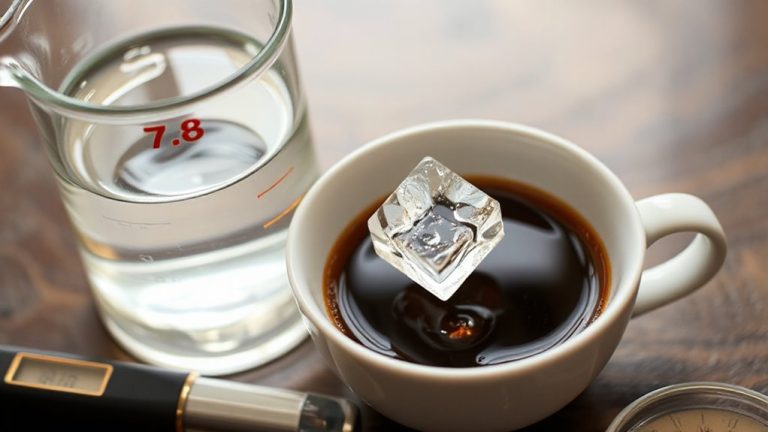
Using filtered water for cold brew isn’t just a suggestion-it’s a must if you want a clean, smooth cup. You’re extracting flavor over 12–24 hours, and impurities or off-balance minerals in tap water get amplified. Filtered water gives you control over mineral balance, which affects how acids and oils dissolve from the grounds. Too few minerals, like in distilled water, leads to flat, under-extracted coffee. Too many causes bitterness. Ideal ranges are 50–150 ppm with balanced calcium and magnesium. pH levels also matter-neutral to slightly acidic (around 7 or just below) helps preserve bright, nuanced notes without sourness. Brita or TAPP filters work fine for most home setups, offering a middle ground. If you’re serious, third-party test strips let you check mineral content and pH levels directly. It’s not fussy-it’s foundational.
How Tap Impurities Ruin Coffee Flavor
Ever wonder why your cold brew tastes flat or off, even when you’re using high-quality beans? Tap water’s impurities are likely to blame. Chlorine, used to disinfect municipal water, leaves a sharp chlorine aftertaste that overwhelms subtle coffee notes. You’re not imagining it-your palate detects what the brew can’t hide. Beyond taste, mineral imbalance in tap water disrupts flavor extraction. Too much calcium or magnesium leads to over-extraction, creating bitterness, while too little results in weak, underdeveloped coffee. Cold brew’s long steep time amplifies these flaws, pulling out more unwanted elements. Standard filters often miss dissolved minerals and volatile compounds. Unfiltered tap water might be safe to drink, but it’s not optimized for coffee. The result? A murky cup lacking the clean finish and layered sweetness cold brew should offer. Fix the water, and you fix the foundation.
How Water Filtration Improves Extraction
Clean water isn’t just about taste-it directly shapes how well your coffee extracts during brewing. When you use filtered water, you’re ensuring better water chemistry, which helps pull out the right flavors from your coffee grounds. Too many minerals in tap water can over-extract bitter notes, while too few lead to weak, flat coffee. Filtration helps maintain a stable mineral balance, critical for even and full extraction. Brands like Brita and Tippy Tapper reduce chlorine and sediment but may not fully adjust mineral content. For cold brew, where steep times are long, consistent water chemistry prevents off-flavors. You’ll get smoother results with fewer surprises. Using filtered water doesn’t guarantee perfect coffee, but it removes variables that harm extraction. It’s a simple step that boosts reliability-especially important if your tap water varies in hardness or taste.
Pick a Filter That Boosts Coffee Clarity
If you want your cold brew to have a crisp, clean taste without unwanted haze or bitterness, the right water filter makes a difference. Filters that improve water chemistry-like activated carbon or dual-stage systems-remove chlorine and balance minerals, leading to smoother extraction. Too much calcium or magnesium can cause off-flavors, while too little may under-extract. A good filter maintains an ideal balance, enhancing clarity and taste. For sediment control, choose filters with fine micron ratings-0.5 to 1 micron, like the Brita Longlast or BWT Bestmax-since they catch fine particles that cloud your brew. Pitcher filters are affordable but less precise; under-sink models offer more control and consistency. Avoid basic filters that only remove large debris-they won’t help water chemistry or clarity much. Upgrading your filter is a small step that directly improves your cold brew’s appearance and flavor, especially if you’re serving it black or over ice.
Brew Cold Coffee With Filtered Water
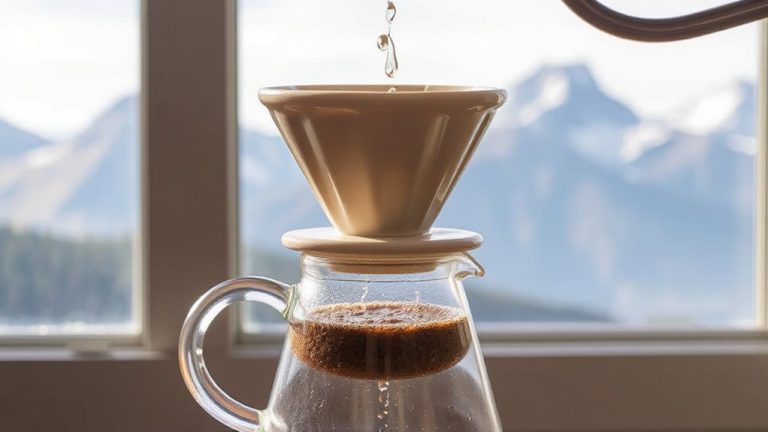
Using filtered water is a simple but essential step in making better cold brew at home. It guarantees a clean base that won’t interfere with flavor, especially important since cold brew uses a long brewing time-typically 12 to 24 hours. During this period, impurities in unfiltered water can amplify off-tastes. You’ll want to use cold filtered water, keeping the water temperature low throughout. This slows extraction, which helps reduce bitterness and acidity for a smoother result. The consistent mineral balance in filtered water also promotes even extraction. Unlike tap water, which varies by region, filtered water offers reliability batch after batch. Whether you use a pitcher filter, faucet attachment, or filtered carafe, just make sure the water is fully chilled before mixing with grounds. For best results, combine this practice with a coarse grind and a brewing time of 16 hours-adjust slightly to taste. A well-designed at-home cold brew maker can further enhance extraction consistency and ease of use.
Taste the Difference: Filtered vs. Tap
What does your tap water taste like on its own? If it’s got a metallic edge or a flat, dull finish, it’ll drag down your cold brew. Tap water varies by region-some areas have high water hardness, which means excess calcium and magnesium. That can lead to over-extraction and bitterness, even in cold brew. Filtered water, like that from a simple carbon filter (think Brita or Aquasana), reduces chlorine and balances minerals. The right mineral balance isn’t just about removing impurities-it’s about keeping enough structure to extract flavor without harshness. Hard water often masks subtle coffee notes, while overly soft water can make brews taste thin. Using filtered water gives you more control, leading to cleaner, smoother results. You’ll notice brighter acidity and clearer sweetness. It’s a small change with a direct payoff in taste-no guesswork needed. Try it side by side. You’ll taste the difference.
Pro Tips for Smoother, Cleaner Cold Brew
You’ve already seen how filtered water sharpens flavor by cutting chlorine and balancing minerals, so now let’s put that clean base to work. Start with bean selection: medium to dark roasts, like Colombian or Sumatran, tend to deliver smoother, less acidic cold brew. Avoid overly light beans-they can taste flat when steeped cold. Grind consistency is just as important. Use a burr grinder for even coarse grounds; blade grinders create uneven particles that lead to over- and under-extraction. A French press or tight-mesh filter helps too, since it reduces sediment. Steep for 12–16 hours at room temperature or in the fridge-longer in the fridge, but flavor stays cleaner. Don’t skip rinsing your filter if using paper, and always dilute your concentrate with filtered water. These steps, combined, mean a cleaner cup every time-no guesswork. For best results, consider a burr grinder with dose control to ensure precision and consistency with every brew.
On a final note
You’ll get cleaner, smoother cold brew by using cold filtered water. Tap water often contains minerals and chlorine that dull flavor. A simple carbon filter, like Brita or ZeroWater, removes impurities and improves extraction. Just brew with the filtered water as you normally would. It’s an easy step that makes a clear difference in taste. For consistent results, always use fresh, cold filtered water-your coffee will taste balanced and bright, not flat or bitter.