The Effect of Grinder Hopper Material on Static and Dose Accuracy
Your grinder’s hopper material impacts static and dose accuracy more than you might think. Plastic hoppers build up static, especially in dry climates, causing grounds to stick and doses to vary-common in models like the Baratza Encore. Glass resists static better and offers visibility, but it’s fragile. Metal hoppers, like those on the Eureka Olympus or DF64, dissipate charge best, ensuring consistent flow and repeatable shots. For reliability and precision, metal is your best bet-especially if you want fewer clumps and more control. You’ll find there’s more to how material shapes performance.
Notable Insights
- Metal hoppers reduce static buildup by conducting and dissipating charge, improving dose consistency.
- Plastic hoppers generate more static, especially in dry conditions, leading to cling and dosing inaccuracy.
- Glass hoppers offer low static retention and good dose accuracy but are prone to breakage.
- Surface texture of hopper material affects grind adhesion independently of static charge levels.
- Stainless steel hoppers minimize residue retention and enhance shot-to-shot dosing precision.
How Hopper Material Affects Dose Accuracy
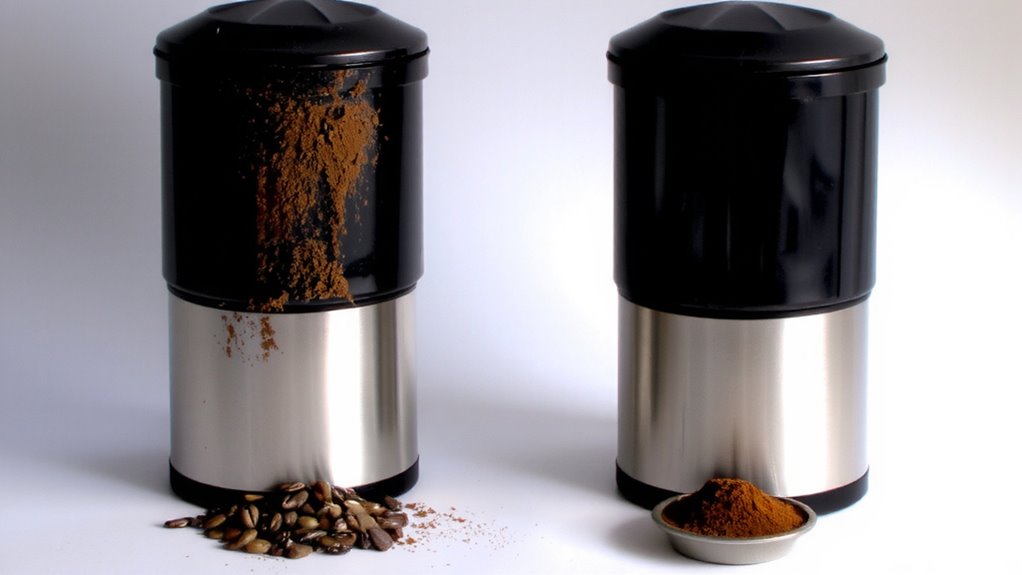
One key factor that often gets overlooked is how the material of your grinder’s hopper can quietly influence dose accuracy over time. Plastic hoppers, like those on the Baratza Encore, tend to hold onto more residual grounds-this grind retention means stale particles mix into your next dose, skewing freshness and weight. Metal hoppers, such as those on the Eureka Mignon, generally have smoother surfaces and lower retention, delivering more consistent doses. Static plays a role, but even without it, material texture matters. Glass or ceramic options exist but are fragile and rare. Beyond performance, consider environmental impact-plastics are lightweight but less recyclable, especially multi-layered ones. Metals last longer and are more recyclable, making them better long-term choices. You’ll get more precise results and reduce waste if you pick durable, low-retention materials. Choose wisely-it affects every shot. Some high-end grinders now feature redesigned burr systems to minimize retention, making Best Mill Grinders a smart starting point when evaluating overall grind consistency.
How Static Builds Up in Coffee Grinder Hoppers
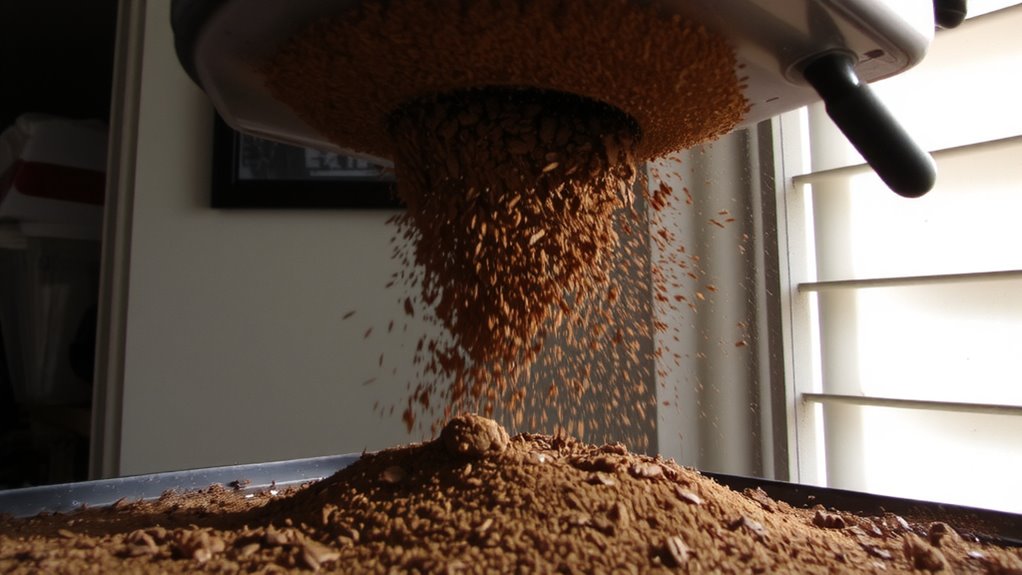
You’ve seen how hopper material affects dose accuracy by influencing grind retention, but another hidden factor can throw off your results just as easily: static. When coffee beans tumble into the hopper and rub against its walls, triboelectric charging occurs-electrons transfer between surfaces, creating a static charge. This charge builds up quickly, especially in dry conditions, and causes ground coffee to stick where it shouldn’t. The effect? Unwanted particle adhesion leads to clumping, uneven dosing, and lost coffee on the grinder’s sides. It’s not just messy-it directly impacts shot consistency and waste. While all materials can generate static, the intensity depends on surface properties and environmental factors like humidity. You can’t eliminate it completely, but understanding how static forms helps you manage it better during grinding.
Plastic Hoppers Attract More Static
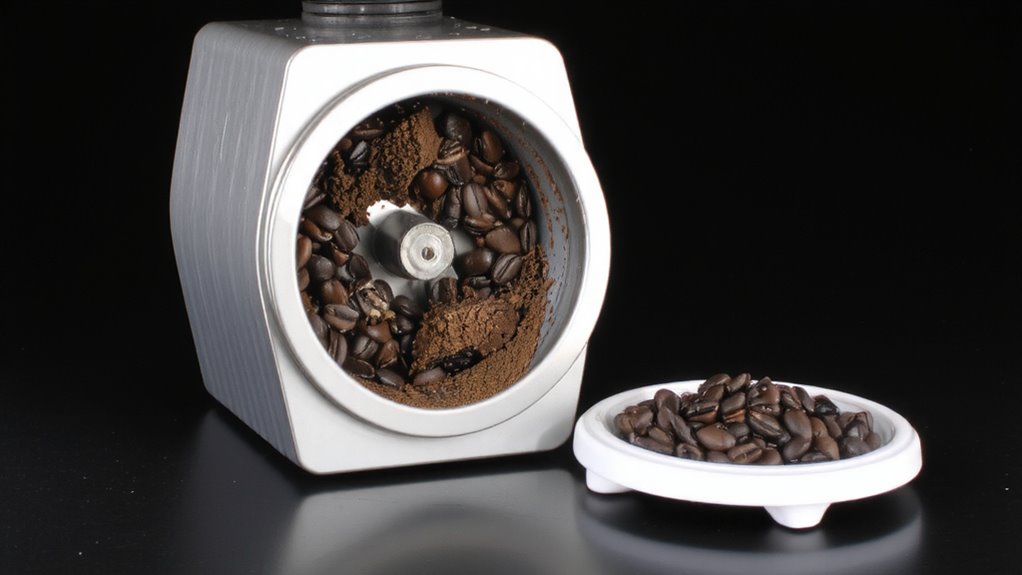
While plastic hoppers are common in both entry-level and high-end grinders-from models like the Baratza Encore to the Niche Zero-they tend to build up more static charge than metal alternatives, especially in low-humidity environments. You’ll notice this when grounds cling to the sides or shoot out erratically during grinding. That’s due to electrostatic charge created as beans rub against the hopper walls. Plastic has a higher tendency to hold this charge because of its material polarity, which doesn’t dissipate energy well. In dry conditions, the effect worsens, leading to messy grinds and inconsistent dosing. Metal hoppers, by contrast, conduct and neutralize charge more effectively. If you’re using a plastic hopper, try adjusting grind settings slightly or grounding the portafilter to reduce static. While not all plastic hoppers behave the same, you should expect more static issues compared to conductive materials.
Glass Hoppers Resist Static Buildup
Glass hoppers offer a solid middle ground between plastic and metal, especially when static is a concern. You’ll find they generate less static than plastic, meaning your coffee grounds don’t cling to the sides, which helps with dose accuracy. That reduced static comes from the material’s natural properties, though it’s not as conductive as metal. Glass clarity lets you easily monitor bean levels, so you’re never caught off guard mid-grind. It’s a practical perk during busy mornings. Hopper insulation is moderate-glass doesn’t transfer heat as quickly as metal, so your beans stay stable in varying environments. However, glass is more fragile than plastic or metal, so handle it carefully. Brands like Compak and Omnia offer grinders with glass hoppers, balancing function and form. If you want visibility, decent static resistance, and consistent bean flow without metal’s quirks, glass is a reliable, low-fuss choice worth considering.
Metal Hoppers Deliver the Most Consistent Doses
Metal hoppers take the lead when dose consistency is critical. You’ll notice fewer dose variances shot to shot, thanks to metal’s natural ability to dissipate static. Dosing consistency improves because coffee grounds don’t cling to the walls like they do in plastic or glass. That’s due to metal conductivity-electrons move freely, reducing static buildup that disrupts pour. If you use a high-brew-volume grinder like the Niche Zero or the DF64, you’re already fighting minor static; a metal hopper helps you win that battle. Some metal hoppers, like those on the Eureka Olympus, use grounding strips for extra stability. While they’re heavier and cost more, the payoff is reliable dosing, especially in dry environments. Just remember, metal won’t eliminate static completely, but it minimizes interference. For repeatable results over time, metal hoppers are the go-to choice when consistency matters most.
Which Hopper Gives the Most Accurate Dose?
What makes one hopper more accurate than another? It comes down to static control and how consistently beans feed into the burr. Metal hoppers, especially those with anti-static coatings, reduce cling, giving you a more precise dose. You’ll notice less variation in dose timing-beans exit faster and more uniformly than in plastic. Hopper color also matters: darker tints, like black or charcoal, help mask coffee oil stains and show less static residue, making it easier to judge bean flow and cleanliness. Clear or light-colored hoppers may look sleek but can distort your view of bean level and buildup. Stainless steel models, like those on the DF64 or Maxi Doser, deliver repeatable performance. You get fewer stuck beans and more reliable shots, especially in dry environments where static spikes. So if accuracy’s your goal, metal’s your best bet-just mind the finish and color for practical advantages during daily use.
Which Hopper Should You Use?
Now that you know metal hoppers-especially those with anti-static coatings-deliver more consistent dosing by reducing static cling and improving bean flow, the next step is picking the right one for your setup. Consider your usual usage: if you’re brewing daily, go for a larger hopper capacity to minimize refills. Just remember, bigger isn’t always better if you care about bean freshness-large batches exposed to air degrade faster. For home use, a 250–300 gram metal hopper strikes a balance between convenience and freshness. Anti-static versions, like those on the DF64 or KG Mods hoppers, improve dose accuracy and reduce mess. Plastic hoppers are cheaper but prone to static and odors, hurting dose consistency. If you’re grinding for immediate use and don’t mind frequent topping off, a smaller metal hopper keeps beans fresher longer. Match hopper capacity to your routine, prioritize metal for flow and static control, and protect bean freshness by avoiding prolonged storage.
On a final note
You’ll get the most accurate dose with a metal hopper, since it builds less static and lets grounds flow evenly. Plastic hoppers create more static, especially in dry environments, leading to clumping and uneven doses. Glass reduces static better than plastic but is fragile and less practical. If consistency matters-like in busy cafes-metal is the clear choice. For home use, glass or anti-static plastic models can work, but metal still performs best overall.