Why Vinegar Shouldn’t Be Used to Descale Modern Coffee Machines
You shouldn’t use vinegar to descale your modern coffee machine because it can damage aluminum and plastic parts, degrade seals, and corrode heating elements. It leaves sour residues that affect taste and smell, even after rinsing. Brands like Breville, De’Longhi, and Jura warn against it-and using vinegar may void your warranty. Instead, go with manufacturer-approved options like Dezcal, Durgol, or citric acid for safe, effective results that protect your machine long-term.
Notable Insights
- Vinegar’s acetic acid can corrode aluminum, plastic, and heating elements in modern coffee machines.
- It may degrade rubber seals and internal components, leading to leaks and pressure issues.
- Lingering vinegar residues can impair coffee taste and release unpleasant odors during brewing.
- Most manufacturers void warranties if vinegar use is detected, even for unrelated repairs.
- Approved descalers like citric acid or brand-specific solutions are safer and equally cost-effective.
Why Vinegar Harms Modern Coffee Makers
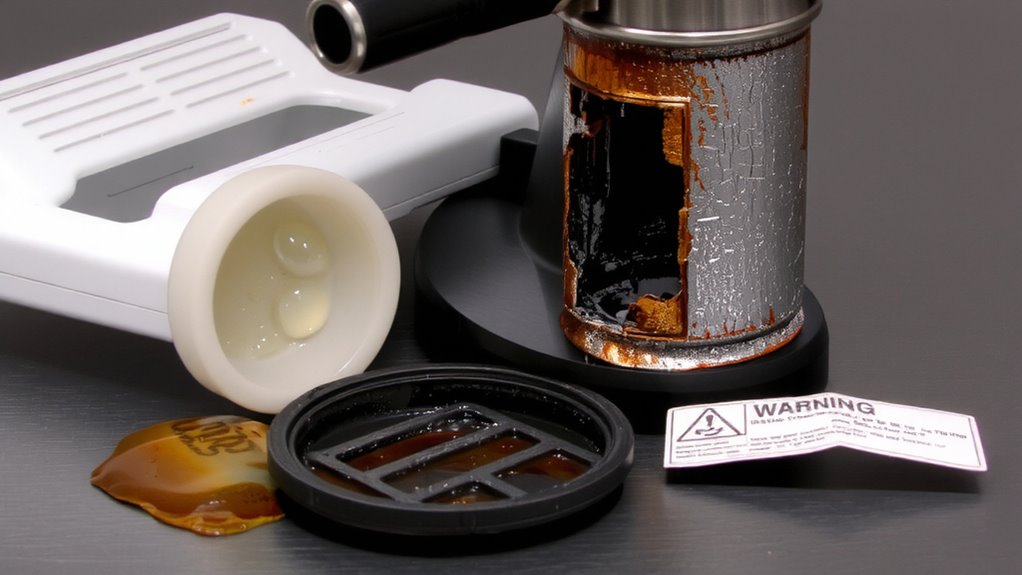
While vinegar is cheap and often recommended online, it’s not always safe for modern coffee machines-especially those with aluminum or plastic internal parts. You risk damaging your machine because vinegar can cause harmful chemical reactions with certain metals and polymers over time. These reactions may weaken seals, corrode heating elements, or degrade tubing. Material compatibility matters-many newer models use components that react poorly to acidic solutions like acetic acid in vinegar. Repeated use can lead to leaks or costly repairs. Manufacturers like Breville, De’Longhi, and Jura specifically advise against vinegar, recommending citric acid–based descalers instead. These alternatives clean effectively without harming sensitive parts. So while vinegar might seem convenient, it’s not worth the long-term risk. Choosing a descaler designed for your machine protects internal components and maintains performance. Always check your manual-using the right product guarantees your coffee maker lasts longer and runs safely. For Breville users, using a best descaler for Breville machines ensures optimal cleaning and protection.
How Vinegar Ruins Taste and Smell in Coffee
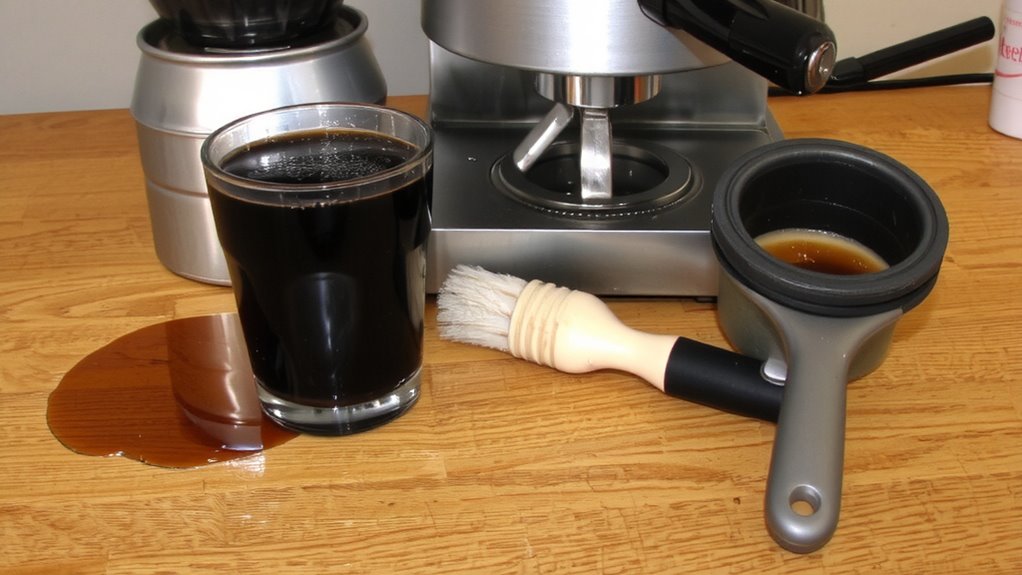
Ever wonder why your coffee tastes off after descaling with vinegar? It’s because vinegar leaves behind residues that cling to internal parts, even after rinsing. These traces cause taste degradation, making your brew taste sour or sharp instead of rich and balanced. Vinegar also introduces aroma distortion, muting the coffee’s natural scent and replacing it with a faint, acidic tang. Even if you run multiple water cycles, volatile compounds from vinegar can linger, subtly affecting each cup. High-heat brewing can amplify this effect, releasing trapped odors during extraction. Unlike dedicated descaling solutions designed to fully dissipate, vinegar isn’t meant for food-contact appliances. For clean flavor and true aroma, use a food-safe, odor-neutral descaler. Your coffee deserves better than a compromise from residue you can’t always smell-but definitely taste. Choosing the right product matters, and Best Nespresso Descalers are formulated specifically to preserve taste and machine integrity.
Vinegar Can Void Your Coffee Maker Warranty
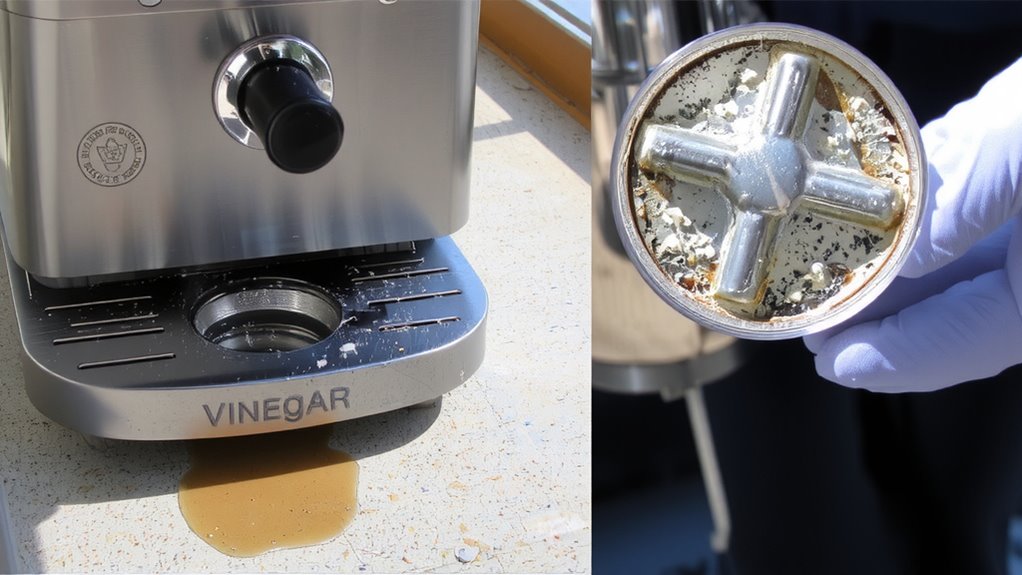
Using vinegar to descale your coffee machine might seem like a cost-effective solution, but it can come at a price-your warranty. Many manufacturers explicitly warn against using vinegar, and doing so may lead to warranty voidance. If your machine breaks and the company finds vinegar residue, they can deny repairs under manufacturer disputes, even if the issue isn’t directly linked.
| Brand | Accepts Vinegar? | Approved Descaler |
|---|---|---|
| Keurig | No | Keurig Descaling Solution |
| Breville | No | Breville ClearXDE |
| De’Longhi | No | De’Longhi EcoDecalk |
Using non-approved solutions risks coverage loss. While vinegar is cheap, the cost of replacing a machine under warranty voidance often outweighs initial savings. Stick to manufacturer-recommended products to protect your investment.
Damage to Seals and Internal Components
You’ve probably heard that vinegar is a go-to fix for descaling, but that advice doesn’t hold up with today’s coffee machines. Modern units use sensitive materials and精密 seals that vinegar can harm over time. Its acidity contributes to material degradation, especially in rubber gaskets and plastic connectors not designed for repeated acid exposure. This leads to seal corrosion, which can cause leaks, pressure loss, and inconsistent brewing performance. Unlike older models, many current machines rely on tight-tolerance parts that degrade faster when exposed to vinegar’s harshness. Even occasional use may weaken components, shortening your machine’s lifespan. While vinegar might seem cheap and natural, the long-term risk outweighs the short-term saving. Once seals fail or internal degradation sets in, repairs are often costly-or impossible. Protect your machine by avoiding acidic home remedies that stress parts built for precision, not corrosion resistance.
Manufacturer-Approved Descaling Alternatives
Most major coffee machine manufacturers recommend using their brand-specific descaling solutions, which are formulated to safely dissolve mineral buildup without harming sensitive internal parts. These products guarantee chemical compatibility with your machine’s materials and meet strict safety standards to protect both you and the device. While they may cost more than household alternatives, their precision formulation reduces long-term risk.
| Brand | Product Example | Key Benefit |
|---|---|---|
| De’Longhi | De’Longhi Descaler | Matches pump and boiler materials |
| Breville | Breville Descaling Solution | Tested for thermal safety |
| Jura | Jura ClearCube | Designed for automatic systems |
You should run the full cycle as directed, since proper dilution and contact time matter. Using approved descalers keeps warranties intact and guarantees reliable performance over time.
Best Non-Vinegar Descaling Solutions
Effectiveness doesn’t have to come at the cost of safety when descaling modern coffee machines. You can use non-vinegar solutions that are both eco friendly and cost effective. Commercial descaling agents like Dezcal or Durgol are formulated specifically for coffee machines, dissolving limescale without damaging sensitive components. These products work faster than vinegar and leave no lingering taste. Many are biodegradable, making them a more eco friendly choice. While they cost more per use than vinegar, their efficiency and machine safety make them cost effective over time. Some autofill brewers even require manufacturer-approved solutions to stay under warranty. Always check your machine’s manual to confirm compatibility. For a DIY option, citric acid powder works well in small doses and is gentle on parts. It’s affordable, effective, and more neutral than vinegar. Whichever solution you pick, regular descaling keeps your machine running efficiently and your coffee tasting clean.
Step-by-Step Descaling Without Vinegar
Now that you’ve seen the benefits of using non-vinegar descalers like Durgol, Dezcal, or citric acid, it’s time to put one of those options to work. Follow these steps for safe, effective descaling. First, check your machine’s manual for recommended descaling frequency-typically every 1–3 months, depending on use and water hardness. Use lukewarm water (not boiling) to mix the descaler, as extreme water temperature can damage seals. Run the solution through your machine’s cycle, then flush with clean water at least twice.
| Step | Action | Tip |
|---|---|---|
| 1 | Mix descaler with water | Use correct ratio per product |
| 2 | Run descaling cycle | Pause mid-cycle for best results |
| 3 | Flush with water | Repeat to guarantee full rinse |
| 4 | Check for residue | Taste test a brew if unsure |
| 5 | Reset machine | Confirm descaling frequency setting |
On a final note
Vinegar can damage your coffee maker’s seals and leave behind odors that affect taste, plus it may void the warranty. Manufacturers like De’Longhi and Breville recommend approved descaling solutions instead. For safe, effective descaling, use citric acid-based cleaners or branded products such as Urnex Descalers. These remove limescale without harming internal parts. Always follow your machine’s instructions. Skipping vinegar protects your machine and your coffee.