How Uneven Grind Sizes Create Channeling and Inconsistent Brews in Pour-Overs
Uneven grind sizes create gaps and clumps in your coffee bed, letting water rush through weak spots and bypass dense areas. This causes channeling, leading to sour, weak coffee from under-extracted zones and bitter notes from over-extracted fines. Blade grinders make this worse with inconsistent chunks and powder. A burr grinder like the Baratza Encore gives you the uniform particles needed for even flow. Get your grind right, and you’ll fix most pour-over issues fast-there’s more to optimizing your setup just ahead.
Notable Insights
- Uneven grind sizes create gaps and dense zones in the coffee bed, promoting uneven water flow.
- Water channels through coarse particles, bypassing fines, leading to unbalanced extraction.
- Inconsistent particle size causes some areas to over-extract while others under-extract.
- Blade grinders worsen channeling by producing scattered fines and large boulders.
- Uniform grinds from burr grinders ensure even resistance and consistent pour-over brews.
What Is Channeling in Pour-Over Coffee?
Ever wonder why your pour-over coffee sometimes tastes weak or bitter even when you follow the same recipe? The issue might be channeling. That’s when water takes the path of least resistance through your coffee bed, bypassing dense spots and over-extracting others. Poor water distribution and an unstable coffee bed structure are the main culprits. When water hits unevenly, it carves channels-especially if your pour technique lacks consistency. A sloppy pour from a gooseneck kettle or starting too aggressively disrupts the grounds. This leads to unbalanced extraction: sour in some sips, harsh in others. You’ll notice this with V60s more than flat-bottom brewers like the Kalita Wave, which promote even saturation. To minimize channeling, focus on steady, centered pours and guarantee your coffee bed is level before brewing. It’s not just grind size-it’s how water moves through the grounds.
Why Grind Size Consistency Prevents Channeling
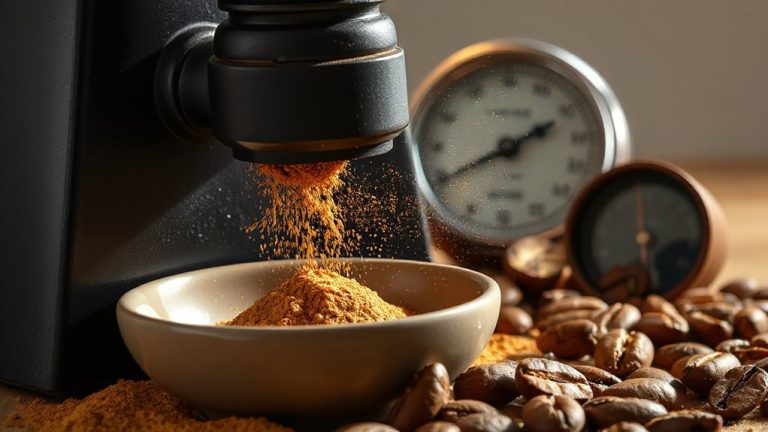
When your grinder produces uneven particle sizes, it creates pockets of resistance that invite channeling during brewing. Water takes the path of least resistance, rushing through loose gaps between coarse particles while avoiding densely packed fines. This uneven flow leads to inconsistent saturation and weak, hollow flavors. Grind uniformity guarantees each coffee particle extracts at a similar rate, minimizing channels. A consistent particle distribution means water meets even resistance across the entire bed, promoting balanced flow. Blade grinders, for example, often fail here, producing scattered fines and boulders. In contrast, quality burr grinders-like the Baratza Encore or 1ZPresso Q2-deliver tighter particle distribution. You’ll see fewer channels, better clarity, and sweeter, more balanced cups. Grind consistency isn’t just ideal-it’s essential for predictable, repeatable pour-overs. Your brew water deserves an even playing field. A key factor in achieving this uniformity is choosing one of the best burr grinders for coffee lovers.
How Fine and Coarse Grinds Cause Over- and Under-Extraction
If you’re aiming for a balanced pour-over, getting the grind size right matters just as much as using fresh beans or proper water temperature. Too fine, and your coffee over-extracts-bitter, harsh, and one-dimensional. Too coarse, and it under-extracts-sour, weak, lacking depth. Both hurt flavor balance. A uniform medium-fine grind, like that from a burr grinder such as the Baratza Encore, maximizes extraction efficiency by ensuring most particles dissolve at a similar rate. Inconsistent sizes mean some extract fully while others don’t, skewing the result. Even with perfect pouring, poor grind control undermines clarity and sweetness. For most pour-overs-like V60 or Chemex-aim for consistency over extreme fineness. Adjust slightly based on bean age or roast, but avoid drastic shifts. Precision here doesn’t require expensive gear, just attention and a reliable grinder. That’s how you hit balanced, repeatable cups.
Why Water Rushes Through Uneven Coffee Beds
Because the consistency of your coffee bed affects how water moves through it, uneven particle sizes can create channels where water slips through too quickly. These gaps form when fine and coarse grounds don’t pack evenly, forcing water flow into concentrated paths. When that happens, some coffee doesn’t get brewed while other parts get over-extracted. You’ll notice this in your cup as weak or sour spots alongside bitter ones. Inconsistent water flow also disrupts coffee agitation, meaning not all particles interact with water the same way. The result? An unbalanced, messy brew. This is especially common with poorly crushed beans from blade grinders. Even with good pour techniques, uneven beds undermine control. For better extraction, you need uniform particles so water flows smoothly and agitation stays consistent across the entire bed. It’s not just about grind size-distribution matters just as much. A high-quality burr grinder ensures a consistent particle size distribution necessary for even extraction.
Burr vs. Blade: Which Grinder Gives the Most Even Grind?
You’ve seen how uneven particles lead to poor extraction and messy flavors, especially when water channels through inconsistent coffee beds. So, which grinder actually fixes this? Burr grinders crush beans between two burrs, giving you a far more even grind. That consistency is key for balanced pour-overs. Blade grinders, on the other hand, chop beans with a spinning blade, creating a mix of fine dust and coarse chunks. They also generate blade heat, which can warm the beans and alter flavor before brewing. Plus, blade grinders offer almost no control over grind size. Burr grinders do have burr retention-some grounds get stuck and later fall out, possibly affecting dose accuracy-but it’s a small trade-off. For evenness and control, a burr grinder like the Baratza Encore or 1ZPresso Q2 is worth it. Save the blade grinder for quick camp coffee, not quality pour-overs. When selecting decaf options, consider trying one of the top-rated best decaf ground coffee picks to ensure quality even before grinding.
6 Signs Your Pour-Over Is Channeling
Ever notice how some pour-overs taste weak or uneven, even when you follow your usual routine? That’s often a sign of channeling. When water finds paths through uneven grind sizes, it flows unevenly, extracting some parts of the coffee too much and others too little. You might see the coffee bloom bubble up quickly on one side but not the other, a clue that water turbulence isn’t spreading evenly. The stream may also rush through one spot in the bed, causing a gurgling sound or an uneven drawdown. Your brew could finish too fast, leaving a sour or thin taste. The surface of the puck might look fractured or have visible cracks after brewing. These are all red flags. Uneven extraction like this usually points back to inconsistent grinds, even if your pouring technique seems on point.
How to Fix Channeling With the Right Grind Setting
While grind consistency plays a major role in preventing channeling, your grinder’s settings can make or break the evenness of extraction. If your brew tastes sour or uneven, you likely need better grind calibration. Adjust your grinder to produce more uniform particles-too fine, and you risk clogging; too coarse, and water rushes through weak spots. A burr grinder, like a Baratza Encore or 1ZPresso Q2, gives you far more control than a blade model. Aim for a medium-fine setting, similar to table salt, for most pour-overs. This supports flow optimization by balancing resistance and drainage. Even small tweaks can reduce channelling and improve flavor clarity. Always dial in fresh-especially when switching beans or roast levels. Proper grind calibration isn’t one-time; it’s part of routine tuning for clean, repeatable brews.
On a final note
You can prevent channeling by using a burr grinder for consistent grind size-blade grinders create uneven particles that lead to over- and under-extraction. Water follows the path of least resistance, so gaps from coarse or fines from fine grinds cause unbalanced flow. Watch for signs like sourness, uneven puck wetting, or fast brew times. Adjust your grind setting gradually, use proper technique, and you’ll get a cleaner, more balanced pour-over every time.