Why Cold Brew Requires a Different Coffee-to-Water Ratio Than Hot Methods
You need more coffee in cold brew because cold water extracts flavors slower than heat, so a higher ratio-like 1:4 or 1:5-ensures strong, balanced results. Steeping 12–24 hours compensates for low temperature, while a coarse grind prevents bitterness. Use twice the coffee (e.g., 30g per 250ml) for a rich concentrate. Dilute 1:1 with water or milk to taste. Try Fellow or OXO dispensers for consistency-there’s more to get right for the smoothest cup.
Notable Insights
- Cold water extracts fewer compounds than hot water, requiring more coffee for sufficient flavor.
- Lower solubility in cold water slows extraction, necessitating a higher coffee-to-water ratio.
- A coarse grind and long steep time demand more grounds to achieve balanced extraction.
- Double the coffee is used to create a concentrated brew that remains flavorful when diluted.
- A 1:4 or 1:5 coffee-to-water ratio compensates for cold water’s reduced chemical diffusion rate.
Cold Water Extracts Less Than Heat
While heat pulls out coffee compounds faster, cold water takes its time, extracting fewer solids and oils over hours-even days. You’ll see this in your brew: cold water has a slower chemical diffusion rate, meaning flavor compounds move from grounds to liquid more sluggishly. That lower temperature also reduces solubility rate, so less of the coffee actually dissolves. That’s why you can’t just use the same ratio as drip or French press. If you do, your cold brew will taste weak and flat. To compensate, you need more coffee-typically 1.5 to 2 times as much as hot methods. A standard starting point is a 1:4 or 1:5 coffee-to-water ratio by weight. Use a digital scale and coarsely ground beans from a burr grinder to keep it consistent. This isn’t about fancy theory-it’s practical chemistry. For consistent large batches, consider using a commercial cold brew coffee maker designed for precision and scalability.
Long Steeps Compensate for Low Temperature
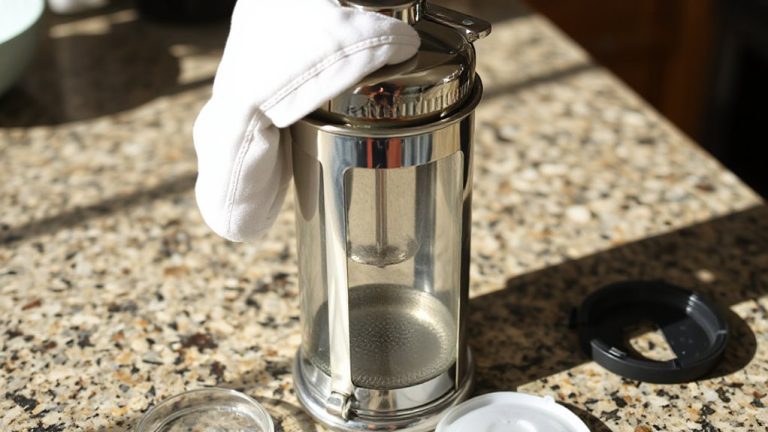
Since cold water extracts coffee more slowly than heat, you’ll need to steep your grounds longer to get a rich, balanced concentrate-typically 12 to 24 hours, depending on your taste and method. This prolonged steeping allows enough time for flavor compounds to dissolve, even without heat. Extended immersion is key: too short, and your brew tastes weak or underdeveloped; too long, and it risks becoming overly bitter or hollow. A 16-hour steep often works well for most setups, especially with standard mason jars or French presses. If you’re using a dedicated cold brew maker like the Toddy or OXO, follow its recommended time, as design affects extraction efficiency. Room temperature can also influence steeping-warmer environments speed extraction slightly, while cooler spaces slow it. Your goal is balance, and that comes from consistent, controlled steeping, not guesswork. A well-designed cold brew maker can streamline this process with built-in filters and optimal steeping chambers.
Use a Coarse Grind for Smooth Extraction
You’ve given your coffee enough time in the cold water to extract the flavors fully, but the grind size you use plays a direct role in how smoothly that extraction happens. A coarse grind is ideal because it prevents over-extraction and sediment, which can make your cold brew bitter or muddy. Since cold brew relies on long extraction time-usually 12 to 24 hours-fine grounds would release too many undesirable compounds. With a coarse grind, like what you’d use for a French press, water moves evenly through the particles, pulling out sweetness and clarity. Grinders like the Baratza Encore or Hario Skerton Pro handle this texture well. If your grind size is too fine, you’ll notice astringency or grit; too coarse, and the result may be weak. Adjusting grind size fine-tunes flavor without changing your coffee-to-water ratio. Consistency matters-uneven particles lead to unbalanced extraction. Stick with coarse, uniform grounds for clean, smooth results every time. For the best results, consider investing in one of the best grinders for cold brew.
Double the Coffee for Concentrated Flavor
Use twice the amount of coffee you’d normally use for regular brewing to make a concentrated cold brew base. This boosts flavor intensity and improves brewing efficiency, since cold water extracts more slowly than hot. A higher coffee-to-water ratio compensates for the lower extraction rate over time, ensuring your concentrate is rich and full-bodied after steeping.
| Brew Method | Coffee (grams) | Water (ml) |
|---|---|---|
| Regular Drip | 15 | 250 |
| Cold Brew | 30 | 250 |
| French Press | 18 | 250 |
Doubling the coffee doesn’t waste beans-it maximizes contact and solubility during the extended steep, typically 12–16 hours. This method works best with a coarse grind to prevent over-extraction and sediment. You’ll get a smooth, concentrated brew that stores well and maintains strength when later diluted.
Dilute to Taste Without Losing Strength
Once you’ve brewed your concentrated cold brew using a double dose of coffee, the next step is adjusting it for drinking. You’ll want to dilute it, but keep strength and flavor intact. The key is controlled ice dilution-adding just enough water or cold cubes to taste without washing out the bold, smooth notes. Many prefer starting with a 1:1 ratio of concentrate to water or milk, then tweaking from there. Using frozen coffee cubes instead of regular ice helps with flavor preservation, since they melt into more coffee, not plain water. This method avoids watering down your drink while still cooling it. Glass bottles or to-go tumblers work well for mixing and sipping on the go. Some brands, like Fellow or OXO, even offer dedicated cold brew dispensers with built-in dilution guides. Experiment to find your ideal balance-consistency matters more than perfection.
On a final note
You need more coffee in cold brew because cold water extracts slower and less than hot. Use a coarse grind to avoid over-extraction during the long steep-12 to 16 hours works best. Double the coffee for a strong concentrate, then dilute with water or milk to taste. This method gives you full flavor without bitterness. Unlike drip or pour-over, cold brew relies on time, not heat, so the ratio matters more. Keep it simple: more grounds, cold water, patience.