French Press Safety: Avoiding Glass Breakage and Lid Malfunctions
Never pour boiling water into a cold glass French press-it can shatter from thermal shock, even if it’s borosilicate. Warm the carafe first with lukewarm water to prevent stress cracks. Use a shatterproof model with a silicone sleeve or switch to stainless steel, like Espro or Thermos, for durability. Check the lid’s seal regularly and replace worn gaskets to stop pressure leaks. Avoid scratches by hand washing gently-damage weakens glass over time. Care matters most with heat and impact, and smart choices improve safety every brew.
Notable Insights
- Pre-warm the glass carafe with lukewarm water to prevent thermal shock and cracking from sudden temperature changes.
- Use shatterproof carafes with borosilicate glass, silicone sleeves, or stainless steel to reduce breakage risks.
- Inspect and maintain the lid’s rubber or silicone gasket weekly to ensure a secure seal and prevent pressure leaks.
- Avoid abrasive cleaning tools and residue buildup to prevent scratches and glass weakening over time.
- Replace worn or damaged gaskets promptly to maintain safety, seal integrity, and optimal French press performance.
Never Pour Boiling Water Into a Cold French Press
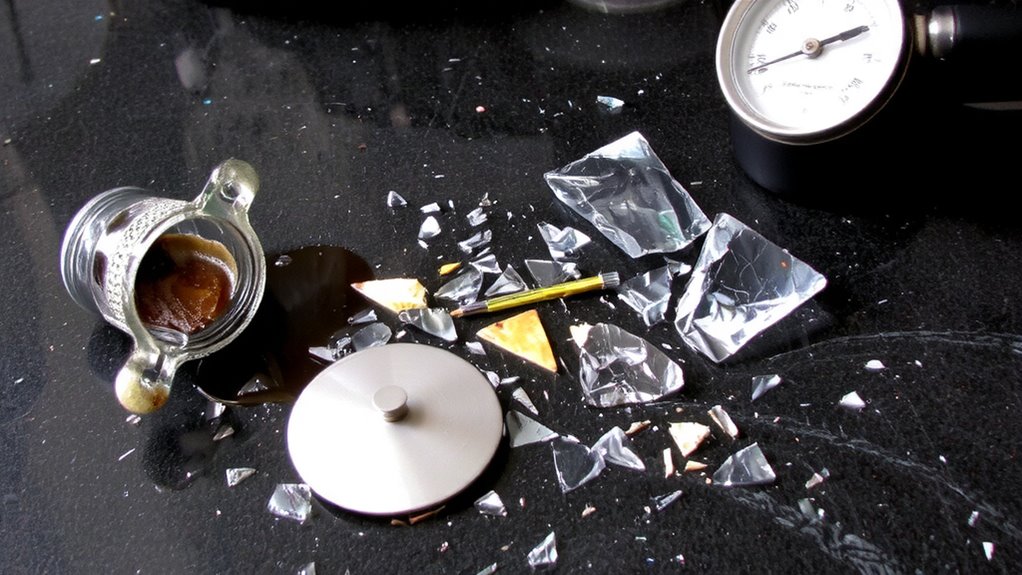
A sudden temperature shift can crack your French press, so never pour boiling water directly into a cold glass carafe. You risk compromising the glass integrity when you expose it to extreme water temperature changes. Even high-quality borosilicate glass, used in brands like Bodum Chambord or Espro, isn’t immune to thermal stress. Instead, warm the carafe first with lukewarm water-about one-third full-for 30 seconds before brewing. This simple step stabilizes the temperature gradient. If you ignore it, microfractures can form instantly, weakening the glass and setting up eventual failure. While double-walled models offer more protection, they’re not foolproof. Always prioritize gradual heat exposure. Your French press safety depends on managing water temperature carefully. It’s not overcaution-it’s basic physics. Respecting glass integrity extends your carafe’s lifespan and prevents messy, dangerous breakage during morning prep.
How Thermal Shock Suddenly Shatters French Press Carafes
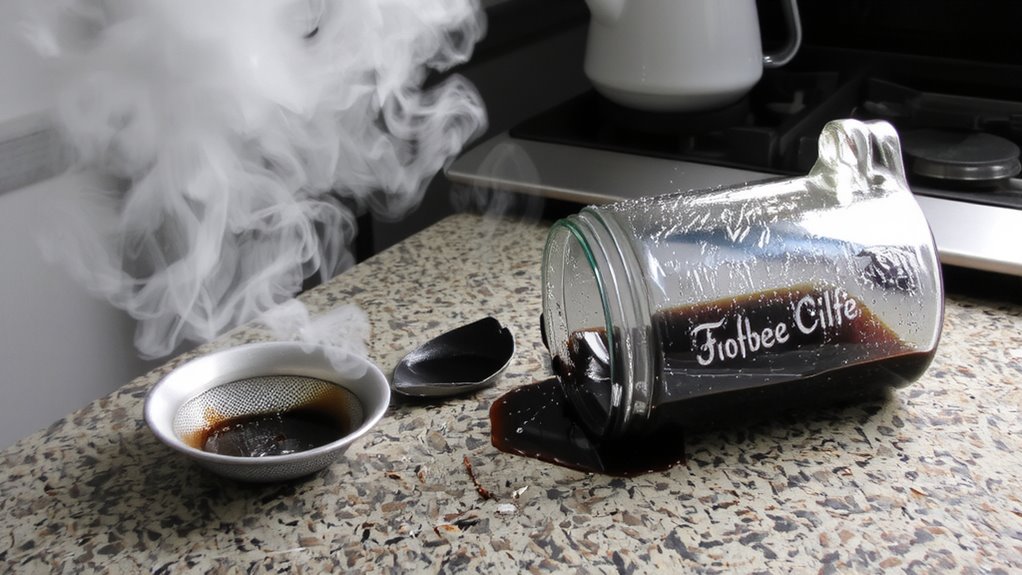
When you pour boiling water into a cold French press, the sudden temperature difference can trigger thermal shock, cracking or even shattering the glass carafe in seconds. This risk increases if the glass has material fatigue from repeated heating and cooling or hidden manufacturing defects. Even high-quality glass, like borosilicate, isn’t immune if mishandled. Slight flaws from production can become failure points under stress. To reduce risk, always pre-warm your press with hot tap water before adding boiling water.
| Risk Factor | Impact on Carafe |
|---|---|
| Sudden heat | Causes uneven expansion |
| Cold start | Raises shock likelihood |
| Material fatigue | Weakens glass over time |
| Manufacturing defects | Creates weak spots |
| Poor pre-heating | Increases breakage chance |
Avoid extreme temperature jumps, inspect your press regularly, and handle it carefully to stay safe during brewing. For those concerned about both safety and environmental impact, consider switching to a plastic-free French press.
Use a Shatterproof Carafe to Prevent Breakage
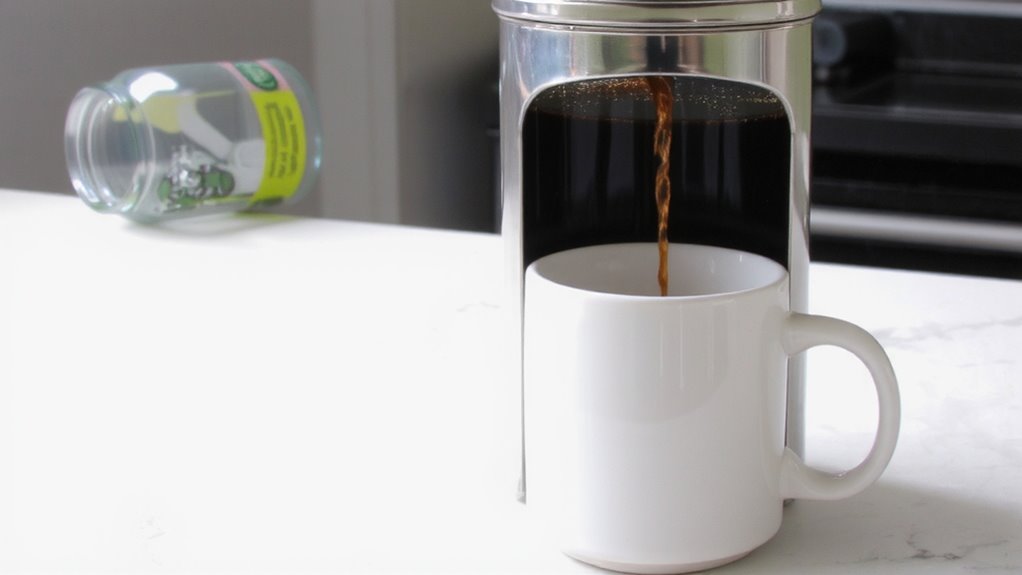
That sudden crack when a French press shatters isn’t just startling-it’s avoidable. Switching to a shatterproof carafe made of durable materials like borosilicate glass with a protective silicone sleeve or reinforced plastic improves safety dramatically. These designs offer strong impact resistance, reducing breakage if the press slips from your hand or hits the counter. Unlike standard glass, shatterproof models maintain material durability over time, even with daily use. Stainless steel French presses, such as those from Espro or Thermos, provide excellent impact resistance and won’t break if dropped. Though they may retain heat differently than glass, their rugged build suits travel or busy kitchens. Always check that the carafe is labeled “shatterproof” or “drop-resistant” and verify the material specs. While no carafe is indestructible, choosing one with better impact resistance and proven material durability means fewer cleanup hazards and longer service life.
Stop Pressure Buildup With a Proper Lid Seal
If you’ve ever struggled with coffee spraying out of your French press when pressing down, the problem likely lies with the lid’s seal. A proper seal prevents pressure from building up and forcing hot liquid past the plunger. Over time, wear can compromise the fit, so regular seal inspection is essential. Check the rubber or silicone gasket each time you clean the press-look for warping, cracks, or looseness. If it’s not snug around the metal filter, pressure will escape. Lid maintenance isn’t complicated: just disassemble the lid weekly, rinse the seal, and re-seat it properly. Some models, like those from Espro or Aeropress, use dual-filter systems with stronger seals, reducing spray risks. But even with high-end presses, a damaged seal defeats the design. Replacing worn gaskets takes minutes and costs little. Keep the seal intact, and you’ll enjoy smoother plunges and safer results.
How Residue and Scratches Weaken Your French Press
A single deep scratch or layer of built-up coffee oil can compromise your French press’s durability and performance. Residue buildup not only affects taste but can also trap moisture, promoting bacterial growth and weakening the glass over time. Oils from coffee accumulate on the carafe’s walls, especially if you skip thorough cleaning. When left unattended, this grime becomes harder to remove and increases the risk of cracks under heat stress. Surface scratches, often caused by abrasive sponges or dropping metal utensils inside, create weak points in the glass. These flaws make the press more prone to sudden shattering when exposed to hot water. Even minor damage can spread under pressure. To avoid failure, hand wash gently with a soft cloth and mild soap. Inspect regularly for surface scratches and signs of residue buildup. Replace the carafe if damage is visible. For long-term reliability, consider models reviewed in the Best French Press Picks for 2024.
On a final note
Always warm your French press before adding hot water to avoid thermal shock, which can shatter glass. Consider switching to a shatterproof model like the Bodum Bistro or Secura for safety. Keep the lid clean and sealed to prevent pressure buildup, and inspect for scratches or mineral buildup that weaken the carafe over time. Proper care extends its life and prevents accidents. Use common sense, maintain your gear, and you’ll brew safely and consistently.