Troubleshooting a Grinder That’s Producing Too Much Chaff
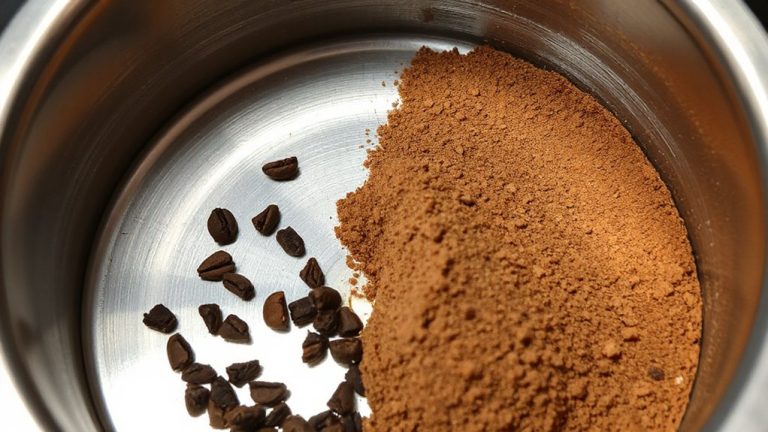
Your grinder’s producing too much chaff because the burrs might be dull or misaligned, especially if you’re using a budget model like the Baratza Encore. Dark, oily beans or low-density Ethiopians also crumble more. Grinding too fine or for too long heats up the beans, making them break unevenly. Static in dry environments traps chaff inside. Try short bursts, a slightly coarser setting, or cleaning the burrs. Better consistency and cooler grinds reduce mess-and there’s more to check if it’s still not clean.
Notable Insights
- Dark or oily roasts are more brittle and produce more chaff; switch to lighter roasts for cleaner grinds.
- Worn or dull burrs tear beans instead of slicing them, increasing chaff; inspect and replace if necessary.
- Misaligned burrs cause uneven grinding and excess fragmentation; ensure proper alignment and calibration.
- Static electricity in dry environments makes chaff cling to the grinder; grind in bursts or adjust settings slightly.
- Heat buildup from prolonged grinding weakens bean structure; use shorter pulses to reduce thermal degradation.
Why Your Grinder Makes Too Much Chaff
Why is your grinder leaving so much chaff behind? It’s often due to bean density and roast level. Lighter roasts are denser and harder, so they fracture cleanly with less chaff. Darker roasts are more brittle, making them crumble and produce more chaff when ground. If your beans are dark or oily, that’s likely the culprit. Low-density beans, like some Ethiopians or high-altitude beans, also break apart unevenly, releasing more husk. You’re not doing anything wrong-your grinder’s just reacting to the bean. Adjusting the grind setting finer might help a bit, but it won’t fix the root cause. If you’re using dark, low-density beans regularly, expect more chaff. It’s just physics. Managing expectations and choosing beans with higher density and medium roast levels can reduce the mess during grinding.
Dull or Misaligned Burrs? How They Cause Excess Chaff
Chaff buildup isn’t always about the beans-your grinder’s burrs might be the real issue. If your burrs are dull from blade wear, they tear rather than slice the beans, creating more chaff and inconsistent particles. Sharp burrs cleanly cut coffee, but worn ones mash and crush, especially at finer grinds. Misaligned burrs cause similar problems: even slight gaps or shifts in burr alignment lead to uneven grinding and extra fragmentation. You might notice clumps of fines mixed with larger chunks-a clear sign something’s off. This isn’t just about taste; it affects brew clarity and filter performance, especially in pour-over or espresso. Check your grinder’s build quality-budget models often have looser tolerances, making alignment harder to maintain. For grinders like the Baratza Encore or 1ZPresso models, regular inspection and calibration can delay wear-related issues. If cleaning and adjusting don’t help, burr replacement may be due. Upgrading to a high-quality mill grinder can significantly reduce chaff production and improve grind consistency.
Wrong Grind Setting? How to Adjust for Cleaner Results
You’ve checked your burrs and ruled out wear or misalignment, so now it’s time to look at how your grind setting could be adding to the chaff problem. If your grind is too fine, it increases friction and heat, breaking down beans more aggressively and producing excess chaff. On the other hand, too coarse a setting can lead to poor grind consistency, where uneven particles cause inefficient particle separation during brewing. This inconsistency often leaves behind more chaff in your grounds. Adjust your grinder incrementally-especially with blade models or lower-tier burr grinders-since small changes make a big difference. For cleaner results, aim for a uniform grind size that matches your brew method: espresso needs fine and consistent, while French press works best with coarse but even particles. Proper calibration improves both extraction and reduces leftover chaff. Choosing the right equipment, such as a high-quality best coffee grinder, can significantly reduce chaff and improve grind uniformity.
Is Static Making Your Chaff Problem Worse?
Could static electricity be making your chaff situation worse? Yes, it might. When you grind coffee, especially in dry environments or with high-speed burr grinders, electrostatic buildup can cause chaff and fine particles to cling to the grinder’s chamber and walls. This is due to particle adhesion, where oppositely charged surfaces attract each other. As a result, more chaff stays suspended and eventually ends up in your grounds. Grinders like the Baratza Encore are prone to this, especially in low humidity. To reduce static, try adjusting your grind setting slightly coarser or grinding in shorter bursts to limit friction heat. Some users tap the grinder lightly after grinding to dislodge clinging particles. While not all chaff comes from static, minimizing electrostatic buildup helps decrease unwanted residue in your final dose, giving you cleaner, more consistent coffee. A well-chosen manual espresso grinder can also reduce static issues due to slower grinding speeds and less heat buildup.
Is Overheating Turning Beans Into Chaff?
While grinding coffee, excessive heat buildup in your grinder might actually contribute to what looks like extra chaff. As beans heat up during prolonged grinding, especially in entry-level or low-speed grinders, heat degradation begins weakening their structure. You’re not creating real chaff, but the beans become more brittle-increasing bean brittleness-and fracture unevenly, producing fine particles that resemble chaff. This is common in blade grinders or conical burr grinders running for long sessions without breaks. High-speed motors and poor heat dissipation worsen the issue. To reduce this, grind in shorter pulses, allowing the motor and burrs to cool. Choosing a grinder with better thermal management-like a flat burr model with ventilation-can help maintain bean integrity. While it won’t eliminate chaff entirely, controlling heat reduces false excess and improves grind consistency.
When to Replace Your Grinder (And Stop the Chaff)
Heat buildup isn’t the only factor behind excessive chaff-like particles-worn grinder components can mimic the same issue, even if you’ve been careful with grind times and temperatures. As your grinder ages, internal parts like burrs lose sharpness, leading to uneven crushing instead of clean cutting. That ragged action creates more chaff. Grinder age directly impacts performance, especially in older blade models or low-tier burr grinders past five years of regular use. Motor wear also plays a role; a weakened motor can’t spin burrs at consistent speeds, worsening inconsistency. If you’ve cleaned thoroughly, adjusted settings, and still get chaff, it’s likely time to replace your grinder. High-quality burr grinders like the Baratza Encore or Fellow Ode offer long-term reliability. Replacing an aged grinder stops the chaff and improves extraction. Don’t keep fighting a worn machine-upgrade for better coffee.
On a final note
If your grinder’s making too much chaff, check the burrs first-dull or misaligned ones shred beans instead of slicing them cleanly. Adjust the grind setting; too fine can increase fragmentation. Reduce static with a quick tap or anti-static tools like the Groundskeeper Wick. Overheating from long grinding sessions can also brittle beans, creating more chaff. If fixes don’t help, consider upgrading-models like the Baratza Encore or Fellow Ode handle beans more cleanly over time.