The Ideal Espresso Dose and Yield Ratio for Café-Quality Shots at Home
Start with an 18g dose and 36g yield (1:2 ratio) for balanced espresso-this works well on machines like the Lelit Bianca or Gaggia Classic. Lighter roasts may need 1:2.5; darker ones often do better at 1:1.5. Use a calibrated burr grinder and level your dose with a WDT tool. Adjust grind first, not dose, to fix sour or bitter shots. Consistency comes from precise weighing and even tamping-small tweaks make all the difference. You’ll learn how to fine-tune every variable for your setup.
Notable Insights
- Start with an 18g dose and 36g yield (1:2 ratio) for balanced, café-quality espresso at home.
- Adjust the ratio to 1:2.5 for lighter roasts to improve sweetness and acidity extraction.
- Use a 1:1.5 to 1:2 ratio for dark roasts to avoid excessive bitterness and harsh flavors.
- Ensure even tamping with 30 pounds of pressure and precise grind size using a burr grinder.
- Fine-tune dose, yield, and grind based on taste-sourness needs more extraction, bitterness needs less.
What Is the Espresso Dose and Yield Ratio?
The espresso dose and yield ratio tells you how much coffee you’re putting in versus how much espresso comes out, and it’s usually written as a simple ratio like 1:2. You’ll see this in both home and café brewing, where precision matters. A 1:2 ratio means 18 grams of ground coffee produces 36 grams of brewed espresso. This balance didn’t appear overnight-it evolved through decades of espresso history and refined brewing science. Machines like the La Marzocco Linea or the Lelit Bianca let you control variables so you can replicate results. While some older methods leaned on volume (in ounces), modern baristas use grams for accuracy. Your equipment, grind size, and bean freshness all affect the outcome. But the ratio gives you a clear starting point-one that’s practical, repeatable, and rooted in real-world testing. It’s your baseline for consistency.
Why 1:2 Is the Standard Espresso Ratio
While you might see ratios like 1:1.5 or 1:3 in specialty cafes, the 1:2 ratio became standard because it consistently delivers balanced shots with most beans and machines. Its historical origins trace back to mid-20th-century Italy, where espresso culture and early equipment standards first took shape. Machines like the Gaggia Classic and Faema E61 were designed around this ratio, making it a natural default. It extracts enough sweetness and body without excessive bitterness, fitting well with typical roast profiles and brew pressures. Equipment standards, including basket sizes and pump pressures, still reflect this balance today. You’ll find most baristas and home users stick with 1:2 because it’s reliable and easy to replicate. It works across a wide range of grinders and beans, requiring less tweaking than more extreme ratios. That’s why it remains the go-to for café-quality shots at home.
How Beans and Roast Change Your Ratio
Freshness, roast level, and bean origin all play a role in how your espresso ratio should be adjusted. Lighter roasts need a higher ratio-say 1:2.5-because they’re denser and less soluble, so they extract slower. If you’re using beans from Ethiopia, known for floral notes, a slightly longer extraction helps highlight delicate acidity. Darker roasts, like a classic Italian-style Brazilian, crackle with sweetness but burn easier; they do best at 1:1.5 or 1:2 to avoid bitterness. Your bean origin affects density and moisture, which changes how water moves through the puck. A fresh single-origin bean from Colombia might behave totally different than a two-month-old blend. You’ve got to tweak your ratio based on these traits, not just follow rules. Roast level especially shifts extraction speed-go too long on dark, and it turns harsh. Adjust wisely. Choosing the right best espresso beans can significantly improve consistency and flavor in your shots.
How to Adjust Dose and Yield for Balanced Flavor
Dialing in the right dose and yield starts with understanding your shot’s flavor profile. If your espresso tastes sour, try increasing the dose or using a finer grind to improve extraction. Bitter shots? Reduce the dose or go coarser to shorten contact time. Consistent tamping pressure matters-uneven tamping causes channeling, leading to unbalanced shots. Aim for 30 pounds of pressure and a level puck every time. Grind consistency is just as essential; a burr grinder delivers uniform particles, while blade grinders create uneven sizes that hurt flavor. For most home machines, start with a 1:2 ratio-18g in, 36g out-and adjust in small increments. Taste tells you more than timing. Fresh beans, stable technique, and clean equipment keep results reliable. Your machine’s pump and brew head design also influence extraction, so tailor settings to your gear. A quality espresso grinder under $200 can make a significant difference in achieving consistent particle size and optimal extraction.
Common Espresso Ratio Mistakes to Avoid
A bloated shot or a weak ristretto might not just be bad luck-it’s often a sign you’re making one of the common ratio mistakes that hurt espresso quality. Using too little coffee or too much water leads to underextracted shots-sour, thin, and lacking sweetness. On the flip side, too much dose or too little yield causes overextracted results-bitter, dry, and astringent. Many home baristas stick to 1:2 without adjusting for bean or grind, but that often fails with darker roasts or finicky grinders. Don’t assume default settings work universally. If your puck is chalking or dripping slowly, you’re likely overextracting. If it’s soupy or sour, you’re underextracting. Dialing in means tweaking dose and yield-not just guessing. A 1:1.5 ratio might work for some beans; others need 1:2.5. Test small changes and taste objectively.
Pro Tips for Consistent Espresso Results
You’ve likely figured out that hitting the right ratio matters, but even a perfect 1:2 won’t save your shot if other variables drift. Consistency starts with precision in grind calibration and tamping pressure. Use a calibrated burr grinder-like the Baratza Encore-for repeatable grind size. Small changes affect flow rate: too fine causes over-extraction, too coarse leads to weak shots. Always level the dose before tamping with 30 pounds of even pressure using a calibrated tool like the Pullman Tamper. For those seeking café-quality results on a budget, consider an espresso grinder under $1000 with high burr quality and grind consistency.
| Factor | Tip |
|---|---|
| Grind calibration | Adjust in 1-click increments on conical grinders |
| Tamping pressure | Use a tamper with a pressure gauge for consistency |
| Dose uniformity | Distribute grounds with a tool like the WDT comb |
On a final note
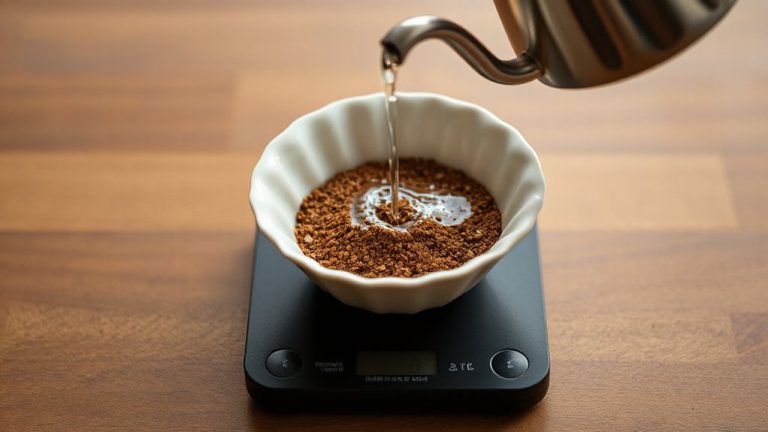
You’ll get café-quality espresso at home by starting with a 1:2 dose-to-yield ratio-say, 18g in, 36g out-and adjusting based on taste. Light roasts may need a higher ratio (like 1:2.5), while dark roasts often work better at 1:1.5. Use a scale and timer, grind fresh, and tweak one variable at a time. Consistency beats theory-track your shots, taste them, and refine. That’s how you dial in real results.