Mastering French Press Coffee Ratios for Smooth, Balanced Flavor
Use a 1:15 coffee-to-water ratio for smooth, balanced French press coffee-1 gram of coffee per 15 grams of water. Grind your beans coarse, like sea salt, using a burr grinder for even particles. Heat water to 195–205°F, just off boil. Steep for exactly 4 minutes, then press slowly. Pour all the coffee out immediately to avoid over-extraction. A finer grind or longer steep time causes bitterness, while too coarse or too short leaves flavor weak. Pre-wet the grounds with a 30-second bloom for better saturation. The right gear, like a Baratza Encore or Espro P7, improves results fast. You’ll get cleaner, richer coffee by mastering these steps.
Notable Insights
- Use a 1:15 coffee-to-water ratio as a baseline for balanced French press coffee.
- Adjust the ratio to 1:14 for stronger flavor or 1:16 for a milder cup.
- Grind coffee to a coarse, sea salt–like consistency to prevent over-extraction and sludge.
- Steep for exactly 4 minutes at 195°F–205°F to achieve optimal flavor extraction.
- Pre-wet grounds with a 30-second bloom to ensure even saturation and better flavor balance.
What’s the Best Coffee-to-Water Ratio for French Press?
A 1:15 coffee-to-water ratio-about 1 gram of coffee for every 15 grams of water-is one of the most reliable starting points for French press brewing. You’ll get a well-rounded cup without excessive bitterness or weakness. If you’re experimenting, this ratio allows room to explore flavor variations by tweaking grind size or steep time instead of adjusting proportions too drastically. For a smoother, chilled option, try a cold brew fusion method-steep coarsely ground coffee in cold water for 12–16 hours, then use a 1:8 ratio for concentrate. While French press typically relies on hot water extraction, blending it with cold brew techniques gives you more versatility. Just remember, temperature and time affect extraction differently. Stick with 1:15 for daily use, but don’t hesitate to adjust slightly based on bean freshness or roast level. It’s practical, repeatable, and easy to scale. Consider using one of the best French press picks for 2024 to enhance consistency and performance in your brewing process.
Use a 1:15 Ratio for Balanced French Press Coffee
You’ve probably heard that starting with a 1:15 coffee-to-water ratio gives you a solid foundation, and that’s where most well-balanced French press brews begin. That means for every 1 gram of coffee, you use 15 grams of water. This ratio strikes a reliable balance between strength and clarity, avoiding the bitterness of over-extraction or the weakness of under-extraction. During the bloom phase, pour just enough hot water to saturate the grounds-about twice their weight-and let it rest for 30 seconds. This releases trapped carbon dioxide and promotes even extraction. Then, add the rest of the water to guarantee consistent immersion. Maintaining immersion consistency throughout the 4-minute brew time helps achieve uniform flavor. Scales and gooseneck kettles aren’t mandatory, but they improve accuracy. If you find the result too weak or strong, adjust slightly-to 1:14 or 1:16-but use 1:15 as your starting point. For optimal extraction, ensure your coffee is ground to the ideal French press grind size, as overly fine or coarse particles can disrupt flavor balance.
Grind Size: Why Coarse Is Crucial for French Press
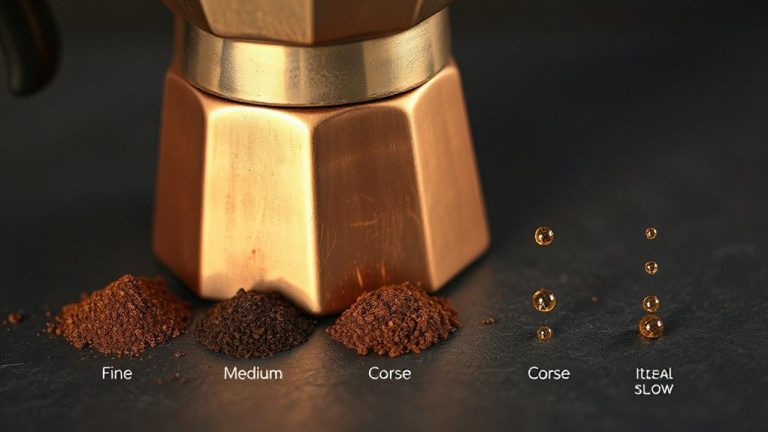
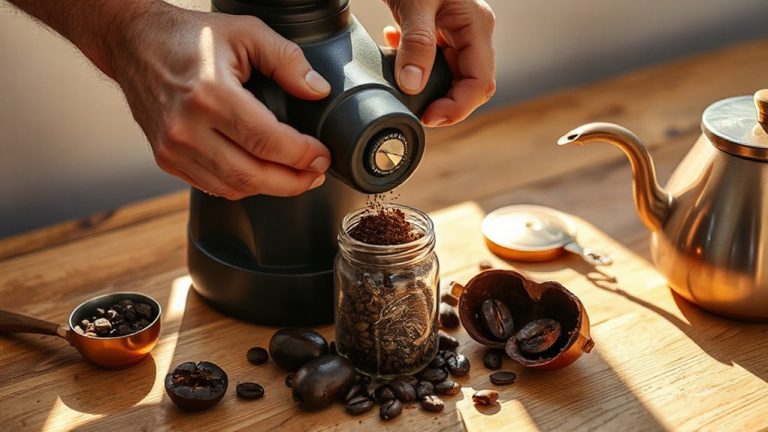
That coarse grind isn’t just a suggestion-it’s a requirement for French press success. Using a fine grind clogs the mesh filter and over-extracts, leading to bitterness. A coarse grind prevents that, allowing water to flow freely while extracting flavor evenly. Grind consistency matters-uneven particles mean some over-extract while others under-extract, muddying the taste. You want high particle uniformity, which blade grinders rarely deliver. Go for a quality burr grinder like the Baratza Encore or Fellow Ode. These give you control and consistent results. Skipping this step leads to sediment in your cup and off-flavors. You’ll also strain the press, making pressing difficult. Coarse means the size of sea salt-no smaller. Adjust if needed, but always prioritize evenness and coarseness. It’s the easiest way to improve your brew. Your French press depends on it. Choosing a French press with no plastic parts helps preserve the purity of your coffee’s flavor. Best plastic-free French press picks can guide you toward durable, non-reactive materials like stainless steel or glass.
Water Temperature and Brew Time: Ideal Settings
Getting the grind right sets the foundation, but water temperature and brew time are just as influential in shaping your final cup. You’ll want to use water just off the boil-around 195°F to 205°F-since it optimizes extraction without scalding the grounds. Preheating your French press with hot water helps maintain this temperature during brewing, improving consistency. Too cool, and your coffee tastes weak; too hot, and it brings out bitterness. For immersion timing, aim for exactly 4 minutes. That’s long enough to extract rich flavor but short enough to avoid excessive sediment and over-extraction. Use a timer-don’t guess. Pour evenly over the grounds to guarantee full saturation. A gooseneck kettle can help, but isn’t essential. Stick to these settings, and you’ll get balanced, full-bodied coffee every time.
Adjust Your Ratio for Stronger or Milder Coffee
A good starting point for most palates is a 1:15 coffee-to-water ratio-like 20 grams of coffee to 300 grams of water-but you can tweak this to suit your taste. If you want stronger coffee, drop to a 1:13 or even 1:12 ratio. This increases coffee strength and boosts flavor intensity, giving a bolder, more concentrated cup. It works well if you enjoy robust profiles or drink coffee black. For a milder result, go with 1:16 or 1:17. You’ll get a lighter body and softer flavor intensity, which suits delicate beans or those sensitive to caffeine. Just remember: adjusting the ratio doesn’t fix poor grind size or bad water temp. Small changes make a difference, so adjust gradually. Use a scale to stay precise-eyeballing leads to inconsistency. The right balance depends on your bean, grind, and preference, but dialing the ratio gives direct control over coffee strength and overall taste.
Perfect French Press: Step-by-Step Guide
Start with fresh beans and a burr grinder-your foundation for a great French press brew. Measure 1:15 coffee to water; for 30 grams of coarsely ground coffee, use 450 grams of hot water (about 200°F). Add coffee to the carafe, pour water, and stir gently. Place the lid on with the plunger up and let it steep for 4 minutes. Press slowly and steadily-don’t rush it. Pour all the coffee into your cup immediately to prevent over-extraction. Leaving grounds in the press degrades flavor. For French press maintenance, rinse after each use. Take apart the mesh filter and clean all parts weekly to avoid oil buildup. A consistent cleaning routine prevents stale tastes and guarantees peak performance. Use mild soap and avoid abrasive pads. Replace filters if they bend or don’t seal. Glass carafes are classic, but stainless steel resists breakage.
Fix Common French Press Mistakes
If you’ve ever ended up with bitter, muddy, or weak coffee from your French press, chances are it’s not the equipment-it’s the method. One of the most common mistakes is poor plunger timing. Steeping too long-past 4 minutes-over-extracts the grounds, leading to bitterness. On the flip side, pressing too soon leaves coffee weak and underdeveloped. Aim for a full 4-minute steep for balanced flavor. Another frequent issue is lack of sediment control. Pouring carelessly after pressing dumps fine grounds into your cup. To reduce sludge, pour slowly and pause before the last bit, leaving the settled fines at the bottom. Using a slightly coarser grind also improves sediment control without hurting extraction. Some French presses have better filtration, like the Espro P7 with dual micro-filters, which cuts down grit more effectively than standard models. Adjust your technique, not the gear.
On a final note
You’ve got what it takes to brew smooth, balanced French press coffee. Stick to the 1:15 ratio, use coarse grounds, and keep water just under boiling. Adjust slightly if you want it stronger or milder. Follow the steps closely, avoid common mistakes like over-steeping, and use a reliable press with a solid filter. It’s simple, repeatable, and works every time-no guesswork needed.