How to Use Grind Size Charts as a Starting Point for New Coffee Beans
Start with a grind size chart to pick the right setting for your brew method-like medium-fine for a Hario V60 or coarse for a French press. This gives you a solid baseline when trying new beans, especially around a week off roast. Charts reduce guesswork, but remember, your grinder’s calibration and bean freshness affect results. Use it as a starting point, then fine-tune based on taste-sour? go finer. Bitter? go coarser. You’ll get better results with a burr grinder, and soon find the sweet spot.
Notable Insights
- Grind size charts match brewing methods to approximate grind levels, offering a reliable starting point for new beans.
- Use the chart to select the correct grind consistency, such as medium-fine for pour-over or coarse for French press.
- Treat the chart as a baseline, then adjust slightly based on taste and extraction results.
- Factor in bean age and roast level, as fresher or lighter beans may require finer or coarser tweaks.
- Always use a burr grinder for consistent results, avoiding the uneven particles from blade grinders.
Match Your Brew Method to the Right Grind Size
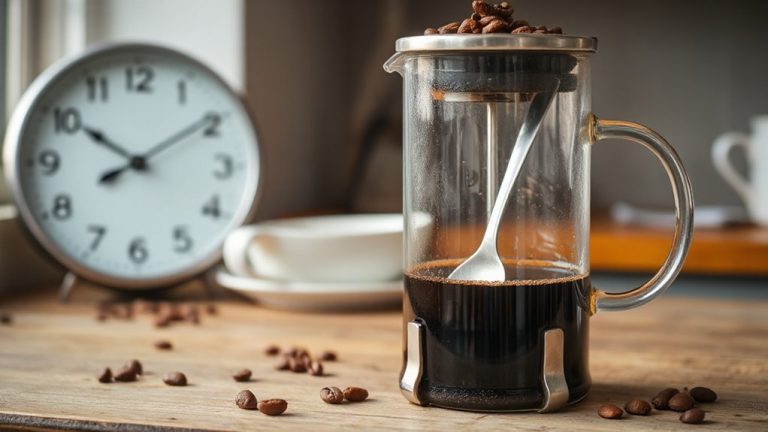
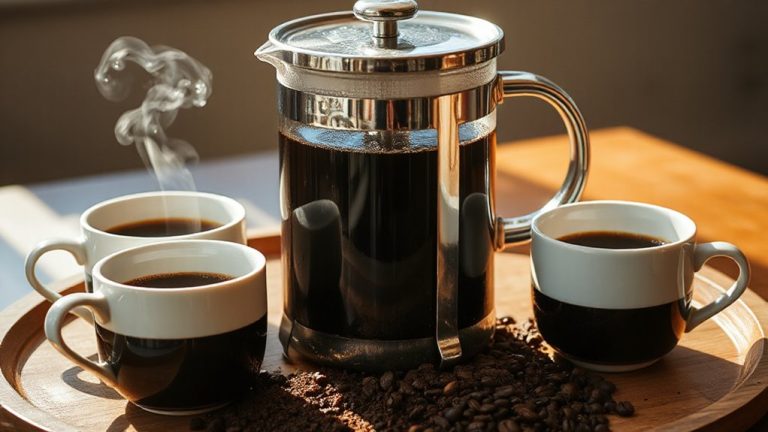
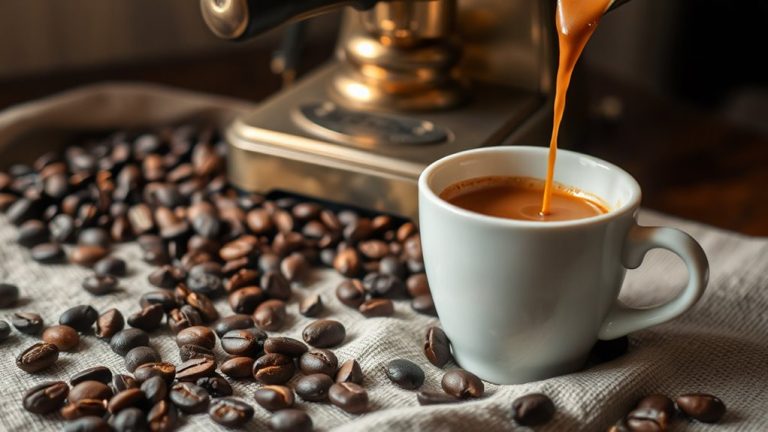
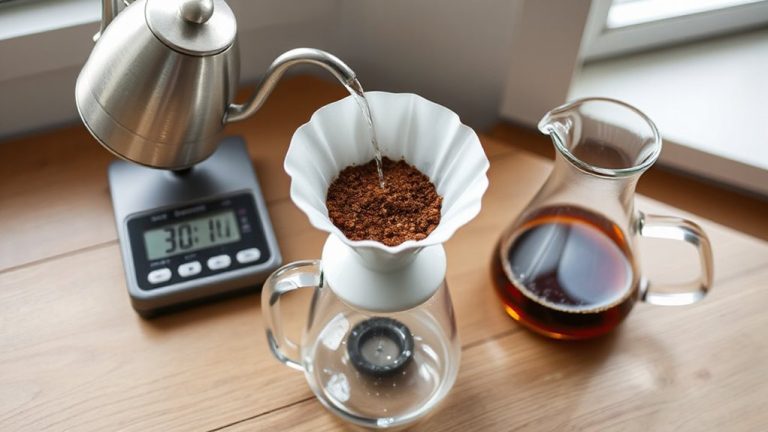
A grind size chart is your best tool for matching coffee beans to your brewing method, and getting it right makes a noticeable difference in flavor. You’ll typically see settings from fine (like table salt) for espresso to coarse (like breadcrumbs) for French press. Matching the grind to your brewer guarantees proper extraction-too fine and your coffee over-extracts and turns bitter; too coarse and it under-extracts, tasting weak. Your brew temperature, ideally between 195°F and 205°F, and water quality, preferably filtered, also impact results. For instance, pour-over cones like the Hario V60 work best with medium-fine grounds, while a Chemex needs a slightly coarser grind. Auto-drip machines often perform well with medium grounds. Always start with the chart, then adjust slightly based on taste. It’s a practical, evidence-based approach that saves time and improves your cup. For French press brewing, using the correct coffee grind for French press ensures balanced extraction and optimal flavor.
Adjust Grind Size for Coffee Freshness
Since freshly roasted beans release carbon dioxide over time, you’ll need to tweak your grind size to maintain consistent extraction. As coffee age increases, gas emission slows, affecting how water interacts with grounds. Freshly roasted beans (under 7 days old) often require a slightly finer grind to compensate for trapped CO₂, which can hinder water absorption. Beyond 10–14 days, beans degas considerably, so adjusting coarser prevents over-extraction. Ignoring coffee age can lead to flavor degradation-stale coffee tastes flat and dull, even with proper brewing. Light roasts retain gas longer than dark roasts, so adjust accordingly. A burr grinder lets you make precise changes; blade grinders won’t offer the consistency needed. You’re not fixing flaws in the bean but adapting to its evolving state. This isn’t about preference-it’s about matching physics to freshness for balanced results. For best results, use a coffee and espresso grinder that offers precise, adjustable settings to match the bean’s degassing cycle.
Refine Your Brew Based on Taste
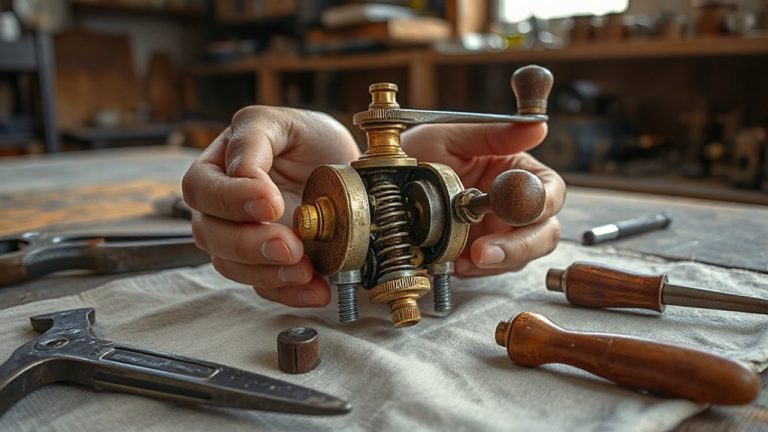
Taste tells you what the grind chart can’t. It’s the real test of whether your grind size works for your coffee and setup. Even if you start with the recommended setting, you’ll need to tweak it based on your taste preference. If your brew tastes sour or weak, the grind is likely too coarse-try going finer to improve extraction and flavor balance. If it’s bitter or harsh, it’s probably too fine; adjust coarser. Your beans, water, and brew method all interact, so the ideal grind varies. A burr grinder gives you consistent control, which is key. Don’t rely solely on charts-use them as a baseline, then let your palate guide adjustments. Small changes make a noticeable difference. Ultimately, the best grind is the one that delivers a cup you enjoy, with clarity and flavor balance that match your personal taste preference. For filter coffee, choosing the right equipment like a high-quality best burr grinder can significantly impact your results.
Fix Common Grind Size Mistakes
Getting the grind size wrong is one of the most common hurdles in brewing great coffee, but it’s also one of the easiest to fix once you know what to look for. Poor grind consistency and lack of dose precision often cause uneven extraction. If your coffee tastes bitter or hollow, the grind is likely too fine or too coarse. A burr grinder beats blade grinders every time-its uniform particles improve extraction. Always adjust in small increments and pay attention to flavor shifts.
| Mistake | Cause | Fix |
|---|---|---|
| Bitter coffee | Grind too fine | Coarsen grind slightly |
| Sour coffee | Grind too coarse | Refine grind setting |
| Uneven flavor | Poor grind consistency | Use quality burr grinder |
Grind consistency and dose precision make or break your brew. Stick to reliable tools, and you’ll fix most issues fast.
Use Grind Size Charts as a Starting Point
While you can tweak your grind through trial and error, starting with a grind size chart saves time and gets you closer to the right setting faster. These charts match common brew methods-like pour over, French press, or espresso-to approximate grind sizes, giving you a reliable baseline. They don’t replace testing, but they reduce guesswork, especially with new beans. For best results, pair the chart with attention to grind consistency; uneven particles lead to over- and under-extraction. Your grinder’s make and model affect output, so check for equipment calibration issues if results stay off. Blade grinders, for example, offer less consistency than burr models. Dialing in means adjusting in small increments after the chart’s suggestion. Charts work best as a starting point-not a final answer-but they improve precision when combined with fresh beans, proper technique, and consistent equipment performance.
On a final note
You now know how grind size charts can guide your brewing. Use them as a starting point, not a strict rule. Match the grind to your method-coarse for French press, fine for espresso. Adjust based on freshness and taste. If it’s bitter, try a coarser grind; if it’s weak, go finer. A good burr grinder gives consistent results, while blade grinders often don’t. Trust your palate over charts every time.